What is Piko Lazer? Picosecond Laser Technology & Cost Guide
Quick Answer
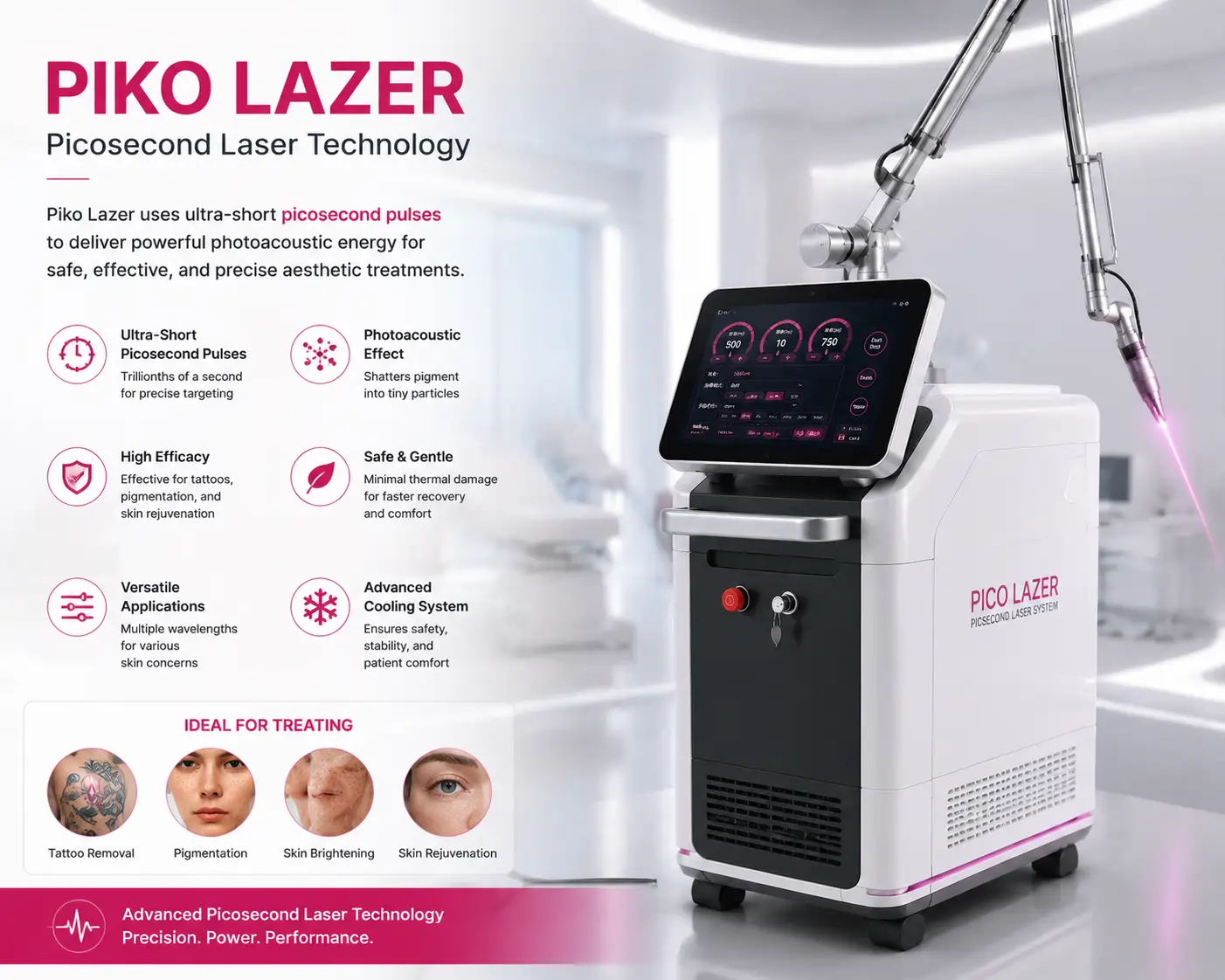
Piko Lazer is another name for Piko Laser or picosecond laser technology. It uses ultra-short laser pulses measured in trillionths of a second to deliver precise energy for tattoo removal, pigmentation treatment, and professional aesthetic applications.

What Is Piko Lazer?
Piko Lazer is a popular search term used to describe Piko Laser technology, which is based on picosecond laser systems.
The word “Piko” comes from “picosecond”, a unit of time equal to one trillionth of a second. Professional Piko Lazer systems deliver laser energy within extremely short pulse durations to create precise interactions with targeted pigments.
Although “Piko Lazer” is a common spelling variation used by consumers, the technical term used by laser manufacturers is usually:
- Picosecond Laser
- Pico Laser System
- Professional Picosecond Laser Machine
In Google searches, users may use different variations including:
- Piko Lazer
- Piko Laser
- Pico Laser
- Pico Laser Machine
- Picosecond Laser
All of these terms generally refer to the same category of ultra-short pulse aesthetic laser technology.
Why Is It Called Piko Lazer?
The term “Piko Lazer” is commonly used because many aesthetic clinics and consumers search for laser treatments using simplified marketing terminology rather than technical medical device terms.
For example, users may search:
- “Piko Lazer treatment”
- “Piko Lazer machine”
- “Piko Lazer price”
- “Piko Lazer before and after”
However, the underlying technology is picosecond laser technology, which describes the ultra-short pulse duration used by the system.
Is Piko Lazer the Same as Picosecond Laser?
Yes. In professional aesthetic applications, Piko Lazer refers to picosecond laser technology.
| Search Term | Meaning |
|---|---|
| Piko Lazer | Consumer search spelling variation |
| Piko Laser | Common aesthetic industry term |
| Pico Laser | Short form of picosecond laser |
| Picosecond Laser | Technical laser technology term |
Professional laser manufacturers usually describe these systems as picosecond lasers, while clinics often use Pico Laser or Piko Laser when communicating with patients.
Related: What Is a Picosecond Laser? Complete Guide
How Does Piko Lazer Work?
Piko Lazer works by delivering laser energy through ultra-short picosecond pulses. These pulses are measured in trillionths of a second, allowing the system to create highly concentrated energy delivery with precise control.
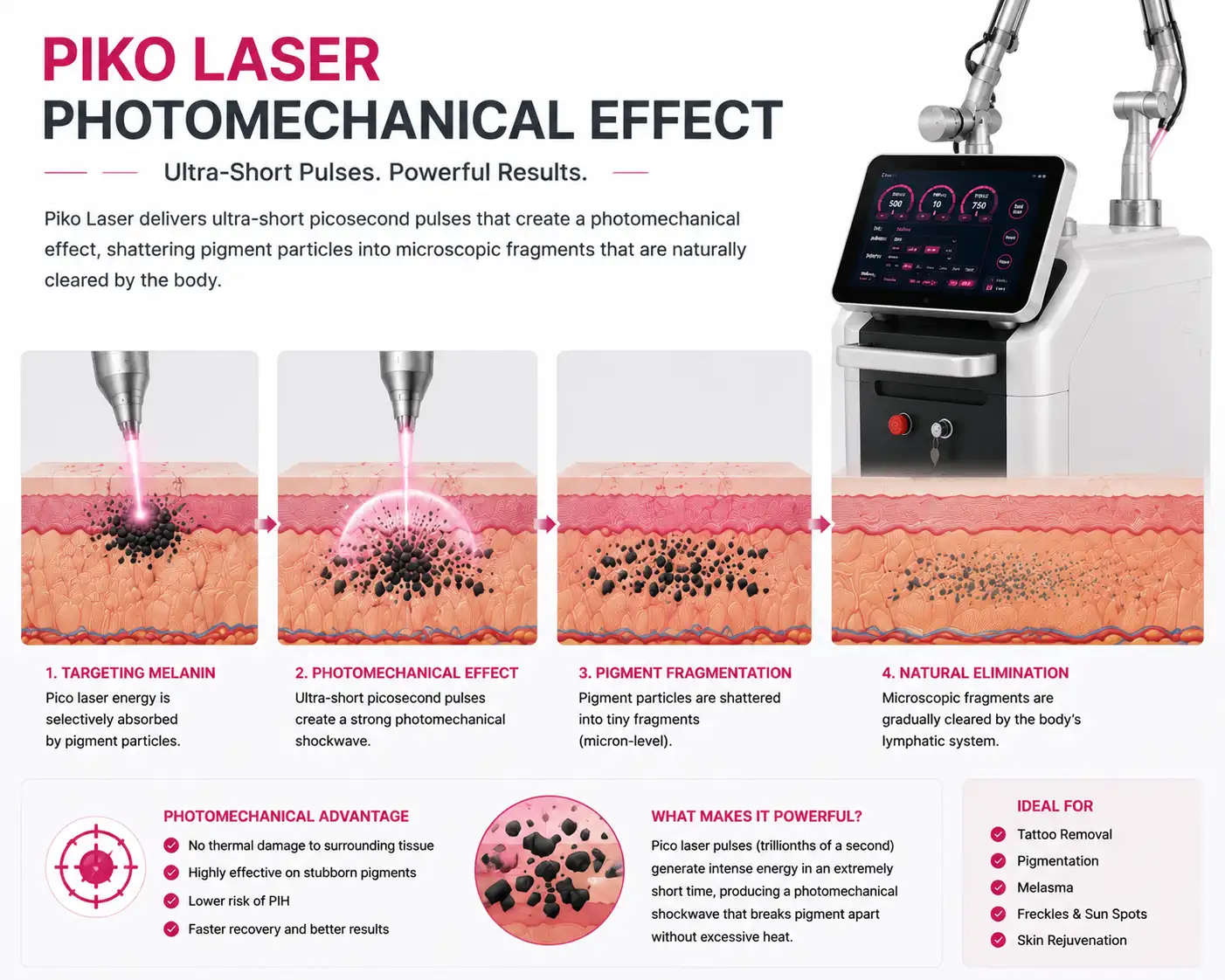
The core technology behind Piko Lazer is the photomechanical effect, where rapid laser energy creates mechanical stress inside targeted pigment particles and breaks them into smaller fragments.
The basic working process includes:
- The laser source generates a high-energy picosecond pulse.
- The system selects an appropriate wavelength based on the treatment target.
- Laser energy is absorbed by pigment particles.
- Ultra-fast energy delivery creates a photomechanical effect.
- Pigment particles are fragmented into smaller particles.
- The body gradually clears the fragmented pigment.
This ultra-short pulse technology is what makes Piko Lazer different from many traditional laser systems.
Related: How Does a Picosecond Laser Work? Complete Technology Guide
The Science Behind Piko Lazer Technology
The main advantage of Piko Lazer technology comes from its extremely short pulse duration.
A picosecond is equal to:
- 1 picosecond = one trillionth of a second
By delivering energy within such a short time period, Piko Lazer systems can generate high peak power while reducing unnecessary heat diffusion into surrounding areas.
The main technological effects include:
- High peak power energy delivery
- Rapid pigment fragmentation
- Precise target interaction
- Controlled thermal impact
Photomechanical Effect: The Core of Piko Lazer
The photomechanical effect is the key principle behind modern Piko Lazer systems.
When laser energy is absorbed by pigment particles, the ultra-short pulse creates rapid expansion inside the target area.
This generates mechanical pressure that breaks larger pigment particles into smaller fragments.
Compared with traditional thermal-based laser interaction, the photomechanical effect allows more precise pigment targeting.
Piko Lazer Pulse Duration Explained
Pulse duration is one of the most important specifications of a professional Piko Lazer system.
Traditional laser systems may operate with longer pulse durations, allowing more thermal energy to spread into surrounding tissue.
Piko Lazer systems deliver energy within picosecond-level pulses, creating a faster and more concentrated energy release.
| Laser Technology | Pulse Duration | Main Interaction |
|---|---|---|
| Traditional Laser | Longer pulse duration | Mainly thermal effect |
| Q-Switched Laser | Nanosecond range | Photothermal + mechanical effects |
| Piko Lazer | Picosecond range | Strong photomechanical effect |
Why Is Piko Lazer More Precise Than Traditional Laser Technology?
The main difference between Piko Lazer and traditional laser technology is the speed of energy delivery.
Because Piko Lazer releases energy within an extremely short period, the laser can interact with pigment targets before significant heat spreads to surrounding areas.
This allows professional systems to achieve:
- More precise pigment targeting
- Advanced energy control
- Flexible treatment applications
- Improved laser performance
Piko Lazer Technology vs Q-Switched Laser
Q-Switched lasers have been widely used for tattoo removal and pigmentation treatments for many years.
Piko Lazer technology improves upon this concept by reducing pulse duration from nanoseconds to picoseconds.
| Feature | Q-Switched Laser | Piko Lazer |
|---|---|---|
| Pulse Width | Nanoseconds | Picoseconds |
| Energy Delivery | Longer release time | Ultra-short pulse delivery |
| Main Effect | Photothermal effect | Photomechanical effect |
| Technology Level | Traditional pigment laser | Advanced pico technology |
For clinics evaluating advanced aesthetic laser equipment, Piko Lazer technology provides a modern platform for pigment-related applications.
Learn more: Picosecond Laser vs Q-Switched Laser
Piko Lazer Wavelengths: 532nm, 755nm and 1064nm Explained
Piko Lazer systems use different laser wavelengths because different pigments absorb laser energy differently.
The wavelength determines how deeply the laser energy penetrates and how effectively it interacts with specific targets.
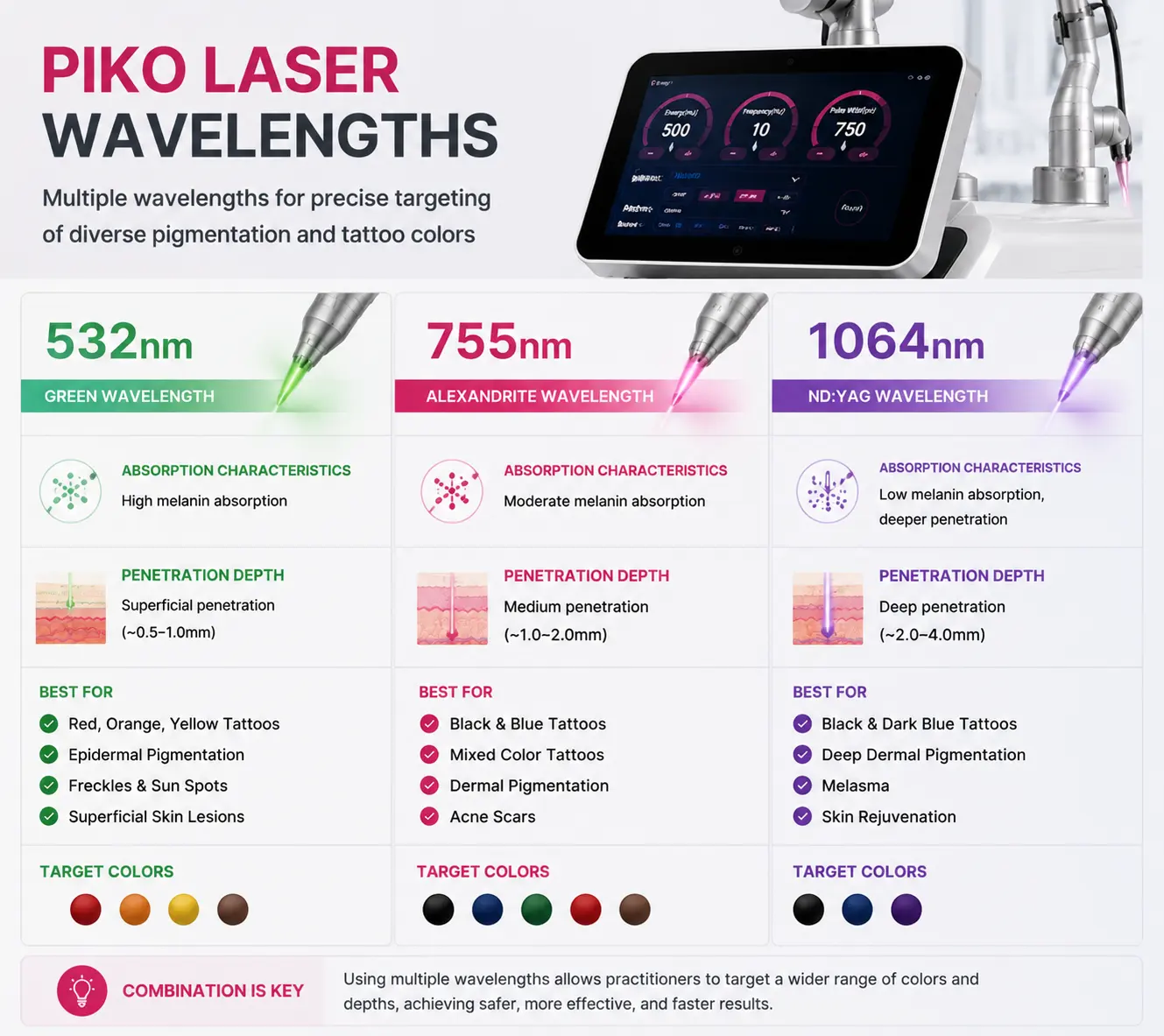
Professional Piko Lazer machines commonly include three major wavelength options:
- 532nm wavelength
- 755nm wavelength
- 1064nm wavelength
Multi-wavelength capability allows clinics to treat a wider range of tattoo colors and pigmentation conditions using one professional platform.
532nm Piko Lazer
The 532nm wavelength is commonly used for pigments that absorb shorter visible wavelengths effectively.
Professional applications include:
- Red tattoo pigment removal
- Orange and warm-color pigment treatment
- Selected superficial pigmentation applications
Because 532nm has a shorter wavelength, it is generally used for targets closer to the surface compared with longer wavelengths.
755nm Piko Lazer
The 755nm wavelength provides additional flexibility for advanced Piko Lazer platforms.
It is commonly used for:
- Specific tattoo pigment applications
- Complex pigment treatments
- Advanced multi-wavelength laser systems
The 755nm wavelength helps expand the application range of professional Piko Laser machines.
1064nm Piko Lazer
The 1064nm wavelength is one of the most widely used wavelengths in professional Piko Lazer systems.
Because it provides deeper penetration compared with shorter wavelengths, 1064nm is commonly selected for:
- Black tattoo ink removal
- Dark blue pigment treatment
- Deeper pigment targets
Many professional systems combine 1064nm and 532nm wavelengths to provide broader tattoo removal capability.
Learn more: Picosecond Laser Wavelengths Explained: 532nm vs 755nm vs 1064nm
Piko Lazer for Tattoo Removal
Piko Lazer tattoo removal is one of the most popular applications of picosecond laser technology.
During treatment, the laser targets tattoo ink particles beneath the skin and delivers ultra-short pulses that create a photomechanical effect.
This process breaks larger pigment particles into smaller fragments, allowing the body to gradually clear them.
Why Is Piko Lazer Effective for Tattoo Removal?
Traditional laser systems often rely more heavily on thermal effects, while Piko Lazer technology focuses on ultra-fast energy delivery and pigment fragmentation.
Key advantages include:
- Ultra-short picosecond pulse delivery
- High peak power
- Precise pigment targeting
- Multiple wavelength options
Piko Lazer Wavelength Selection for Tattoo Colors
| Tattoo Color | Common Piko Lazer Wavelength |
|---|---|
| Black Ink | 1064nm |
| Dark Blue Ink | 1064nm |
| Red Ink | 532nm |
| Orange Ink | 532nm |
| Green / Blue Pigments | 755nm |
Because modern tattoos often contain multiple colors, professional clinics usually prefer multi-wavelength Piko Lazer systems.
Related: Picosecond Laser Tattoo Removal Technology
Piko Lazer for Pigmentation Treatment
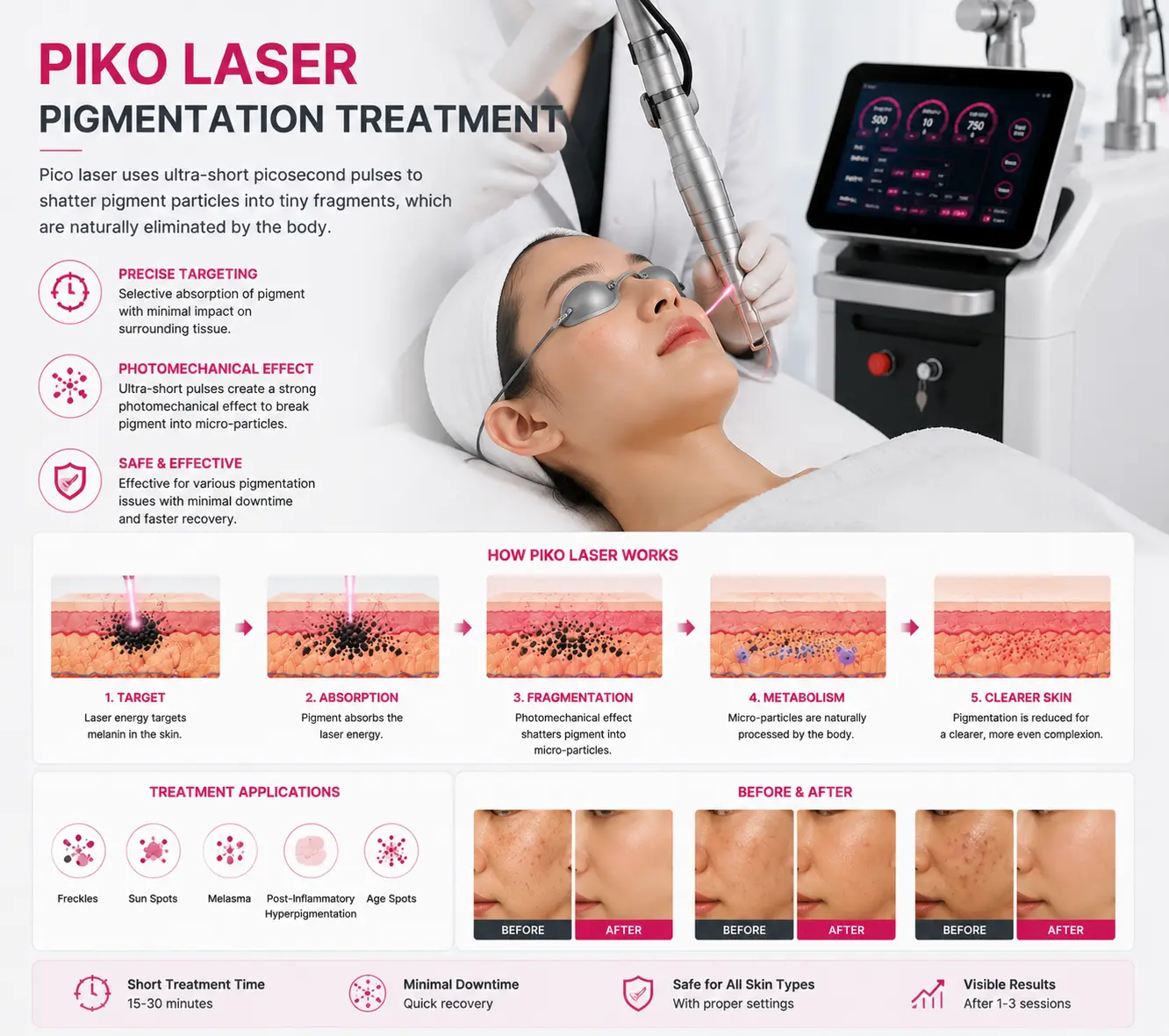
Besides tattoo removal, Piko Lazer technology is widely used for professional pigmentation treatments.
The ultra-short pulse technology allows controlled interaction with pigment targets while providing precise energy delivery.
Applications may include:
- Pigment correction treatments
- Selected pigmentation procedures
- Advanced aesthetic skin treatments
How Does Piko Lazer Treat Pigmentation?
The selected wavelength is absorbed by pigment structures. The rapid energy release creates mechanical stress that helps break pigment into smaller particles.
Treatment parameters depend on:
- Pigment type
- Treatment depth
- Skin characteristics
- Selected wavelength
Why Professional Clinics Choose Multi-Wavelength Piko Lazer Systems
A professional Piko Lazer machine with multiple wavelengths provides greater treatment flexibility compared with a single wavelength system.
Benefits include:
- Treatment of different tattoo colors
- Broader pigmentation applications
- More flexible clinical protocols
- Better equipment versatility
For clinics and distributors, wavelength configuration is one of the most important factors when selecting a professional Piko Lazer system.
Professional Piko Lazer Machine for Clinics
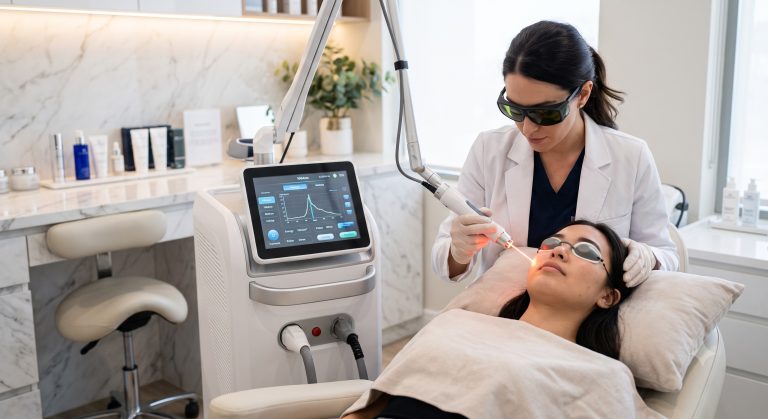
A professional Piko Lazer machine is an advanced aesthetic laser platform designed for clinics, medical aesthetic centers, and distributors.
Unlike consumer beauty devices, professional Piko Lazer systems are engineered for daily clinical operation and require stable energy output, reliable performance, and flexible treatment configurations.
When selecting a professional Piko Lazer machine, clinics should evaluate:
- Laser pulse technology
- Wavelength configuration
- Energy stability
- Cooling system performance
- Treatment handpiece design
- Manufacturer support
Professional Piko Lazer Technical Specifications
The performance of a professional Piko Lazer system depends on multiple technical parameters working together.
Important specifications include pulse duration, wavelength options, energy output, repetition rate, spot size, and cooling technology.
| Specification | Importance |
|---|---|
| Pulse Duration | Determines ultra-short energy delivery capability |
| Wavelength Options | Defines treatment flexibility for different pigments |
| Energy Output | Influences treatment capability and application range |
| Frequency | Affects treatment speed and operational efficiency |
| Spot Size | Supports different treatment areas |
| Cooling System | Supports stable operation and treatment comfort |
Pulse Width of Professional Piko Lazer Systems
Pulse width is one of the most important technical specifications of a professional picosecond laser system.
Picosecond lasers operate with extremely short pulse durations, allowing energy to be delivered faster than traditional nanosecond laser systems.
Depending on platform design, professional Piko Lazer systems may feature pulse widths measured in several hundred picoseconds.
Short pulse duration helps create:
- Higher peak power
- Rapid pigment fragmentation
- Precise laser interaction
Energy Output and Peak Power
Energy output determines how much laser energy is delivered during each pulse.
Peak power describes the maximum power generated during the extremely short pulse duration.
Because Piko Lazer systems compress energy into a very short time period, they can generate high peak power while maintaining precise control.
Spot Size Options
Professional Piko Lazer machines typically provide adjustable spot sizes to support different treatment requirements.
Different spot sizes allow practitioners to optimize treatment parameters based on:
- Treatment area
- Target depth
- Clinical application
Cooling Technology in Professional Piko Lazer Systems
Cooling technology is an essential component of professional aesthetic laser systems.
A reliable cooling system helps:
- Maintain system stability
- Manage internal heat
- Improve treatment comfort
- Support long-term equipment performance
Modern Piko Lazer systems may integrate advanced cooling solutions including air cooling, water cooling, and optimized thermal management systems.
Related: Professional Laser Cooling Technology

How Much Does a Professional Piko Lazer Machine Cost?
The price of a professional Piko Lazer machine depends on system configuration, technology level, wavelength options, and manufacturer support.
Professional pico laser systems are typically priced higher than consumer devices because they are designed for medical aesthetic clinics and professional treatment environments.
| Piko Lazer System Category | Typical Price Range |
|---|---|
| Entry-Level Professional Pico System | Around $20,000 – $40,000 |
| Multi-Wavelength Professional Piko Lazer | Around $40,000 – $80,000 |
| Advanced Premium Pico Platform | $80,000+ |
The final cost depends on factors such as:
- 532nm / 755nm / 1064nm wavelength configuration
- Pulse technology
- Energy output
- Cooling system
- Accessories and handpieces
- After-sales support
Why Clinics Invest in Professional Piko Lazer Systems
Professional clinics choose Piko Lazer technology because it provides a versatile platform for multiple aesthetic applications.
A single professional system may support:
- Tattoo removal
- Pigmentation treatments
- Skin rejuvenation applications
- Advanced aesthetic procedures
For clinics and distributors, a multi-functional Piko Lazer machine can help expand treatment services while improving equipment efficiency.
Looking for a Professional Piko Lazer Machine?
Cocoon Laser provides professional picosecond laser systems for aesthetic clinics, distributors, and OEM partners.
Request a QuoteExplore professional systems: Professional Picosecond Laser Systems
Frequently Asked Questions About Piko Lazer
What is Piko Lazer?
Piko Lazer is a popular term used to describe Piko Laser or picosecond laser technology. It uses ultra-short laser pulses measured in trillionths of a second for pigment treatment, tattoo removal, and professional aesthetic applications.
Is Piko Lazer the same as Pico Laser?
Yes. Piko Lazer and Pico Laser generally refer to the same picosecond laser technology. The difference is mainly spelling and marketing terminology.
Professional manufacturers usually use the term “picosecond laser”, while clinics and consumers commonly search for “Pico Laser” or “Piko Lazer”.
Is Piko Lazer the same as Picosecond Laser?
Yes. Piko Lazer is a commonly used name for picosecond laser technology.
The technical principle is based on ultra-short pulse laser delivery, where energy is released within picosecond-level durations.
What is Piko Lazer used for?
Piko Lazer is commonly used for:
- Tattoo removal
- Pigmentation treatment
- Skin rejuvenation applications
- Advanced aesthetic laser procedures
How does Piko Lazer remove tattoos?
Piko Lazer removes tattoos by delivering ultra-short laser pulses that target tattoo pigments and create a photomechanical effect.
The energy fragments pigment particles into smaller pieces, which can then be gradually processed by the body’s natural clearance system.
What wavelengths does Piko Lazer use?
Professional Piko Lazer systems commonly use:
- 532nm
- 755nm
- 1064nm
Different wavelengths are selected according to pigment color, treatment depth, and clinical requirements.
What is the difference between Piko Lazer and Q-Switched Laser?
The main difference is pulse duration. Q-Switched lasers typically operate in the nanosecond range, while Piko Lazer systems operate in the picosecond range.
The shorter pulse duration allows Piko Lazer technology to create stronger photomechanical interactions with pigment particles.
How much does a professional Piko Lazer machine cost?
A professional Piko Lazer machine typically ranges from approximately $20,000 to over $80,000 depending on wavelength configuration, energy output, pulse technology, cooling system, and manufacturer support.
Advanced multi-wavelength systems generally cost more because they provide broader treatment capabilities.
What should clinics consider before buying a Piko Lazer machine?
Clinics should evaluate:
- Available wavelengths
- Pulse technology
- Energy stability
- Cooling system
- Manufacturer experience
- Technical support
Piko Lazer Before and After Results
Many users search for “Piko Lazer before and after” because they want to understand potential treatment outcomes.
Results depend on multiple factors, including:
- Target condition
- Pigment type
- Skin characteristics
- Treatment parameters
- Number of sessions
Professional clinics typically evaluate each case individually and develop treatment plans based on the specific application.

Piko Lazer vs Pico Laser: Is There Any Difference?
There is no major technical difference between Piko Lazer and Pico Laser.
| Term | Usage |
|---|---|
| Piko Lazer | Common spelling variation used in searches |
| Piko Laser | Marketing and clinic terminology |
| Pico Laser | Common shortened name |
| Picosecond Laser | Technical industry terminology |
For SEO purposes, all of these terms are important because different users search using different language.
Final Verdict: Understanding Piko Lazer Technology
Piko Lazer is a popular term for advanced picosecond laser technology that uses ultra-short pulses to deliver precise laser energy for aesthetic applications.
The core technology behind Piko Lazer includes:
- Picosecond pulse delivery
- Photomechanical pigment fragmentation
- Multiple wavelength options
- Advanced cooling technology
- Professional energy control
For clinics and aesthetic professionals, choosing the right Piko Lazer machine requires evaluating not only laser specifications but also reliability, treatment flexibility, and manufacturer support.
Cocoon Laser provides professional picosecond laser systems designed for aesthetic clinics, distributors, and OEM partners.
Request a Professional Piko Lazer Machine Quote
Contact Cocoon Laser to learn more about professional picosecond laser systems, wavelength configurations, and OEM solutions.
Get a QuoteExplore professional solutions: