Body contouring refers to a group of aesthetic treatments designed to
improve body shape, enhance tissue firmness, reduce localized fat, and
create more balanced body proportions. Unlike weight loss programs, body
contouring focuses on refining specific areas after lifestyle changes or
for individuals seeking targeted aesthetic improvement.
Modern body contouring includes both surgical and non-surgical approaches.
Advances in aesthetic technology have introduced energy-based treatments
such as High-Intensity Focused Ultrasound (HIFU), Radio Frequency (RF),
Electrical Muscle Stimulation (EMS), and other technologies that support
professional body shaping procedures.
For aesthetic clinics and medical professionals, understanding how different
body contouring technologies work is essential when selecting suitable
treatment solutions and equipment.
Key Takeaways
Body contouring focuses on improving body shape rather than replacing
healthy weight management.
Non-surgical body contouring technologies target different concerns including
fat reduction, skin tightening, and muscle stimulation.
HIFU, RF, EMS, and other technologies work through different mechanisms
and are not interchangeable.
Choosing the correct technology depends on the patient's goals and the
clinical application.
Professional evaluation is essential for safe and effective treatment
planning.
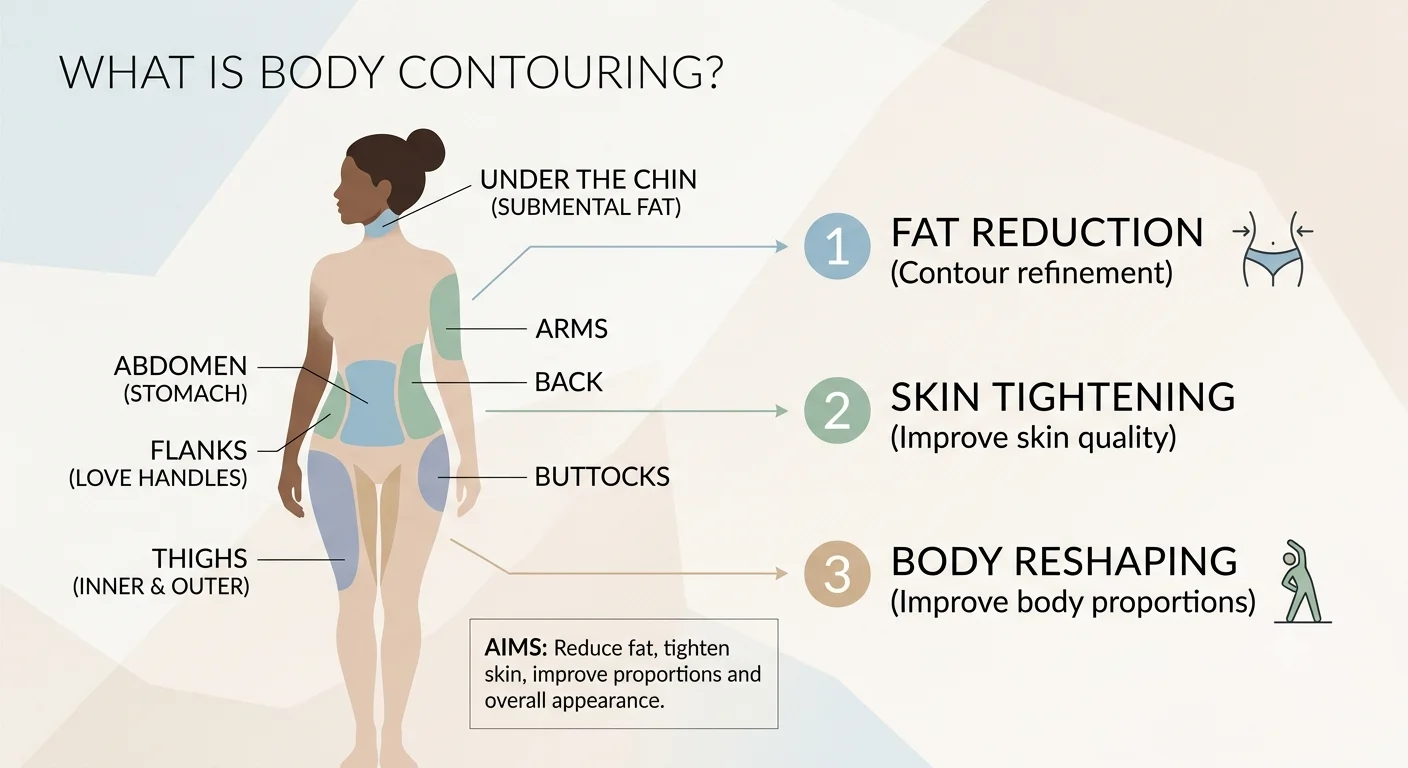
What Is Body Contouring?
Body contouring is a category of aesthetic treatments designed to reshape
and refine specific areas of the body by improving factors such as fat
distribution, skin firmness, muscle definition, and overall body proportions.
The goal of body contouring is not necessarily weight reduction. Instead,
these treatments focus on areas where individuals may have concerns such
as localized fat deposits, loose skin, reduced firmness, or uneven contours.
Common treatment areas include:
Abdomen
Waist
Arms
Thighs
Buttocks
Back
Neck and jawline
Body contouring treatments aim to improve body proportions, skin quality,
and overall appearance through different aesthetic approaches.
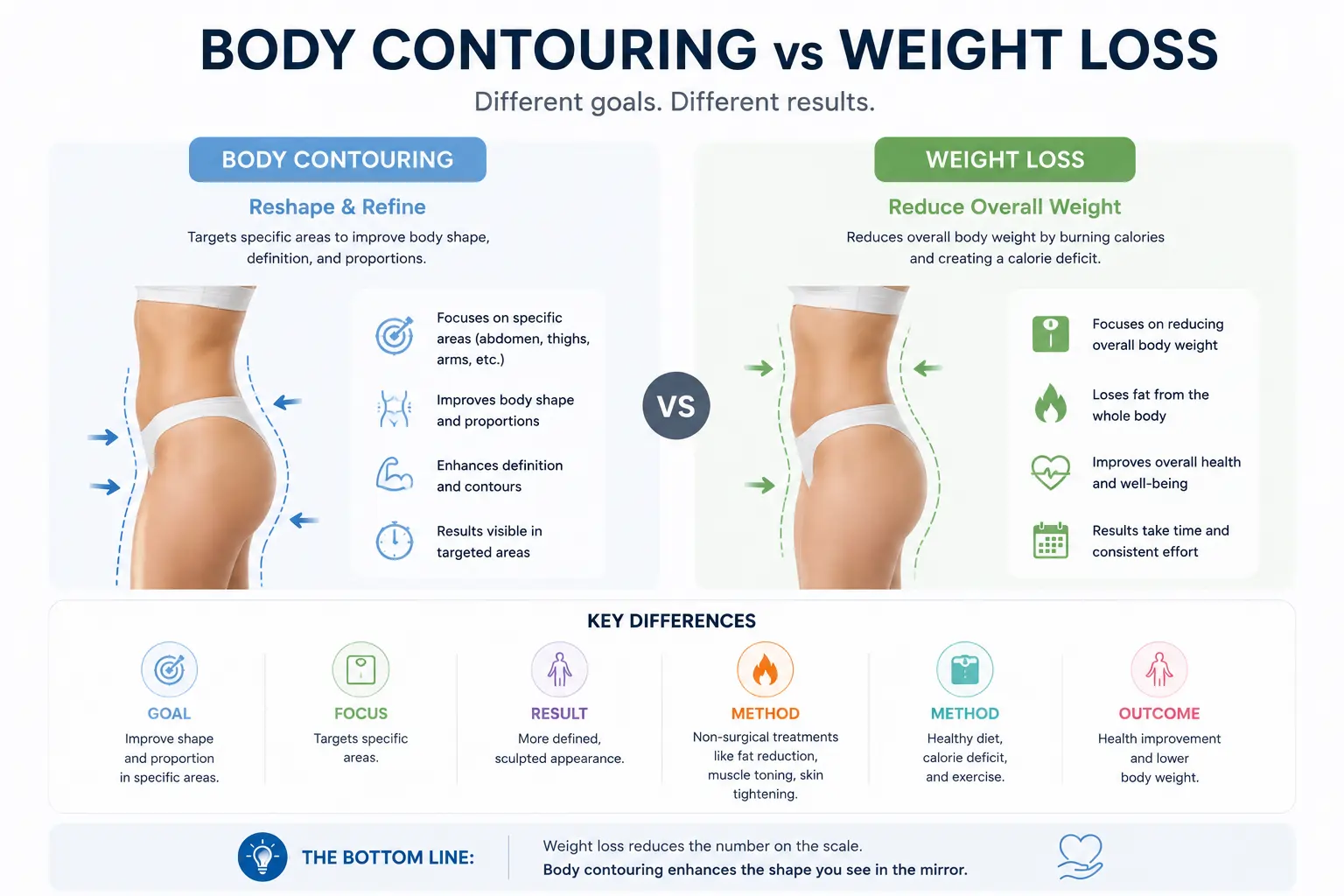
Body Contouring vs Weight Loss: What's the Difference?
Body contouring and weight loss are often confused, but they serve different
purposes.
Weight Loss
Body Contouring
Reduces overall body weight
Improves specific body areas
Usually achieved through diet and exercise
Uses aesthetic treatments or procedures
Changes total body mass
Refines body shape and proportions
May not address loose skin or contour irregularities
May target skin firmness, fat distribution, or muscle definition
Weight loss changes overall body mass, while body contouring focuses on
improving specific areas and body proportions.
How Does Body Contouring Work?
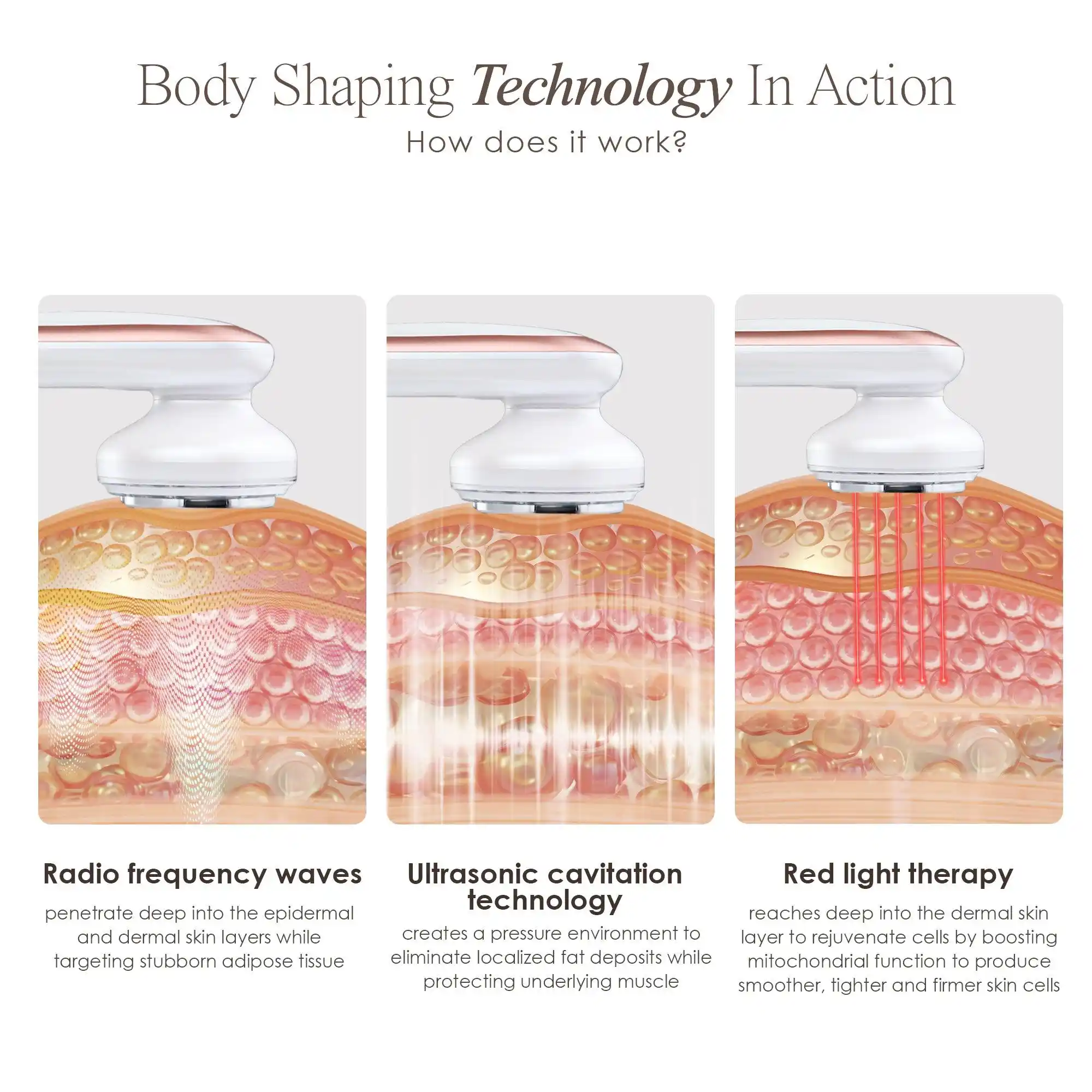
Body contouring works by targeting specific tissues or biological processes
that influence body appearance. Different technologies use different mechanisms,
including controlled heating, cooling, electromagnetic stimulation, or
mechanical effects, depending on the desired treatment goal.
Unlike traditional weight loss methods, body contouring treatments are
designed to improve localized concerns rather than reduce overall body
weight.
Different body contouring technologies target different tissues, including
fat cells, collagen structures, and muscle activity.
Targeting Different Tissue Layers
The human body contains multiple tissue layers, including skin, subcutaneous
fat, connective tissue, and muscle. Body contouring technologies are designed
to influence specific layers depending on the treatment objective.
Modern body contouring can be divided into several categories based on
the aesthetic concern being addressed. Understanding these categories helps
clinics select appropriate technologies for different patient goals.
1. Fat Reduction Treatments
Fat reduction treatments focus on decreasing localized fat deposits in
specific areas of the body. These treatments are generally intended for
body shaping rather than significant weight loss.
Common treatment areas include the abdomen, waist, thighs, arms, and other
areas where localized fat accumulation may affect body proportions.
Fat reduction technologies are designed to target localized fat concerns
as part of a broader body contouring strategy.
Common Technologies
Cryolipolysis (controlled cooling technology)
Laser-assisted fat reduction technologies
Radio frequency-based body contouring systems
These approaches are generally selected for individuals who have localized
fat concerns but are already close to their desired body weight.
2. Skin Tightening Treatments
Skin tightening technologies focus on improving skin firmness by stimulating
collagen remodeling and supporting tissue contraction.
Changes in skin elasticity may occur due to aging, weight fluctuations,
pregnancy, or natural changes in connective tissue.
Energy-based skin tightening technologies aim to improve firmness by influencing
collagen-related tissue responses.
Common Technologies
High-Intensity Focused Ultrasound (HIFU)
Radio Frequency (RF)
Combined energy-based aesthetic systems
HIFU and RF are commonly discussed in non-surgical body contouring because
they focus on tissue remodeling rather than surgical removal or volume
replacement.
3. Muscle Stimulation Treatments
Muscle stimulation technologies are designed to activate muscle contractions
through controlled electrical energy. They are commonly used as part of
body sculpting programs focused on muscle definition.
Electrical Muscle Stimulation (EMS)
EMS creates controlled muscle contractions that may support muscle conditioning.
It does not replace exercise and cannot change skeletal structure or directly
remove fat.
4. Body Sculpting Treatments
Body sculpting is a broader term that refers to improving the overall
shape and balance of the body. It may combine multiple approaches depending
on individual goals.
Modern clinics often combine technologies such as HIFU, RF, and EMS to
address different aspects of body appearance, including firmness, contour
definition, and muscle conditioning.
Important:
No single body contouring technology addresses every concern. Effective
treatment planning depends on understanding whether the primary goal is
fat reduction, skin tightening, muscle definition, or volume enhancement.
Non-Surgical Body Contouring Technologies
Non-surgical body contouring has become increasingly popular because it
provides aesthetic improvement without traditional surgical procedures.
These technologies typically use controlled energy or stimulation methods
to influence targeted tissues.
Different technologies work through different mechanisms. Some focus on
skin tightening, some support muscle conditioning, while others target
localized fat concerns. Selecting the appropriate technology depends on
the patient's goals and clinical assessment.
1. High-Intensity Focused Ultrasound (HIFU)
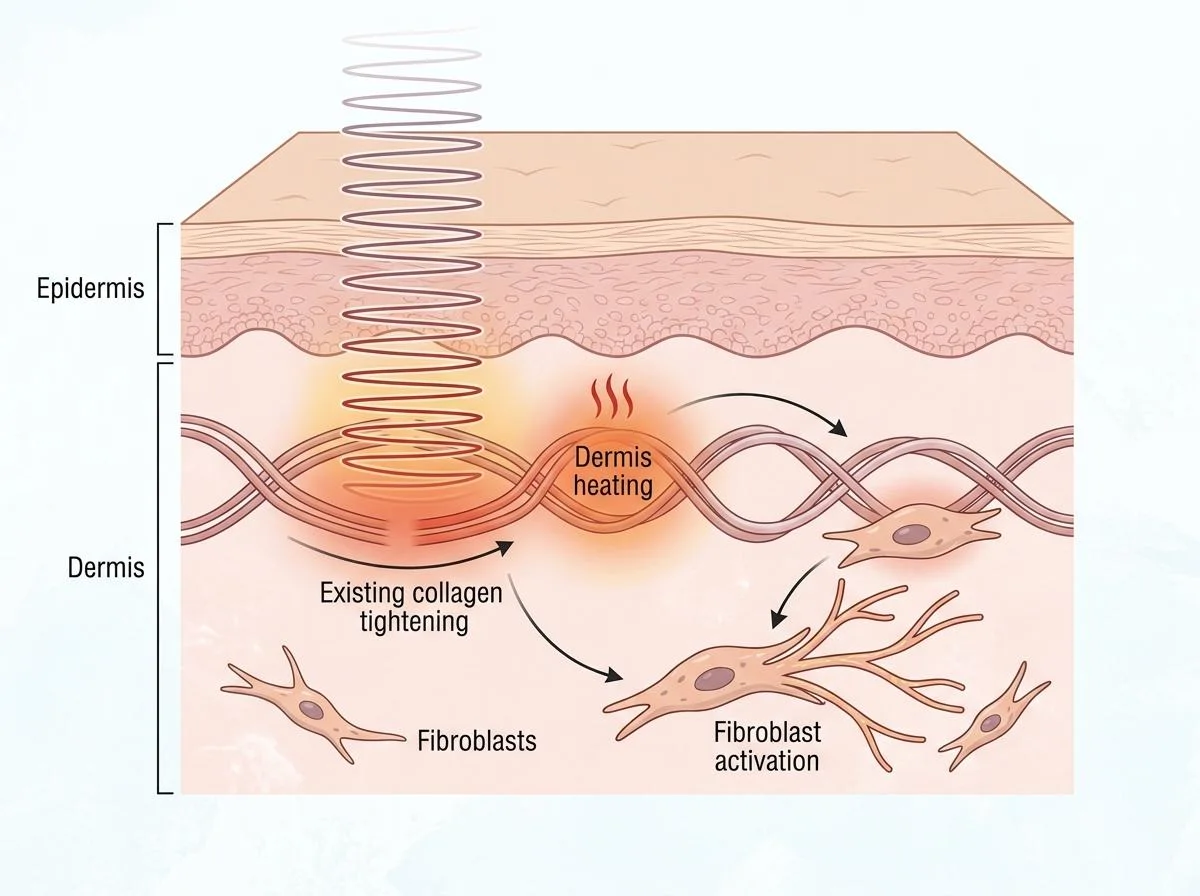
High-Intensity Focused Ultrasound (HIFU) is an energy-based aesthetic
technology that delivers focused ultrasound energy into targeted tissue
layers. The controlled thermal effect can stimulate tissue remodeling and
collagen-related responses.
In aesthetic medicine, HIFU is commonly associated with skin tightening,
lifting, and selected body contouring applications.
How HIFU Works
Focused ultrasound energy is delivered into targeted tissue depths.
The body naturally remodels treated tissues over time.
Results develop gradually depending on individual response.
Common HIFU Applications
Skin tightening
Body contour improvement
Facial lifting applications
Non-surgical aesthetic treatments
Clinical Note:
HIFU does not function as a replacement for surgical procedures or volume-enhancing
treatments. Its role depends on the treatment objective and device indications.
2. Radio Frequency (RF) Technology
Radio Frequency (RF) body contouring uses electromagnetic energy to generate
controlled heat within targeted tissues. RF technology is commonly used
in aesthetic treatments focusing on skin firmness and collagen remodeling.
Because collagen and connective tissue play an important role in skin
elasticity, RF treatments are often incorporated into programs designed
to improve skin texture and firmness.
Potential Benefits of RF
Supports collagen remodeling.
Improves skin firmness.
Can be combined with other body contouring approaches.
Suitable for different aesthetic treatment plans.
Limitations of RF
RF is not designed to change skeletal structure or replace missing volume.
Its primary role is related to tissue quality and skin tightening.
3. Electrical Muscle Stimulation (EMS)
Electrical Muscle Stimulation (EMS) technology uses controlled electrical
impulses to stimulate muscle contractions. It is commonly used in body
sculpting programs focused on muscle activation and definition.
Muscles receive controlled stimulation during treatment sessions.
Treatment may support muscle conditioning goals.
EMS is not a replacement for physical exercise and cannot modify bone
structure or directly remove fat deposits.
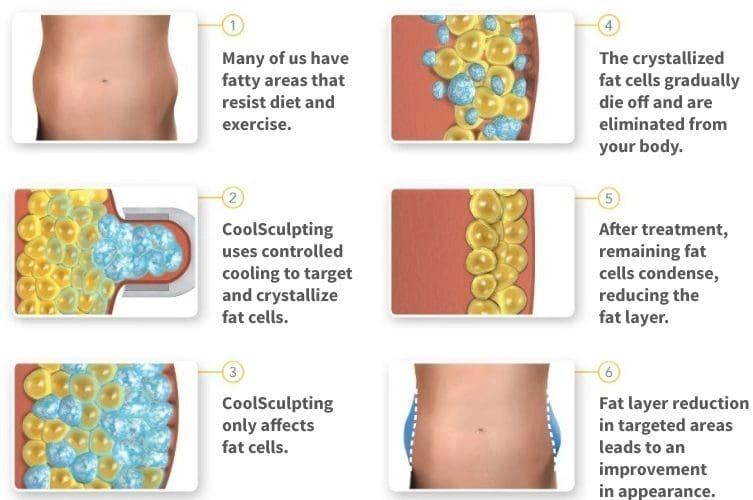
4. Cryolipolysis (Controlled Cooling Technology)
Cryolipolysis is a non-surgical technology that uses controlled cooling
to target selected fat cells. It became widely known as a non-invasive
approach for localized fat reduction.
This technology focuses primarily on fat-related concerns rather than
skin tightening or muscle development.
Important:
Fat reduction technologies and skin tightening technologies address different
aesthetic goals and should not be considered interchangeable.
5. Laser-Based Body Contouring Technologies
Laser-based aesthetic technologies use controlled light energy for selected
body contouring applications. Depending on the system design, laser approaches
may target different tissue responses.
As with all aesthetic technologies, clinical results depend on device
specifications, treatment protocols, patient characteristics, and professional
operation.
HIFU vs RF vs EMS vs Other Body Contouring Technologies
Technology
Main Target
Primary Purpose
Common Applications
HIFU
Deep tissue layers
Tissue remodeling and tightening
Skin tightening, lifting, body contouring
RF
Skin and connective tissue
Thermal collagen remodeling
Firmness improvement, skin quality
EMS
Muscle tissue
Muscle stimulation
Body sculpting and conditioning
Cryolipolysis
Fat cells
Localized fat reduction
Fat contouring
Laser
Targeted tissue response
Energy-based aesthetic treatment
Selected body contouring applications
HIFU vs RF vs EMS: What's the Difference?
HIFU, RF, and EMS are three commonly discussed technologies in modern
non-surgical body contouring. Although they are often grouped together,
each technology works through a different mechanism and is designed for
different aesthetic goals.
Understanding these differences helps clinics select suitable treatment
platforms and helps patients understand what results they can realistically
expect.
Feature
HIFU
RF
EMS
Energy Type
Focused ultrasound energy
Radio frequency electromagnetic energy
Electrical stimulation
Primary Target
Deep tissue layers
Skin and connective tissue
Muscle tissue
Main Purpose
Tissue remodeling and tightening
Collagen stimulation and firmness improvement
Muscle activation and conditioning
Common Applications
Lifting, tightening, body contouring
Skin quality improvement, tightening
Body sculpting and muscle definition
Adds Volume?
No
No
No
Changes Bone Structure?
No
No
No
How to Choose the Right Body Contouring Technology?
The best body contouring technology depends on the specific aesthetic
goal rather than the technology name alone. Different devices are designed
for different applications.
Treatment Goal
Potential Technology Category
Improve skin firmness
HIFU, RF, and other skin tightening technologies
Support muscle definition
EMS and muscle stimulation technologies
Address localized fat concerns
Fat reduction technologies based on individual assessment
Improve overall body contour
Combination treatment approaches
Professional assessment is essential because similar aesthetic concerns
may have different underlying causes. For example, a contour concern caused
by loose skin requires a different approach from one caused by reduced
volume or muscle definition.
Who Is a Good Candidate for Non-Surgical Body Contouring?
Non-surgical body contouring is generally considered for individuals who
want to improve specific areas of their body without undergoing traditional
surgical procedures.
Potential Candidates
Adults with stable body weight.
Individuals with realistic expectations.
People seeking improvement in body firmness or contour.
Patients interested in minimally invasive or non-invasive options.
Individuals who understand that results vary.
Situations Requiring Professional Evaluation
Significant weight changes planned in the future.
Medical conditions affecting treatment safety.
Unrealistic expectations of complete body transformation.
Need for surgical correction rather than non-invasive improvement.
Important:
Non-surgical body contouring is designed for aesthetic enhancement and
should not be considered a replacement for weight management or medically
necessary procedures.
Benefits and Limitations of Non-Surgical Body Contouring
Benefits
Limitations
Minimal downtime compared with surgery
Results may be gradual
Can target specific aesthetic concerns
Results vary between individuals
Multiple technologies available
Not suitable for every concern
Can be incorporated into aesthetic treatment plans
Does not replace surgical procedures when surgery is required
How Clinics Choose Body Contouring Equipment
For aesthetic clinics, selecting a body contouring system requires more
than comparing technology names. Equipment selection should consider clinical
applications, reliability, treatment versatility, and long-term business
value.
1. Treatment Applications
Clinics should first identify which services they want to provide, such
as skin tightening, body sculpting, muscle stimulation, or comprehensive
contouring programs.
2. Technology Combination
Many modern aesthetic platforms combine multiple technologies, allowing
clinics to provide broader treatment options from a single system.
3. Safety Features
Important considerations include energy control systems, treatment monitoring
features, cooling mechanisms, and operational safety.
4. Training and Support
Reliable technical training, maintenance support, and manufacturer cooperation
are important factors when choosing professional aesthetic equipment.
AI 360 HIFU: Advanced Body Contouring Technology for Professional Clinics
As body contouring continues to evolve, aesthetic clinics are increasingly
looking for multifunctional platforms that can address different treatment
goals while improving operational efficiency.
AI 360 HIFU represents a new generation of professional aesthetic technology
by integrating multiple energy-based approaches into one intelligent platform.
It combines HIFU, Radio Frequency (RF), and Electrical Muscle Stimulation
(EMS) technologies to support comprehensive aesthetic treatment programs.
Multi-Technology Integration
Different aesthetic concerns often require different treatment approaches.
By combining multiple technologies, multifunctional platforms allow clinics
to design more flexible treatment protocols according to individual needs.
Technology
Role in Treatment Programs
HIFU
Supports tissue remodeling and skin tightening applications
Supports muscle stimulation and conditioning programs
Designed for Professional Aesthetic Practices
For clinics and distributors, equipment selection involves evaluating
technology capability, treatment flexibility, reliability, and manufacturer
support.
A multifunctional body contouring system can help aesthetic practices
expand treatment offerings while providing solutions for different patient
goals.
Learn more about Cocoon Laser's professional body contouring solutions
and AI 360 HIFU technology for aesthetic clinics worldwide.
Explore Body Contouring Solutions
View AI 360 HIFU
Future Trends in Body Contouring Technology
The aesthetic industry continues to move toward safer, more personalized,
and multifunctional treatment solutions. Future body contouring technologies
are expected to focus on improved precision, better patient comfort, and
smarter treatment management.
1. Combination Technologies
Instead of relying on a single energy source, modern aesthetic platforms
increasingly combine multiple technologies to address different layers
of tissue and treatment objectives.
2. Personalized Treatment Protocols
As clinics collect more treatment data and improve patient assessment
methods, customized treatment planning is becoming increasingly important.
3. Improved User Experience
Patient comfort, intuitive operation, and efficient treatment workflows
are becoming important factors in professional aesthetic equipment development.
4. Growth of Non-Surgical Treatments
Demand for non-surgical aesthetic procedures continues to increase because
many patients prefer options with minimal downtime and gradual natural-looking
improvements.
Conclusion: Understanding Modern Body Contouring
Body contouring is a broad category of aesthetic treatments designed to
improve body appearance through targeted approaches such as skin tightening,
muscle stimulation, fat reduction, and tissue remodeling.
Non-surgical technologies including HIFU, RF, EMS, and other energy-based
systems provide different solutions depending on treatment goals. Understanding
the differences between these technologies helps clinics select appropriate
equipment and helps patients develop realistic expectations.
For aesthetic professionals, choosing the right body contouring platform
requires evaluating technology, safety features, treatment flexibility,
and manufacturer support.
As the industry continues to develop, multifunctional systems that combine
multiple technologies will play an increasingly important role in modern
aesthetic practices.
Frequently Asked Questions
What is body contouring?
Body contouring refers to aesthetic treatments designed to improve body
shape, firmness, and proportions by targeting concerns such as localized
fat, skin laxity, muscle definition, and tissue quality.
Is body contouring the same as weight loss?
No. Weight loss focuses on reducing overall body weight, while body contouring
focuses on refining specific areas and improving body appearance after
or alongside healthy lifestyle management.
What are the different types of body contouring treatments?
Body contouring treatments can include fat reduction, skin tightening,
muscle stimulation, and body sculpting approaches. Different technologies
are selected based on individual treatment goals.
What is non-surgical body contouring?
Non-surgical body contouring uses technologies such as HIFU, RF, EMS,
and other energy-based systems to improve body appearance without traditional
surgery.
How does HIFU work for body contouring?
HIFU uses focused ultrasound energy to create controlled thermal effects
in targeted tissue layers, supporting tissue remodeling and skin tightening
applications.
What is the difference between HIFU and RF body contouring?
HIFU uses focused ultrasound energy to target deeper tissue layers, while
RF uses electromagnetic energy to generate controlled heat and support
collagen-related skin improvements.
Can body contouring remove all body fat?
No. Body contouring is designed for targeted aesthetic improvement and
is not a replacement for weight loss or medical obesity treatment.
How long do body contouring results last?
Results vary depending on the technology used, individual factors, lifestyle,
and treatment goals. Maintaining a stable lifestyle may help support long-term
results.
Frequently Asked Questions
What is body contouring?
Body contouring refers to aesthetic treatments designed to improve body
shape, firmness, and proportions by targeting concerns such as localized
fat, skin laxity, muscle definition, and tissue quality.
Is body contouring the same as weight loss?
No. Weight loss focuses on reducing overall body weight, while body contouring
focuses on refining specific areas and improving body appearance after
or alongside healthy lifestyle management.
What are the different types of body contouring treatments?
Body contouring treatments can include fat reduction, skin tightening,
muscle stimulation, and body sculpting approaches. Different technologies
are selected based on individual treatment goals.
What is non-surgical body contouring?
Non-surgical body contouring uses technologies such as HIFU, RF, EMS,
and other energy-based systems to improve body appearance without traditional
surgery.
How does HIFU work for body contouring?
HIFU uses focused ultrasound energy to create controlled thermal effects
in targeted tissue layers, supporting tissue remodeling and skin tightening
applications.
What is the difference between HIFU and RF body contouring?
HIFU uses focused ultrasound energy to target deeper tissue layers, while
RF uses electromagnetic energy to generate controlled heat and support
collagen-related skin improvements.
Can body contouring remove all body fat?
No. Body contouring is designed for targeted aesthetic improvement and
is not a replacement for weight loss or medical obesity treatment.
How long do body contouring results last?
Results vary depending on the technology used, individual factors, lifestyle,
and treatment goals. Maintaining a stable lifestyle may help support long-term
results.
References
American Society of Plastic Surgeons (ASPS). Body contouring and aesthetic
surgery resources.
U.S. Food & Drug Administration (FDA). Information about aesthetic devices
and non-invasive body contouring technologies.
American Academy of Dermatology (AAD). Cosmetic dermatology and skin health
resources.
Scientific literature discussing ultrasound, radio frequency, electrical
stimulation, and energy-based aesthetic technologies.
Cocoon Laser develops professional aesthetic equipment for clinics, distributors,
and OEM partners worldwide. Our body contouring solutions integrate advanced
technologies designed for modern aesthetic practices.