Hip dips are a natural variation in body shape that appear as an inward
curve between the hips and upper thighs. Although they have become widely
discussed on social media, hip dips are not a medical problem or a sign
of poor fitness. They are mainly influenced by anatomy, muscle attachment,
and fat distribution.
Understanding what causes hip dips can help individuals develop realistic
expectations about exercise, body contouring treatments, and aesthetic
procedures.
This article is intended for educational purposes only. Hip dips are a
normal anatomical variation and are not considered a medical condition.
Any aesthetic treatment should be discussed with a qualified healthcare
professional based on individual anatomy and treatment goals.
What Are Hip Dips?
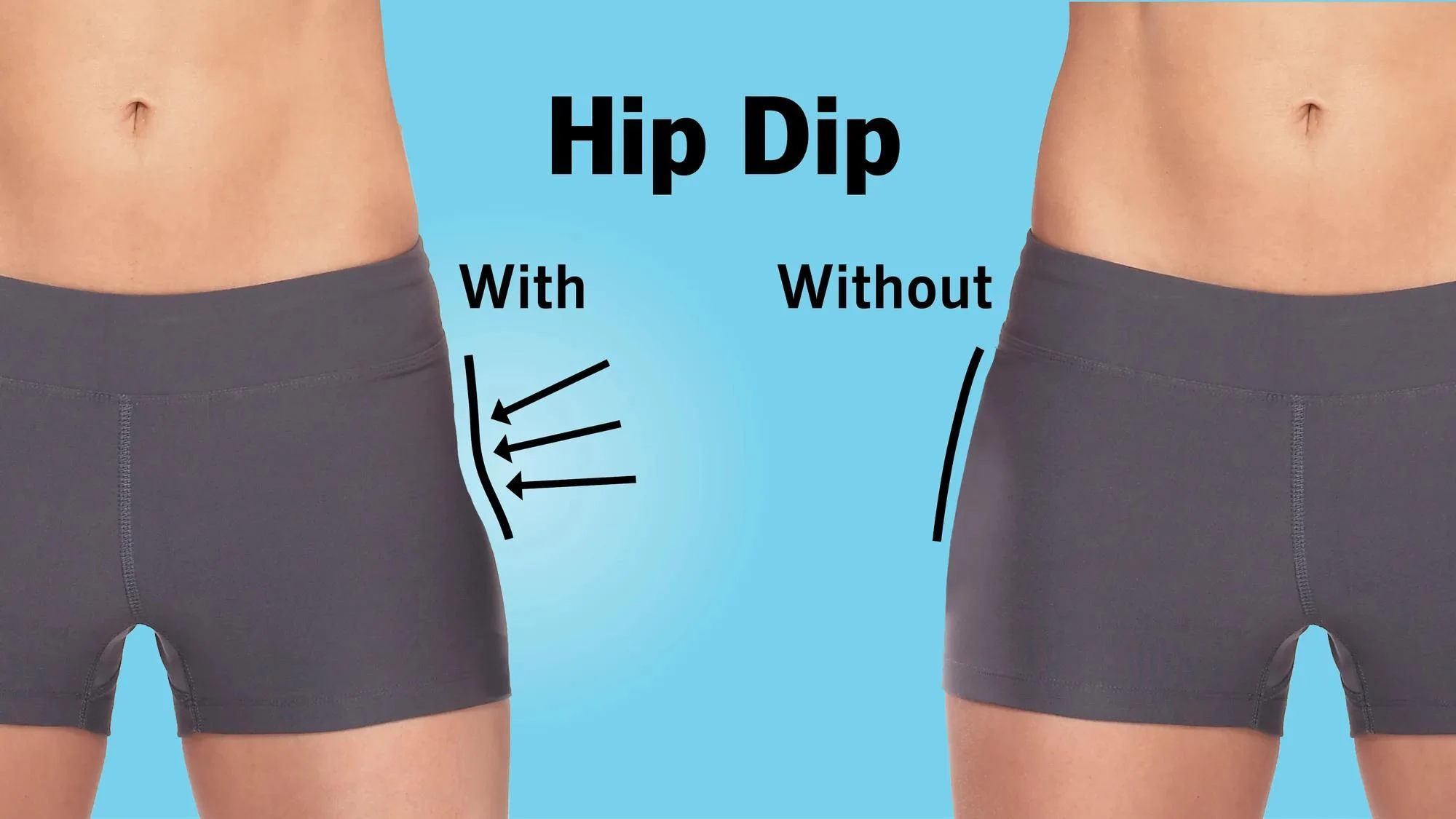
Hip dips refer to the natural inward indentation that appears on the outer
area of the hips, usually between the hip bone and the upper thigh. They
are sometimes called “violin hips” because the contour resembles the curved
shape of a violin.
The appearance of hip dips varies significantly between individuals. Some
people have a more visible indentation, while others have a smoother transition
from the waist to the thighs.
From a medical perspective, hip dips are considered a normal anatomical
variation. They do not indicate an unhealthy body shape, excessive weight,
or insufficient exercise.
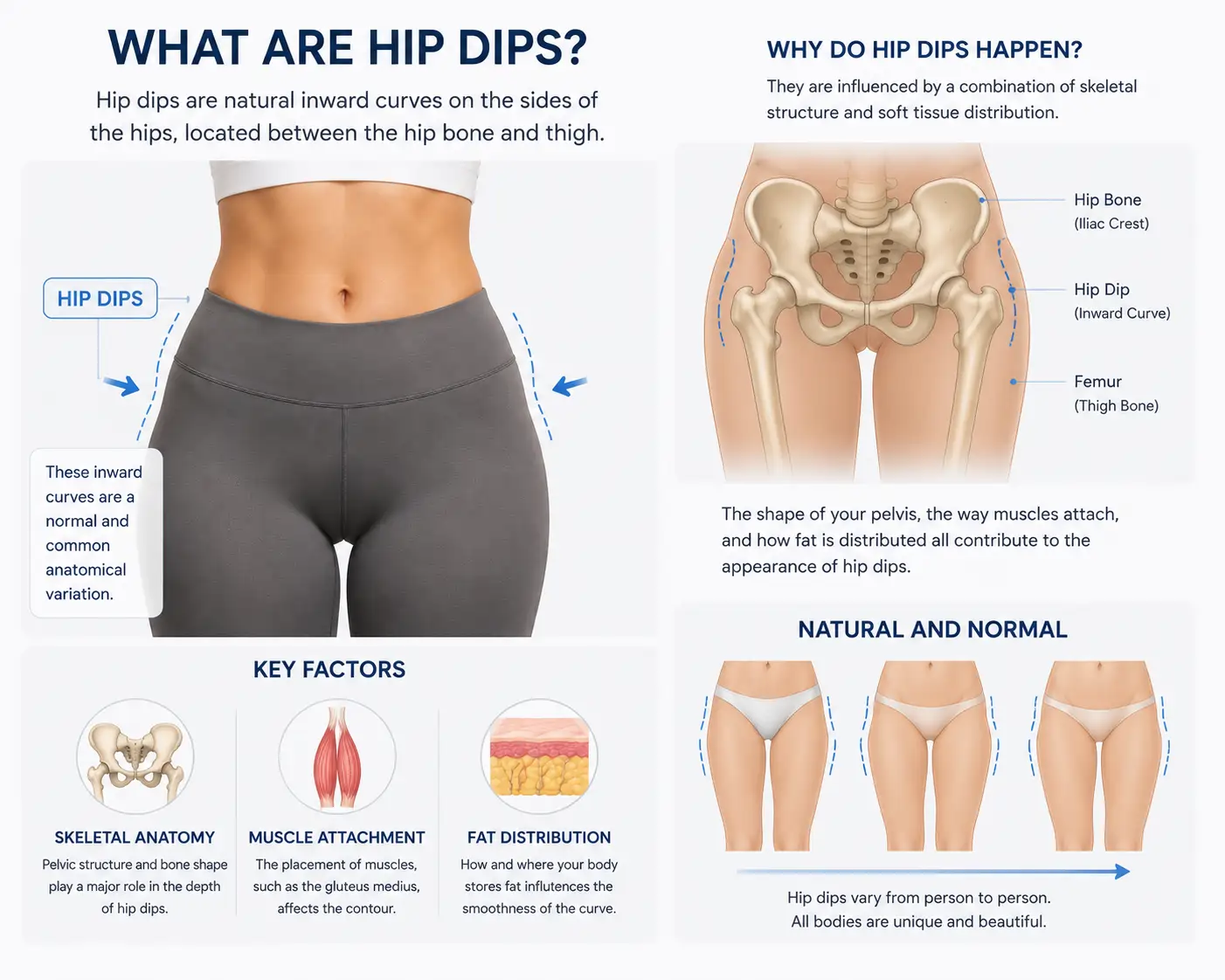
Hip dips are natural inward curves between the hips and thighs influenced
by skeletal anatomy and soft tissue distribution.
Hip Dips Anatomy: Why Do They Appear?
The appearance of hip dips is not caused by a single factor. Instead,
several anatomical structures work together to create the external shape
of the hips.
Pelvic Structure
The pelvis forms the foundation of the body’s lower contour. Differences
in pelvic width, hip bone shape, and femur position can influence whether
hip dips appear more noticeable.
Muscle Attachment
The gluteal muscles attach to different areas around the pelvis and femur.
These attachment points affect how muscles create the outer contour of
the hips.
Fat Distribution
Subcutaneous fat distribution differs naturally between individuals. More
or less soft tissue around the hips can influence whether the underlying
anatomical shape becomes visible.
Genetic Factors
Genetics influence skeletal proportions, muscle shape, and body composition.
This is why hip shape varies greatly among people, even those with similar
body weight and fitness levels.
Are Hip Dips Normal?
Yes. Hip dips are completely normal and are present in many healthy individuals.
They are simply one of many variations in human body shape.
Social media often presents certain body shapes as ideal, which can create
unrealistic expectations. However, there is no medical definition of a
“perfect” hip contour.
Important:
Hip dips are not a condition that requires correction. Any decision to
pursue aesthetic treatment should be based on personal preference rather
than medical necessity.
Hip Dips vs No Hip Dips: What’s the Difference?
One of the most common questions about hip dips is whether people who
have them have a different body structure compared with people who appear
to have smoother hip contours.
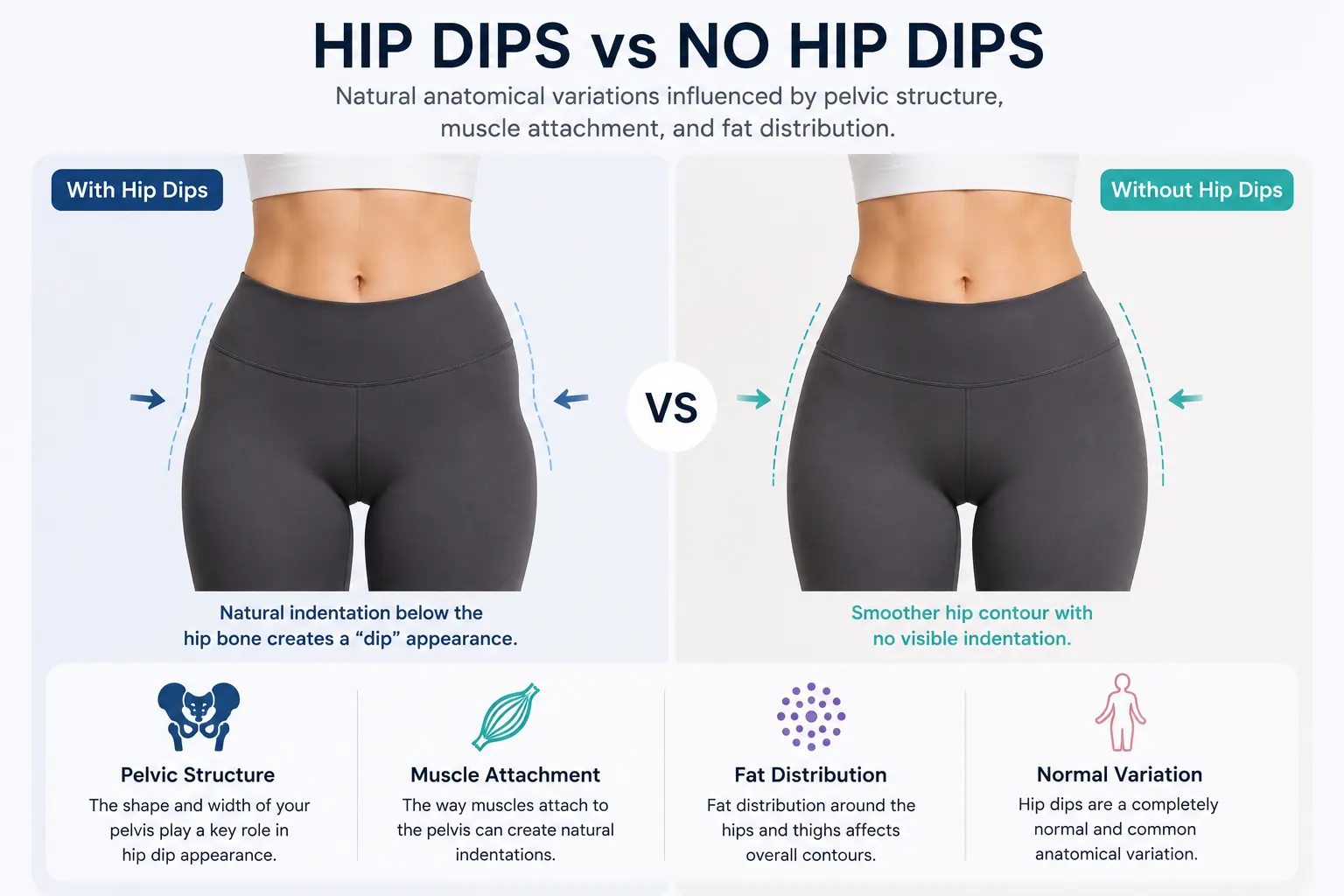
The answer is that both shapes are normal. The difference mainly comes
from how bones, muscles, and soft tissues create the external silhouette
of the hips.
Hip dips and smoother hip contours are both normal body variations influenced
by anatomy, muscle structure, and fat distribution.
Hip Dips
Smooth Hip Contours
Visible inward curve between the hip and upper thigh
More continuous outer hip line
Underlying pelvic structure may be more noticeable
Soft tissue may create a smoother transition
Common in many healthy individuals
Also common in many healthy individuals
Not related to poor fitness or health
Not a measure of physical condition
Neither appearance is considered better from a medical perspective. Body
contour differences are simply part of natural human variation.
Common Myths About Hip Dips
Because hip dips have become widely discussed online, many misconceptions
have developed around their causes and treatment.
Understanding the difference between appearance-related concerns and medical
facts can help individuals make more informed decisions.
Myth
Fact
Hip dips mean someone is unhealthy.
Hip dips are a normal anatomical variation and do not indicate poor health.
Only people with low body fitness have hip dips.
Hip dips can appear in individuals with different body shapes and fitness
levels.
Exercise can completely remove hip dips.
Exercise can improve muscle definition but cannot change skeletal structure.
Hip dips are caused by excess fat.
Hip shape depends on multiple factors including bones, muscles, and fat
distribution.
Everyone needs hip dip correction.
Treatment is a personal aesthetic choice, not a medical requirement.
Hip Dips vs Love Handles: What’s the Difference?
Hip dips and love handles are often confused because both affect the appearance
of the waist and hip area. However, they are caused by completely different
factors.
Hip dips are mainly related to anatomy, while love handles usually refer
to areas of localized fat accumulation around the waist and sides.
Feature
Hip Dips
Love Handles
Primary Cause
Bone structure, muscle attachment, soft tissue distribution
Localized fat accumulation
Location
Outer hip area between pelvis and thigh
Waist and side abdominal area
Can Weight Loss Remove It?
Usually no, because anatomy remains unchanged
May reduce with overall fat loss
Treatment Goal
Improve contour balance
Reduce localized fat or improve body shape
Understanding this difference is important because the treatment approach
for improving skin firmness, reducing fat, or adding volume can be completely
different.
Can Exercise Change Hip Dips?
Exercise is one of the most common approaches people consider when trying
to improve the appearance of hip dips. Strength training can influence
muscle size, tone, and overall body composition, but it cannot change the
underlying skeletal structure that contributes to hip dips.
Building the gluteal muscles, especially the gluteus maximus and gluteus
medius, may create a fuller appearance around the hips. However, the natural
indentation caused by pelvic anatomy may still remain.
What Exercise Can Improve
Glute muscle strength and definition.
Overall lower-body muscle balance.
Body composition and fitness level.
The appearance of surrounding hip contours.
What Exercise Cannot Change
Pelvic bone shape.
Femur position and skeletal alignment.
Genetic fat distribution patterns.
Natural anatomical variations.
Key Point:
Exercise can improve the surrounding structures of the hips, but hip dips
themselves are not a problem that requires correction.
How Do Body Contouring Treatments Relate to Hip Dips?
Body contouring treatments are designed to improve specific aesthetic
concerns such as skin laxity, localized fat, muscle definition, or soft
tissue volume. Because hip dips are mainly influenced by anatomy, the most
appropriate approach depends on what aspect of the contour an individual
wants to improve.
A professional assessment should first determine whether the concern is
related to:
Loss of skin firmness.
Insufficient soft tissue volume.
Muscle definition.
Localized fat distribution.
A combination of multiple factors.
Volume-Related Concerns
When the primary concern is a lack of soft tissue volume, procedures that
add volume may be considered by qualified medical professionals. Examples
may include injectable treatments or surgical fat transfer depending on
patient suitability.
Skin Firmness Concerns
When the concern involves skin laxity or reduced firmness, energy-based
technologies such as radio frequency or focused ultrasound may be considered
as part of a broader skin tightening strategy.
Muscle Definition Concerns
For individuals seeking improved muscle appearance, strength training
and muscle stimulation technologies may support muscle conditioning goals.
What Can HIFU, RF, and EMS Do for Hip Contours?
Energy-based aesthetic technologies have become increasingly popular in
body contouring. However, each technology works through a different mechanism
and addresses different aesthetic goals.
Understanding their limitations is important because no non-invasive technology
can change bone structure or completely eliminate natural anatomical variations.
Technology
Potential Applications
Limitations
HIFU
Skin tightening, tissue remodeling, selected body contouring applications
Does not add volume or reshape pelvic anatomy
Radio Frequency (RF)
Collagen stimulation, skin firmness improvement
Does not directly fill anatomical depressions
EMS
Muscle stimulation and conditioning support
Does not change bone structure or fat distribution
HIFU Technology
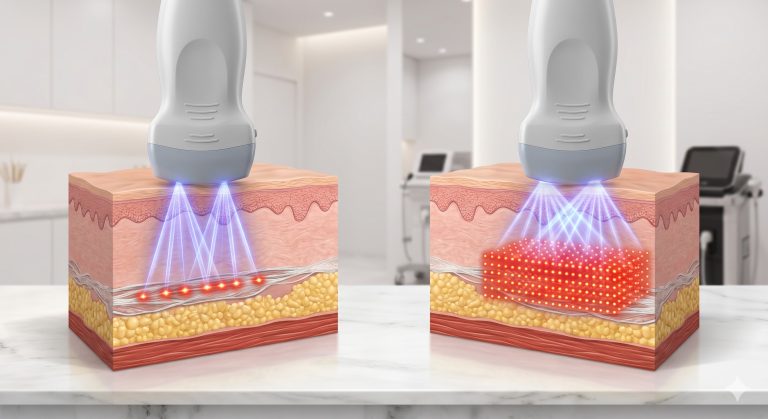
High-Intensity Focused Ultrasound (HIFU) uses focused ultrasound energy
to create controlled thermal effects in targeted tissue layers. In aesthetic
applications, it is commonly associated with skin tightening and tissue
remodeling.
For hip contour concerns, HIFU may support improvements related to skin
firmness but does not function as a volume replacement treatment.
Radio Frequency Technology
Radio Frequency (RF) technology uses controlled electromagnetic energy
to generate heat within targeted tissues. Depending on the device and application,
RF may support collagen remodeling and skin tightening.
RF is not designed to recreate missing volume in areas affected by skeletal
anatomy.
EMS Technology
Electrical Muscle Stimulation (EMS) creates controlled muscle contractions
and may be incorporated into body conditioning programs.
EMS may support muscle definition but cannot modify the underlying structure
responsible for hip dips.
Hip Dip Treatment Options Comparison
Because hip dips are influenced by multiple anatomical factors, different
treatments address different concerns. The most appropriate option depends
on whether the goal is improving muscle definition, increasing volume,
tightening skin, or enhancing overall body contour.
Treatment
Primary Goal
How It May Help
Main Limitation
Exercise & Strength Training
Muscle development
May improve glute shape and overall lower-body definition
Cannot change pelvic structure
Dermal Fillers
Soft tissue volume enhancement
May improve contour irregularities through added volume
Requires qualified medical injection providers
Fat Transfer
Natural volume enhancement
Uses transferred fat to increase soft tissue volume
Surgical procedure with recovery requirements
HIFU
Skin tightening and tissue remodeling
May support firmness and contour improvement
Does not replace lost volume
Radio Frequency (RF)
Skin quality improvement
Supports collagen remodeling and firmness
Cannot directly correct skeletal contours
EMS
Muscle stimulation
Supports muscle conditioning
Cannot alter anatomy or fat distribution
Who Is a Good Candidate for Hip Dip Improvement?
Not everyone who has hip dips needs or benefits from treatment. Since
hip dips are a normal body variation, the decision to pursue aesthetic
improvement should be based on personal preference and realistic expectations.
People with realistic expectations about possible results.
Individuals who understand that anatomy cannot be completely changed.
Patients willing to follow professional treatment recommendations.
Individuals Who May Need Additional Evaluation
People with unrealistic expectations of completely eliminating hip dips.
Individuals with active infections or untreated skin conditions.
Patients with medical conditions affecting treatment safety.
Individuals considering invasive procedures without understanding risks
and recovery.
Clinical Approach:
A qualified professional should first identify whether the concern is
related to volume, skin laxity, muscle definition, or natural anatomy before
recommending any treatment.
Risks and Limitations of Hip Dip Treatments
Every aesthetic procedure has potential benefits and limitations. Understanding
these factors helps individuals make informed decisions.
Non-Invasive Treatments
Energy-based technologies such as HIFU, RF, and EMS are generally associated
with minimal downtime, but possible temporary effects may include redness,
swelling, discomfort, or sensitivity depending on the technology used.
Injectable Treatments
Injectable procedures may provide volume enhancement but involve medical
risks including bruising, swelling, infection, asymmetry, and other complications.
Proper patient selection and professional technique are essential.
Surgical Procedures
Surgical options such as fat transfer involve greater changes to body
contour but also require consideration of anesthesia, recovery time, postoperative
care, and potential surgical risks.
Long-Term Expectations
No treatment permanently changes the underlying pelvic anatomy responsible
for hip dips. Results may change over time due to aging, weight fluctuations,
lifestyle factors, and natural tissue changes.
How to Choose the Right Hip Dip Improvement Approach?
The most suitable approach depends on understanding the actual cause of
the visible contour rather than focusing only on the appearance itself.
Main Concern
Possible Approach
Need for more volume
Professional evaluation of volume-enhancing procedures
Loose or less firm skin
Energy-based skin tightening technologies
Limited muscle definition
Strength training or EMS-assisted conditioning
Multiple concerns combined
Individualized treatment planning
A comprehensive consultation allows professionals to determine whether
treatment is appropriate and which technology or procedure best matches
the individual’s goals.
Conclusion
Hip dips are a normal variation in human anatomy caused by differences
in pelvic structure, muscle attachment, and soft tissue distribution. They
are not a medical problem and do not need to be corrected unless an individual
personally desires aesthetic improvement.
Exercise can improve muscle development and overall body shape, but it
cannot change skeletal anatomy. For individuals interested in aesthetic
contour improvement, different treatments address different concerns, including
volume enhancement, skin tightening, and muscle conditioning.
Technologies such as HIFU, RF, and EMS may play a role in modern body
contouring strategies, but they should be selected according to realistic
treatment goals and professional assessment.
The best approach is not to eliminate a natural body feature, but to understand
individual anatomy and choose safe, evidence-informed options that support
personal aesthetic goals.
Frequently Asked Questions
Are hip dips normal?
Yes. Hip dips are a completely normal anatomical variation caused by differences
in pelvic structure, muscle attachment, and fat distribution. They are
not a medical condition and do not indicate poor health or fitness.
Why do I have hip dips?
Hip dips occur because of natural differences in body anatomy. Factors
including pelvic shape, femur position, muscle structure, genetics, and
soft tissue distribution influence how the outer hip contour appears.
Can exercise remove hip dips?
No. Exercise cannot completely remove hip dips because it cannot change
bone structure. However, strength training may improve surrounding muscle
development and create a different overall body contour.
Are hip dips caused by being overweight?
No. Hip dips are not caused by excess weight. They can appear in individuals
with different body shapes, body weights, and fitness levels.
Can HIFU fix hip dips?
HIFU does not fill hip dips or change pelvic anatomy. It may support skin
tightening and tissue remodeling in selected body contouring applications,
but it is not a replacement for volume-enhancing procedures.
What treatment can improve the appearance of hip dips?
The appropriate approach depends on the individual’s anatomy and goals.
Options may include exercise, volume-enhancing procedures, skin tightening
technologies, or muscle conditioning methods depending on the specific
concern.
Do hip dips become more visible after losing weight?
In some individuals, weight loss may make hip dips appear more noticeable
because reduced soft tissue coverage can reveal underlying anatomical contours
more clearly.