The Ultimate Clinic Guide to CO2 Star vs CO2 4D Fractional Laser: Efficacy, Wavelengths, and ROI
The Clinical Crossroads: Choosing Between CO2 Star and CO2 4D Fractional Laser Systems
For clinic owners and medical aesthetic directors, the decision between a traditional CO2 Star fractional laser and a CO2 4D fractional laser system is not merely a hardware choice—it is a strategic clinical and financial fork in the road. While both devices operate on the fundamental principle of ablative fractional photothermolysis using a 10,600nm wavelength, their pulse delivery architectures, energy density (fluence) profiles, and thermal damage zones differ substantially. This directly impacts patient downtime, complication rates (post-inflammatory hyperpigmentation/PIH), and the number of sessions required to achieve a given clinical endpoint. Failing to understand these nuances can lead to suboptimal outcomes for Fitzpatrick Skin Types III-VI and a lower return on investment (ROI) per treatment room hour.
Physical Mechanism Deep Dive: 10,600nm Ablation vs Micro-Thermal Zones
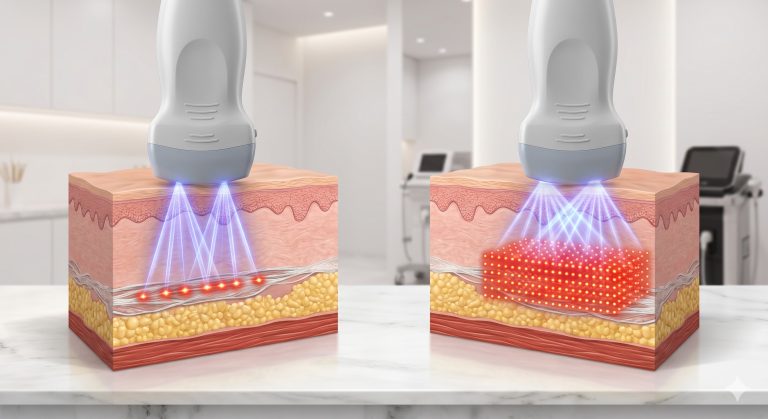
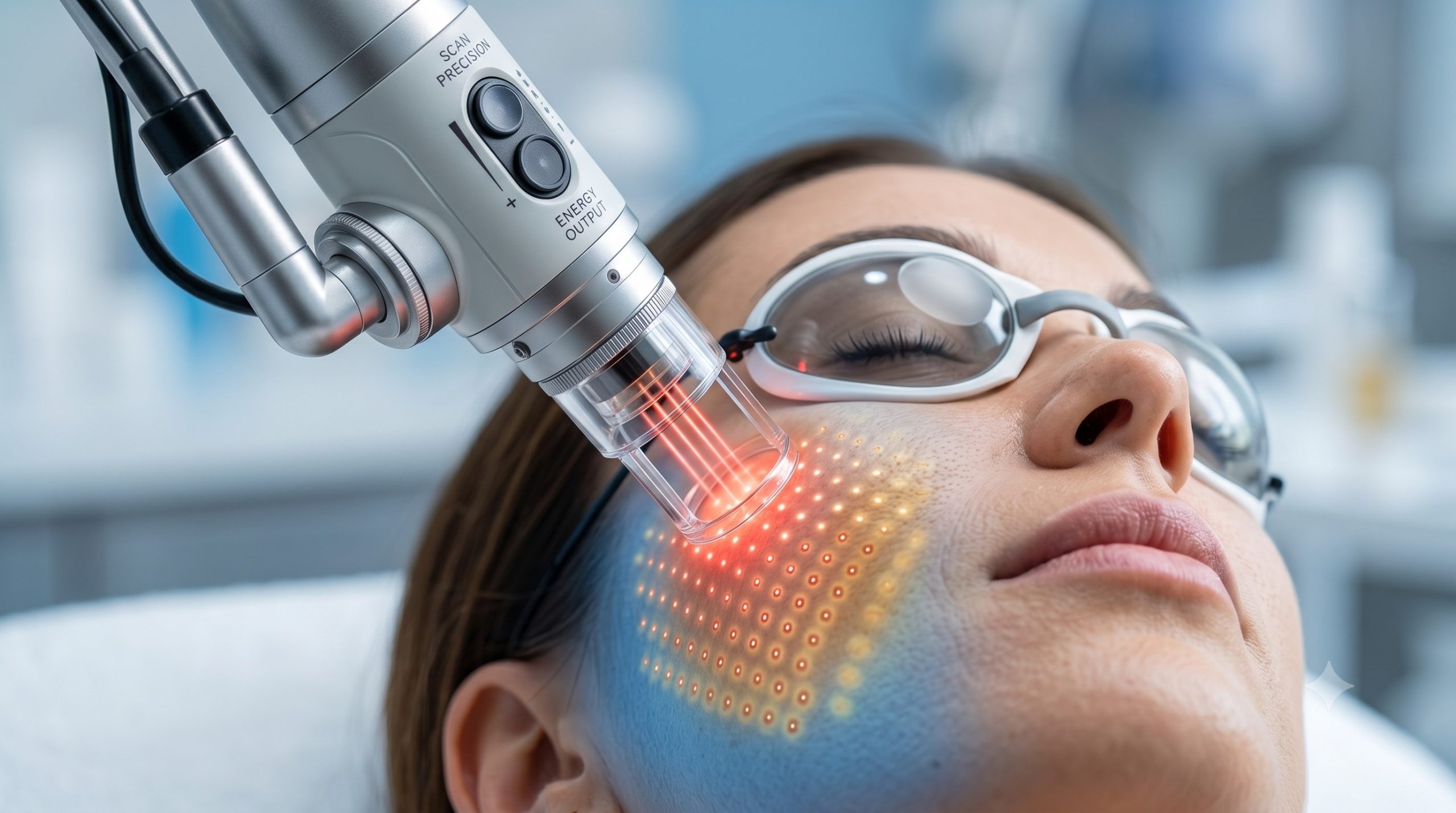
Both platforms leverage the peak water absorption coefficient of the 10,600nm wavelength, which is approximately 10,000 cm⁻¹ in dermal tissue. However, the delivery mechanism creates distinct micro-thermal zones (MTZs). A conventional CO2 Star laser typically delivers a high-fluence, short-pulse (50-100µs) ablation with a wider residual thermal damage zone (RTD) of 80-120µm. In contrast, a modern CO2 4D fractional laser utilizes a “stacked pulse” or “quasi-continuous” wave technology, creating a deeper but narrower MTZ. This allows for epidermal preservation bridges as small as 150µm, accelerating re-epithelialization. Key clinical metrics to evaluate include spot size (typically 120µm to 500µm for fractional patterns), pattern density (5%-20% coverage per pass), and pulse energy (10-150 mJ/MTZ). Systems with Medical CE certification and ISO 13485 manufacturing compliance guarantee these parameters are reproducible.
Comparative Output Metrics Table
| Key Parameter | CO2 Star (Traditional Ablative) | CO2 4D Fractional Laser |
|---|---|---|
| Wavelength | 10,600nm (CO2) | 10,600nm (CO2) |
| Pulse Architecture | Single high-fluence pulse (50-100µs) | Stacked / quasi-CW pulse train (200-500µs) |
| Typical MTZ Diameter | 150-300µm | 120-250µm |
| Typical Residual Thermal Damage (RTD) | 80-120µm | 50-80µm |
| Maximum Fluence per MTZ | 100-200 mJ | 40-120 mJ |
| Pattern Density per Pass | 10-20% coverage | 5-15% coverage |
| Indication Best Suited | Deep scars, rhinophyma, high-grade rhytids | Acne scars, photodamage, skin laxity, mixed Fitzpatrick III-V |
| Typical Social Downtime | 7-14 days | 3-7 days |
| FDA / CE Compliance | 510(k), Medical CE Class IIb | 510(k), Medical CE Class III (often) |
| Handpiece Shot Lifetime | ~5-8 million pulses | >10 million pulses (sealed tube) |
Selecting the Optimal Platform Based on Indication and Fitzpatrick Scale
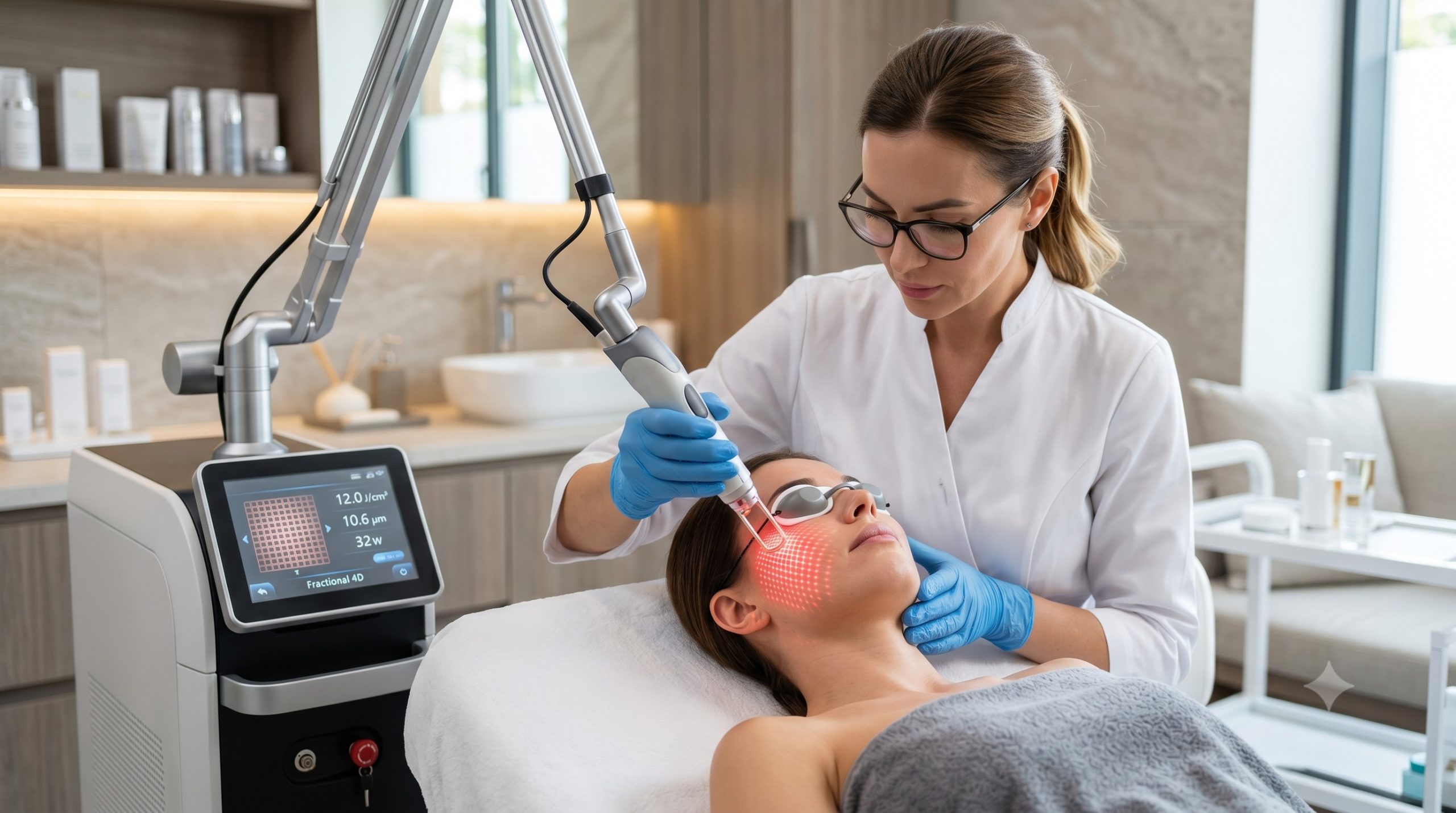
The primary clinical advantage of the CO2 4D fractional laser emerges when treating moderate to severe rhytids, atrophic acne scars, and photodamage on patients with Fitzpatrick Skin Types III-V. The lower effective fluence per MTZ (typically 40-80 mJ versus 100-150 mJ for aggressive CO2 Star ablation) significantly reduces the risk of prolonged erythema and PIH. For deep surgical scars, severe solar elastosis, or rhinophyma, a high-energy CO2 Star with a continuous scanning ablative mode may still be preferred. However, from a clinic workflow perspective, the CO2 4D system enables a “lunchtime” protocol with 3-5 days of social downtime versus 7-14 days for full-field ablation.
Clinic ROI, Safety Compliance, and Long-Term Verdict
When calculating CapEx vs OpEx, the initial acquisition cost for a premium CO2 4D fractional laser (with features like a sealed RF metal tube for gas lifetime and active beam homogenization) is typically 30-40% higher than entry-level CO2 Star systems. However, the higher patient throughput (3-4 treatments per hour vs 1-2 treatments per hour) and premium pricing for “minimal downtime fractional resurfacing” (often $1,200-$2,000 per session vs $800-$1,500 for aggressive CO2 Star) result in a faster break-even point—often under 8-10 months in high-volume medical spas. Furthermore, ensure any device under consideration includes FDA 510(k) clearance or Medical CE marking (Class IIb or III), verified laser safety class 4 enclosure, and validated handpiece durability (e.g., >10 million shots per tube). The future of clinical aesthetic practice leans heavily toward customizable fractional systems that balance efficacy with patient safety and minimal downtime. Consequently, for 85% of mixed-race and aging skin clinics, the CO2 4D fractional laser platform offers the superior risk-adjusted ROI and clinical versatility.