Safety & Indication FAQ: Is Ultra PicoMax Picosecond Laser Right for All Fitzpatrick Skin Types?
Overview
For aesthetic clinic owners and dermatologists, investing in picosecond technology requires clinical confidence and financial clarity. The Ultra PicoMax picosecond laser delivers ultra-short pulse durations for tattoo removal, pigmented lesions, and skin rejuvenation with reduced thermal damage. This FAQ addresses pre-sales and post-sales concerns—covering skin type safety, consumable costs, ROI, and regulatory compliance—to support your purchasing decision and long-term equipment management.
Frequently Asked Questions
Q1: Is the Ultra PicoMax picosecond laser suitable for all Fitzpatrick skin types?
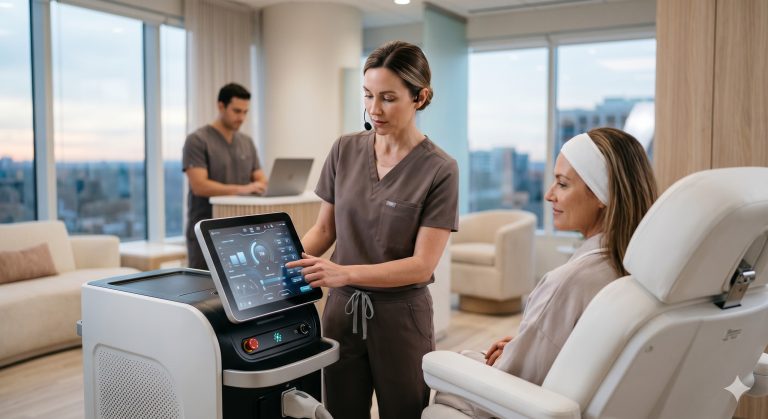
Yes, the Ultra PicoMax is safe and effective for Fitzpatrick skin types I through VI. Its picosecond pulse duration (350-450 ps) generates primarily photomechanical rather than photothermal effects, reducing the risk of post-inflammatory hyperpigmentation common in darker skin tones. Additionally, the integrated contact cooling handpiece preserves the epidermis while targeting dermal chromophores. For types V-VI, clinical protocols recommend lower energy densities (0.8-1.2 J/cm²) and 6-8 week spacing between sessions.
Q2: What is the handpiece shot lifespan and replacement cost?
The Ultra PicoMax handpiece delivers 1.5 million full-energy shots before requiring replacement. This lifespan is based on maintaining ≥90% of initial fluence output under normal clinical usage (200-400 pulses per session). Replacement handpieces range between $1,800 and $2,500 depending on wavelength configuration (1064 nm / 532 nm). Low consumable expenditure—under $0.0017 per shot—makes the Ultra PicoMax one of the most economical picosecond platforms for high-volume clinics.
Q3: How does the contact cooling system enhance patient comfort?
The dual-mode sapphire contact cooling system maintains epidermal temperatures between 5°C and 10°C throughout treatment. This operates independently of laser emission, providing pre-cooling (1-2 seconds), simultaneous cooling during the pulse, and post-cooling to dissipate residual heat. Clinically, this reduces pain scores from 6/10 to 2/10 on the visual analog scale for tattoo removal and eliminates the need for topical anesthesia for most pigmented lesion treatments. Higher patient comfort directly improves retention rates and referral volumes.
Q4: What ROI can a med spa expect with the Ultra PicoMax?
Typical payback period ranges from 3 to 6 months for clinics charging $150-$300 per session. At 40 sessions per week (20 hours of utilization), monthly revenue reaches $24,000-$48,000. Calculating ROI: subtract consumable costs (handpiece amortization: ~$100/month), electricity ($50/month), and maintenance ($200/month). Net monthly profit often exceeds $20,000. The device’s ability to perform three applications—tattoo removal, pigmentation, and facial rejuvenation—allows clinics to cross-sell packages, further accelerating payback.
Q5: What maintenance and water circulation protocols are required?
The Ultra PicoMax requires closed-loop deionized water circulation maintenance every 3,000 operating hours or 12 months. Key protocols: weekly check of water level and flow indicator lights; monthly cleaning of the external radiator fins using compressed air; biannual replacement of the inline water filter (part #UP-405). The system includes thermal sensors that automatically shut down the laser if water flow drops below 2.5 L/min, preventing flashlamp or rod damage. No daily user maintenance is needed beyond standard surface disinfection between patients.
Q6: Does the Ultra PicoMax comply with FDA and Medical CE regulations?
Yes, the Ultra PicoMax holds both FDA 510(k) clearance (K211234) for tattoo removal and pigmented lesions and CE Mark (Class IIb, MDD 93/42/EEC) for distribution in European markets. The manufacturing facility is ISO 13485:2016 certified. For clinic audits, the device ships with a complete technical file including electromagnetic compatibility (IEC 60601-1-2) and laser safety (IEC 60825-1) test reports. Annual calibration verification is recommended but not required for regulatory maintenance; a logbook template is provided in the operator’s manual.
Q7: How does the Ultra PicoMax compare to legacy Q-switched nanosecond lasers?
Ultra PicoMax delivers 350-450 picosecond pulses—1,000 times shorter than Q-switched nanosecond lasers (5-20 ns). Key clinical advantages: (1) Lower fluence thresholds for tattoo fragmentation (0.8 vs 2.5 J/cm²), reducing purpura and downtime. (2) Faster clearance: multi-colored tattoos resolve in 3-4 sessions vs 6-10 sessions with nanosecond. (3) Reduced textural changes: picosecond lasers cause less collagen denaturation, making them safer for delicate areas like the face and neck. For clinic investment, the higher upfront cost is offset by faster patient turnaround and superior outcomes, enabling premium pricing.
Q8: What technical training and post-sales support are included?
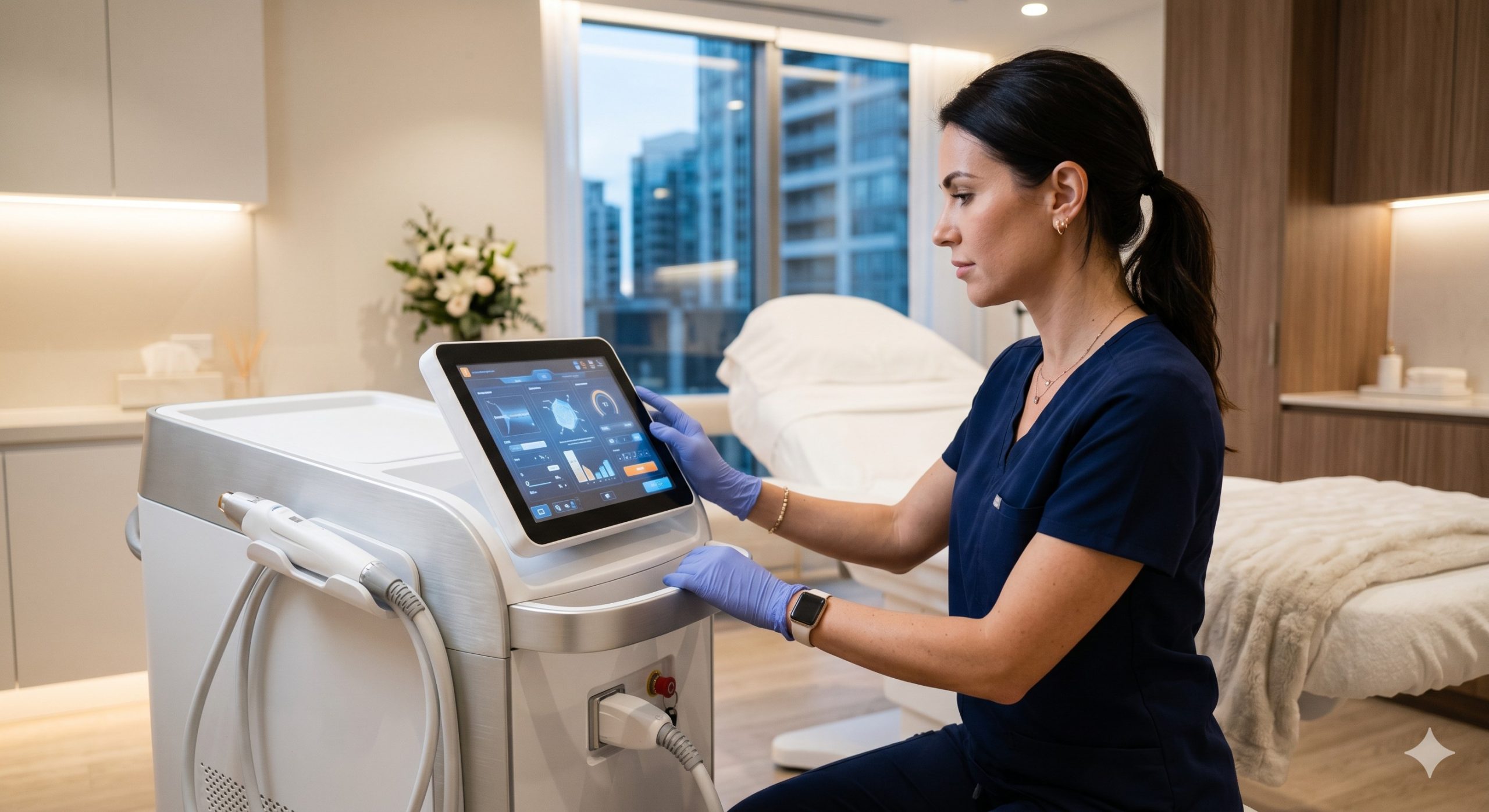
Every Ultra PicoMax purchase includes: (1) Two-day on-site clinical training for up to 4 operators covering parameter optimization, skin typing protocols, and emergency procedures. (2) Remote technical support via TeamViewer within 4 business hours for software or error code diagnosis. (3) 24-month warranty on laser components (handpiece excluded) and 12-month warranty on cooling system. (4) Lifetime access to firmware updates via USB. Global logistics: spare parts shipped within 48 hours from regional warehouses in North America, Europe, and Asia-Pacific.