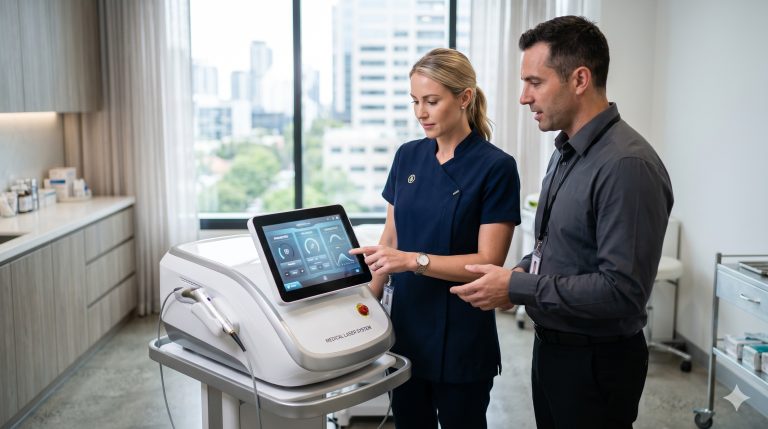
Painless Aesthetic Treatments: How the Picosecond Cooling System Works
Overview
For B2B aesthetic clinics and dermatologists, patient comfort during tattoo removal is a primary factor influencing treatment adherence, satisfaction, and clinic profitability. The central question of whether picosecond laser tattoo removal hurts more than getting a tattoo requires a definitive, evidence-based answer. This FAQ consolidates clinical data and operational insights to guide procurement decisions, establish accurate patient expectations, and optimize clinical protocols for the modern aesthetic practice. Clinical research overwhelmingly demonstrates that advanced picosecond lasers cause significantly less pain than traditional Q-switched nanosecond lasers and typically involve a lower pain threshold than the initial tattoo application process, primarily due to the photomechanical action and integrated cooling technologies.
Frequently Asked Questions
Q1: Does picosecond tattoo removal hurt more than getting the original tattoo?
No, clinical studies indicate that picosecond tattoo removal is generally less painful than getting the tattoo itself. Pain is a key secondary endpoint in comparative studies, where the Visual Analogue Scale (VAS) is used to measure patient discomfort. In a prospective split-study, subjects reported a mean pain score of 4.9 for a 1064nm picosecond laser compared to 5.8 for a nanosecond laser, both significantly lower than what is typically associated with the tattooing process, which can cause prolonged localized pain due to repeated needle insertion . Patients typically describe the sensation as a mild burning or pinprick feeling, akin to a hot elastic band snapping against the skin, which resolves quickly .
Q2: What makes picosecond lasers less painful than nanosecond lasers?
Picosecond lasers are less painful due to their ultra-short pulse durations and predominantly photomechanical mechanism of action. While nanosecond lasers destroy ink particles primarily through intense heat (photothermal effect), picosecond pulses (measured in trillionths of a second) generate a powerful photoacoustic shockwave that shatters ink into smaller fragments with minimal collateral heat damage to surrounding tissue . This significantly reduces thermal pain and the incidence of severe post-treatment side effects like blistering and burning, which are statistically less pronounced with picosecond technology .
Q3: How do advanced cooling systems enhance patient comfort during treatment?
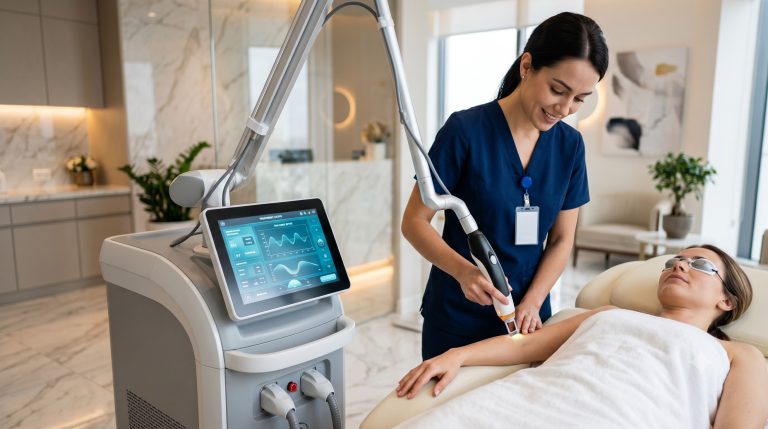
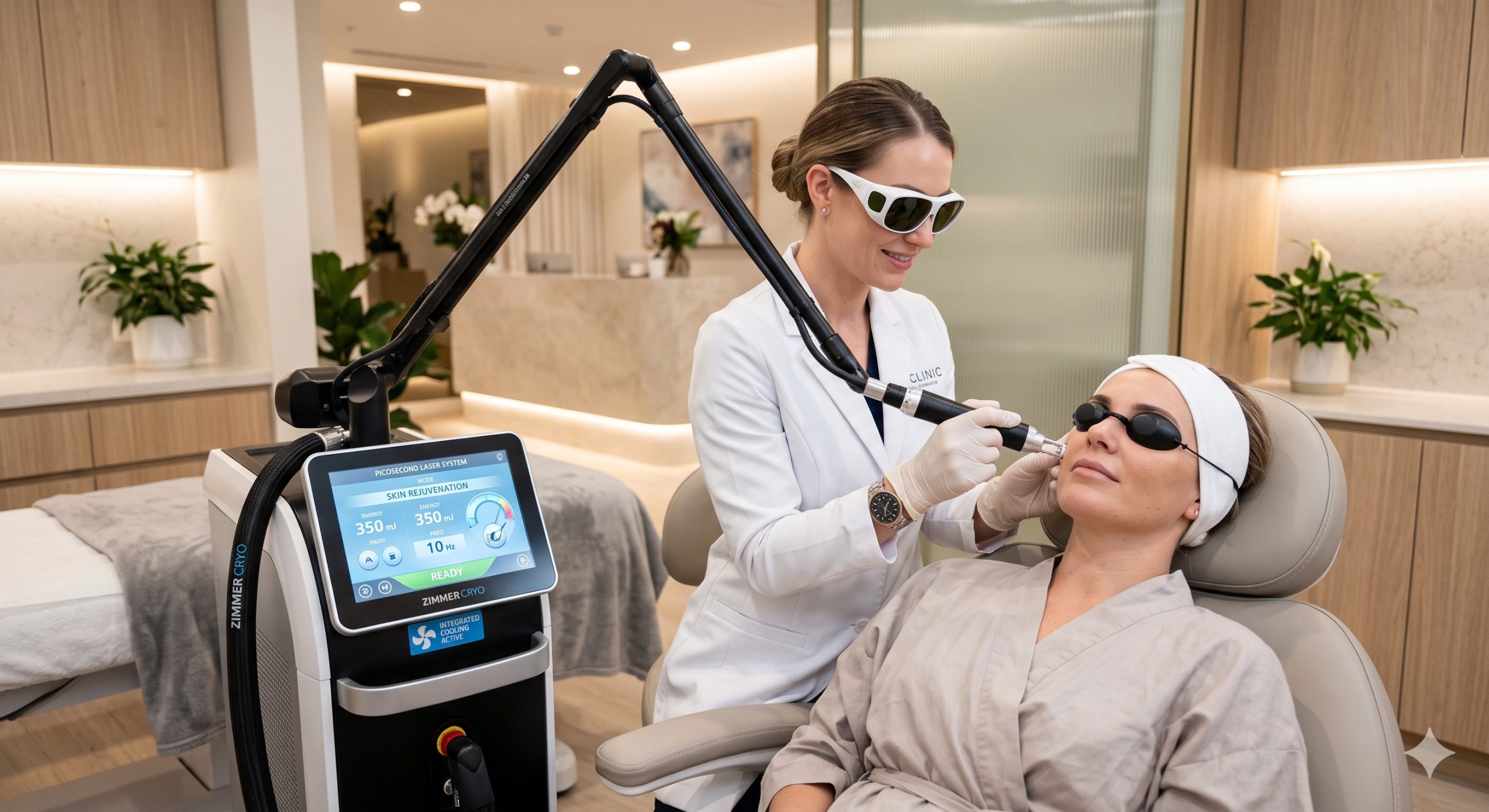
Modern picosecond devices incorporate sophisticated cooling mechanisms that are critical for pain management. These include contact cooling via chilled sapphire tips, which actively cool the epidermis milliseconds before, during, and after the laser pulse, or cryogen spray cooling. By maintaining the surface temperature at a comfortable level (often around -4°C to 10°C), these systems create an analgesic effect and protect the skin from thermal buildup, significantly reducing the stinging sensation associated with energy delivery . For many patients, topical anesthetic may not even be necessary when advanced cooling is utilized effectively .
Q4: What factors influence the level of pain a patient experiences during treatment?
Patient pain perception during picosecond tattoo removal is influenced by the tattoo’s location, size, ink colors, and skin type, as well as operator skill. Areas with thinner skin (e.g., ribs, spine, ankles) generally experience more sensitivity. The laser’s wavelength and fluence settings also play a role; for instance, the 1064nm wavelength is typically better tolerated on deeper, darker tattoos . Operator proficiency in optimizing spot size, pulse repetition rate, and ensuring adequate cooling can significantly mitigate discomfort. Clinics can further enhance patient tolerance through the application of topical anesthetic or cold air devices .
Q5: What is the recovery process like compared to the healing of a new tattoo?
Recovery from picosecond tattoo removal is often more straightforward and involves less long-term discomfort than healing a new tattoo. Post-treatment, patients typically experience transient erythema and mild edema that resolves within 24 hours . It is normal to see a ‘frosted’ whitening of the skin (epidermal vacuolization) which resolves in 30-60 minutes . Unlike the constant soreness, weeping, and scabbing associated with new tattoos, healing from picosecond treatment is faster and characterized by reduced blistering and crusting . Patients generally report a faster return to normal activities with proper post-care (moisturizing and high-SPF sun protection) .
Q6: What are the mandatory pre-care and post-care protocols to minimize pain and risk?
Clinics must enforce strict protocols to optimize outcomes and minimize pain. Pre-care requires patients to avoid sun exposure and tanning for four weeks and cease blood-thinning medications five to seven days prior . A mandatory test spot 72 hours before treatment is essential to gauge skin reaction, especially on Fitzpatrick skin types IV-VI . Post-care focuses on reducing discomfort and side effects: ice packs should be applied (10 min/hour) in the first 24-48 hours, and occlusive dressings used to protect the area. Patients must avoid activities like saunas, intense exercise, and direct sun exposure for at least seven days .
Q7: Are picosecond laser treatments safe and comfortable for dark skin types (Fitzpatrick V-VI)?
Yes, picosecond lasers offer a superior safety profile for treating darker skin types compared to nanosecond alternatives. The reduced thermal damage minimizes the risk of post-inflammatory hyperpigmentation (PIH), a common concern in ethnic skin . However, this requires careful clinical management. Clinics should use lower fluences (e.g., 0.8-2.5 J/cm²), longer pulse intervals (3-5 seconds), and ensure robust dynamic cooling to protect the epidermis . Clinical data from Asian cohorts strongly supports the safety and efficacy of picosecond lasers in reducing adverse events .
Q8: How does pain management in picosecond treatment affect clinic ROI and patient retention?
Superior pain management is a key driver of clinic profitability and patient retention. Since picosecond treatments cause less pain and have lower risks of side effects like blistering, clinics experience higher patient satisfaction and adherence to the required 6-10 session treatment plan . Patients who experience a more comfortable procedure are more likely to complete their full course, increasing revenue per patient. With reduced downtime, clinics can schedule more appointments, increasing patient throughput and ROI. This makes picosecond technology a high-value investment, with most clinics achieving ROI within 6-9 months by leveraging these patient-centric advantages .