HIFU Skin Tightening FAQ: Expert Answers for Aesthetic Clinics & Dermatologists
Overview
High-Intensity Focused Ultrasound (HIFU) has revolutionized non-invasive skin tightening, offering a needle-free, surgery-free alternative to facelifts. For B2B clinic buyers and dermatologists, understanding the technology’s clinical nuances, operational requirements, and ROI potential is critical. This FAQ addresses high-intent questions from pre-sales evaluation to post-sales technical support, ensuring you have the expert knowledge required to make a confident investment.
Frequently Asked Questions
Q1: Is HIFU suitable for all Fitzpatrick skin types and what are the safety protocols?
Yes, HIFU is safe and effective for all Fitzpatrick skin types (I-VI) because it targets the deep dermis and SMAS layer without relying on melanin absorption, unlike laser treatments. This selective photothermolysis bypass mechanism eliminates the risk of post-inflammatory hyperpigmentation, making it a versatile solution for diverse patient demographics. For darker skin types, we recommend starting with lower energy settings and performing a test spot, but the technology’s fundamental design inherently supports a broader patient base.
Q2: How many treatment sessions are typically required to see visible skin tightening results?
Most patients achieve optimal lifting and tightening results with a single HIFU session, though some may require 2-3 sessions spaced 3-6 months apart. The body’s neocollagenesis process peaks at 90 days post-treatment, with gradual improvements continuing for up to 6 months. For B2B clinics, this means higher patient throughput and faster ROI cycles compared to multi-session alternatives like radiofrequency or IPL.
Q3: What is the average lifespan of a HIFU handpiece and what are the consumable replacement costs?
The typical lifespan of a standard HIFU handpiece is between 5,000 to 10,000 shots or pulses, depending on the manufacturer’s specifications and usage intensity. This translates to roughly 20-30 full-face treatments. We recommend tracking shot count diligently to maintain energy output consistency and prevent patient comfort issues. Budgeting for consumable handpieces is a key component of your clinic’s operational cost analysis, and many new generation systems feature auto-lock mechanisms to prevent out-of-specification usage.
Q4: How does the advanced cooling system maximize patient comfort during the HIFU treatment?
The integrated contact cooling system delivers a constant chilled sapphire tip temperature (typically 0-5°C) directly to the epidermis, acting as a thermal buffer to protect the skin surface. This mechanism permits higher therapeutic energy delivery to the target tissue layer (4.5mm and 3.0mm deep) without inducing epidermal burns or significant discomfort. For clinical workflows, this translates to a ‘painless aesthetic treatment’ experience that boosts patient retention and word-of-mouth referrals.
Q5: What is the clinical ROI and payback period for investing in a HIFU machine?
Based on average market pricing, a medical-grade HIFU system can achieve a full capital return within 3 to 6 months of active clinical use. Assuming you perform just 3-4 HIFU facelift procedures per week at an average retail price of $800-$1,200 per session, the machine can generate upwards of $10,000-$15,000 in monthly revenue. With low maintenance costs and minimal consumables (primarily handpieces and coupling gel), the profit margins are significantly higher than legacy laser systems.
Q6: How do we clean and maintain the water circulation system to prevent technical errors?
To maintain optimal thermal regulation and prevent pump failures, you must replace the deionized or distilled water in your HIFU system’s circulation circuit every 3 months. Use a water test pen (TDS meter) to ensure conductivity stays below recommended levels. We also advise running a cleansing cycle with a specialized water purifier solution to prevent biofilm buildup in the tubing, which is the leading cause of temperature sensor errors and ‘E1’ fault codes.
Q7: What are the key technical specifications and spot size options available on modern HIFU devices?
The clinical efficacy of HIFU relies on precise energy density at the focal point; our systems typically offer spot sizes ranging from 1.5mm (for fine lines) to 4.5mm (for deep SMAS lifting). You can configure parameters like energy fluence (Joules per pulse) and focal depth to tailor the treatment to various tissue densities. For clinic technicians, understanding the ‘focal volume’ algorithm is essential for ensuring target tissue coagulation without overheating the dermal papillary layer.
Q8: What post-sales technical support and warranty protocols are included with the B2B investment?
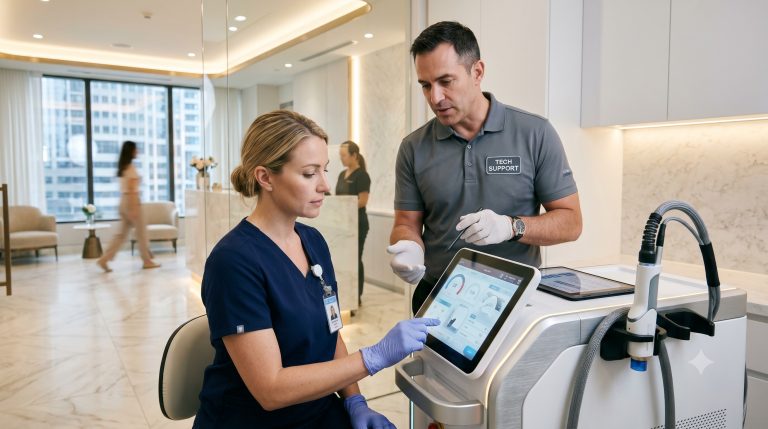
All of our B2B agreements include a comprehensive 18-month standard warranty covering core components like the generator, motherboard, and touchscreen interface, plus a 6-month warranty on the handpiece. We provide global technical support with a 48-hour response SLA for spare parts logistics. Furthermore, we include on-site or remote clinical training for your lead aesthetic practitioners and a dedicated technical portal for troubleshooting error logs and firmware updates.