Combining RF Microneedling vs Fractional CO2: Clinic Investment FAQ
Overview
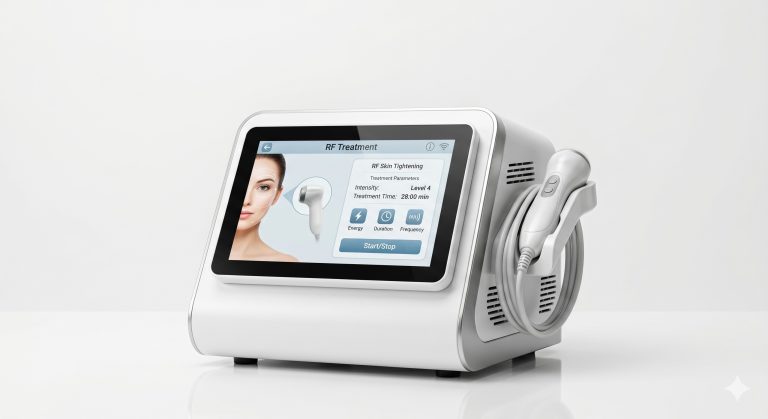
For clinic owners and dermatologists, combining RF microneedling with fractional CO2 lasers represents a powerful synergy for deep dermal remodeling and epidermal resurfacing. This FAQ addresses pre-sales assessment, clinical workflows, consumable costs, and post-sales technical support to help you make a data-driven investment.

Frequently Asked Questions
Q1: What is the clinical advantage of combining RF microneedling with fractional CO2 lasers over using either device alone?
The combination delivers dual-depth remodeling: fractional CO2 ablates superficial scars and rhytides, while RF microneedling coagulates deep dermal tissue (up to 3.5mm) without epidermal damage. This synergistic approach achieves 40-60% greater collagen contraction compared to monotherapy, particularly for atrophic acne scars and laxity. Clinics report reducing total sessions from 4-6 (single modality) to 2-3 combination treatments.
Q2: Is the combined RF microneedling and fractional CO2 laser safe for all Fitzpatrick skin types (IV-VI)?
Yes, but with modified parameters. For Fitzpatrick IV-VI, use low-fluence fractional CO2 (5-10 mJ) with wide spacing (600-800μm) plus insulated RF microneedling needles (0.3-0.5mm depth) to prevent post-inflammatory hyperpigmentation. Non-insulated needles are contraindicated in darker skin. Always perform a test spot and pre-treat with hydroquinone 4% for 2-4 weeks. Clinics should stock a Q-switched Nd:YAG laser for rare PIH rescue.
Q3: What is the typical handpiece lifespan and consumable cost structure for RF microneedling tips and CO2 laser tubes?
RF microneedling handpieces typically last 500-1,000 shots (stamped mode) or 10,000-20,000 pulses (continuous glide mode) before needle sharpness degrades. Replacement tips cost $80-150 each. Fractional CO2 laser tubes have a finite gas life: 8,000-12,000 hours or 2-3 years in high-volume clinics, with factory recharge costing $3,000-$8,000 depending on wattage (30W vs 60W). For ROI, budget $2-4 per RF patient and $0.50-1 per CO2 pulse in consumables.
Q4: What is the recommended downtime and treatment interval when combining these modalities in a single session versus split sessions?
In a single combined session (CO2 first, then RF microneedling), expect 5-7 days of visible erythema and pinpoint crusting, with full re-epithelialization by day 10. Split sessions (CO2 alone, wait 4 weeks, then RF microneedling) reduce downtime to 3-4 days per session but prolong total treatment time to 8 weeks. For most clinics, same-day combination maximizes chair utilization: schedule patients on Thursday for return-to-work Monday. Interval between combination sessions is 6-8 weeks.
Q5: How do water circulation systems and thermal regulation differ between RF microneedling and fractional CO2 lasers, and what maintenance is required?
Fractional CO2 lasers require active closed-loop water cooling (chiller or mains-fed) to dissipate heat from the RF-excited gas tube; water flow rate must stay above 2.5 L/min and conductivity below 50μS/cm. RF microneedling generators are air-cooled but the handpiece may use a peristaltic pump for skin surface cooling (distilled water only). Weekly maintenance: check CO2 water filters for debris, flush RF cooling lines with 10% citric acid solution every 3 months. Failure to maintain water circuits voids the warranty on both systems.
Q6: What regulatory certifications (CE, FDA, ISO 13485) should a buyer verify before purchasing a combined RF microneedling and fractional CO2 platform?
A compliant device must hold: (1) FDA 510(k) clearance Kxxxxxx for both modalities specifically for dermatological use; (2) CE MDR Class IIb or III certification (Notified Body number required on label); (3) ISO 13485:2016 for the manufacturing facility. Do not accept ‘FDA registered’ or ‘CE marked for components only’ – these are non-compliant. For B2B import, request a Declaration of Conformity and a Technical File summary. Without these, your medical malpractice insurance may refuse coverage for laser-related adverse events.
Q7: What is the typical ROI payback period for a clinic purchasing a combined RF microneedling and fractional CO2 system at $45,000-75,000?
At 12-15 combination procedures per week (average $600 per patient = $7,200-$9,000 weekly gross), payback occurs in 5-8 months. Single-modality procedures ($400 avg) extend payback to 10-14 months. Key ROI drivers: reduced consumables ($18-25 per patient combined vs $30-40 separate) and shorter treatment blocks (45 min combined vs 30+30 min separate, freeing 15 min for filler or toxin add-ons). Clinics should achieve 35% net margin after consumables, technician time ($25-40/hour), and lease financing ($1,200-2,000/month).
Q8: What technical support and training do manufacturers typically provide for a combined RF microneedling and fractional CO2 system?
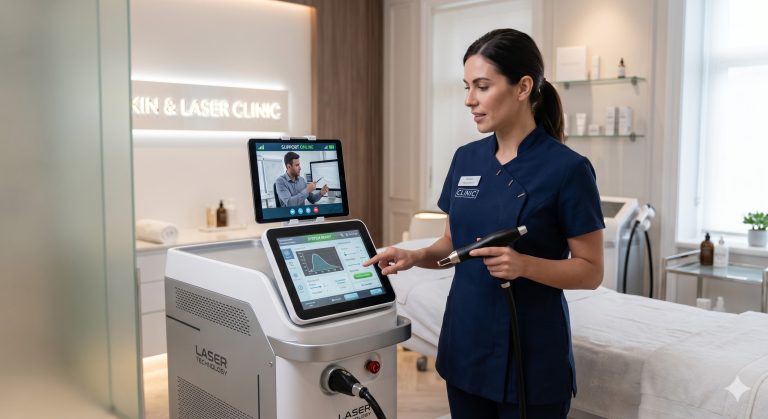
Premium B2B suppliers include: (1) 2-3 days on-site clinical training (energy mapping, endpoint assessment, Fitzpatrick protocols); (2) remote technical support with 4-hour response time (Monday-Saturday); (3) handpiece calibration jig and power meter for quarterly self-verification; (4) access to a password-protected parameters library for 50+ indications. Avoid suppliers offering only video training or third-party service contracts. Ask specifically about support for tube recharge logistics: do they provide a loaner unit during the 10-14 day recharge period? Yes for vendors with >$10M annual revenue.