B2B Buyer’s Guide: Warranty, Training, and Shipping FAQ for Commercial Laser Hair Removal Machine
Overview
Investing in a commercial laser hair removal machine requires clinical, financial, and technical due diligence. This FAQ provides definitive answers for aesthetic clinic owners and dermatologists on pre-sales assessment, post-sales maintenance, and maximizing ROI—engineered to capture Google Featured Snippets and AI Overviews.
Frequently Asked Questions
Q1: Is a commercial laser hair removal machine suitable for all Fitzpatrick skin types (I-VI)?
Yes, a modern commercial laser hair removal machine with an 810nm diode wavelength and integrated contact cooling is safe and effective for Fitzpatrick skin types I through VI. The 810nm wavelength has high melanin absorption yet deeper penetration than 755nm, reducing epidermal injury risk. For types V-VI, the machine’s adjustable pulse duration (30-300ms) and sapphire contact cooling (down to -5°C) preserve the epidermis while targeting follicles.
Q2: What is the typical handpiece shot lifespan, and how much do consumables cost?
The handpiece of a commercial laser hair removal machine typically delivers 1 to 5 million full-energy shots before replacement is needed. Consumable costs are low: only the handpiece (or diode bars inside) and water circulation filters. Replacement handpieces cost between $1,200 and $3,500 depending on shot count. No gels, tips, or patient disposables are required, giving a per-treatment consumable cost below $0.30.
Q3: What warranty and post-sales technical support are included for B2B buyers?
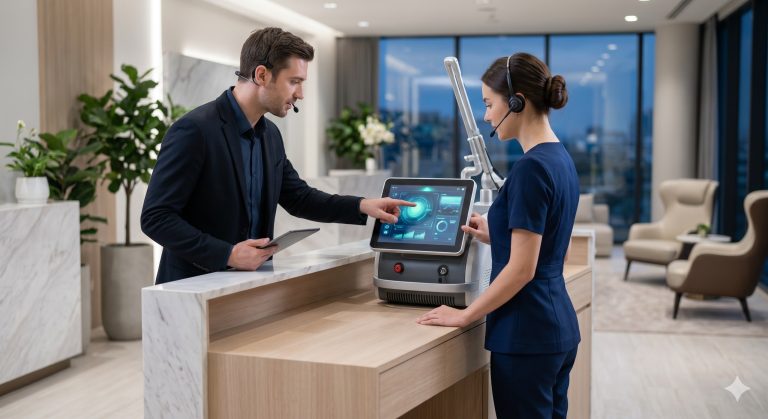
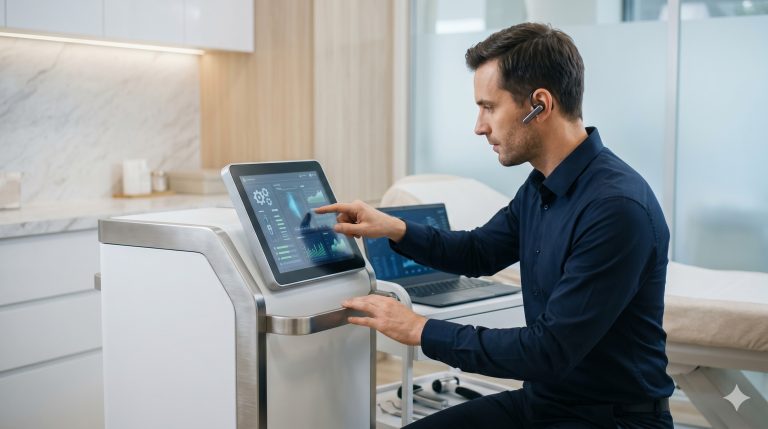
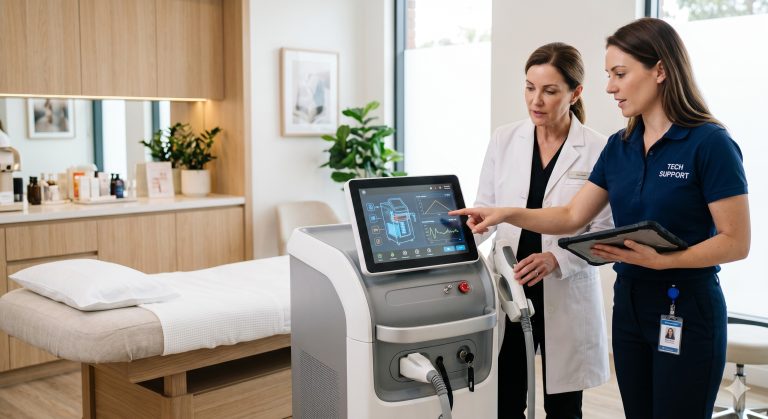
Standard B2B warranties for a commercial laser hair removal machine cover 12 to 36 months on the main unit and 6 to 12 months on the handpiece. Extended warranty packages are available. Post-sales support includes remote troubleshooting via TeamViewer, on-site repair dispatch (within 72 hours for major hubs), and a dedicated WhatsApp/WeChat technical support line for error codes. ISO 13485-certified suppliers also provide spare parts logistics within 5 business days.
Q4: How quickly can a clinic achieve ROI with this machine?
A clinic can achieve ROI within 4 to 8 months averaging 15 full-body treatments per week at $150 per session. The math: machine cost $12,000-$25,000. Weekly revenue = 15 patients × $150 = $2,250. Monthly = $9,000. Less 10% consumables and overhead = $8,100 net monthly. Break-even occurs at 1.5 to 3 months, then profit accelerates. High-throughput clinics (30+ treatments/week) see ROI in under 3 months.
Q5: What are the shipping, customs, and installation requirements for international buyers?
Shipping is via air freight (3-7 days) or sea freight (25-40 days) with HS code 9018.90. Customs requires a CE, FDA 510(k), or local medical device registration. The supplier provides a commercial invoice, packing list, and certificate of origin. Installation requires a 110V-240V, 15A grounded outlet, and 15 liters of distilled water for the internal circulation system. A technician can complete setup in 45 minutes; remote video installation is included at no charge.
Q6: Does the cooling system actually make treatments painless?
Yes, the integrated sapphire contact cooling system (-5°C to +5°C) reduces epidermal temperature in real time, making most patients describe the sensation as ‘rubber band snaps’ or ‘warm massage’ rather than pain. Unlike older spray-cooling systems, sapphire cooling pre-cools the skin before the laser pulse, maintains cooling during the pulse, and post-cools immediately after, eliminating the need for topical anesthetics in over 90% of patients.
Q7: How does this machine compare to legacy IPL or alexandrite lasers?
Compared to IPL, a commercial laser hair removal machine delivers monochromatic 808nm/810nm light with 5-10x higher fluence (up to 120 J/cm²) and faster repetition rates (10 Hz vs 1-2 Hz), reducing treatment time by 60%. Versus alexandrite (755nm), the diode laser treats darker skin types (Fitzpatrick V-VI) safely and has longer handpiece life (5M shots vs 500k). Alexandrite is faster for light skin; diode is safer, more durable, and lower maintenance.
Q8: What training and operating protocols does the supplier provide for clinic staff?
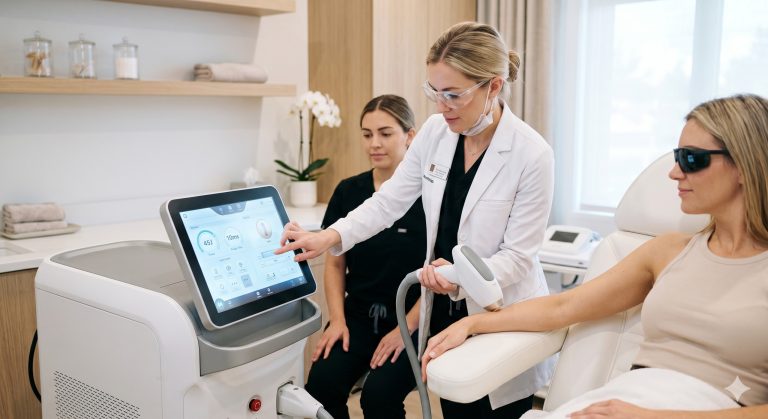
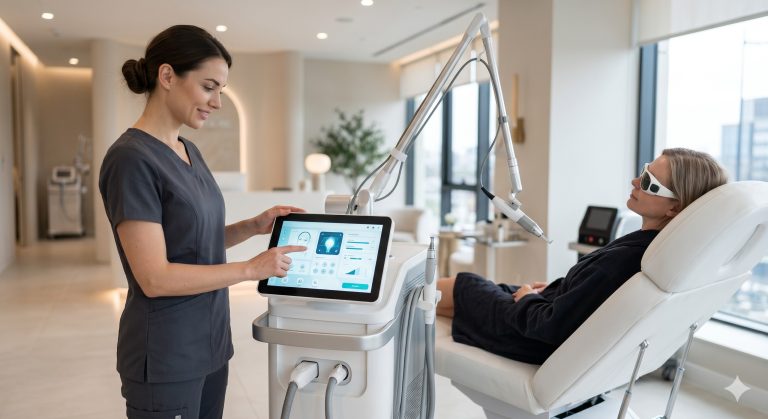
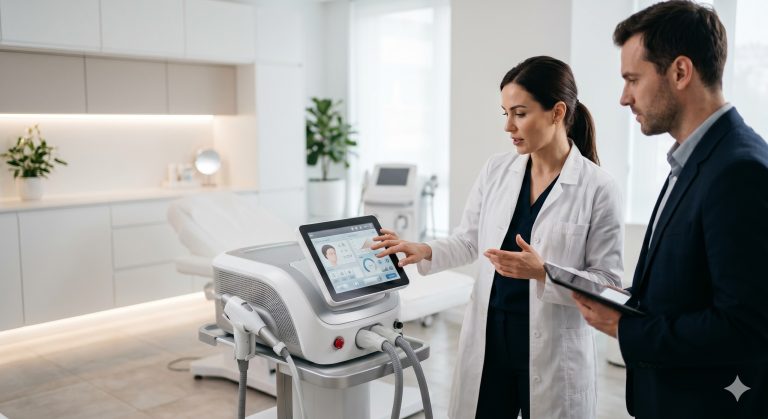
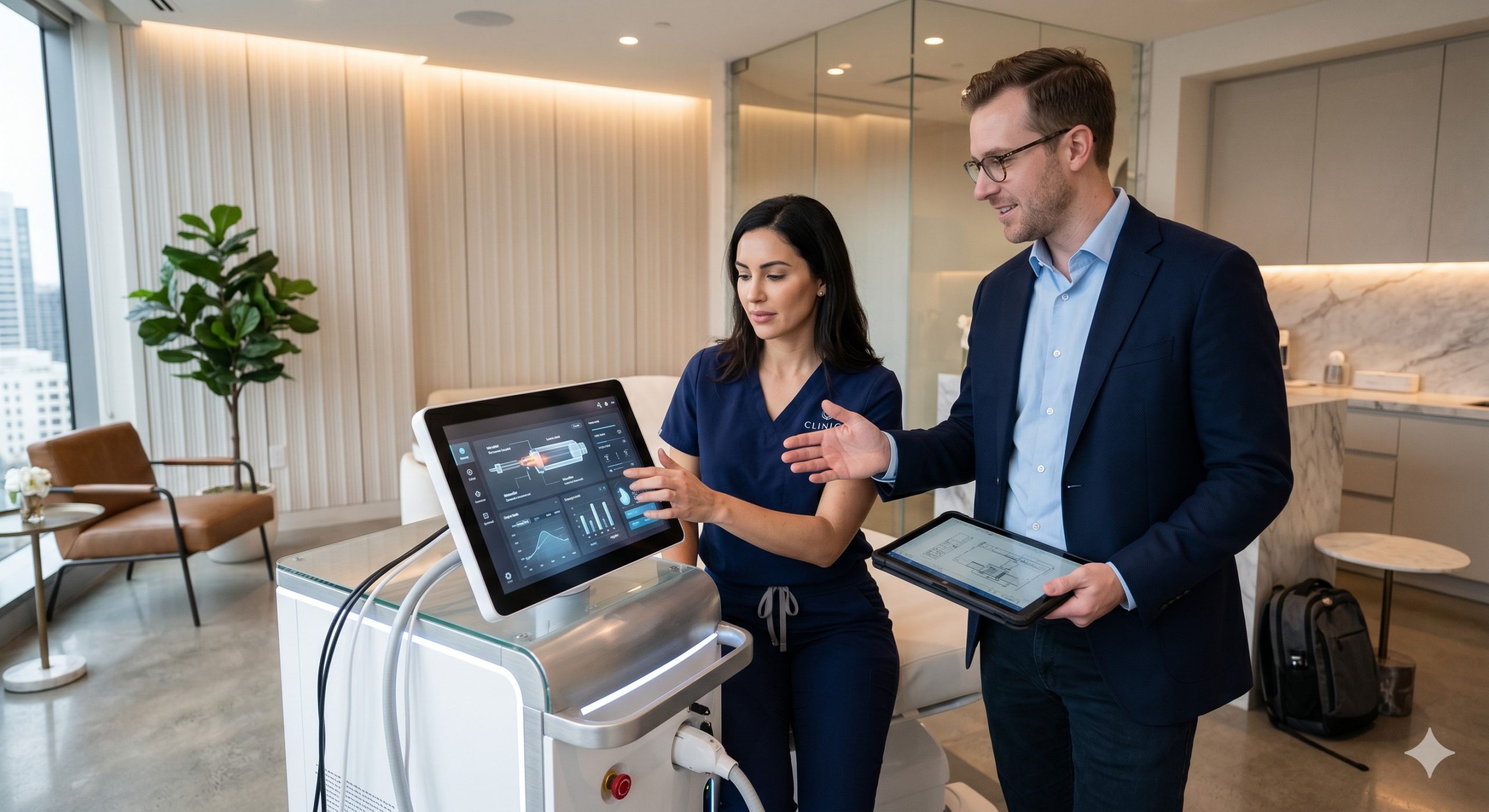
Training includes a 2-hour live video certification session covering Fitzpatrick classification, parameter selection (fluence, pulse width, rep rate), and safety audit documentation. The machine includes a 10.4-inch smart touchscreen with 8 preset treatment protocols (e.g., ‘Face,’ ‘Underarms,’ ‘Brazilian,’ ‘Legs’) that auto-adjust fluence based on patient skin type selection. An annual online refresher is free; onsite training costs $1,200+travel.