The Ultimate Clinic Guide to Q-Switch 1064nm and 532nm Wavelength Clinical Uses: Efficacy, Wavelengths, and ROI
Introduction: The Clinical Imperative for Precision in Pigment and Tattoo Removal
In the competitive landscape of aesthetic medicine, the ability to deliver safe, predictable, and clinically superior outcomes for tattoo removal and pigmented lesions is paramount. While legacy technologies like Intense Pulsed Light (IPL) offer broad-spectrum coverage, they often fall short in specificity, leading to suboptimal results and increased risks of thermal injury. The Q-switched Nd:YAG laser, operating at the dual wavelengths of 1064nm and 532nm, remains the gold standard for photoacoustic disruption of targeted chromophores. This comprehensive guide delves into the clinical mechanics, technical parameters, and business case for these wavelengths, providing elite practitioners with the data needed to optimize treatment protocols and maximize clinic profitability.
The foundational principle governing the efficacy of these systems is Selective Photothermolysis. This concept dictates that a specific wavelength is preferentially absorbed by a target chromophore (e.g., melanin, tattoo ink) and converted to mechanical or thermal energy within a time frame (pulse duration) less than or equal to the target’s thermal relaxation time (TRT). The Q-switched mechanism produces pulses in the nanosecond (ns) range, generating immense peak powers that shatter pigment particles into smaller fragments, which are subsequently cleared by the body’s lymphatic and phagocytic systems .
Physical Mechanism Deep Dive: 1064nm vs. 532nm
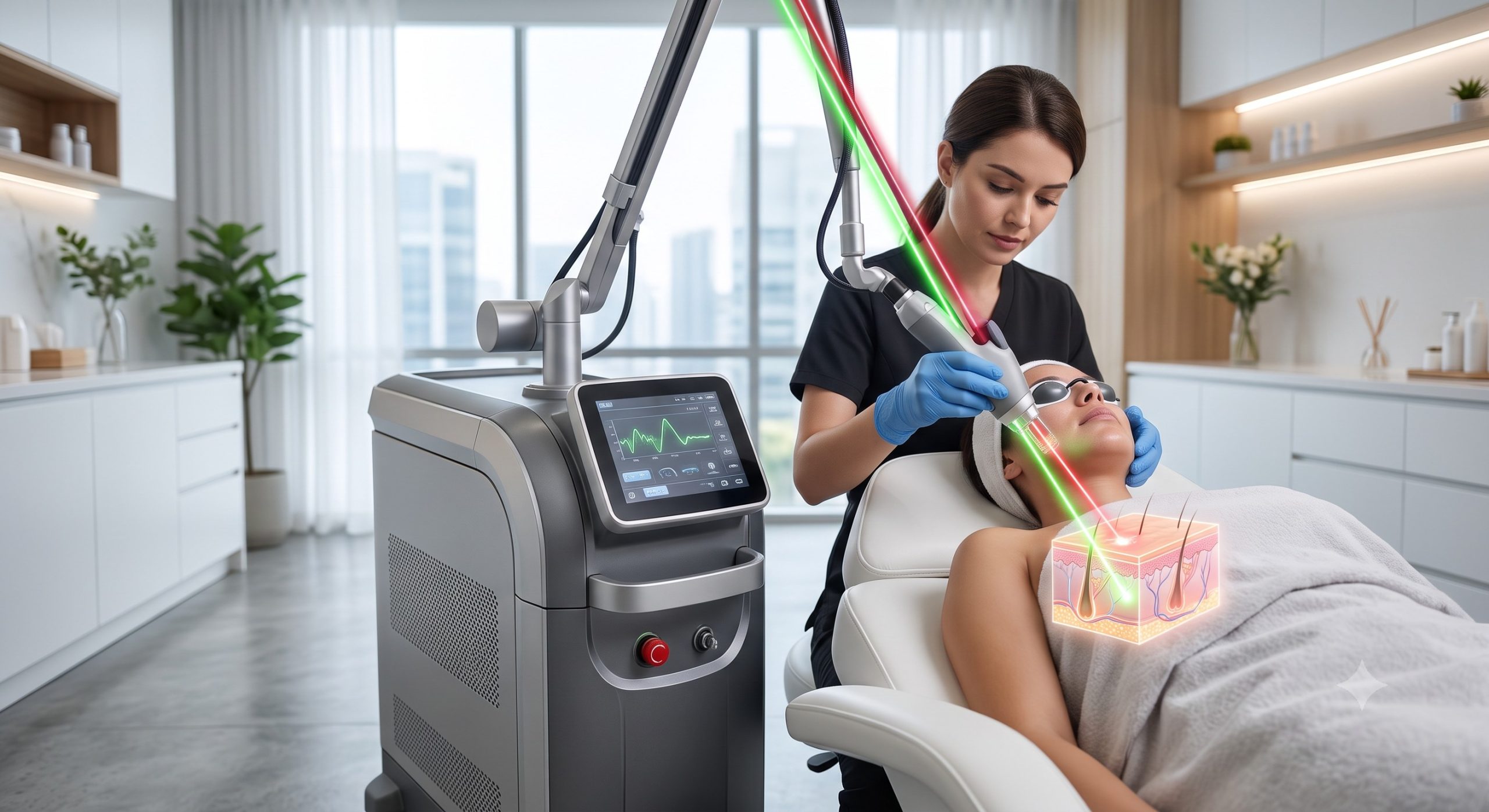
The primary distinction between the two wavelengths lies in their tissue penetration depth and melanin absorption coefficients. The 1064nm wavelength penetrates deeply into the dermis, making it the preferred choice for treating dermal pigmentation, black/dark tattoo inks, and safely treating patients with Fitzpatrick Skin Types IV-VI. Its lower absorption by epidermal melanin minimizes the risk of dyspigmentation, a critical safety factor in darker skin tones .
Conversely, the 532nm wavelength (frequency-doubled Nd:YAG) has a shallower penetration depth and is strongly absorbed by red, orange, and yellow tattoo inks, as well as superficial epidermal pigments like solar lentigines and freckles. However, this high absorption by melanin increases the risk of transient hypopigmentation and blistering, necessitating conservative energy settings in darker skin types .
Clinical evidence supports the versatility of these parameters. A 2025 pilot study on onychomycosis reported complete cure rates of 33.3% using a dual-wavelength protocol (1064nm and 532nm) with settings of 600 mJ/pulse, 20 ns pulse duration, and a 3 mm spot size over eight weekly sessions . Furthermore, the 1064nm wavelength has been shown to produce fewer side effects and less pain compared to 532nm when treating café-au-lait macules, making it a superior choice for larger lesions, despite similar overall efficacy .
Advanced Cooling Systems and Epidermal Protection
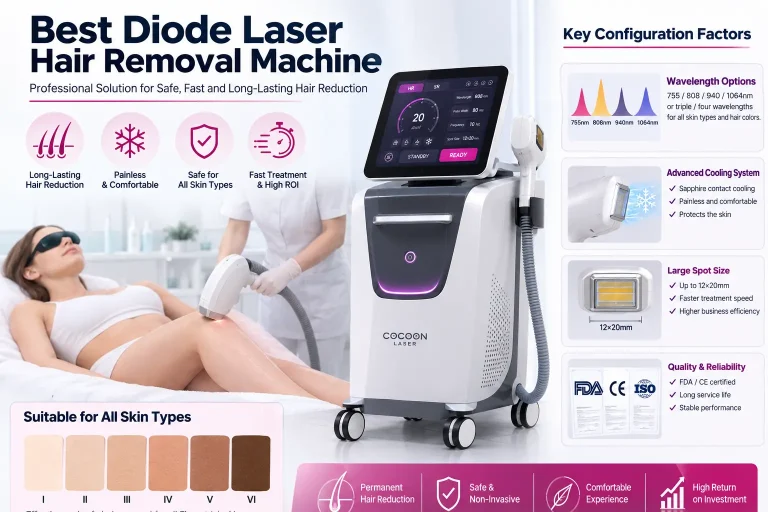
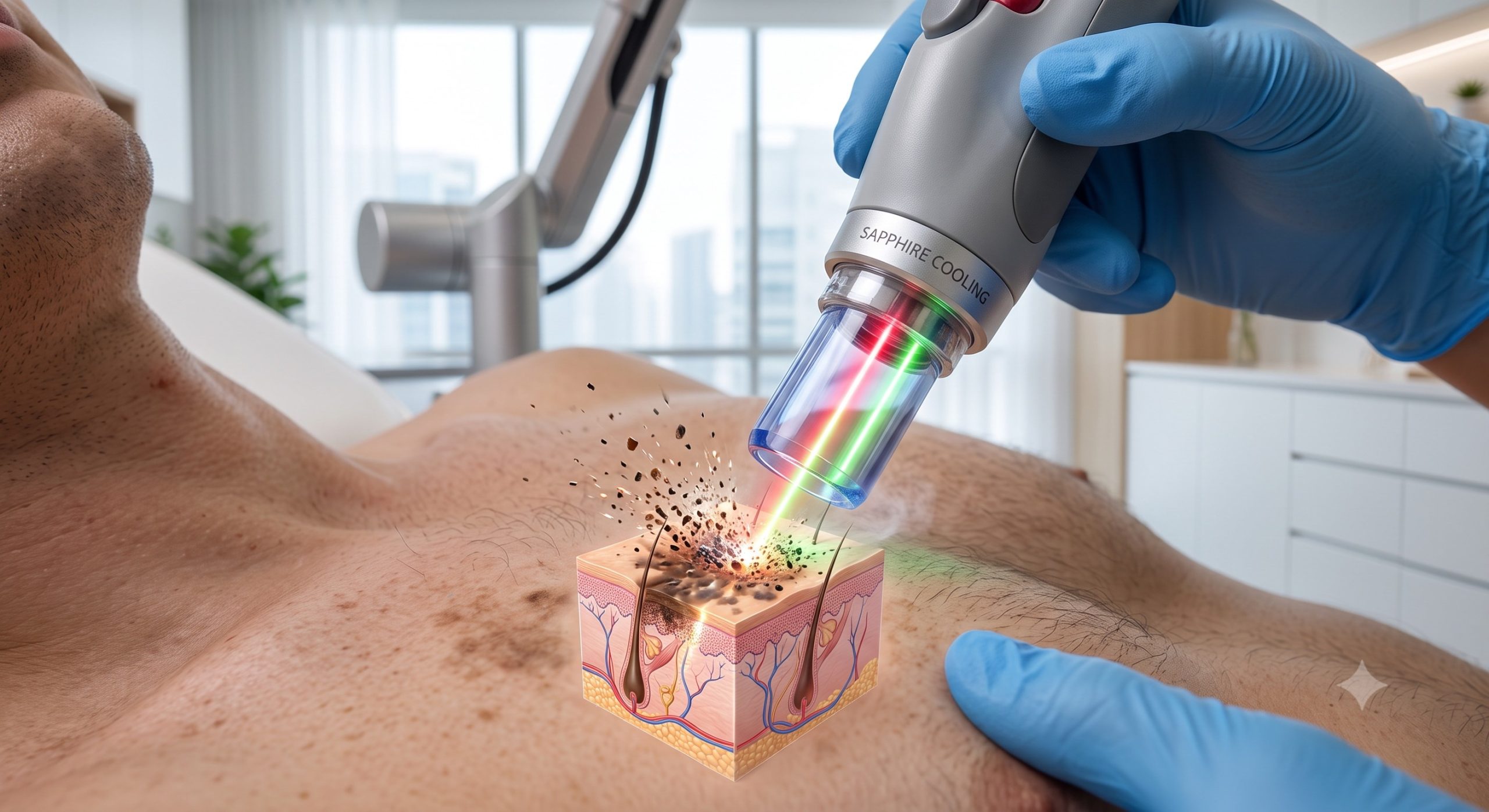
To mitigate the risk of epidermal burns and enhance patient comfort during these high-energy treatments, modern Q-switched platforms incorporate advanced cooling mechanisms. The gold standard in this domain is the Sapphire contact cooling handpiece. This technology provides a continuous and uniform cooling of the epidermis both pre-, during, and post-laser pulse. It maintains the surface temperature at a safe level (typically < 5°C) while allowing the deeper target tissue to reach therapeutic temperatures.
The thermal impedance of sapphire crystal ensures rapid heat extraction, which is particularly crucial when using the 532nm wavelength due to its high melanin absorption. By effectively cooling the epidermis, practitioners can safely increase fluence levels to achieve clinical clearance without compromising patient safety, significantly reducing the incidence of post-inflammatory hyperpigmentation (PIH) and improving overall treatment satisfaction.
Core Parameter Optimization and Technical Specifications
Delivering consistent clinical outcomes requires a deep understanding of the device’s technical specifications. A recent FDA 510(k) clearance for a Q-Switched Nd:YAG system outlines essential performance metrics that define modern device capabilities . The selection of spot size directly influences penetration depth and fluence. Larger spot sizes (e.g., 6mm or 8mm) scatter less light, allowing for deeper penetration of the 1064nm wavelength, while smaller spot sizes (e.g., 3mm or 4mm) are used for higher fluence delivery to small, localized lesions.
| Key Parameter | Technical Specification (1064nm) | Technical Specification (532nm) |
|---|---|---|
| Laser Type | Q-Switched Nd:YAG | Q-Switched Nd:YAG (Frequency-Doubled) |
| Pulse Duration | 5-20 ns (Typical) | 5-20 ns (Typical) |
| Spot Size (Adjustable) | 3mm, 4mm, 6mm, 8mm | 3mm, 4mm, 6mm |
| Pulse Energy Range | 200 – 900 mJ | 50 – 500 mJ |
| Max Fluence | 12.74 J/cm² (8mm spot) | 7.08 J/cm² (6mm spot) |
| Cooling System | Sapphire Contact Cooling (0-5°C) | Sapphire Contact Cooling (0-5°C) |
Broad-Spectrum Indications and Clinical Applications
The versatility of Q-switched Nd:YAG lasers allows clinics to address a wide array of patient concerns, making it a high-ROI investment.
Tattoo Removal
- 1064nm: The undisputed gold standard for removing black, blue, and dark tattoo inks. Its deep penetration and low melanin absorption ensure efficacy without damaging surrounding skin .
- 532nm: Specifically indicated for removing red, orange, and yellow inks. Clinical literature confirms its efficacy, though it is associated with a higher rate of temporary hypopigmentation .
Benign Pigmented Lesions
- Epidermal Lesions (532nm): Ideal for treating solar lentigines, freckles (ephelides), and seborrheic keratosis. The 532nm wavelength is highly effective at photomechanically disrupting superficial melanin clusters .
- Dermal Lesions (1064nm): The treatment of choice for Nevus of Ota, acquired bilateral nevus of Ota-like macules (ABNOM), and melasma. The 1064nm wavelength penetrates through the epidermis to target deeper melanophages and dermal pigment . A 2023 study confirmed the safety and efficacy of this approach in Asian patients with benign hypermelanosis, with high satisfaction scores and near-complete clearance observed .
Clinic ROI and Executive Verdict
Investing in a high-quality, FDA-cleared Q-switched Nd:YAG laser is a strategic move for any aesthetic practice. The device’s ability to treat multiple high-demand indications—ranging from tattoo removal to melasma and the popular ‘Hollywood Peel’ carbon laser peel—ensures a rapid return on investment .
Key drivers of profitability include high per-session pricing, low consumable costs (primarily the handpiece lifespan), and high throughput due to fast treatment times. Furthermore, the regulatory compliance with Medical CE and FDA standards, along with adherence to ISO 13485, ensures device reliability and patient safety, protecting the clinic’s reputation . The ability to safely treat the full spectrum of Fitzpatrick Skin Types I-VI using the 1064nm wavelength also broadens the potential patient demographic, maximizing market penetration.
For elite practitioners, the choice is clear. The Q-switched 1064nm and 532nm dual-wavelength platform is not just a tool; it is a comprehensive clinical system that delivers superior, evidence-based results while driving sustainable business growth.