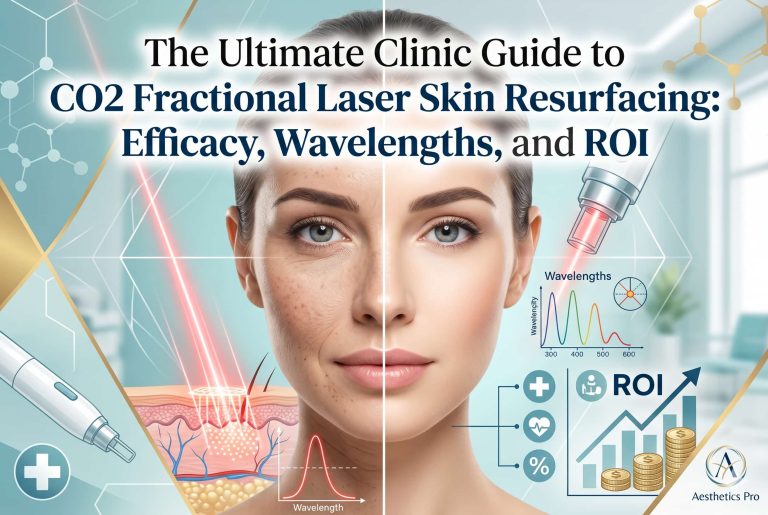
The Ultimate Clinic Guide to optimal pulse technology (opt) square wave: Efficacy, Wavelengths, and ROI
Introduction: The Clinical Imperative for Square-Wave Precision in Aesthetic Medicine
In the rapidly evolving landscape of medical aesthetics, the margin between therapeutic success and adverse patient outcomes is often defined by the consistency of energy delivery. Traditional Intense Pulsed Light (IPL) systems have long been hampered by inherent energy fluctuations, typically characterized by a spiked, bell-curve energy discharge that poses significant clinical risks. The initial energy spike can induce epidermal burns, while the trailing sub-therapeutic tail fails to achieve the necessary thermal threshold for effective chromophore destruction, leading to inconsistent results and high retreatment rates .
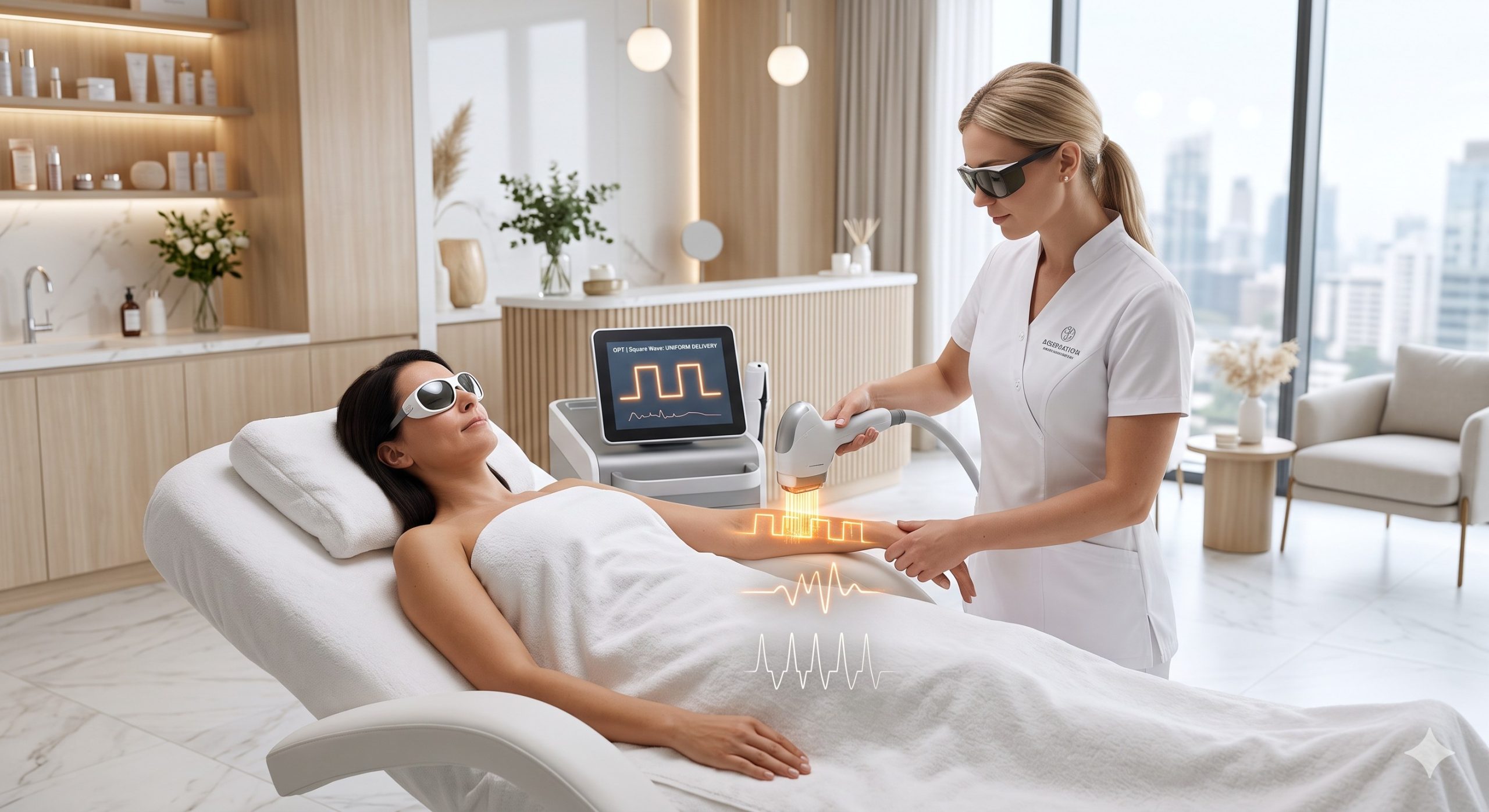
Optimal Pulse Technology (OPT) represents a paradigm shift, fundamentally re-engineering the energy delivery mechanism to produce a true square wave pulse. This sophisticated power supply technology ensures that every millisecond of the pulse maintains a constant and uniform energy level, or fluence. This guide provides a comprehensive, data-driven analysis of OPT square wave technology, examining its physical mechanisms, clinical advantages, technical specifications, and return on investment (ROI) for forward-thinking aesthetic clinics.
Physical Mechanisms: Selective Photothermolysis & Square-Wave Dynamics
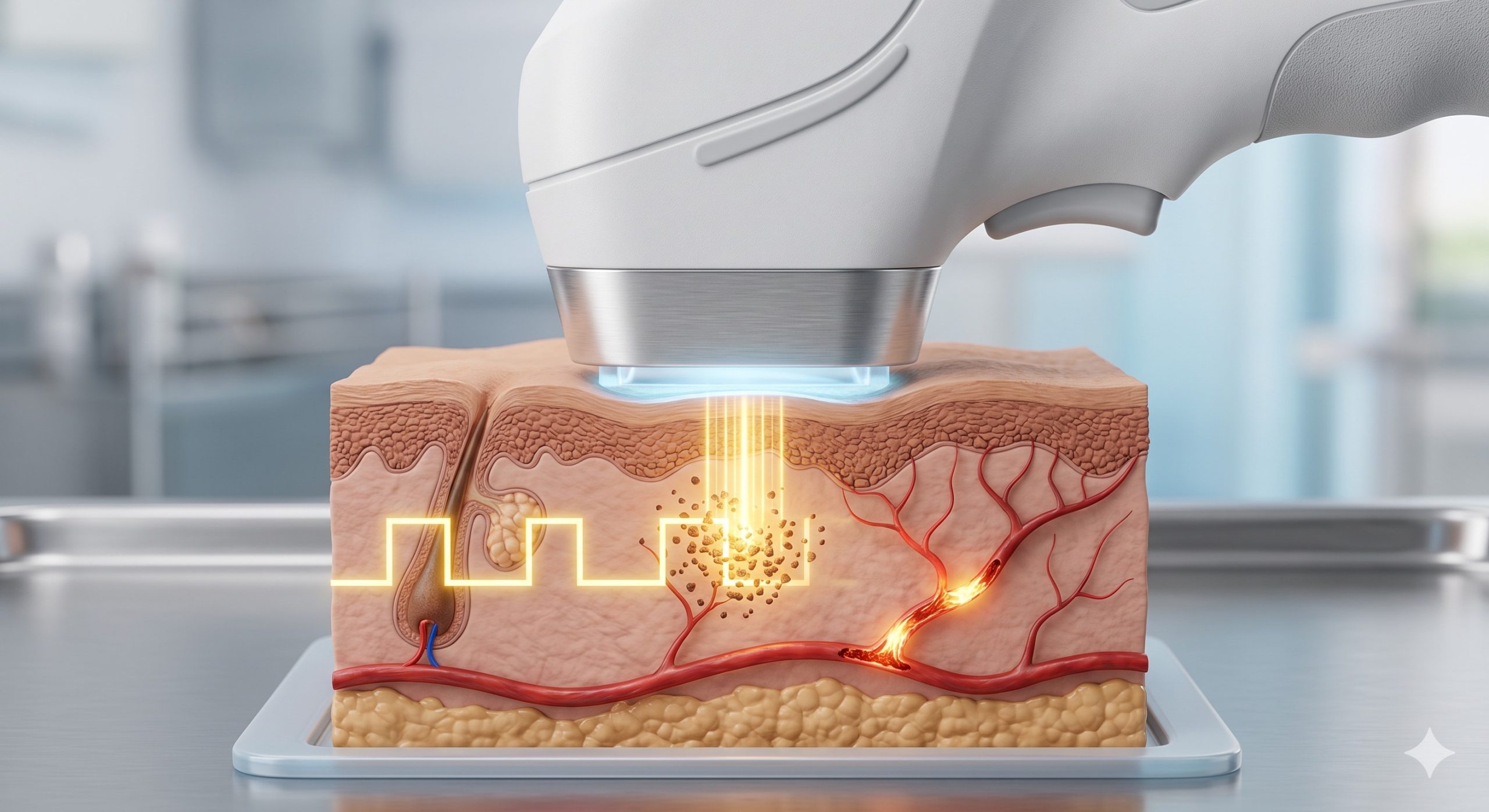
The clinical superiority of OPT is rooted in the principle of Selective Photothermolysis, which dictates that optimal thermal damage to a target chromophore (melanin, hemoglobin, or water) requires a specific wavelength, pulse duration, and fluence. The square-wave delivery system is critical to achieving this. Unlike conventional systems where energy peaks and troughs fail to maintain the therapeutic window, the OPT square wave delivers a consistent, instantaneous peak power that is sustained uniformly throughout the entire pulse duration .
This uniform energy output ensures that the target chromophore absorbs sufficient energy to reach the coagulation or destruction temperature without the collateral thermal spread that causes scarring or dyspigmentation. Research indicates that for sub-threshold conditions in certain biological models, the square pulse is theoretically the optimal shape for maximizing power and achieving threshold excitation, translating clinically to more predictable and potent treatments at safer energy levels .
Wavelength Synergy and Penetration Depth
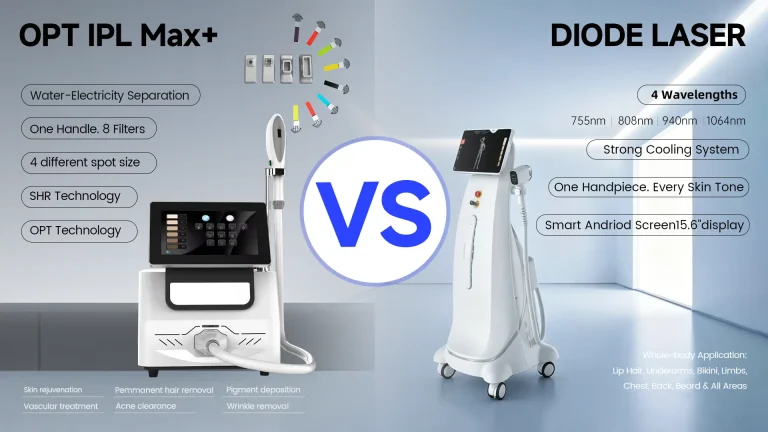
Modern OPT platforms utilize a sophisticated multi-wavelength handpiece, typically incorporating diode bars, to address various indications across a broad spectrum of phototypes. A common configuration combines 755nm, 808nm, and 1064nm wavelengths.
- 755nm Alexandrite: Offers high absorption in melanin, making it ideal for superficial pigment and fine hair in Fitzpatrick skin types I-III.
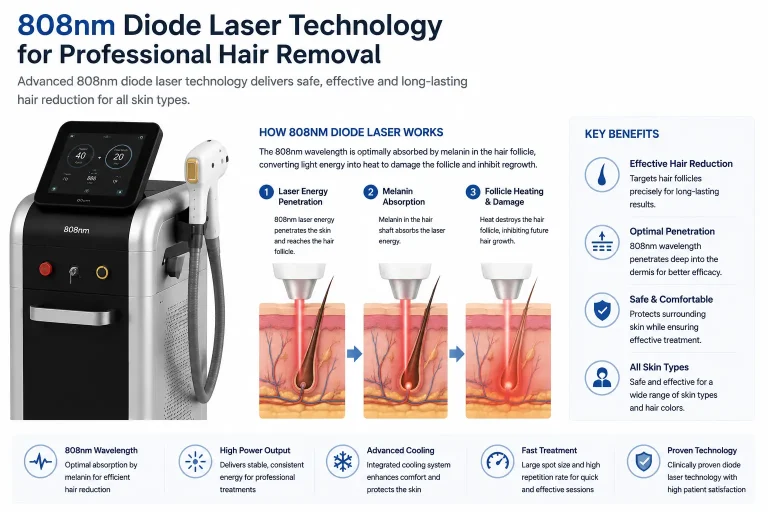
- 808nm Diode: The “gold standard” wavelength for hair removal due to its deep penetration and high absorption in melanin relative to water and hemoglobin, making it safe and effective for a wider range of skin types .
- 1064nm Nd:YAG: Penetrates deeply into the dermis with minimal melanin absorption, providing the safest profile for hair removal and vascular lesions in darker skin types (Fitzpatrick IV-VI).
Technical Specifications & Cooling Systems
The hardware engineering behind an OPT device is critical to its performance and longevity. Key parameters include a large spot size (often up to 16x50mm) to accelerate treatment speed, high energy density (up to 40-50 J/cm²), and adjustable pulse widths to optimize thermal relaxation times for different targets.
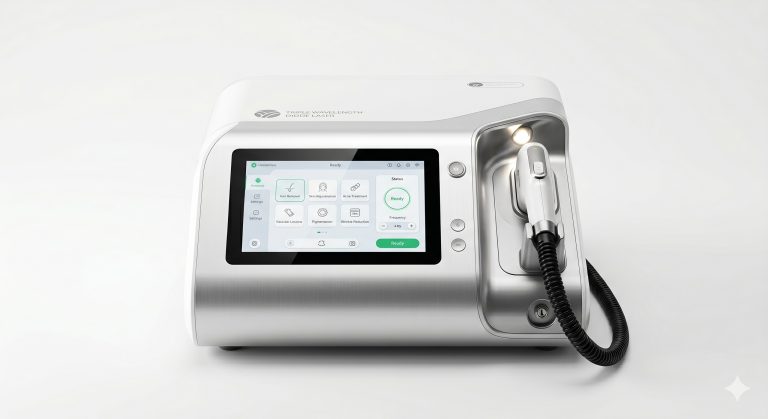
A critical component ensuring patient safety and comfort is the integrated Sapphire Contact Cooling System. This system actively cools the epidermis before, during, and after the laser pulse. The sapphire window provides a high coefficient of thermal conductivity, maintaining an epidermal temperature as low as 4°C to 8°C. This protects the skin from thermal injury while allowing the deeper target to reach the high temperature required for clinical efficacy. This cooling mechanism allows for painless treatment sessions, significantly enhancing patient comfort and clinic throughput.
| Key Parameter | Technical Specification (Typical) |
|---|---|
| Wavelengths (Laser Type) | 755nm (Alexandrite) / 808nm (Diode) / 1064nm (Nd:YAG) |
| Cooling System | Sapphire Contact Cooling (TEC) – Down to 4°C |
| Pulse Shape | True Square Wave (OPT) with Uniform Energy Output |
| Energy Density (Fluence) | Up to 40-50 J/cm² (Adjustable) |
| Spot Size | Up to 16×50 mm (for high-throughput treatments) |
| Regulatory Standards | Medical CE, FDA Cleared, ISO 13485 |
Clinical Indications and Fitzpatrick Scale Strategy
The versatility of OPT square wave technology allows clinicians to safely and effectively treat a wide array of dermatological indications, including permanent hair reduction, vascular and pigmented lesions, and skin rejuvenation. The ability to split the energy into multiple sequential sub-pulses (pulse trains) with specific thermal relaxation delays is crucial for managing patients with higher Fitzpatrick skin types (III-VI). This approach allows the epidermis to cool between pulses while the basal heat within the deeper follicle or target accumulates to the point of thermal destruction .
Clinicians can treat a broad patient demographic safely by adjusting parameters like fluence, pulse width, and cooling levels. For example, treating a vascular lesion (hemoglobin target) requires a shorter pulse width than treating a deep hair follicle (melanin target). The square wave ensures that the selected fluence is delivered consistently, achieving the required clinical clearance rates whether treating fine red hair or deep brown skin.
Clinic ROI, Compliance, and Strategic Implementation
From a business consultancy perspective, the adoption of an OPT device is a strategic investment in clinic profitability and reputation. The technology enables high-throughput treatments due to large spot sizes and high frequency, allowing for multiple patient sessions per day. Furthermore, the superior clinical outcomes and pain-free treatment experience translate to higher patient satisfaction, retention, and lucrative package sales. By minimizing side effects and complications, clinics significantly reduce the cost and liability associated with treating adverse events.
Compliance and safety are non-negotiable. Clinics should ensure their OPT platform adheres to rigorous industry standards, including Medical CE, FDA clearance, and ISO 13485 certification. These certifications guarantee that the device meets stringent quality and safety requirements, protecting both the clinic and the patient.
In conclusion, OPT square wave technology is not merely an incremental upgrade but a transformative advancement in aesthetic medicine. Its ability to deliver consistent, safe, and superior clinical outcomes makes it an indispensable asset for any clinic aiming to lead in patient care and business growth.