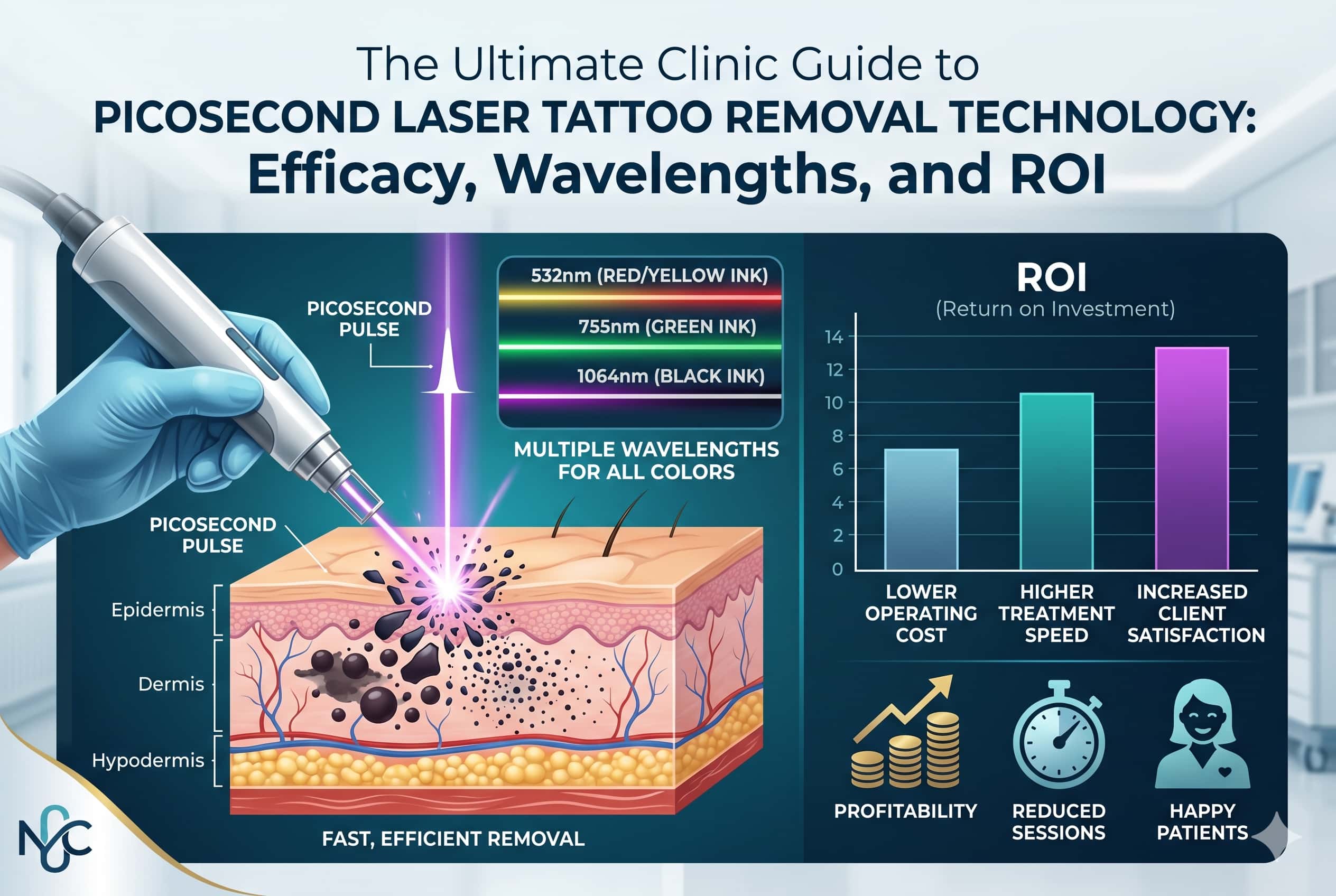
The Ultimate Clinic Guide to Picosecond Laser Tattoo Removal Technology: Efficacy, Wavelengths, and ROI
Introduction: The New Standard in Tattoo Removal
For decades, Q-switched nanosecond lasers were the clinical standard for tattoo removal. However, the technology landscape has shifted dramatically. Today, picosecond laser tattoo removal technology represents a paradigm shift, offering superior clearance rates, fewer treatment sessions, and an enhanced safety profile that is reshaping medical aesthetics . As an elite B2B consultant, I analyze this technology not just for its clinical efficacy, but for its profound impact on clinic profitability and patient satisfaction.
Unlike older technologies that rely primarily on photothermal energy (heat) to break down ink, picosecond (ps) lasers operate with pulse durations in the realm of 10⁻¹² seconds. This ultra-short pulse width generates a powerful photoacoustic (photomechanical) shockwave that shatters tattoo ink into microscopic particles far more effectively, with significantly less collateral thermal damage to the surrounding skin . This guide provides a comprehensive clinical deep dive into the technology, parameters, and business implications of adopting this revolutionary device.
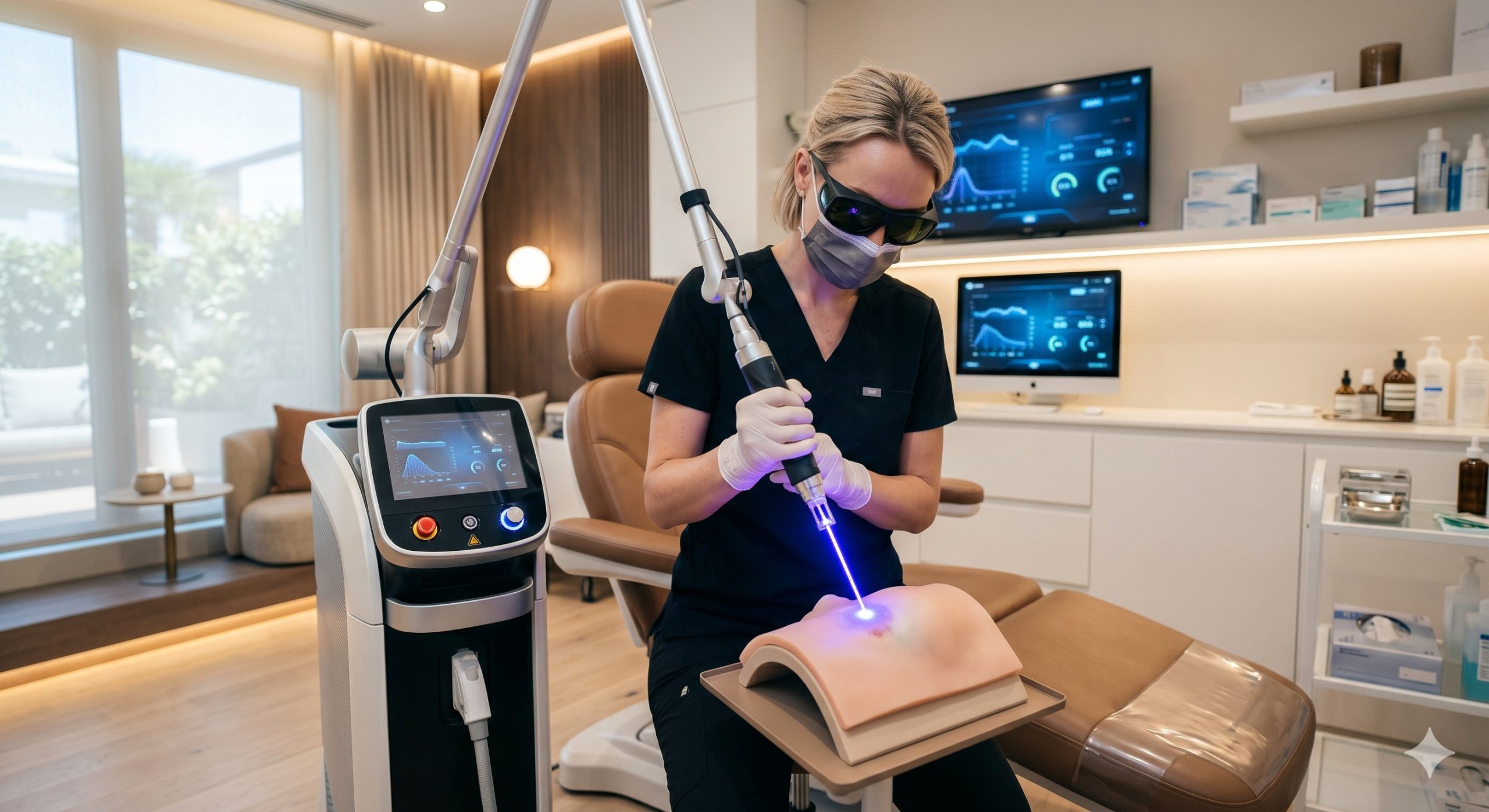
The Physical Mechanism: Selective Photothermolysis and Stress Relaxation
The efficacy of laser tattoo removal is rooted in the theory of selective photothermolysis. This principle dictates that to achieve optimal targeting of a chromophore (like tattoo ink) while sparing surrounding tissue, the laser’s pulse duration must be shorter than the target’s thermal relaxation time (TRT) . While nanosecond lasers achieved this to a degree, picosecond technology introduces a critical advantage by also defeating the stress relaxation time (SRT) of the pigment particles .
Photomechanical vs. Photothermal Effects
In practice, this means that instead of slowly heating and fracturing ink particles (photothermal), the picosecond laser delivers an intense mechanical impulse. This creates an acoustic shockwave that pulverizes even the most resistant ink particles into dust-sized fragments. These smaller particles are more readily phagocytosed by macrophages and cleared by the body’s lymphatic system. The result is faster clearance of tattoo pigment with a lower risk of adverse effects like post-inflammatory hyperpigmentation (PIH), especially in Fitzpatrick Skin Types IV-VI .
Critical Technical Specifications & Output Metrics
For a clinic, understanding the core hardware specifications is essential for clinical efficacy and business strategy. The key parameters governing a picosecond laser device’s performance include wavelength, spot size, fluence (energy density), and pulse width.
| Key Parameter | Technical Specification & Clinical Implication |
|---|---|
| Wavelengths (Multi-Wavelength Platform) | 755nm (Alexandrite): Optimal for black, blue, green ink. 1064nm (Nd:YAG): Deep penetration for black ink, safe for darker skin types. 532nm (Nd:YAG): Targets red, yellow, orange ink . |
| Pulse Duration (Picosecond Domain) | Typically ranges from 450 ps to 800 ps. Essential for defeating Stress Relaxation Time (SRT) of pigment, creating a photomechanical effect that fragments ink with less thermal damage . |
| Spot Size | Adjustable (e.g., 2mm to 10mm). Larger spot sizes (8-10mm) accelerate treatment speed and increase throughput for large tattoos . |
| Fluence (Energy Density) | Clinically adjusted based on indication, ink color, and skin type (e.g., 532nm: 0.8-1.3 J/cm²; 1064nm: 0.7-3.4 J/cm²). Precise fluence control ensures maximum efficacy with minimal side effects . |
| Cooling System | Advanced Contact Cooling (e.g., Sapphire) and/or Dynamic Air Cooling (e.g., Zimmer Cryo). Protects the epidermis by minimizing thermal injury, enhancing patient comfort and safety . |
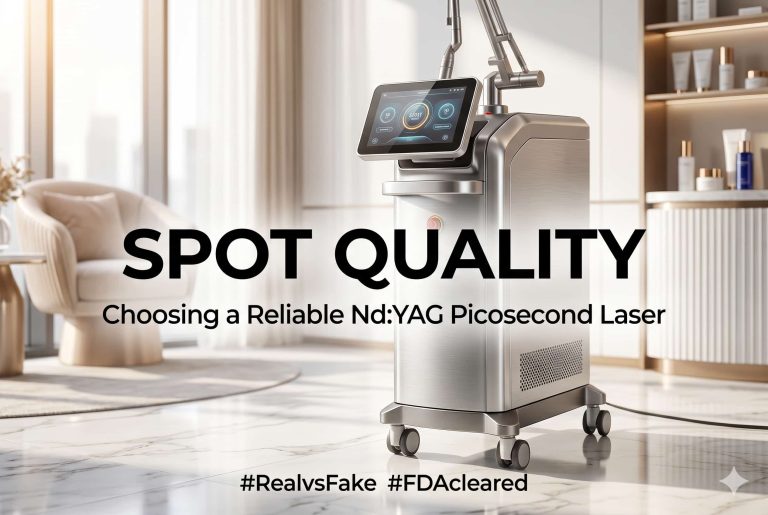
| Regulatory Compliance | FDA 510(k) Clearance & Medical CE Mark. Manufactured under ISO 13485 quality management systems, ensuring safety, reliability, and clinic audit protection . |
Wavelength and Tissue Interaction
Different tattoo ink colors and depths require specific wavelengths for optimal absorption. A multi-wavelength platform is considered the gold standard for clinics looking to treat a broad range of patient demographics.
- 755 nm (Alexandrite): Highly effective for treating black, blue, and green inks. This is often cited as the preferred wavelength for treating resistant colors and is FDA-cleared for a variety of pigmentary conditions .
- 1064 nm (Nd:YAG): The deep-penetrating wavelength of choice. It is ideal for treating dark black ink in all skin types, particularly in patients with darker skin (Fitzpatrick IV-VI) due to its lower melanin absorption and reduced risk of PIH .
- 532 nm (Nd:YAG): The short-wavelength workhorse for treating “sunset” colors—red, yellow, and orange—which are typically difficult to correct .
Clinical Workflows: The R0 Method and Advanced Protocols
To further optimize outcomes and clinic throughput, advanced protocols like the R0 (Rapid) method are being adopted. This technique utilizes a topical application of perfluorodecalin after each laser pass to rapidly remove the opaque cavitation bubbles (whitening) that scatter laser energy. This allows the clinician to perform multiple sequential passes during a single treatment session, significantly accelerating pigment clearance without increasing thermal damage .
A retrospective study on Korean patients (Fitzpatrick III-IV) using the R0 method with a Nd:YAG picosecond laser reported that over 70% of patients achieved >70% clearance after only four sessions, with no long-term scarring . This demonstrates a significant leap forward in treatment efficiency.
Evidence-Based Clearance Data
A 2024 prospective study in 20 Fitzpatrick IV patients observed approximately 60% clearance of black tattoos after just two picosecond 1064nm laser sessions . In comparison, achieving similar results with traditional Q-switched lasers often requires significantly more sessions. The Kirby-Desai scale remains a useful pre-treatment tool for predicting the number of sessions required, but picosecond technology consistently outperforms predictions, with clinical studies showing a strong positive correlation (r=0.803) between estimated and actual session counts .
Recent intravital visualization studies using multiphoton tomography have provided groundbreaking insight into the clearance timeline. They revealed that transepidermal clearance of tattoo particles continues for up to 12 weeks post-treatment, supporting the recommendation for longer treatment intervals (6-8 weeks) to allow the body’s immune system to eliminate fragmented pigments effectively .
Safety, Compliance, and Darker Skin Types
For a medical aesthetic device, patient safety is paramount. Leading picosecond devices boast Medical CE, FDA clearance, and are manufactured under ISO 13485 quality management systems. These certifications ensure the device meets stringent safety and performance standards.
The technology’s inherent safety profile is particularly advantageous for darker skin types (Fitzpatrick IV-VI). Because the mechanism is predominantly photomechanical, there is less residual heat, dramatically lowering the risk of dyspigmentation (hypopigmentation and hyperpigmentation) which is a common complication with older, heat-based laser systems .
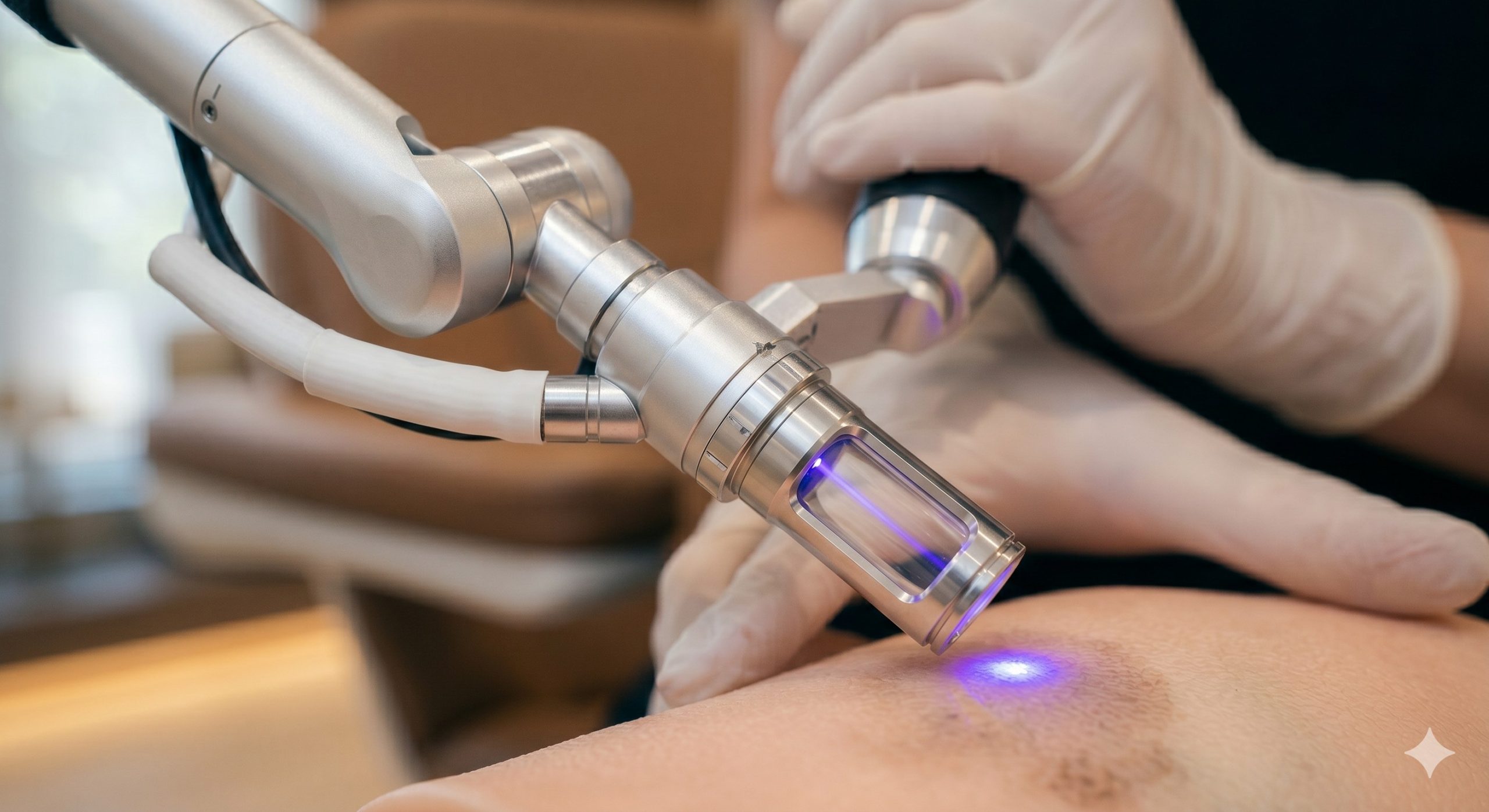
Clinic ROI, Indications, and Combination Therapies
From a business consultancy perspective, adding a picosecond laser to a clinic’s portfolio offers a compelling ROI. The reduced number of sessions per patient increases patient throughput, maximizes chair time, and drives higher profit margins per treatment. Furthermore, the platform is versatile, allowing clinics to offer a suite of high-demand aesthetic services beyond just tattoo removal.
Beyond Tattoo Removal: Expanding the Clinical Workflow
Investing in a picosecond platform expands service offerings to include:
- Benign Pigmented Lesions: Effective for treating solar lentigines, ephelides, and dermal melanocytosis like Nevus of Ota .
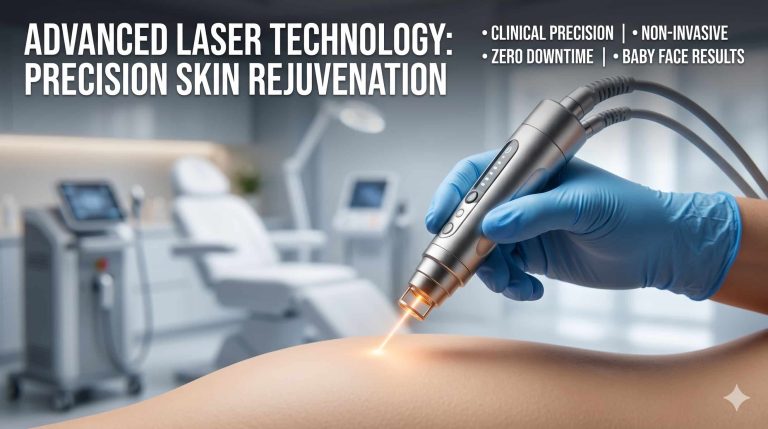
- Skin Rejuvenation & Scar Revision: Using fractional diffractive lens arrays or microlens array (MLA) handpieces, picosecond lasers can create laser-induced optical breakdown (LIOB) to stimulate collagen and elastin production for treating acne scars, photoaging, and fine lines .
- Combination Therapy: Clinical workflows are increasingly combining picosecond lasers with other modalities. The latest research suggests combining picosecond laser treatment with a subsequent fractional CO2 laser pass can further enhance transepidermal elimination of ink and improve overall skin texture .
By integrating a high-performance picosecond laser tattoo removal technology platform, clinics position themselves at the forefront of aesthetic medicine, offering evidence-based, safe, and highly effective treatments that drive patient loyalty and sustainable revenue growth.