B2B Buyer’s Guide: Warranty, Training, and Shipping FAQ for Medical Aesthetic Lasers
Overview
For B2B clinic owners and dermatologists, a laser warranty is not just a repair promise—it’s a critical asset protection and revenue continuity tool. Unlike consumer electronics, medical aesthetic lasers involve high-power components, complex cooling circuits, and consumable handpieces. This FAQ covers pre-sales and post-sales warranty specifics to help you avoid costly downtime and unexpected fees. Below, we answer the top 8 high-intent questions clinic buyers ask when evaluating a medical laser warranty.
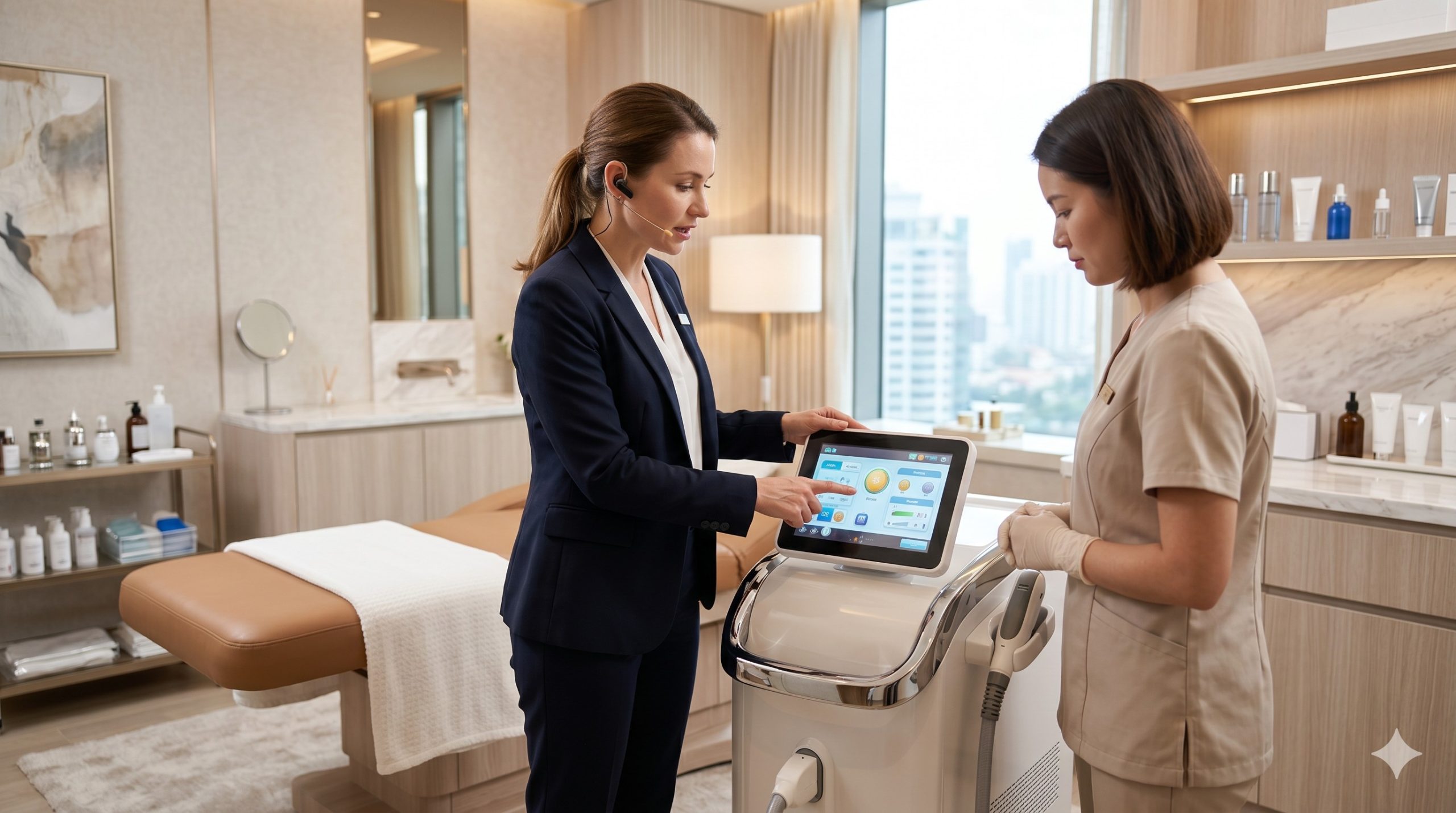
Frequently Asked Questions: Medical Laser Warranty for Clinics
Q1: What is the ideal warranty length for a medical aesthetic laser?
The industry standard for a comprehensive medical laser warranty is 24 months (2 years) for parts and labor, with an additional 12-24 months on the laser handpiece (diode bars or flashlamps). Some entry-level or refurbished units offer only 12 months, which often indicates lower-grade internal components. A 24-month full-coverage warranty aligns with the typical failure curve of key parts like water pumps, power supplies, and Peltier cooling modules.
Q2: Does a medical laser warranty cover consumables like handpieces or flashlamps?
No, standard warranties do NOT cover consumable items. Handpiece shot lifespan, flashlamps, disposable tips, and filters are considered wear parts with finite cycles. For example, a diode laser handpiece typically lasts 500,000 to 1,000,000 shots. You must ask the supplier for the exact consumable cost per shot and replacement schedule before purchasing. Some premium B2B suppliers offer a 6-month consumable discount agreement.
Q3: What warranty provisions cover the water cooling system and seals?
Look for explicit coverage of the internal closed-loop water cooling system, including the pump, radiator, water seals, and thermoelectric coolers (TEC). Many failures occur due to dried seals or pump burnout after 18 months. A robust warranty clause should state that any cooling-related leakage or thermal regulation failure is covered under parts and labor. Without this, water circuit repairs often cost $800-$1,500 out of pocket.
Q4: Does the warranty include on-site service or only depot repair?
Premium B2B warranties include on-site service within 72 hours for critical failures, while economy warranties require you to ship the unit (depot repair) at your expense. On-site service minimizes clinic downtime; depot repair can take 2-4 weeks. For high-volume clinics, demand a clause specifying on-site response time and a loaner unit if repair exceeds 5 business days. Read the warranty terms for ’round-trip shipping’ responsibility.
Q5: What training and clinical support are included with the warranty?
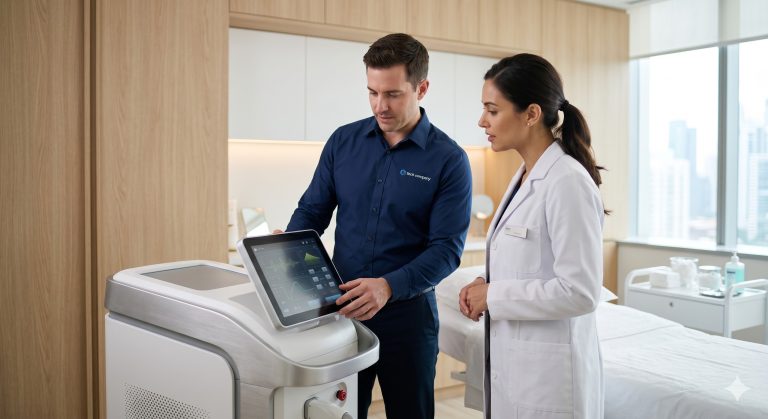
Warranty activation should include initial onsite or virtual clinical training for at least 4 hours, covering safe operation, parameter selection, and maintenance. Post-warranty, you may pay $300-$500 per day for refresher training. Some manufacturers void the warranty if unapproved personnel open the chassis or misadjust water levels. The contract must clearly state that hands-on training for two operators is included before warranty starts.
Q6: How does the warranty handle energy output degradation over time?
A performance warranty clause should guarantee at least 85% of original rated fluence (J/cm²) after 12 months of normal use. Medical laser diodes naturally degrade, but excessive drop below 80% indicates component failure. Ask for a written energy output test report at installation and after 12 months. If output falls below the threshold, the warranty must cover recalibration or diode bar replacement without cost to you.
Q7: Are firmware updates and software support included in the warranty?
Yes, but only if explicitly stated. Most standard warranties exclude software support except for critical bug fixes. Look for ‘firmware updates included for 24 months’—this covers new treatment protocols, parameter refinements, and safety lockouts. Without this, you may be charged $200-$500 per update. Ensure the warranty does not require a separate annual software maintenance contract (SMA) for basic operation.
Q8: What voids a medical laser warranty most commonly in clinics?
The top three warranty voids are: (1) Using non-certified replacement handpieces or generic flashlamps, (2) Skipping recommended water filter changes or using non-distilled water, and (3) Allowing non-certified technicians to repair internal power or cooling circuits. Additionally, voltage fluctuations without a clinic-grade surge protector are a common exclusion. Your warranty contract will list required maintenance logs—keep them signed and dated.