Why MedSpas Are Investing in Picosecond Lasers: A Complete ROI Analysis of Clinical Efficacy, Wavelengths, and Patient Demand
Executive Summary: The Business Case for Picosecond Technology in Aesthetic Medicine
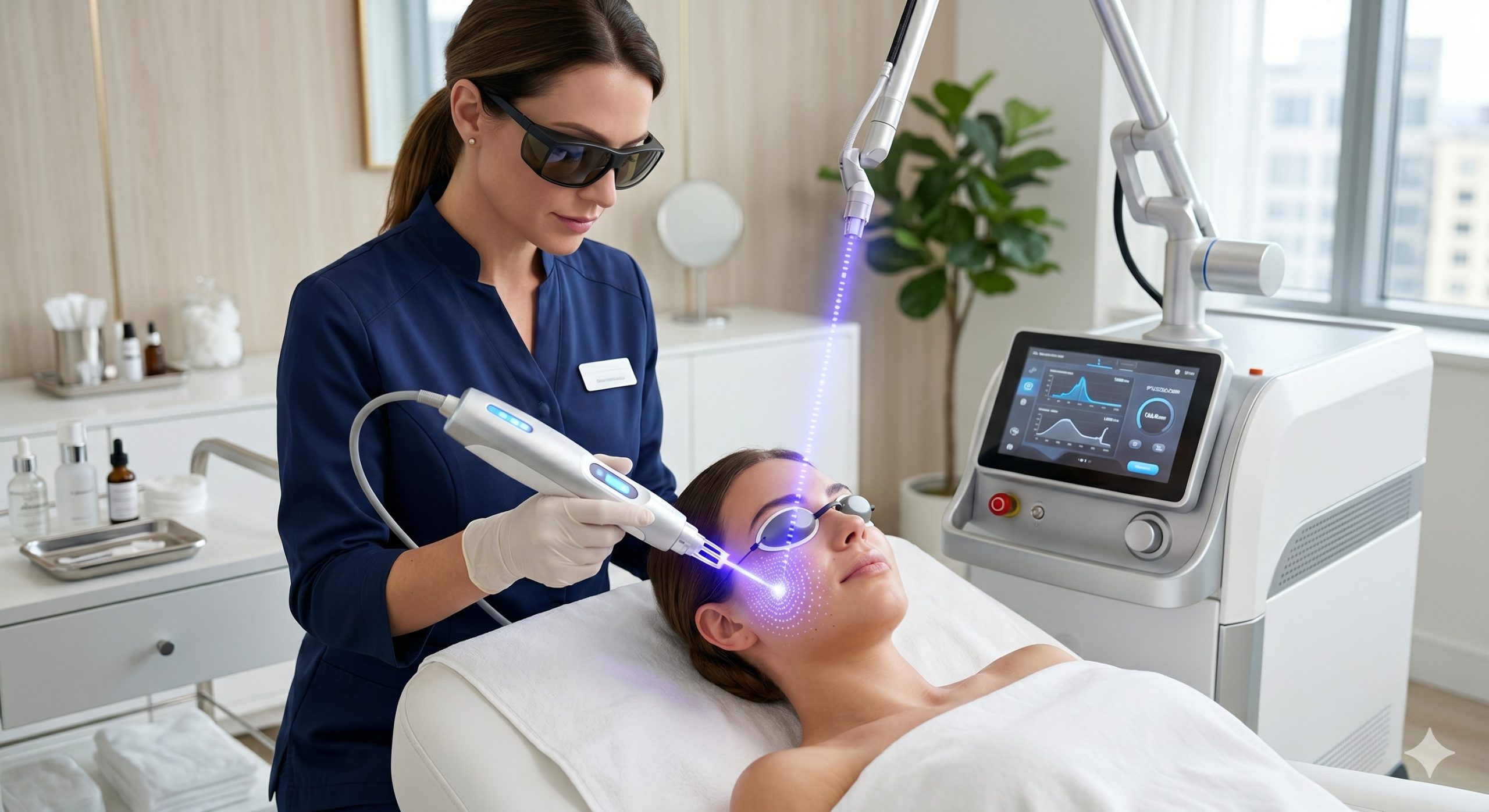
For medspas seeking a competitive edge, the shift from nanosecond Q-Switched lasers to picosecond laser technology represents more than an upgrade—it is a strategic imperative. With pulse durations measured in trillionths of a second (typically 450ps to 750ps), these systems generate laser-induced optical breakdown (LIOB) and photoacoustic shockwaves that shatter tattoo ink and pigment granules into dust-sized particles. This mechanism enables superior clearance rates (often >75% after 2–3 sessions for benign pigmented lesions) with lower fluence requirements (0.5–2.5 J/cm² vs. 3–10 J/cm² for nanosecond devices), thereby reducing thermal diffusion and minimizing downtime. For clinic owners, this translates to higher patient satisfaction, premium pricing power ($600–$1,200 per session for full-face rejuvenation), and expanded treatment indications including melasma (Fitzpatrick IV–VI), acne scars, and photodamage—areas where legacy Q-Switched lasers frequently underperform or pose higher risk.
Physical Mechanism Deep Dive: Selective Photothermolysis vs. Photoacoustics
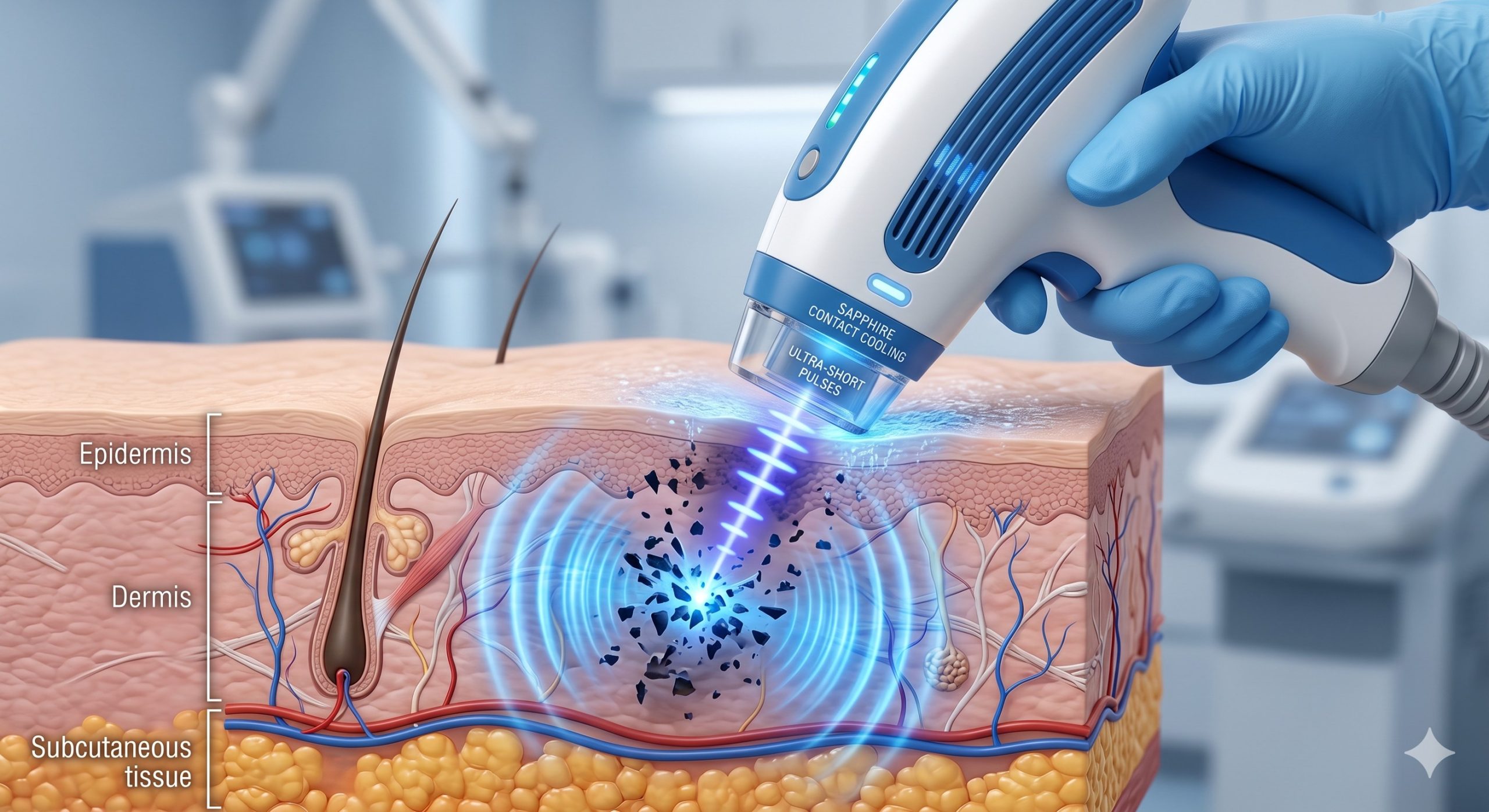
Traditional nanosecond lasers rely on selective photothermolysis—heat-mediated destruction of chromophores. However, picosecond lasers introduce a paradigm shift: photoacoustic and photomechanical effects dominate. At a pulse width of 500 picoseconds, the thermal relaxation time (TRT) of melanosomes (≈250–500 nanoseconds) becomes longer than the laser pulse. Consequently, energy is confined within the chromophore before heat diffuses, generating a high-amplitude pressure wave that mechanically disrupts targets without collateral thermal injury to surrounding collagen or epidermis. This mechanism is particularly advantageous for treating dermal pigmentation (e.g., nevus of Ota, Hori’s nevus) and resistant tattoos (blue/green pigments requiring 755nm or 1064nm wavelengths). Clinical data demonstrate picosecond 755nm alexandrite lasers achieve ≥75% ink clearance after 3 sessions versus <50% for nanosecond counterparts, as published in Lasers in Surgery and Medicine (2021).
Critical Output Metrics for Clinical Decision-Making
Medspa investors must evaluate three interdependent parameters: peak power (energy per pulse divided by pulse width; typically 0.5–1.2 GW for picosecond systems), fluence (energy density measured in J/cm²), and spot size (2mm–8mm). Larger spot sizes (≥6mm) reduce scattering and enable deeper penetration (>3mm for 1064nm), while smaller spots (2–3mm) concentrate peak fluence for resistant tattoos. Repetition rate (5–10 Hz) influences treatment speed: higher rates shorten session times (e.g., 20-minute full-face rejuvenation vs. 45 minutes for older systems), directly improving daily patient throughput and per-procedure profitability.
| Parameter | Picosecond Laser Specification (Benchmark) |
|---|---|
| Pulse Width | 450–750 picoseconds |
| Wavelengths Available | 532nm / 755nm / 808nm / 1064nm (depending on platform) |
| Peak Power | 0.5–1.2 GW (gigawatts) |
| Fluence Range | 0.2–2.5 J/cm² (toning) to 4.0–8.0 J/cm² (tattoo) |
| Spot Sizes | 2mm, 3mm, 4mm, 6mm, 8mm interchangeable |
| Repetition Rate | 5–10 Hz |
| Cooling System | Sapphire contact cooling (−4°C to +4°C) ± optional cryogen spray |
| FDA Clearance | Yes (tattoo, pigmented lesions, acne scars, facial rejuvenation) |
| Medical CE Mark | Yes (Class IIb) |
| Handpiece Shot Lifespan | 2–5 million pulses |
Epidermal Protection & Cooling Systems: Safety as a Revenue Driver
Adverse events—post-inflammatory hyperpigmentation (PIH), blistering, or scarring—destroy patient trust and clinic reputation. Modern picosecond lasers integrate advanced cooling modalities to enable safe operation across Fitzpatrick skin types I–VI. The gold standard is Sapphire contact cooling (tip temperature −4°C to +4°C), which creates a continuous cold interface at the epidermis while the dermal target absorbs photoacoustic energy. Some high-end platforms incorporate cryogen spray cooling (CSC) with dynamic timing (20–80 ms pre-pulse, 20–40 ms post-pulse) for additional protection over bony areas or thin skin. For medspas treating diverse demographics, devices with Medical CE and FDA 510(k) clearance specifically for all Fitzpatrick types are non-negotiable. Systems lacking validated cooling protocols significantly increase malpractice exposure—a hidden cost often omitted from initial quotes.
Target Indications & Fitzpatrick Skin Type Strategy
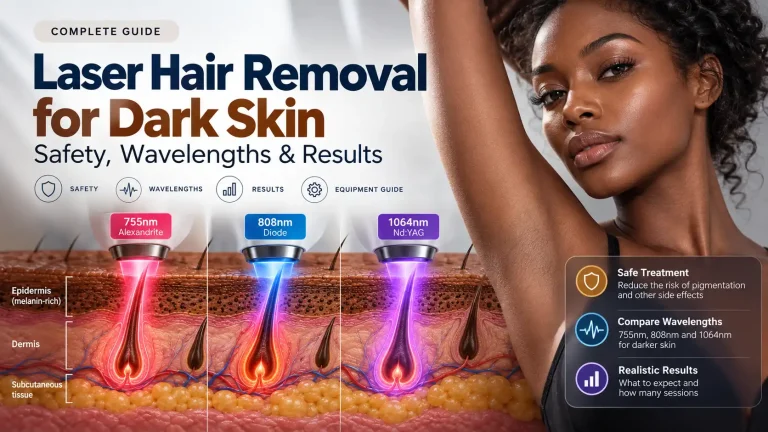
The economic justification for picosecond investment rests on treatment versatility. Unlike single-wavelength IPL or diode devices, premium picosecond platforms offer triple-wavelength configurations (755nm, 808nm, 1064nm) or dual-wavelength (532nm, 1064nm) via frequency-doubling. Each wavelength targets specific chromophores:
- 755nm (Alexandrite): Ideal for superficial pigmentation (ephelides, lentigines) and green/black tattoo ink on Fitzpatrick I–III.
- 808nm (Diode): Optimized for hair reduction and vascular lesions; deeper penetration with minimal melanin absorption, suitable for Fitzpatrick IV–V.
- 1064nm (Nd:YAG): Deepest penetration for dermal melasma, nevus of Ota, and darker skin types (Fitzpatrick V–VI). Lower melanin absorption reduces PIH risk.
- 532nm (Frequency-doubled Nd:YAG): Superficial red/yellow pigments and epidermal lentigines (Fitzpatrick I–II only).
A 2023 survey of 150 medspas by the American Med Spa Association found that clinics offering picosecond-based melasma protocols generated 34% higher average revenue per patient compared to those relying solely on Q-Switched lasers. Additionally, combination therapy—picosecond toning followed by non-ablative fractional resurfacing—has emerged as a high-value package priced at $1,500–$2,500 per series.
ROI Analysis: CapEx, OpEx, and Profitability Accelerators
Entry-level picosecond systems range from $45,000 to $80,000 (used) and $90,000 to $180,000 (new FDA-cleared platforms). While the initial capital expenditure is substantial, three factors drive rapid payback:
- Per-procedure pricing: Tattoo removal ($250–$500 per session), melasma treatment ($400–$800), and photoaging/facial rejuvenation ($600–$1,200). At just 15 procedures per week (average ticket $500), monthly revenue reaches $30,000, yielding payback in 3–6 months.
- High throughput: 10 Hz repetition rates with 6–8mm spot sizes enable complete facial rejuvenation in ≤20 minutes, allowing 3–4 procedures per hour.
- Reduced consumables: Unlike hair removal diodes requiring gel or disposable tips, picosecond handpieces typically have shot lifespans of 2–5 million pulses without maintenance (assuming ISO 13485-certified manufacturing). Total cost of ownership (TCO) over 5 years averages $0.08–$0.12 per pulse, versus $0.30–$0.60 for older Q-Switched systems requiring frequent flash lamp replacements.
However, clinics must budget for ongoing calibration (every 12–24 months, $1,500–$3,000) and operator training ($2,000–$5,000 per clinician). Medspas lacking in-house medical directors should verify state regulations for laser operation—delegation to aestheticians requires specific supervisory protocols and liability insurance riders.
Conclusion: Strategic Integration for Sustained Growth
Investment in picosecond laser technology is no longer a luxury for medspas targeting premium demographics—it is a clinical and business necessity. The combination of superior efficacy (higher clearance with fewer sessions), expanded safety envelope (Fitzpatrick I–VI with sapphire cooling), and diverse revenue streams (tattoos, pigmentation, scarring, rejuvenation) creates a defensible market position against competitors still operating legacy nanosecond systems. Clinic owners should prioritize devices with Medical CE (Class IIb), FDA clearance for specific indications, and verifiable ISO 13485 manufacturing certifications. By integrating picosecond lasers into multi-modality workflows (e.g., combining with RF microneedling or injectables), medspas can command package pricing of $3,000–$5,000 per patient per year—turning capital expenditure into a long-term asset with measurable clinical and financial returns.