Benefits of CO2 Fractional Laser Treatment FAQ: Expert Answers for Aesthetic Clinics & Dermatologists
Overview
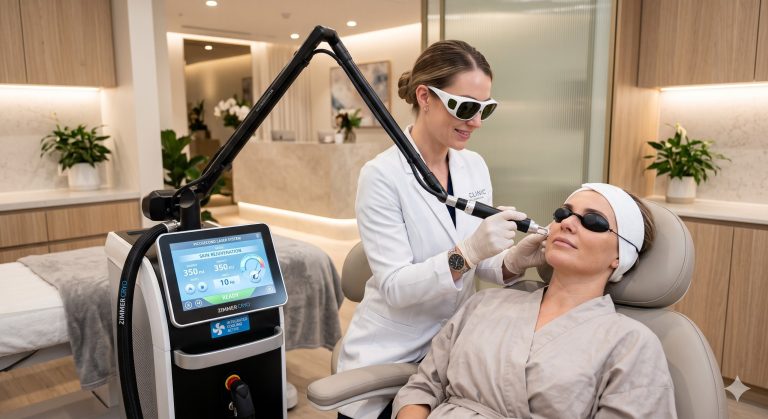
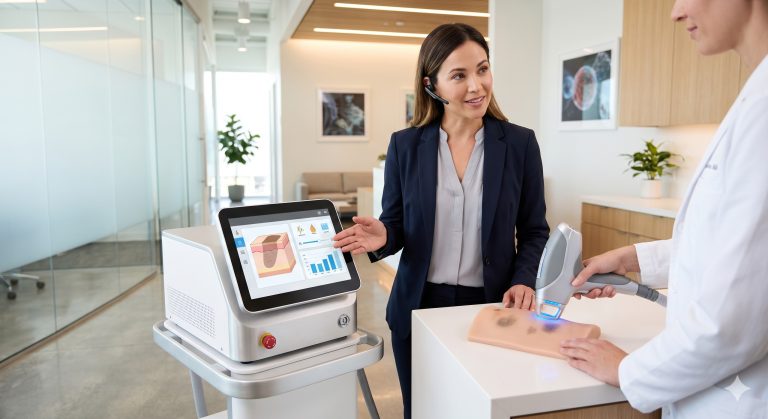
The benefits of CO2 fractional laser treatment extend far beyond superior clinical outcomes for scarring and rejuvenation. For B2B buyers—clinic owners, dermatologists, and medical spa directors—the primary advantages include high patient throughput, predictable ROI, and low consumable costs compared to legacy ablative lasers. This FAQ addresses both pre-sales technical considerations and post-sales operational support to help you make a confident investment.
Frequently Asked Questions
Q1: What are the top three clinical benefits of CO2 fractional laser treatment for clinic owners?
The top three clinical benefits are: 1) Significant improvement in atrophic acne scars and surgical scars with just 1-3 sessions; 2) Effective rhytide reduction and skin tightening via dermal collagen neogenesis; 3) Versatility to treat actinic keratosis, photoaging, and striae distensae. Unlike fully ablative CO2 lasers, fractional technology leaves untreated micro-islands of skin, accelerating healing from 2-3 weeks down to 5-7 days, which increases patient turnover and reduces chair-time costs for your clinic.
Q2: How does the ROI of CO2 fractional laser compare to non-fractional or IPL devices?
CO2 fractional laser typically delivers full ROI within 6-9 months for a busy medical spa, compared to 12-18 months for older IPL or non-fractional ablative systems. This faster payback results from two factors: higher per-session pricing (USD 800-1,500 per full face vs. USD 300-500 for IPL) and consumable costs below USD 2.50 per treatment when using a 15,000-shot handpiece. Additionally, combination workflows (e.g., stacking with radiofrequency) allow you to bill two procedures per patient visit, directly increasing same-day revenue.
Q3: Is CO2 fractional laser treatment safe for Fitzpatrick skin types IV, V, and VI?
Yes, modern CO2 fractional lasers with advanced contact cooling and optimized dwell times are safe for Fitzpatrick IV-VI when operated correctly. The key safety mechanisms include: real-time skin impedance monitoring, adjustable pulse stacking limits, and a minimum 15-20ms pulse duration to avoid bulk heating. For type V-VI, we strongly recommend a test spot at 10-15 mJ and a 5% coverage density, followed by a 4-week evaluation. Always use prophylactic hydroquinone and sun avoidance 4 weeks pre-treatment to reduce post-inflammatory hyperpigmentation risk below 3%.
Q4: What is the typical handpiece lifespan and consumable replacement schedule?
The typical handpiece lifespan for a medical-grade CO2 fractional laser is 800,000 to 1.2 million shots before the optics show measurable energy decay (>15% drop from baseline). Consumable replacement schedule: replace the disposable tip lens every 8,000-10,000 shots or immediately if carbonization is visible; change the deionized water filter every 3 months (or 500 hours of operation); and recalibrate the energy meter every 200,000 shots. For a clinic performing 20 full-face treatments weekly (approx. 3,000 shots/week), expect handpiece replacement every 5-6 years and tip lenses every 3-4 weeks.
Q5: What post-sales technical support and warranty terms should I expect from a supplier?
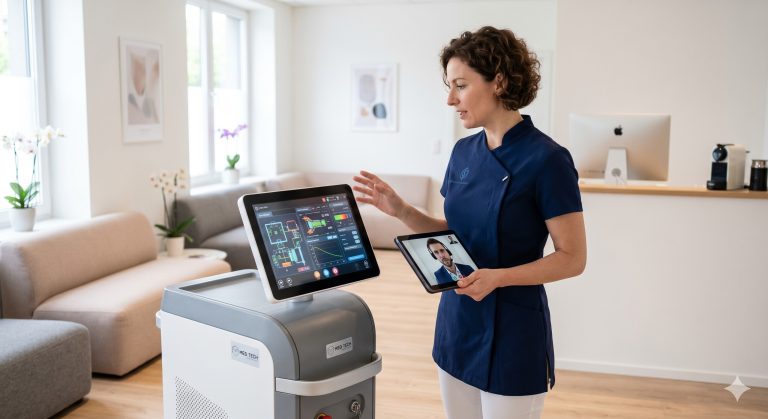
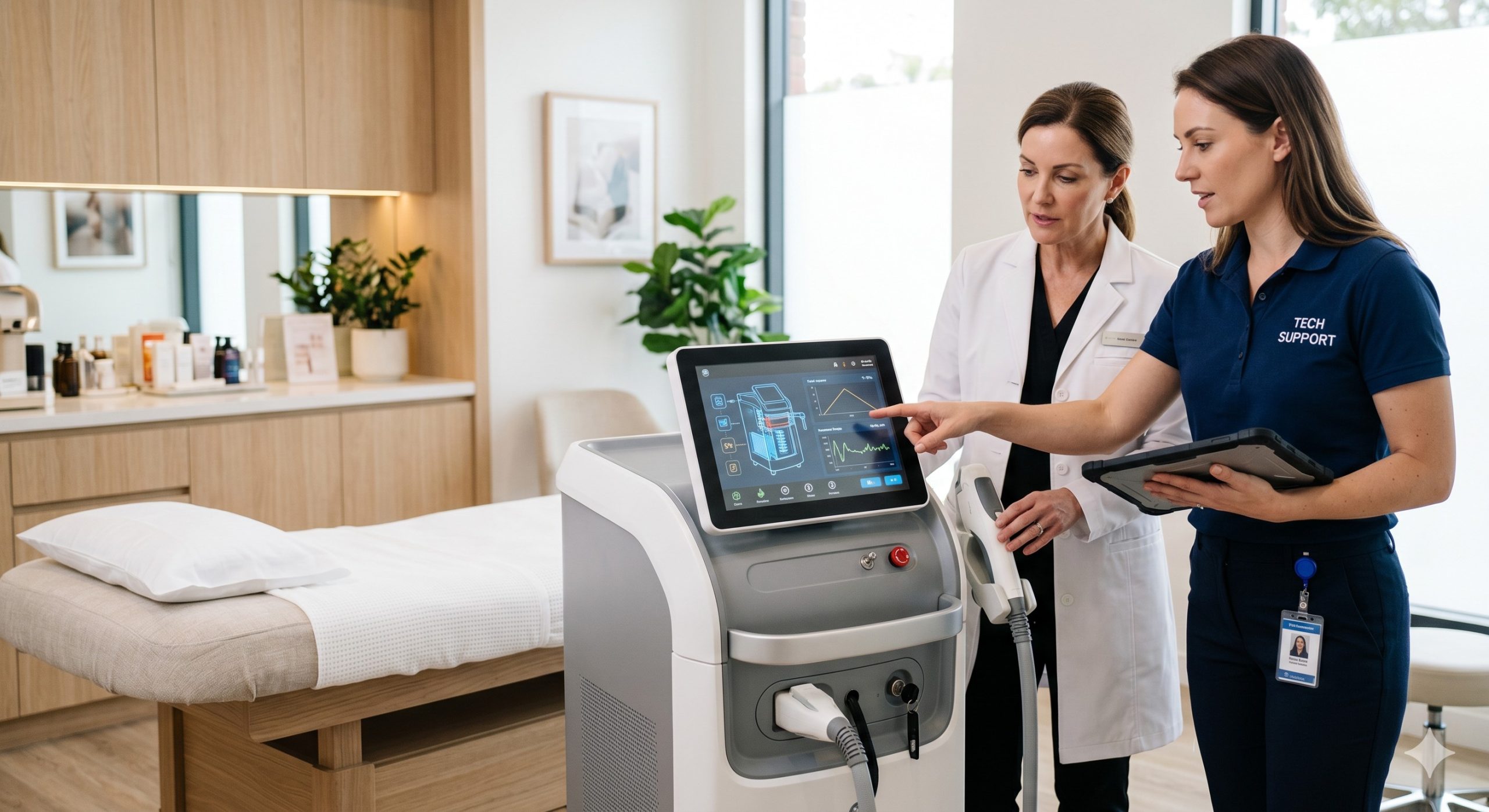
Industry-leading B2B suppliers provide a minimum 24-month warranty on the laser source and scanning system, plus a 12-month warranty on the handpiece and touchscreen UI. Critical post-sales support requirements include: remote diagnostic access via Wi-Fi module (response time <4 business hours), a loaner handpiece for any repair exceeding 5 days, and an online parts portal with 48-hour shipping for common consumables (lenses, windows, water pump cartridges). Always verify that the supplier offers on-site training for at least two of your clinicians and provides English-language service manuals with error code tables.
Q6: How does the advanced cooling system minimize patient pain and downtime?
The integrated contact cooling system—typically a sapphire tip pre-chilled to 2-4°C—reduces epidermal surface temperature by 10-15°C within 100ms of laser impact, lowering pain scores from 7/10 (without cooling) to 2-3/10. This cooling mechanism also limits microthermal zone coagulation depth to a consistent 200-400µm, which directly translates to shorter downtime: erythema resolves in 3-4 days instead of 7-10 days. For your clinic, better pain control means higher patient acceptance rates, less need for topical anesthesia (saving 20-30 minutes per appointment), and improved repeat booking rates.
Q7: What maintenance protocols are required for the water circulation system?
Weekly: Check the distilled water level and top up to the fill line; inspect for air bubbles in the circulation line. Monthly: Run the self-cleaning cycle (5 minutes with a mild citric acid solution diluted 1:10) to prevent calcium scaling in the radiator. Quarterly: Replace the inline deionizing cartridge and clean the external fan filter. Annual: Have the flow rate tested (must remain above 1.2 L/min) and the thermoelectric cooler’s Peltier module resistance checked. Neglecting water circuit maintenance is the #1 cause of reduced scanning pattern consistency and premature handpiece failure.
Q8: Can I upgrade my existing non-fractional CO2 laser to fractional technology?
No, true fractional CO2 requires a completely different scanning engine, galvanometer-driven spot dispersion, and proprietary pulse stacking firmware. However, many manufacturers offer a trade-in credit of 15-25% of the new system price when you return your legacy non-fractional or continuous-wave CO2 laser. The clinical workflow upgrade: you can keep your existing IPL or Q-switched Nd:YAG for pigment and combine it with a new fractional CO2 for textural remodeling. This dual-laser approach typically increases average ticket value by 40-60% without needing separate room construction.