OPT IPL Max+ Technology Explained: FAQ for Aesthetic Clinics & Dermatologists
Overview
OPT (Optimal Pulse Technology) IPL Max+ represents a significant advancement over traditional IPL systems, utilizing square-wave pulse technology and multi-level contact cooling to deliver safer, more comfortable, and more efficacious treatments for hair reduction, pigmentation, and vascular lesions. This FAQ addresses the most critical pre-sales and post-sales questions for B2B clinic buyers, dermatologists, and medical spa owners.
Frequently Asked Questions
Q1: Is OPT IPL Max+ technology suitable for all Fitzpatrick skin types?
Yes, OPT IPL Max+ technology is clinically safe and effective for Fitzpatrick skin types I-VI. The integrated advanced contact cooling (down to -5°C to 4°C) protects the epidermis, while the OPT square-wave pulse delivers precise, uniform energy to the dermis. This reduces thermal buildup in melanin-rich skin, minimizing the risk of burns or hyperpigmentation commonly associated with traditional IPL on darker skin types.
Q2: What is the typical handpiece shot lifespan of an OPT IPL Max+ device?
The typical handpiece lifespan is between 300,000 and 500,000 full-power flashes, depending on energy levels and maintenance. Most premium OPT IPL Max+ systems use imported xenon flashlamps and capacitors. After reaching this threshold, the clinical efficacy may decline by approximately 15-20%, signaling a need for replacement. This translates to roughly 600-1000 full-body treatment sessions, offering a low consumable cost per shot of $0.01-$0.02.
Q3: How does OPT IPL Max+ differ from traditional IPL or diode lasers?
Unlike traditional IPL’s decaying ‘spike’ pulse, OPT uses a true square-wave pulse with uniform energy delivery. This prevents peak energy spikes that cause pain and epidermal damage. Compared to diode lasers (single wavelength), OPT IPL Max+ uses broad-spectrum light (typically 560nm-1200nm) with multiple cut-off filters, allowing one device to treat hair, pigmentation, and vascular lesions. Diode lasers are faster for hair but lack versatility.
Q4: What is the realistic clinical ROI and payback period for an OPT IPL Max+ machine?
A clinic can achieve full ROI within 4 to 8 months with consistent booking. Assuming 10-15 treatments per week at an average service fee of $150-$250 per session, gross monthly revenue ranges from $6,000 to $15,000. Consumable costs (water, filters, handpiece amortization) are under $300 per month. The payback period for a $12,000-$25,000 device is exceptionally fast compared to fractional CO2 or high-end diode systems.
Q5: What post-sales technical support and training are included for my clinic?
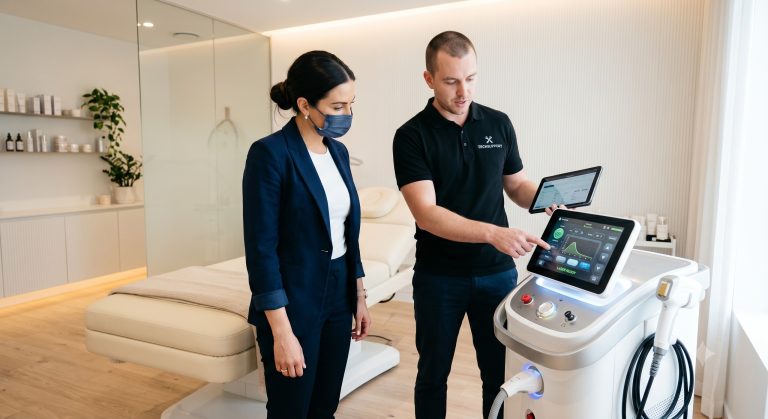
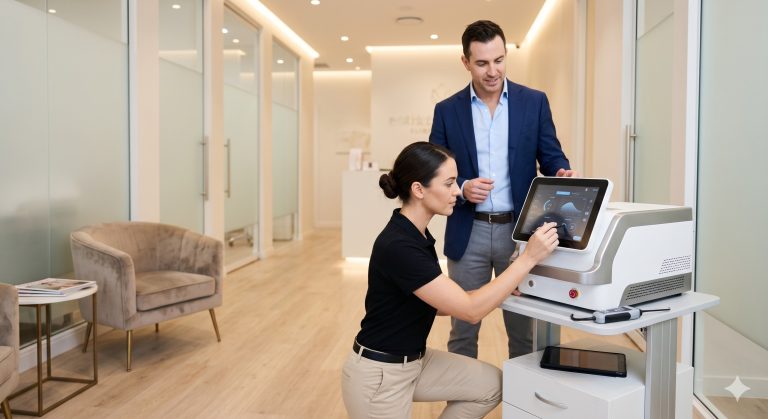
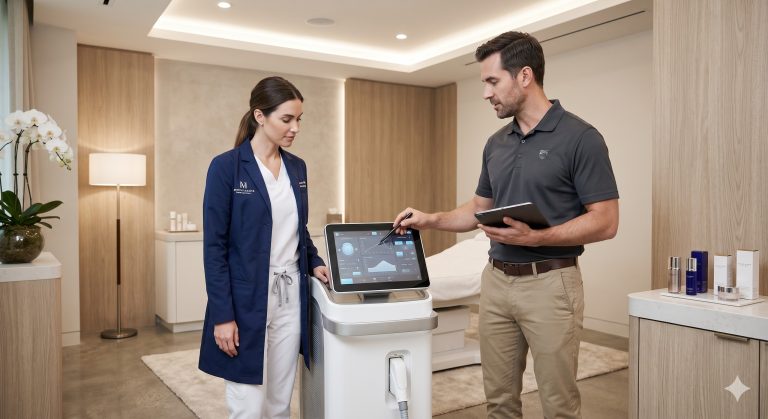
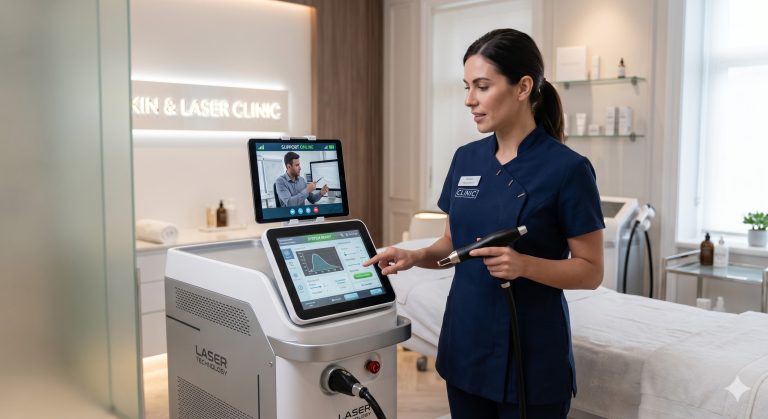
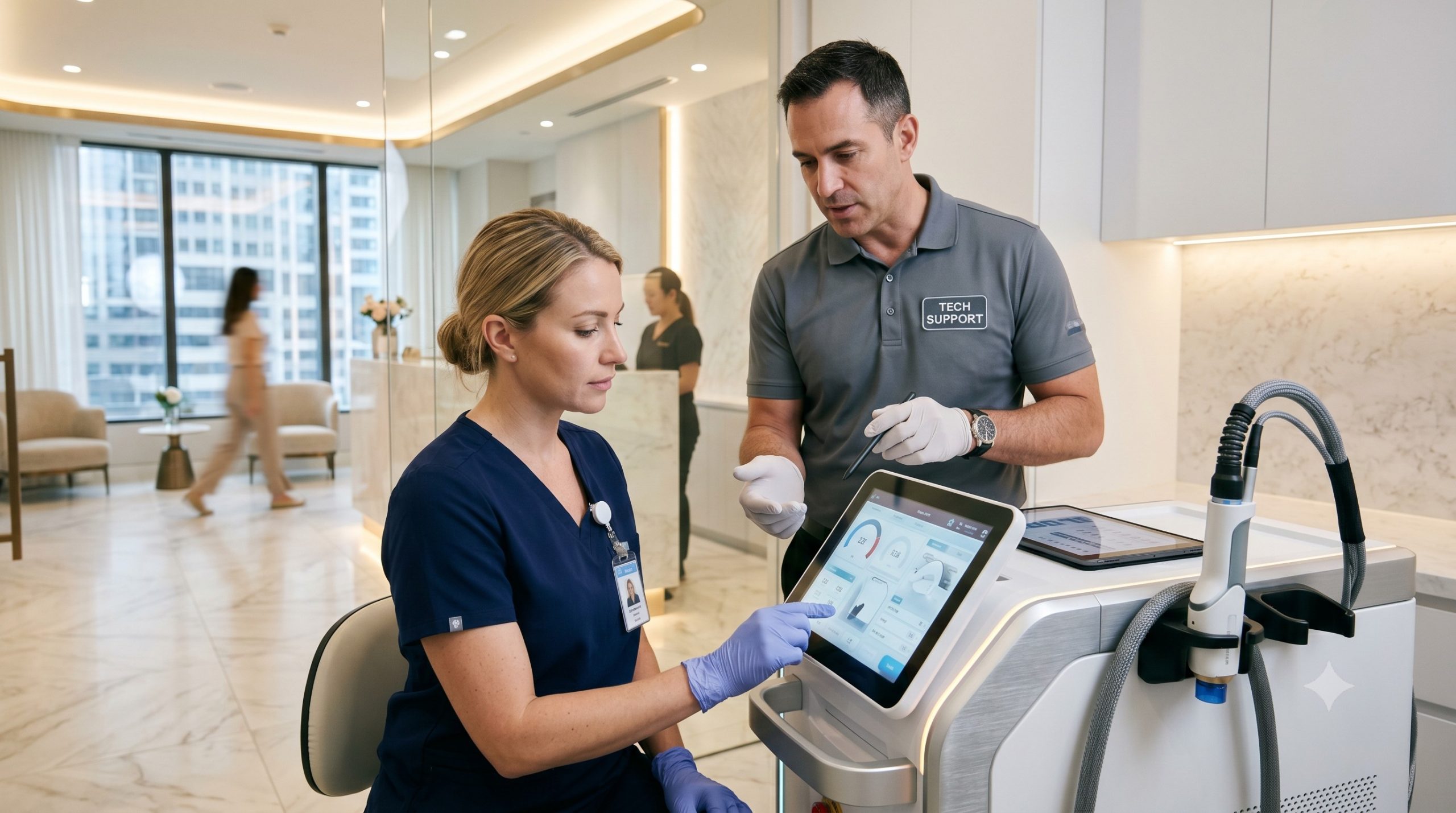
Standard B2B packages include 2-3 days of on-site or virtual clinical training, device installation, and calibration. Remote technical support includes 12-24 hour response time for error codes, spare parts logistics (handpiece, filters, water pump), and firmware updates. Always verify that the supplier provides a minimum 2-year warranty covering the generator and 6-12 months on the handpiece. ISO 13485-certified suppliers offer the most reliable after-sales support.
Q6: What maintenance protocols are required for the water circulation system?
The water circulation system requires distilled water changes every 3-6 months and filter cleaning every 4 weeks. The internal circulation pump typically has a lifespan of 2-3 years. Preventive maintenance includes checking for air bubbles (which reduce cooling efficacy), replacing O-rings annually, and descaling the circuit if hard water was accidentally used. Failure to maintain the water circuit leads to overheated handpiece and reduced tip life.
Q7: Which treatment filters are available, and what are their clinical indications?
OPT IPL Max+ typically uses 6-8 interchangeable cut-off filters: 560nm (pigmentation, vascular), 590nm (vascular, lighter hair), 640nm (deep hair removal), 690nm (coarse hair), 755nm (melanin-rich hair), and 1064nm (optional for deeper vessels). Each filter targets specific chromophores: shorter wavelengths for superficial lesions, longer wavelengths for deeper follicles and darker skin types. Using the incorrect filter reduces efficacy and increases side effects.
Q8: What troubleshooting steps resolve ‘low energy output’ errors on the handpiece?
First, check the water flow and coolant temperature (should be below 25°C). Second, inspect the flashlamp counter; if it exceeds 350,000 shots, the xenon lamp requires replacement. Third, verify that the sapphire contact tip is clean and free from debris. Fourth, ensure the selected energy density (J/cm²) matches the preset protocol. If the error persists, perform a factory self-test; a failing capacitor board is likely and requires technician service.