The Ultimate Clinic Guide to Professional Skin Care Machines Wholesale: Efficacy, Wavelengths, and ROI
Introduction: The $15.8 Billion Question in Medical Aesthetics
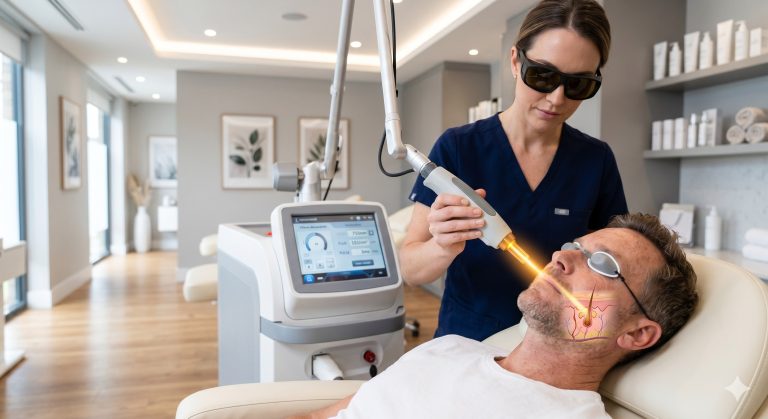
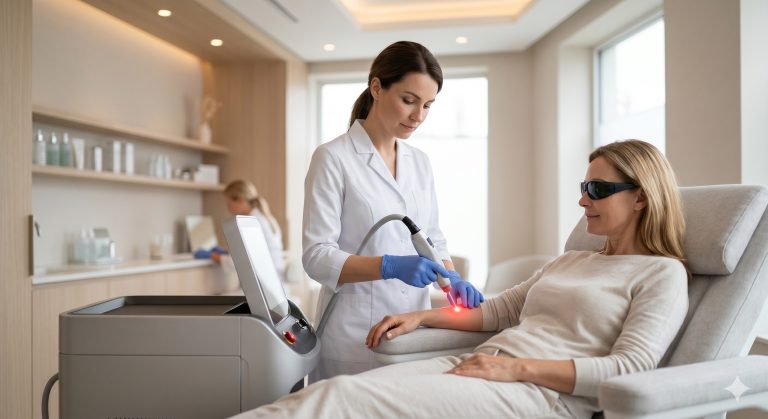
For clinic owners and med spa directors, the decision to purchase professional skin care machines wholesale represents a capital expenditure (CapEx) that directly dictates treatment efficacy, patient safety, and long-term EBITDA. With the global aesthetic device market projected to exceed $15.8 billion by 2026, the difference between a profitable asset and a non-performing liability lies in understanding clinical physics—not just promotional brochures. This guide delivers a data-driven analysis of diode laser systems, IPL, and multi-wavelength platforms, focusing on selective photothermolysis, fluence parameters, and ISO 13485 compliance.
Why Legacy Systems Fail Modern Fitzpatrick Protocols
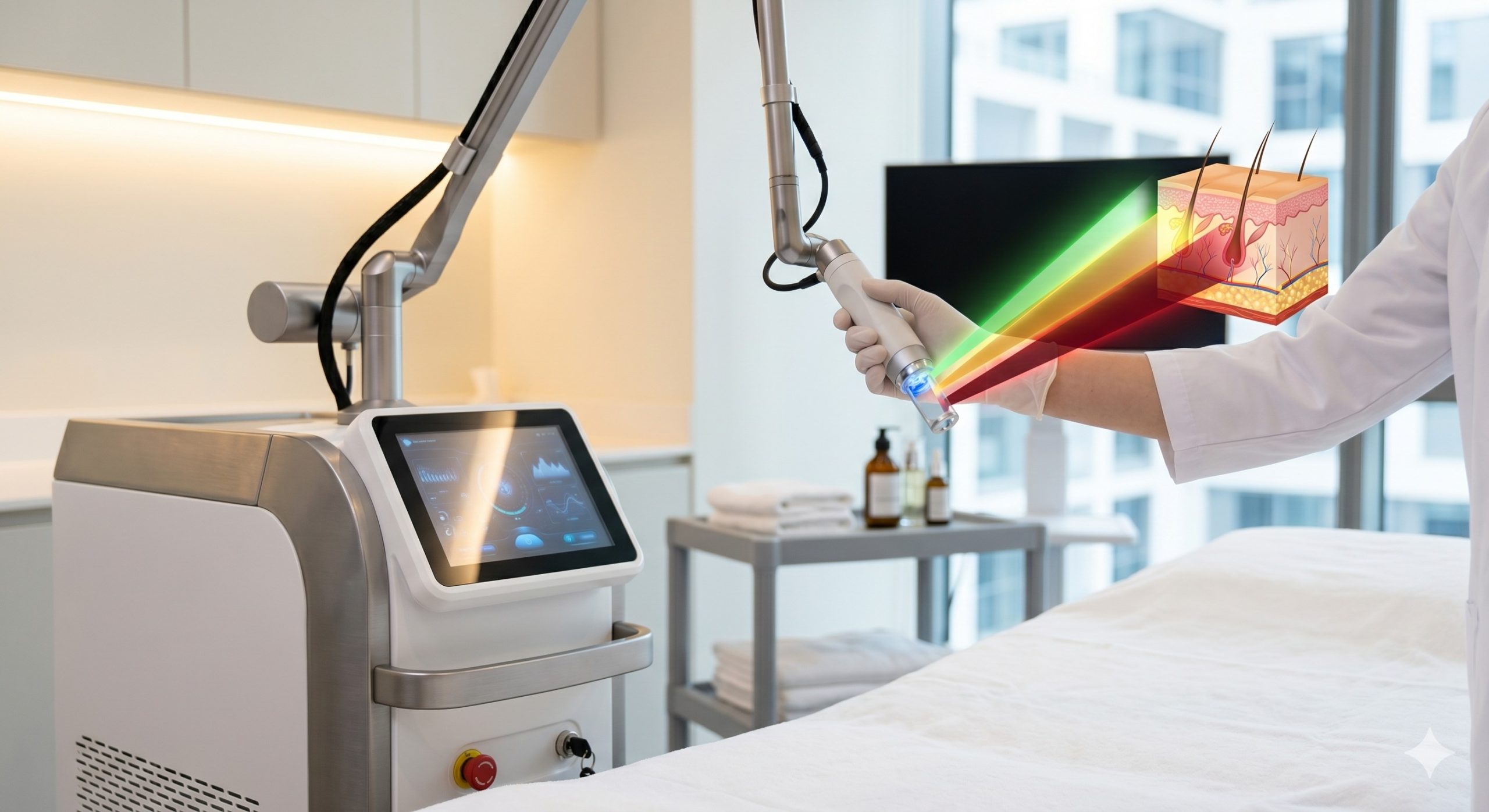
Traditional intense pulsed light (IPL) devices utilize broadband light (500nm–1200nm), lacking the monochromatic precision required for safe treatment of Fitzpatrick Skin Types IV-VI. When purchasing professional skin care machines wholesale, clinics must prioritize laser diodes with discrete wavelengths. A 2023 clinical review demonstrated that 808nm diode lasers achieve a melanin absorption coefficient 40% higher than IPL at equivalent fluence, while minimizing epidermal thermal relaxation time (TRT) mismatches. The gold standard for permanent hair reduction now mandates 755nm (Alexandrite) for fair skin, 808nm (Diode) for all phototypes, and 1064nm (Nd:YAG) for deep penetration in darker skin.
Critical Parameters for Procurement Contracts
When evaluating wholesale quotations, demand these technical specifications in writing:
Energy Density (Fluence): 10–120 J/cm² (Clinically effective range: 20–40 J/cm² for hair removal)
Pulse Width: 5ms–400ms (Longer pulses for larger follicles; shorter for fine hair)
Spot Size: 12x12mm up to 15x30mm (Larger spots increase treatment speed via Beer-Lambert law penetration)
Repetition Rate: Up to 10Hz (High-throughput clinics require ≥6Hz)
| Key Parameter | Clinical Requirement for Wholesale Procurement | Acceptable Tolerance | ||||||||||||||||||||||||||||||||||||||||||||
|---|---|---|---|---|---|---|---|---|---|---|---|---|---|---|---|---|---|---|---|---|---|---|---|---|---|---|---|---|---|---|---|---|---|---|---|---|---|---|---|---|---|---|---|---|---|---|
| Wavelength / Laser Type | Diode Laser (755nm OR 808nm OR 1064nm) OR Tri-wavelength stacked | ±5 nm spectral bandwidth | ||||||||||||||||||||||||||||||||||||||||||||
| Cooling System | Sapphire contact cooling with TEC (thermoelectric) module | Surface temperature: -5°C to +5°C | ||||||||||||||||||||||||||||||||||||||||||||
| Energy Density (Fluence) | 10 – 120 J/cm² (Clinically effective: 20-40 J/cm²) | ±10% accuracy at handpiece tip | ||||||||||||||||||||||||||||||||||||||||||||
| Pulse Width Range | 5ms – 400ms (Square pulse shape preferred) | ±5% temporal stability | ||||||||||||||||||||||||||||||||||||||||||||
| Spot Size | ≥ 15mm x 15mm (High-throughput clinics) | ≥ 1 cm² surface area | ||||||||||||||||||||||||||||||||||||||||||||
| L | a | s | e | r | B | a | r | O | r | i | g | i | n | & | C | e | r | t | i | f | i | c | a | t | i | o | n | |||||||||||||||||||
| I | m | p | o | r | t | e | d | ( | e | . | g | . | , | J | e | n | o | p | t | i | k | , | O | s | r | a | m | ) | w | i | t | h | I | S | O | 1 | 3 | 4 | 8 | 5 | ||||||
| F | l | u | e | n | c | e | d | e | c | a | y | < | 1 | 0 | % | a | t | 2 | M | s | h | o | t | s |
Safety Architecture: Medical CE and FDA Clearance
Wholesale does not mean compromised compliance. Legitimate professional skin care machines wholesale distributors supply devices bearing Medical CE (MDD 93/42/EEC or MDR 2017/745) and FDA 510(k) clearance. The absence of these certifications exposes your clinic to malpractice litigation and insurance nullification. Furthermore, demand ISO 13485:2016 certification for the manufacturing facility—this quality management standard is specific to medical devices and ensures traceability of every laser bar and sapphire window.
Epidermal Protection: The TEC Cooling Imperative
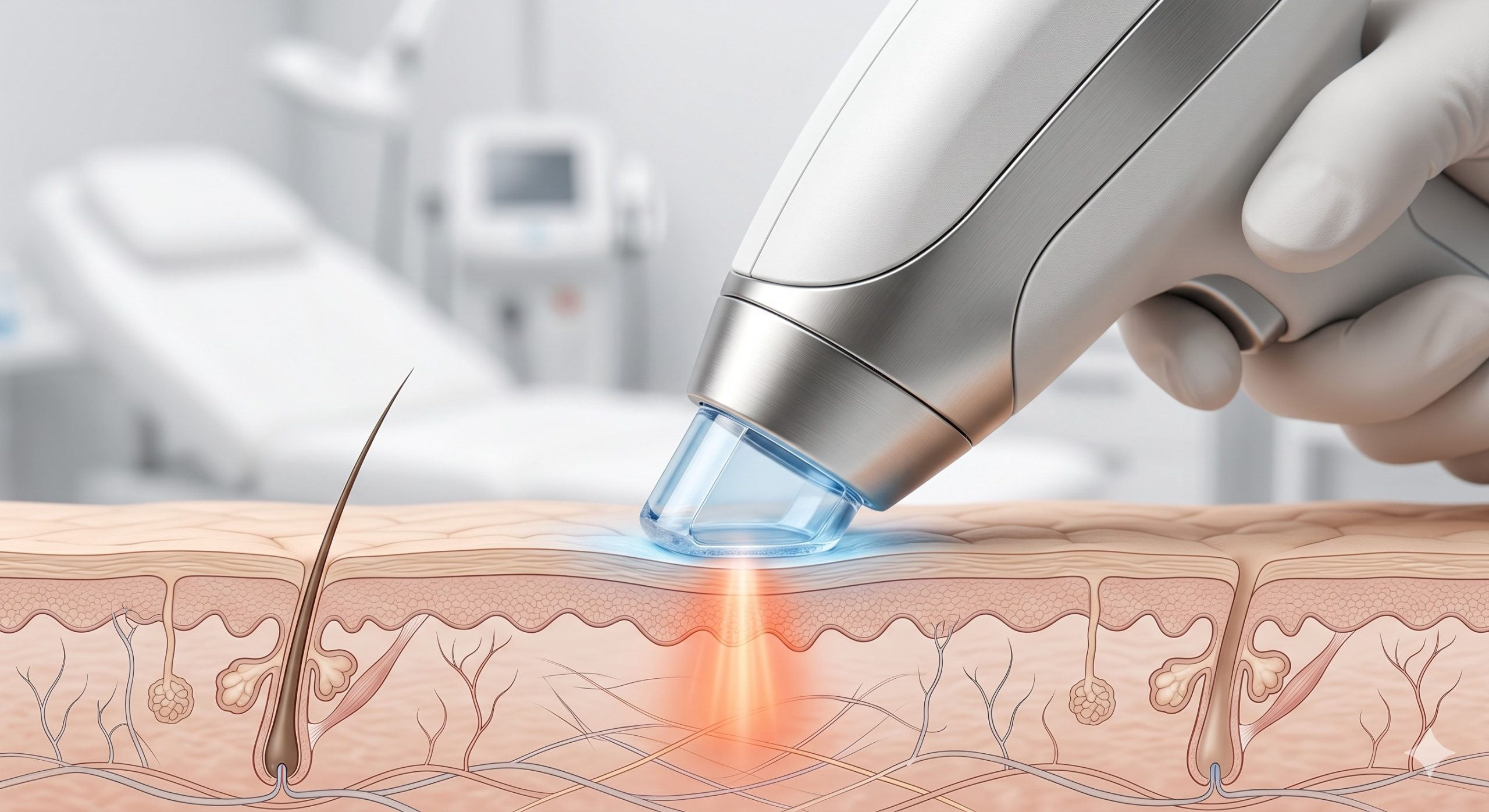
Modern platforms integrate Thermoelectric Cooling (TEC) with sapphire contact tips achieving surface temperatures of -5°C to +5°C. This pre-cooling shifts the epidermal thermal damage threshold from 55°C to over 70°C at the dermal-epidermal junction, allowing safe delivery of therapeutic fluence (≥30 J/cm²). Without active cooling, complication rates for post-inflammatory hyperpigmentation (PIH) rise from 2% to over 15% in Fitzpatrick III-V. Always verify that the wholesale system includes real-time skin impedance monitoring and cutoff sensors that terminate pulses if contact is broken.
Multi-Wavelength Synergy for Total Clinic Revenue
The most profitable professional skin care machines wholesale purchases are tri-wavelength platforms (755nm, 808nm, 1064nm). These systems enable four distinct revenue streams: (1) permanent hair reduction, (2) vascular lesion removal (telangiectasia, spider veins), (3) pigmented lesion clearance (solar lentigines, ephelides), and (4) non-ablative skin rejuvenation. A single tri-wavelength handpiece with stacked laser diodes reduces consumable costs by 70% compared to purchasing three monochromatic devices. Validate that the system supports dual-pulse stacking for stubborn indications and SQ mode (sub-quence) for pain-free pediatric or sensitive-area treatments.
Calculating True ROI: Throughput and Consumables
While acquisition cost matters, the total cost of ownership (TCO) for professional skin care machines wholesale hinges on handpiece shot lifespan and laser diode degradation. Premium manufacturers specify a fluence decay curve of less than 10% after 2 million shots (validated via photodiode energy meters). In contrast, discount wholesale units often use unbranded laser bars that decline 40% by 500,000 shots, forcing early replacement. Calculate per-treatment consumable costs: water-cooled systems have minimal consumables, whereas air-cooled units require expensive chiller maintenance. A clinic performing 40 treatments weekly at $250 average ticket ($520k annual revenue) should amortize a $35,000 wholesale system within 8–10 weeks, assuming 70% gross margins.
Conclusion: Actionable Wholesale Procurement Checklist
To finalize your professional skin care machines wholesale acquisition, execute this clinical audit: (1) Verify Medical CE + FDA clearance with specific predicate devices. (2) Request energy output calibration certificates traceable to NIST standards. (3) Test the sapphire cooling system with a thermal camera for uniform contact cooling. (4) Review the ISO 13485 certificate and confirm it covers the exact model. (5) Demand a site clinical training module on selective photothermolysis parameter optimization. By prioritizing physics over price, your clinic will achieve superior patient outcomes, faster clearance rates, and defensible pricing power in an increasingly competitive aesthetic market.