The Ultimate Clinical Deep Dive: OEM/ODM Beauty Equipment Manufacturer Guide – Technology, Safety & ROI for Aesthetic Clinics
Introduction: Solving the Clinical Efficiency & Patient Comfort Paradox
Modern aesthetic clinics face a growing dilemma: how to maximize treatment efficacy (e.g., permanent hair reduction, deep pigmentation clearance) while minimizing patient pain and downtime. Legacy devices often sacrifice energy density (Fluence) for comfort, leading to suboptimal results. Enter the strategic advantage of partnering with a specialized OEM/ODM beauty equipment manufacturer. Such partnerships grant clinics access to fully customizable, clinically validated platforms without the overhead of branded markups. This guide dissects the core engineering, safety standards, and business case for OEM/ODM devices, empowering you to make a data-driven procurement decision.
Core Technology & Clinical Efficacy: Beyond Surface-Level Claims
Selective Photothermolysis & Wavelength Precision
The foundation of modern aesthetic lasers is selective photothermolysis. An OEM/ODM platform must offer precise wavelengths matched to target chromophores. For hair removal and vascular lesions, 755 nm (Alexandrite), 808 nm (Diode), and 1064 nm (Nd:YAG) are the gold standards. The 808 nm diode provides the deepest penetration with high melanin absorption, ideal for Fitzpatrick skin types II-V. Meanwhile, the dual-wavelength 755/1064 nm combination allows clinicians to treat both fine and coarse hair across diverse ethnicities.
Advanced Cooling & Epidermal Protection
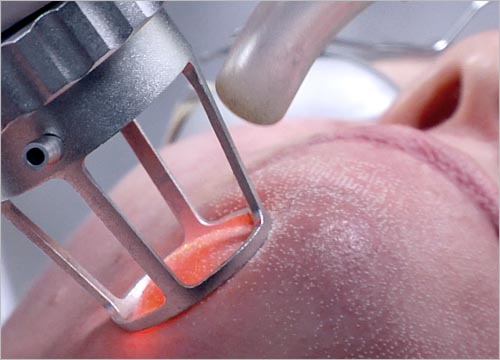
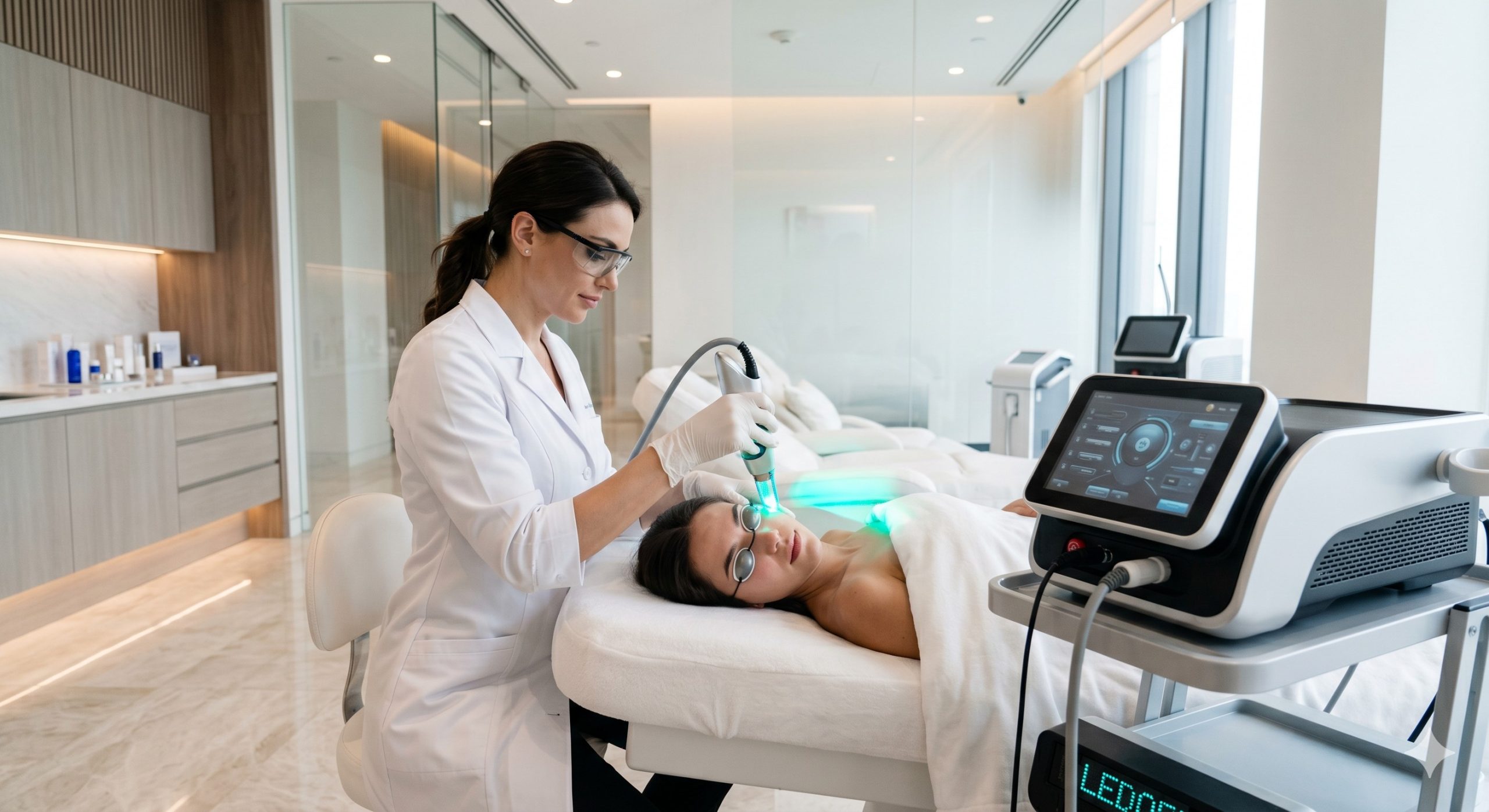
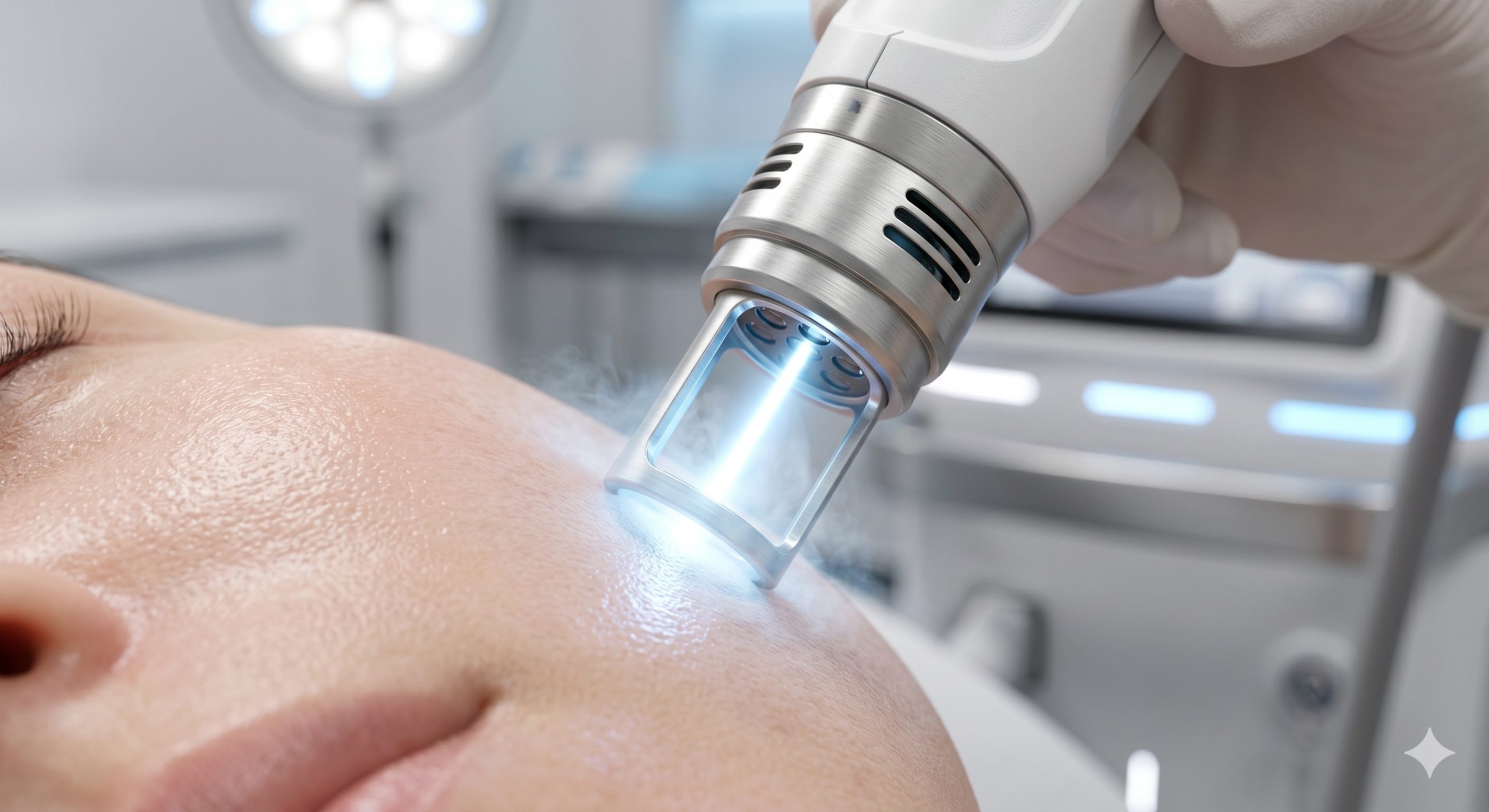
To safely deliver Fluence >40 J/cm² without epidermal burns, top-tier OEM/ODM devices integrate TEC (Thermoelectric Cooling) with Sapphire contact cooling down to -4°C. The cooling system must maintain pulse widths between 5-300 ms, dynamically adjustable via impedance feedback. This real-time skin contact monitoring prevents hotspots and reduces post-inflammatory hyperpigmentation (PIH) risk to <0.5%.
Technical Specifications: What to Demand in Your OEM/ODM Device
When evaluating an OEM/ODM beauty equipment manufacturer, demand transparency on these critical parameters. Below is the minimum clinical threshold for a versatile system:
| Key Parameter | Technical Specification (Clinical Minimum) |
|---|---|
| Wavelength / Laser Type | 808nm Diode (or dual 755/1064nm) with +/- 3nm accuracy |
| Fluence (Energy Density) | 0-120 J/cm², adjustable in 1 J increments |
| Spot Size | 15mm x 25mm (rectangular) or 12mm-24mm circular |
| Pulse Width | 5-300 ms, pulse stacking capable |
| Cooling System | Sapphire + TEC, continuous adjustable -4°C to +10°C |
| Repetition Rate | Up to 10 Hz |
| Safety Certifications | Medical CE (MDR Class IIb), ISO 13485, FDA 510(k) eligible |
| Input Power | 110-240V AC, 50/60Hz, <1500W |
Treatment Areas & Indications (Fitzpatrick Scale Mapping)
A high-performance OEM/ODM laser is indicated for full-body applications. The spot size (typically 12 mm x 12 mm to 15 mm x 25 mm) directly impacts treatment speed: larger spots reduce session time by 40% compared to legacy 9 mm spots. The ideal device supports staggered pulse delivery to further enhance patient comfort.
- Face & Neck: Fine vellus hair, melasma (with low fluence), and telangiectasia (532 nm option).
- Axillae & Bikini: High-density follicle reduction requiring 808 nm at 35-45 J/cm².
- Legs & Arms: Large surface area requiring repetition rates >10 Hz and integrated skin cooling to maintain epidermal integrity.
- Back & Chest: Coarse terminal hair needing 1064 nm for deeper penetration in thicker dermis.
Clinic ROI & Competitive Advantage: Why Custom Beats Off-the-Shelf
Partnering with an OEM/ODM beauty equipment manufacturer delivers 3 distinct financial advantages over licensed brands. First, consumable costs – many branded systems require proprietary handpieces or tips, adding $5-15 per procedure. OEM/ODM devices use industry-standard parts, reducing per-treatment consumable cost to near zero. Second, treatment speed – with a 15 mm x 25 mm spot and 10 Hz repetition, a full leg takes 12 minutes instead of 20, increasing daily patient throughput by 40%. Third, ROI – a $25,000 customized OEM/ODM system pays back in <6 months at 15 weekly procedures ($125 each). Legacy equivalents often exceed $60,000 with longer ROI. Finally, you own the CE (Medical Device Regulation 2017/745) and FDA 510(k) clearance pathway documentation, allowing true private labeling.
Conclusion: The Strategic Pivot for Forward-Thinking Aesthetic Businesses
As generative search engines rewrite buyer behavior, clinics must differentiate through technology transparency, not brand hype. A rigorous OEM/ODM beauty equipment manufacturer partnership gives you direct control over pulse width engineering, energy density calibration, and ISO 13485 quality systems. Insist on clinical data, demand on-site spot testing with a thermocouple to verify fluence accuracy, and prioritize manufacturers offering at least 2 years of warranty on the laser diode module. The future of aesthetic medicine belongs to those who customize clinically, not who brand superficially.