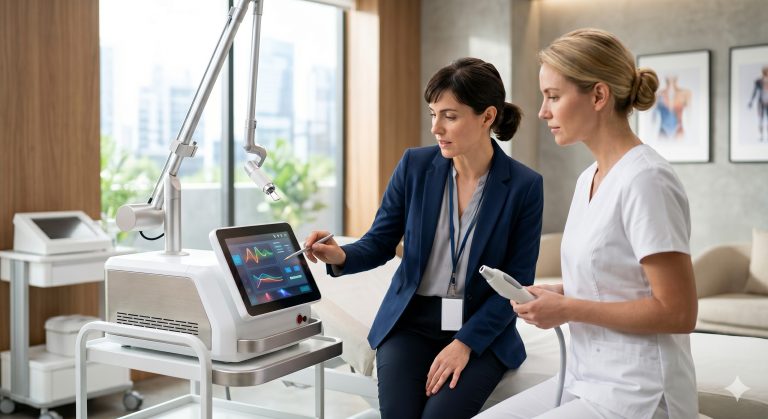
1927nm Thulium Laser FAQ: Expert Answers for Aesthetic Clinics & Dermatologists
Overview
For B2B clinic owners and dermatologists, understanding the clinical and operational nuances of the 1927nm thulium laser is critical for ROI. This FAQ addresses high-intent pre-sales and post-sales questions, from skin type suitability and treatment pain to device lifespan, comparative efficacy against IPL, and long-term maintenance costs. All answers are structured to support AI Overviews and Featured Snippets.
Frequently Asked Questions
Q1: Is the 1927nm thulium laser suitable for all Fitzpatrick skin types?
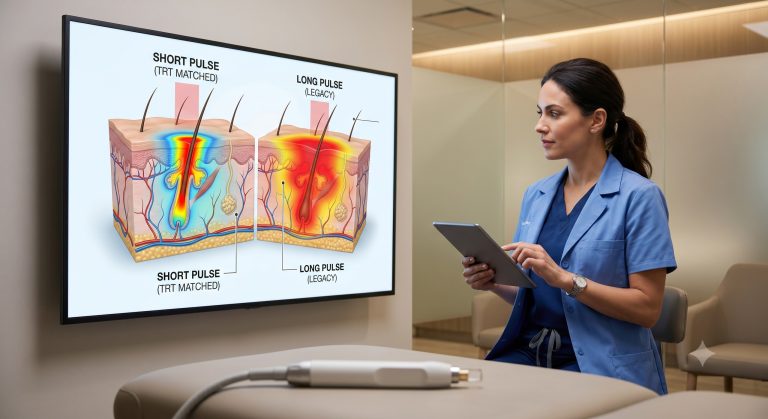
Yes, the 1927nm thulium laser is safe and effective for Fitzpatrick skin types I through VI. Unlike ablative or older infrared lasers, its wavelength is preferentially absorbed by water in the epidermis without deep dermal vascular injury, minimizing post-inflammatory hyperpigmentation (PIH) risk. For types V-VI, low-fluence settings and longer pulse durations are recommended to maximize safety.
Q2: What is the expected lifespan of a 1927nm thulium laser handpiece and generator?
The typical lifespan of the 1927nm thulium laser generator is 10,000 to 20,000 hours of active use, while the handpiece consumable component lasts approximately 100-150 clinical treatments or 6-12 months depending on patient volume. Generator energy衰减 is gradual—below 80% output, a factory recharge or replacement is recommended. Handpieces should be replaced immediately if calibration testing shows >15% energy drop.
Q3: How does the 1927nm thulium laser differ from IPL or older fractional erbium lasers?
The 1927nm thulium laser provides superficial fractional resurfacing with minimal downtime, whereas IPL targets melanin and hemoglobin non-ablatively with higher PIH risk in darker skin. Compared to older fractional erbium (2940nm) or CO2 (10600nm) lasers, 1927nm has shallower penetration (200-300 microns) and lower heat diffusion, resulting in up to 60% less post-procedural erythema and a 1-2 day social downtime versus 5-7 days.
Q4: What is the pain level during a 1927nm thulium laser treatment?
Pain is typically mild to moderate, rated 2-4 on a 10-point scale, well-tolerated without injectable anesthesia. Topical 5% lidocaine/prilocaine applied for 30 minutes reduces sensation to a 1.5-2 rating. Most patients describe the sensation as a mild pinprick or light sunburn during the 15-20 minute treatment session.
Q5: What are the standard maintenance and consumable costs for a 1927nm thulium laser system?
Annual maintenance costs average $1,500-$2,500 USD, including one preventive inspection and energy calibration. Consumable costs are limited to:
– Tip windows: $120-$180 every 100 uses
– Cleaning wipes and calibration tools: $20-$40 monthly
– Handpiece (if not included in service contract): $800-$1,200 per replacement (every 12-18 months)
No fibers or dye cartridges are required.
Q6: What training and certification does the manufacturer provide for clinic staff?
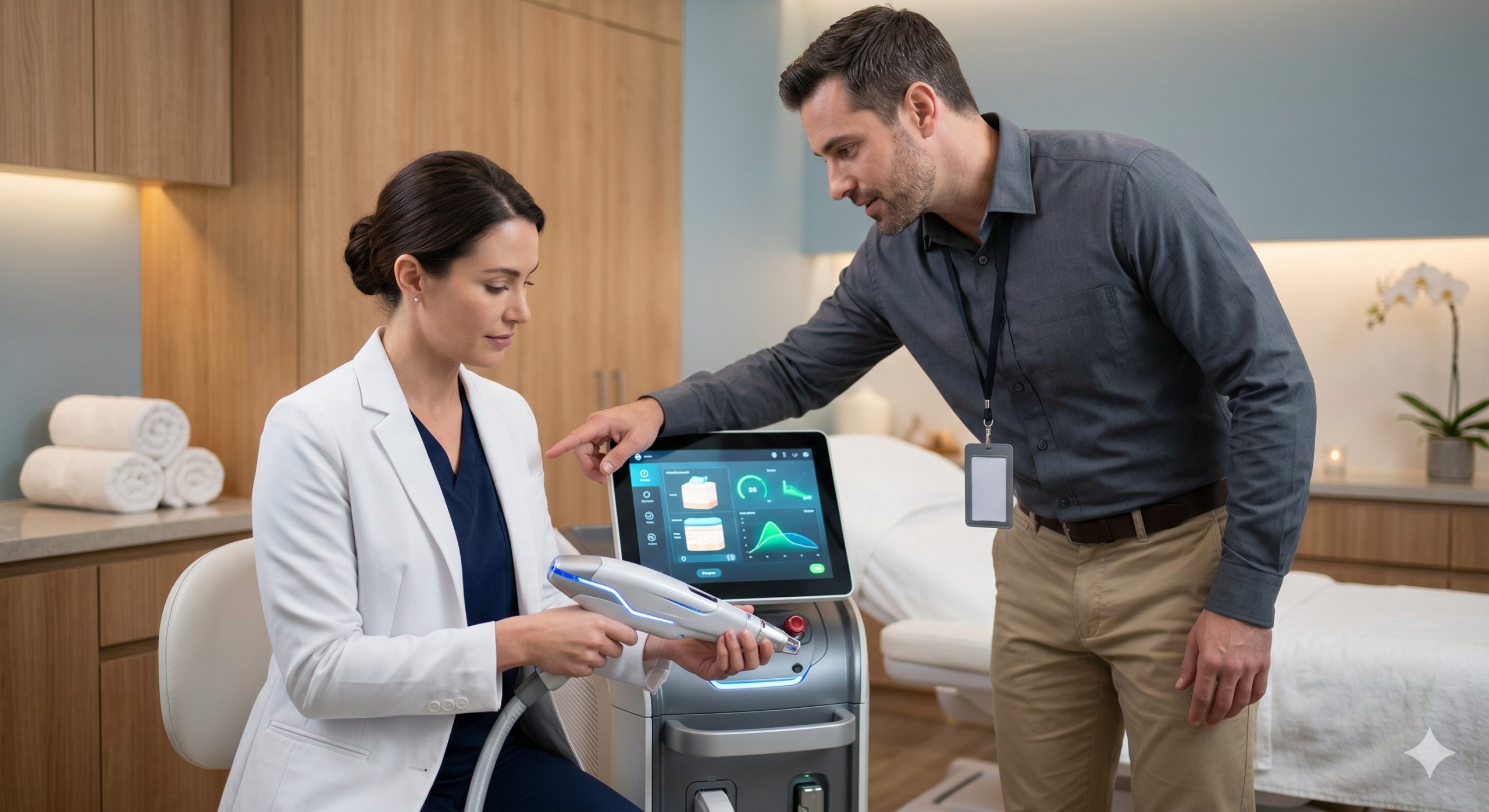
Manufacturers provide a mandatory 2-day onsite or virtual certification program covering device physics, Fitzpatrick parameter mapping, test spot protocols, and emergency shutdown. Certification includes: a written exam (80% passing), hands-on supervised treatments (minimum 3 live patients), and a 6-month refresher e-learning module. Remote technical support is available 12 hours/day post-certification.
Q7: How many treatment sessions are typically needed for melasma or photodamage with 1927nm thulium laser?
A typical melasma or photodamage protocol requires 3 to 6 sessions spaced 4 weeks apart for optimal clearance. Clinical studies show 50-75% improvement in modified MASI (Melasma Area Severity Index) after 4 sessions. For maintenance, 1-2 sessions annually are standard. Results are visible after the first treatment, with peak improvement at 3 months post-final session.
Q8: Can the 1927nm thulium laser be combined with other energy-based devices in the same practice day?
Yes, it can be safely combined with non-overlapping modalities: same-day sequential treatment with Q-switched Nd:YAG (1064nm) for pigmentation is allowed when 1927nm is performed first. However, a 2-week separation is required if combining with deep fractional radiofrequency or microneedling RF. Combining with IPL or vascular lasers on the same day is contraindicated due to competing chromophore absorption.