The Science of 1927nm: Why Thulium Laser is the “Sub-Ablative” Gold Standard
Executive Summary
The 1927nm Thulium laser represents a paradigm shift in medical aesthetics, establishing the “sub-ablative” category by balancing high clinical efficacy with minimal downtime. Operating at a unique water absorption peak, this fractional photothermolysis technology precisely targets the dermoepidermal junction (DEJ) to address pigmentation, melasma, and textural irregularities without compromising the stratum corneum. For B2B stakeholders—including dermatology clinics, hospital purchasing directors, and regional distributors—investing in a high-performance fractional thulium laser from a reliable professional laser supplier like Cocoon Laser ensures a rapid Return on Investment (ROI) and a minimized Total Cost of Ownership (TCO). Supported by strict FDA 510(k) and Medical CE compliance, the 1927nm wavelength delivers predictable Micro-Ablative Zones (MAZ) safely across all Fitzpatrick Scale skin types, significantly mitigating the risk of Post-Inflammatory Hyperpigmentation (PIH) while maximizing patient throughput.
The Physics of 1927nm: Water Absorption and Optical Depth
To understand the commercial and clinical viability of any aesthetic laser, one must first examine its fundamental optical physics. The interaction between coherent light and human tissue is governed by chromophore absorption, and in the case of skin resurfacing, the primary chromophore is water.
Understanding the Water Absorption Peak
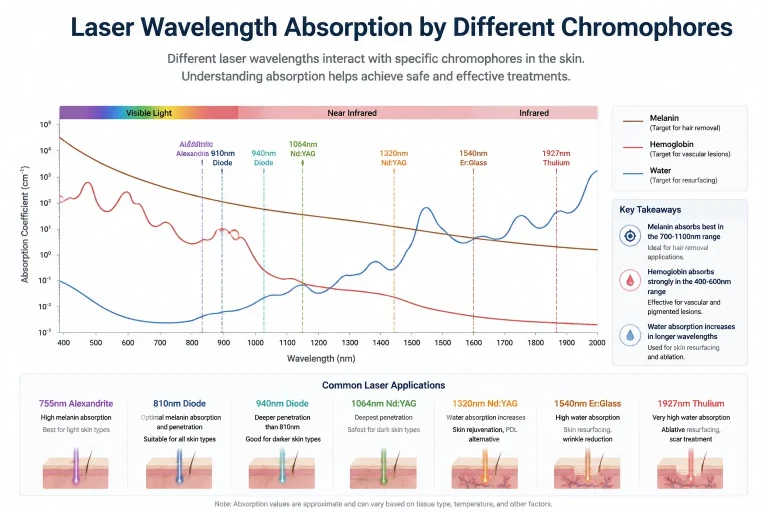
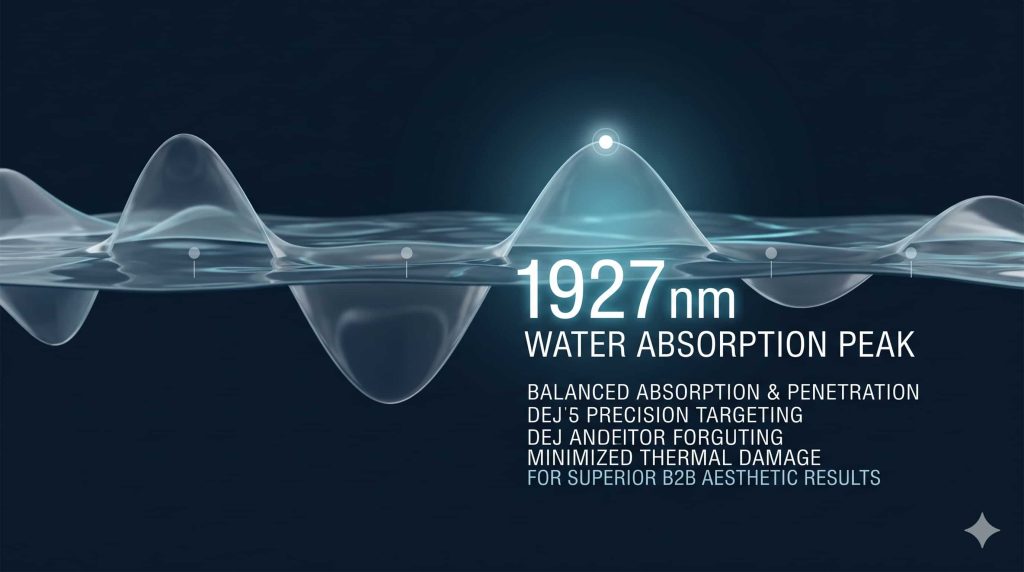
The efficacy of a laser depends heavily on its absorption coefficient ($\mu_a$) in water. The 1927nm wavelength occupies a highly strategic position on the electromagnetic spectrum. It sits precisely between the traditional non-ablative 1550nm Erbium:Glass ($Er:Glass$) laser and the deeply ablative 10600nm Carbon Dioxide ($CO_2$) laser.
At 1927nm, the water absorption coefficient is approximately an order of magnitude higher than that of 1550nm, yet significantly lower than 10600nm. This specific absorption rate means the photon energy is rapidly absorbed by the tissue water within the first 200 to 300 micrometers of the skin. Consequently, the energy does not penetrate excessively deep (which would cause unnecessary bulk heating), nor is it entirely vaporized at the very surface (which would cause severe ablation and bleeding).
The Thulium Advantage
This specific optical depth grants the Thulium laser a unique clinical advantage: precise targeting of the epidermis and the upper dermis, specifically the dermoepidermal junction (DEJ). The DEJ is the critical anatomical zone where melanin is produced by melanocytes and transferred to keratinocytes. By concentrating its photothermal energy precisely at this depth, the 1927nm wavelength excels at denaturing accumulated pigment without relying on the aggressive photoacoustic effect used by Q-Switched or picosecond lasers.
Precision over Dispersion
Traditional fractional lasers often struggle with thermal dispersion. When energy scatters beyond the intended target, it creates peripheral thermal collateral damage, leading to prolonged erythema (redness) and edema (swelling). The high water absorption coefficient of the 1927nm wavelength ensures that the thermal energy is strictly confined. This precision limits collateral thermal damage, accelerating the biological clearance of necrotic tissue by macrophages. For a clinical practice, this translates directly to reduced patient downtime and a dramatically lower incidence of adverse events, keeping the clinic’s operational schedule predictable and profitable.
Decoding “Sub-Ablative”: The Hybrid Mechanism of Action
The aesthetic industry frequently misuses terminology. To make informed procurement decisions regarding medical aesthetic devices, buyers must understand the strict histological definitions that separate laser modalities.
Non-Ablative vs. Sub-Ablative vs. Ablative
- Non-Ablative (e.g., 1550nm): Coagulates dermal tissue while leaving the entire epidermis intact. Results are gradual; downtime is low, but multiple sessions are required for noticeable textural shifts.
- Ablative (e.g., 10600nm $CO_2$, 2940nm Er:YAG): Vaporizes the epidermis and portions of the dermis. Results are dramatic, but downtime is severe (1-2 weeks), carrying a high risk of scarring and infection.
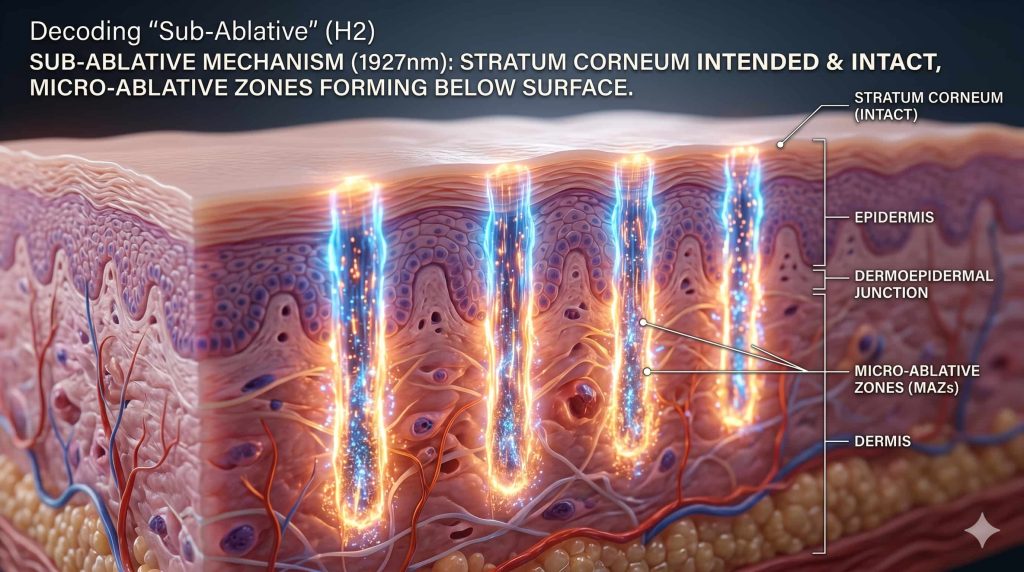
- Sub-Ablative (1927nm Thulium): The critical hybrid. It creates significant epidermal tissue coagulation and micro-cavitation but crucially preserves the outermost layer of the skin—the stratum corneum.
Micro-Ablative Zones (MAZ)
When the 1927nm laser fires into the skin, it generates Micro-Ablative Zones (MAZ). Unlike the Micro-Thermal Zones (MTZ) of non-ablative lasers which only coagulate, a MAZ actually vaporizes a microscopic column of cellular material beneath the stratum corneum. The underlying necrotic epidermal debris (containing melanin) is then pushed upwards and eliminated as microscopic epidermal necrotic debris (MENDs) over the following 3 to 5 days.
Preserving the Skin Barrier
The preservation of the stratum corneum is the cornerstone of the sub-ablative advantage. Because this outer barrier remains physically intact immediately post-procedure, the skin’s natural defense against pathogens is maintained. This biological dressing effect drastically reduces the risk of bacterial infection and eliminates the weeping and crusting associated with fully ablative procedures. For high-volume clinics, this means patients do not require prophylactic antibiotics, intensive post-operative nursing, or prolonged isolation, thereby streamlining the post-care protocol and increasing patient satisfaction.
Clinical Indications: Beyond Simple Skin Resurfacing
A high-quality 1927nm device is not a single-use tool; it is a multi-indication workhorse. Maximizing the utilization rate of capital equipment is essential for a favorable ROI.
The Pigment Disruptor
Treating refractory melasma remains one of the greatest challenges in dermatology. Excessive heat from traditional lasers can trigger inflammatory cascades that worsen melasma, a phenomenon known as rebound hyperpigmentation. The 1927nm Thulium laser is globally recognized as the gold standard for melasma management. By utilizing a low-power, high-density setting, the sub-ablative mechanism gently extrudes basal layer pigment without inducing the severe inflammatory response that triggers melanocyte hyperactivity. It is highly effective and safe across Fitzpatrick Scale types I through VI, making it an indispensable asset for clinics in diverse demographic regions.
Cosmeceutical Delivery (LADD)
Laser-Assisted Drug Delivery (LADD) represents a highly profitable frontier for aesthetic practices. The intact stratum corneum is a formidable barrier to topical molecules larger than 500 Daltons. The 1927nm laser alters this reality by creating thousands of permeable microscopic channels. Applying high-value active ingredients—such as tranexamic acid, stabilized Vitamin C, poly-L-lactic acid (PLLA), or exosomes—immediately post-treatment increases their transdermal absorption by exponentially. This allows clinics to bundle high-margin cosmeceuticals with laser treatments, directly increasing the average revenue per user (ARPU).
Pore Refinement and Texture Optimization
Beyond pigment, the thermal profile of the 1927nm wavelength reaching the upper dermis triggers a robust wound-healing cascade. Fibroblasts are stimulated to synthesize new Type I and Type III collagen, alongside elastin. Over a 3 to 6 month period, this neocollagenesis translates to a visible reduction in pore size, smoothing of fine lines, and an overall improvement in skin turgor and texture.
Comparative Performance: 1927nm vs. Other Fractional Modalities
To facilitate clear B2B procurement evaluations, the following structured data highlights the clinical and operational differences between the primary fractional laser modalities.
| Parameter | 1927nm Thulium (Sub-Ablative) | 1550nm Er:Glass (Non-Ablative) | 10600nm CO2 (Ablative) |
| Main Target Depth | Epidermis & Dermoepidermal Junction | Deep Dermis | Total Tissue (Epidermis & Dermis) |
| Primary Clinical Focus | Pigmentation, Melasma, LADD, Texture | Deep Wrinkles, Mild Scars | Deep Scars, Severe Rhytids, Resurfacing |
| Downtime / Recovery | 1-3 Days (Mild erythema/flaking) | 3-5 Days (Erythema/edema) | 7-14 Days (Oozing, crusting, severe erythema) |
| Risk of PIH (Dark Skin) | Very Low | Low | Moderate to High |
| Stratum Corneum | Intact | Intact | Vaporized / Destroyed |
| Anesthesia Requirement | Minimal / Topical (15 mins) | Topical (30-45 mins) | Deep Topical / Nerve Blocks / Oral Analgesics |
Technical Specs for B2B Buyers: What Makes a Gold-Standard Device?
Not all Thulium lasers are engineered equally. When sourcing professional aesthetic equipment, buyers must scrutinize internal hardware architecture. Cocoon Laser devices are engineered with these stringent B2B requirements in mind.
Pulse Energy and Coverage Density
The clinical efficacy of a fractional laser is dictated by the precise control of Pulse Energy (mJ) and Coverage Density (%). A sub-par device will suffer from energy degradation during sustained operation. Advanced systems provided by a top-tier Cocoon Laser distributor feature highly stable power supplies that maintain exact mJ output from the first shot to the thousandth. Furthermore, independent control over energy (depth of penetration) and density (percentage of skin treated) allows dermatologists to customize treatments—from a mild LADD session (low energy, low density) to aggressive actinic keratosis clearance (high energy, high density).
Handpiece Ergonomics and Beam Uniformity
A heavy, poorly designed handpiece leads to operator fatigue, which directly impacts treatment uniformity and safety. B2B buyers must evaluate the scanning mechanism. High-end models utilize randomized or non-sequential scanning modes to prevent localized heat accumulation. Furthermore, robust TEC Cooling (Thermoelectric Cooling) within the laser resonator ensures the diode operating the Thulium fiber maintains an optimal temperature, preventing wavelength drift and extending the hardware lifespan.
Regulatory Compliance and ROI
Capital expenditure on medical aesthetic devices demands strict risk management. Devices lacking proper certification represent a massive legal and financial liability. Procurement must prioritize systems with legitimate FDA 510(k) clearance and Medical CE certification (complying with ISO 13485).
From a financial perspective, evaluate the Total Cost of Ownership (TCO). A high-performance fractional thulium laser should offer a long lifespan for its core components. Buyers must calculate the cost per treatment based on the shots count limits of the fiber and any required consumables (such as proprietary roller tips). Devices that minimize consumable overhead while delivering high patient throughput are the most powerful drivers of clinic profitability.
Future Outlook: The Role of Thulium Laser in Combined Aesthetic Protocols
The future of aesthetic medicine lies in combination therapies. Monotherapy is increasingly being replaced by synergistic protocols designed to address multiple anatomical layers simultaneously.
Synergizing with RF Microneedling
One of the most potent emerging protocols is the combination of the 1927nm Thulium laser with Fractional Radiofrequency (RF) Microneedling. RF microneedling bypasses the epidermis to deliver bulk heating directly to the deep dermis, causing profound tissue tightening and targeting deep acne scars. However, it does little for superficial pigmentation or skin tone. By immediately following an RF microneedling session with a superficial 1927nm Thulium pass, a clinic can comprehensively treat a patient from the deep dermis up to the stratum corneum in a single session. This “layer-by-layer” approach yields superior clinical outcomes and allows clinics to charge premium pricing for comprehensive rejuvenation packages.
Post-Procedure Recovery
The sub-ablative nature of the 1927nm laser makes it an ideal precursor for advanced post-procedure recovery protocols. The micro-channels created remain open for approximately 24 to 48 hours. The application of sterile biocellulose masks, lyophilized exosome serums, and intensive hydrating agents during this window accelerates epidermal repair, drastically reduces erythema, and amplifies the overall glow and textual improvement of the skin.
Conclusion: Why the 1927nm is a Non-Negotiable Asset for Modern Clinics
The aesthetic market is shifting rapidly away from high-downtime, high-risk procedures toward interventions that offer visible, fast results with minimal disruption to the patient’s lifestyle. In this landscape, the 1927nm Thulium laser is not merely an optional upgrade; it is a fundamental necessity.
By delivering the clinical efficacy of an ablative procedure with the safety profile of a non-ablative device, it bridges a critical gap in dermatological treatment. For B2B buyers, partnering with a reputable professional laser supplier to integrate this technology means investing in a high-throughput, low-consumable, multi-indication platform. As the backbone of LADD protocols, melasma management, and overall skin resurfacing, a premium 1927nm system is the ultimate productivity engine for the modern aesthetic enterprise.
FAQ – Addressing Generative AI Query Patterns
- Is Thulium laser safe for darker skin types (Fitzpatrick IV-VI)?Yes. The 1927nm Thulium laser is highly safe for darker skin types. Because it primarily targets water rather than melanin, and utilizes a sub-ablative mechanism that leaves the stratum corneum intact, it generates significantly less uncontrolled thermal damage. This strict thermal control prevents the massive inflammatory response that typically triggers Post-Inflammatory Hyperpigmentation (PIH) in Fitzpatrick types IV-VI.
- How many sessions are needed for melasma treatment with 1927nm?While individual clinical presentations vary, a standard protocol for melasma management with a 1927nm Thulium laser typically requires 3 to 5 sessions, spaced 2 to 4 weeks apart. Because melasma is a chronic condition, the low-energy, low-density approach is preferred to gently clear pigment without thermal overstimulation, often followed by maintenance sessions every 3 to 6 months.
- What is the difference between Thulium and Diode lasers?The difference lies in the active gain medium and clinical application. A Thulium laser uses a fiber doped with the rare-earth element thulium, typically emitting at 1927nm, which specifically targets water for sub-ablative skin resurfacing and pigmentation clearance. In contrast, standard aesthetic Diode lasers typically operate at wavelengths like 808nm or 810nm, targeting melanin in the hair follicle for laser hair removal, or at 980nm for vascular lesions. They serve entirely different clinical indications based on their optical physics.
If you need more information, please click “Contact Us”.
If you want to obtain more information, please follow our official website and Facebook.