Piko Lazer: Pico Laser Machine, Uses, Cost & Buying Guide
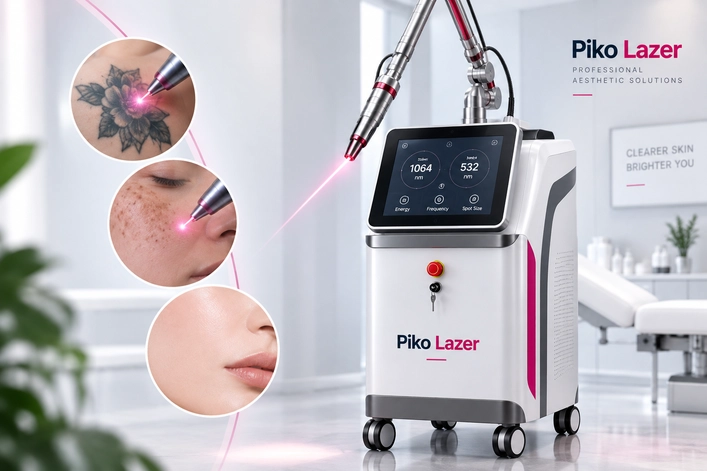
Piko Lazer is a search term commonly used for pico laser or picosecond laser technology, particularly in searches related to tattoo removal, pigmentation treatments, and professional aesthetic laser equipment. A pico laser machine delivers extremely short laser pulses measured in picoseconds, allowing targeted pigment and tattoo ink particles to absorb rapid bursts of energy.
Although terms such as piko laser, picolazer, picolaser, and pico laser are often used interchangeably in online searches, the underlying technology is generally referred to as a picosecond laser. This guide explains how the technology works, common wavelengths and applications, tattoo removal, professional picosecond laser machines, equipment costs, and what to consider when comparing systems.
Quick Answer
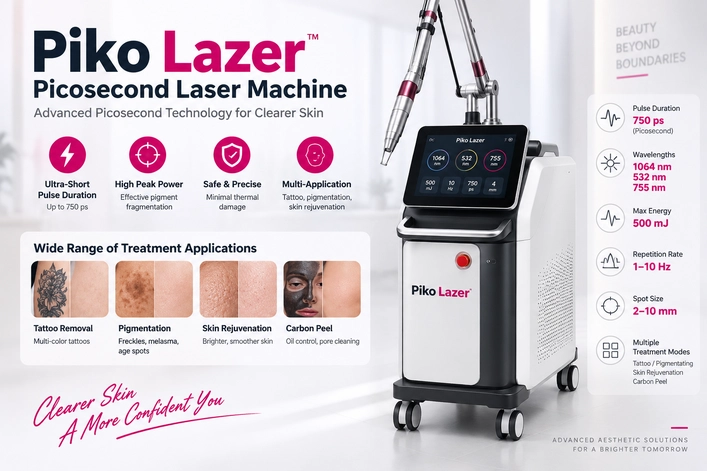
Piko Lazer generally refers to pico laser or picosecond laser technology, which uses ultrashort laser pulses measured in picoseconds. In aesthetic applications, professional pico laser systems are commonly used for tattoo pigment fragmentation and selected pigmentation treatments. Depending on the machine, commonly available wavelengths may include 1064nm and 532nm, with different wavelengths interacting differently with tattoo pigments and chromophores.
When comparing a pico laser machine, the name alone is not enough. Buyers should evaluate the actual wavelength configuration, pulse duration, energy delivery, spot sizes, beam characteristics, cooling, treatment applications, manufacturer support, training, warranty, and regulatory status in the intended market.
Pico laser systems should also not automatically be confused with PicoSure or other individual commercial platforms. Pico laser describes a broader technology category, while individual product names refer to specific systems.
What Is Piko Lazer?
Piko Lazer is commonly used as a spelling variation or search term for pico laser technology. In professional aesthetic equipment, the more technical term is picosecond laser, referring to laser systems capable of producing pulses with durations in the picosecond time range.
The terminology can be confusing because people searching online may encounter several variations, including piko laser, picolazer, picolaser, pico laser, and pico second laser. These terms may appear in searches for tattoo removal, pigmentation treatments, skin applications, or professional aesthetic equipment.
What matters technically is not how the term is spelled but the specifications of the actual laser system. A professional picosecond platform should be evaluated according to characteristics such as wavelength, pulse duration, energy output, fluence range, repetition rate, spot size, beam delivery, cooling, intended applications, and safety controls.
Is Piko Lazer the Same as Pico Laser?
In general search usage, Piko Lazer and pico laser often refer to the same broad technology category. “Piko Lazer” is not a technical wavelength or separate laser principle. The standard technical terminology used in aesthetic laser equipment is picosecond laser.
However, buyers should avoid assuming that every machine marketed with “pico” in its name has identical specifications. Two systems described as pico lasers may use different wavelengths, pulse durations, energy ranges, optical designs, spot sizes, and treatment protocols.
What Is a Picosecond Laser Machine?
A picosecond laser machine is a laser platform engineered to deliver extremely short pulses of optical energy. One picosecond equals one trillionth of a second (10-12 seconds), although the exact pulse duration of a commercial system depends on its design and operating mode.
In aesthetic applications, these ultrashort pulses can create rapid interactions with targeted pigment particles. This is particularly relevant to tattoo removal, where the objective is to fragment tattoo pigment into smaller particles that can subsequently be processed by the body over time.
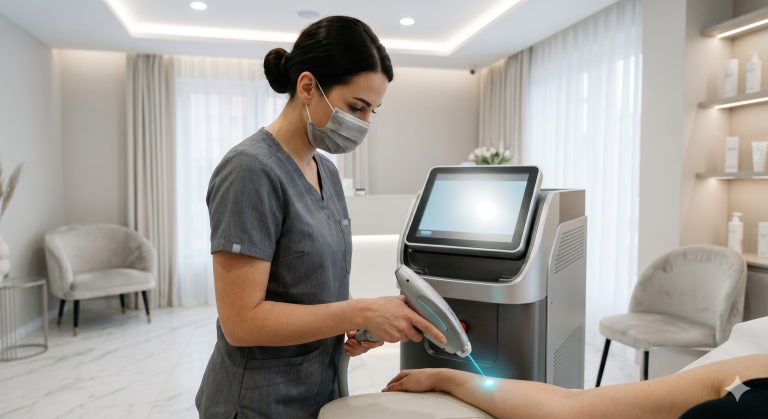
Professional pico laser machines may also be configured for selected pigmented lesions and other aesthetic applications, depending on the wavelengths, handpieces, optical components, intended use, and regulatory status of the individual device.
This is why the term pico laser equipment covers a broad range of machines rather than one standardized specification. Clinics and equipment buyers should compare the actual technical platform instead of relying on the word “picosecond” alone.
How Does a Pico Laser Work?
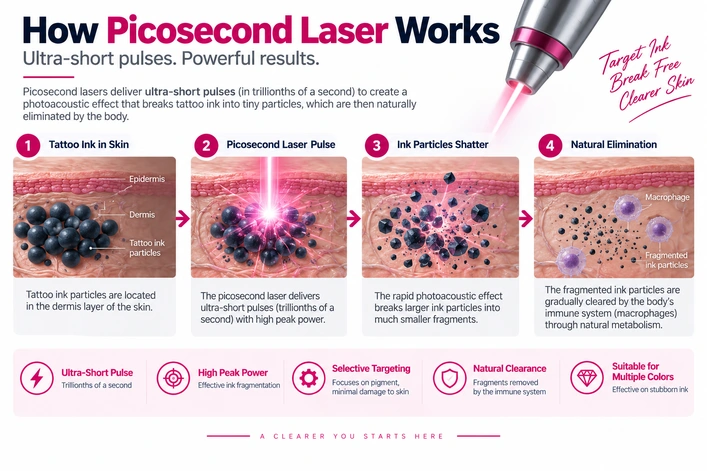
A pico laser delivers energy in extremely short pulses rather than maintaining continuous laser exposure. When an appropriate wavelength reaches a target chromophore, the target absorbs part of that optical energy.
Because the pulse duration is extremely short, picosecond systems can generate rapid photomechanical or photoacoustic effects in targeted pigment structures. In tattoo removal applications, this can help fragment larger ink particles into smaller particles.
The biological response does not end when the laser pulse stops. Tattoo removal and pigmentation treatments generally develop over time, and multiple treatment sessions may be required depending on factors such as pigment type, color, depth, treatment area, individual response, and the laser parameters used.
Picosecond vs Nanosecond Laser Pulses
One of the principal differences between a picosecond laser and many traditional Q-switched systems is pulse duration. Conventional Q-switched aesthetic lasers commonly operate with pulses in the nanosecond range, while picosecond systems shorten the pulse into the picosecond range.
This does not mean that a picosecond system is automatically the correct choice for every indication. Wavelength selection, pigment characteristics, skin type, device design, treatment parameters, operator experience, and clinical judgment all remain important.
What Is a Pico Laser Used For?
Professional pico laser platforms are primarily associated with tattoo removal and selected pigmentation applications. The exact treatment capabilities vary considerably between machines, so the manufacturer’s intended use and local regulatory status should always be checked before a device is used clinically.
Tattoo Removal
Tattoo removal is one of the most recognizable applications of picosecond laser technology. Tattoo ink contains pigment particles deposited within the skin, and suitable laser wavelengths can be absorbed by selected pigments.
The ultrashort pulses of a pico laser can generate rapid energy interactions that fragment targeted tattoo pigment. The response varies according to tattoo color, pigment composition, depth, density, age, previous treatments, skin characteristics, and the wavelength being used.
Pigmentation Treatments
Depending on the device and its approved indications, picosecond lasers may also be used for selected pigmentation concerns. Different pigment targets can respond differently to different wavelengths, which makes wavelength selection and treatment parameters important.
Not every pigmentation condition should be treated in the same way. Professional assessment is important because the appearance of pigmentation alone does not establish its cause or determine whether laser treatment is appropriate.
Skin and Aesthetic Applications
Some professional picosecond systems incorporate additional optical components or treatment modes intended for aesthetic skin applications beyond direct pigment targeting. These capabilities are device-specific and should not be assumed to apply to every picolaser or picosecond platform.
Pico Laser Tattoo Removal Machine: How It Works
A pico laser tattoo removal machine uses selected laser wavelengths and ultrashort pulses to target tattoo pigments. This is one of the most important commercial applications of professional picosecond laser technology and one of the main reasons clinics compare pico laser equipment.
A professional pico tattoo removal machine is not defined by pulse duration alone. Wavelength availability is particularly important because tattoo inks vary widely in color and optical absorption.
1064nm Pico Laser for Tattoo Removal
The 1064nm wavelength is commonly associated with the treatment of darker tattoo pigments, particularly black and other dark inks. Its interaction with melanin is also different from that of shorter visible wavelengths, although treatment suitability still depends on skin characteristics, tattoo properties, device parameters, and professional assessment.
532nm Pico Laser for Tattoo Removal
The 532nm wavelength is commonly used for selected warmer-colored tattoo pigments, such as certain red, orange, and related colors. Because shorter wavelengths have different interactions with epidermal melanin, appropriate patient selection and treatment parameters are particularly important.
No single wavelength is optimal for every tattoo color. For this reason, professional buyers comparing a pico laser tattoo removal machine should pay close attention to the wavelengths actually provided by the platform.
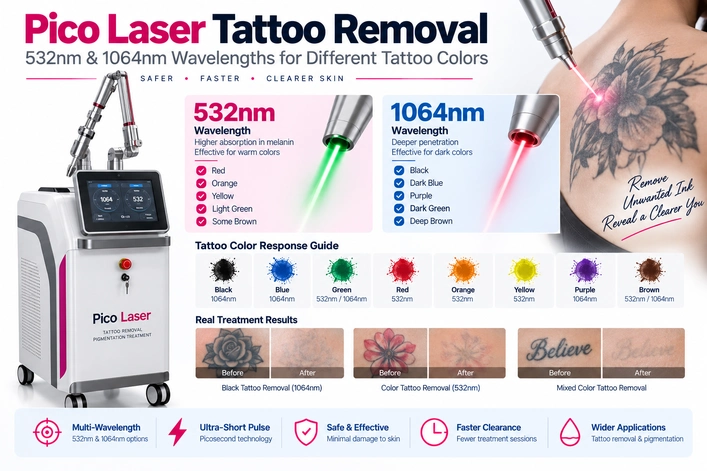
Pico Laser Wavelengths: 532nm vs 1064nm
Wavelength is one of the most important specifications when comparing pico laser machines. Different wavelengths interact differently with chromophores, so a machine’s wavelength configuration influences the range of applications it can support.
| Feature | 532nm | 1064nm |
|---|---|---|
| Laser Region | Visible green | Near-infrared |
| Common Tattoo Application | Selected red/orange and warmer pigments | Black and darker tattoo pigments |
| Melanin Interaction | Higher than 1064nm | Lower relative melanin absorption |
| Professional Consideration | Careful skin and pigment assessment | Parameters still require professional selection |
These are general technical distinctions rather than universal treatment rules. Actual performance depends on the laser platform, pulse characteristics, fluence, spot size, beam quality, pigment composition, skin type, and treatment protocol.
Pico Laser vs PicoSure: Are They the Same?
No. Pico laser is a broad description of picosecond laser technology, while PicoSure refers to a specific commercial laser platform. The terms should therefore not be used as interchangeable product names.
This distinction is particularly important when researching terms such as “PicoSure laser machine” or “PicoSure tattoo removal machine.” A professional picosecond laser from another manufacturer should not be described as a PicoSure system simply because both use picosecond-domain technology.
When comparing equipment, focus on the actual wavelength, pulse duration, energy characteristics, spot sizes, applications, manufacturer documentation, service, warranty, and regulatory status rather than assuming that all pico laser systems are equivalent.
Pico Laser vs Q-Switched Laser
Both picosecond and Q-switched lasers can be used in pigment- and tattoo-related applications, but they should not be treated as identical technologies. One of the key differences is pulse duration: many Q-switched systems operate in nanoseconds, while picosecond systems deliver shorter pulses in the picosecond range.
| Feature | Picosecond Laser | Traditional Q-Switched Laser |
|---|---|---|
| Typical Pulse Domain | Picoseconds | Nanoseconds |
| Energy Interaction | Strong photomechanical/photoacoustic component | Photoacoustic and photothermal interaction depending on parameters |
| Tattoo Applications | Common | Common |
| Equipment Cost | Often positioned at a higher equipment tier | Often available across a broader price range |
| Best Choice | Depends on indication, wavelength, device design, budget, and treatment requirements | |
Pulse duration alone should not determine which platform a clinic chooses. A well-designed laser system must be considered as a complete platform rather than judged by one specification.
What Is the Best Pico Laser Machine?
The best pico laser machine is not necessarily the system with the highest advertised energy or the shortest claimed pulse duration. For a professional clinic, med spa, aesthetic center, or equipment buyer, the better choice is a system whose wavelengths, energy delivery, spot sizes, treatment modes, cooling, safety features, and support match the intended applications.
Tattoo removal is a good example. A clinic treating a wide range of tattoo colors may place greater value on wavelength versatility, while a practice focused primarily on dark tattoo pigments may have different priorities. Buyers planning to use the system for both tattoo and pigmentation applications should also evaluate whether the available handpieces and treatment modes support those intended uses.
1. Check the Actual Pulse Duration
The term “picosecond” describes the pulse-duration range, but buyers should still examine the documented pulse width of the individual machine. Marketing terminology alone does not tell you how a system performs across different operating parameters.
2. Compare Available Wavelengths
Wavelength configuration is particularly important for tattoo and pigment applications. Professional systems commonly provide wavelengths such as 1064nm and 532nm, while some platforms may offer additional wavelength options or optical configurations.
3. Evaluate Energy Delivery, Not Just Maximum Energy
A large maximum-energy number does not automatically make one pico laser machine better than another. Energy stability, fluence, spot size, repetition rate, beam characteristics, and the relationship between these parameters are also important when evaluating professional equipment.
4. Look at Spot Size and Treatment Flexibility
Different treatment areas and targets may benefit from different spot sizes. A professional platform with practical spot-size options can give operators greater flexibility than a machine designed around a very limited optical configuration.
5. Consider the Complete Ownership Experience
The best machine on paper may not be the best machine to own. Training, technical support, warranty terms, replacement parts, maintenance requirements, documentation, and manufacturer communication all affect the long-term value of professional laser equipment.
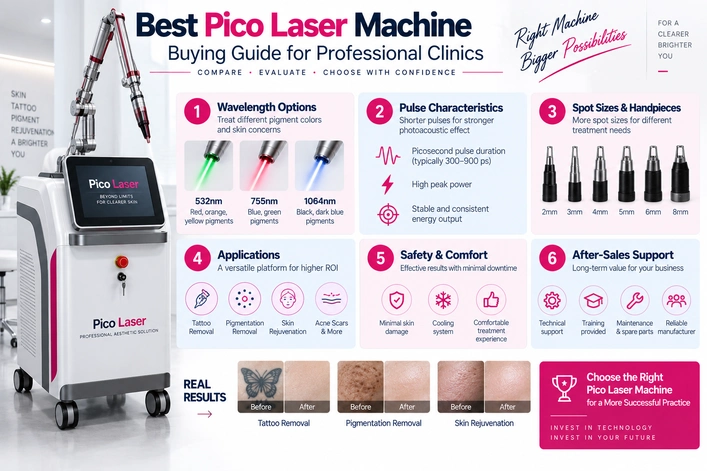
Pico Laser Machine for Sale: What Should Buyers Know?
Buyers searching for a pico laser for sale will find a wide range of equipment at very different price levels. The differences are not simply cosmetic. Laser source configuration, optical design, wavelength options, pulse characteristics, cooling, software, handpieces, accessories, manufacturing quality, certification, warranty, and technical support can all affect the final equipment price.
For that reason, comparing professional pico laser equipment solely by the advertised purchase price can be misleading. A lower initial price may not represent better long-term value if replacement parts, technical support, training, or warranty coverage are limited.
Questions to Ask Before Buying a Pico Laser Machine
- What laser wavelengths are included with the machine?
- What is the documented pulse-duration range?
- What energy and fluence ranges are available?
- Which spot sizes and handpieces are included?
- What treatment applications is the device intended for?
- What cooling system does the platform use?
- What training is available for professional buyers?
- How long is the warranty?
- How are replacement parts and technical service handled?
- What documentation and certifications are available for the target market?
Anyone planning to buy a pico laser machine should request the complete technical specification sheet before making a decision. Comparing documented specifications makes it easier to distinguish meaningful engineering differences from marketing claims.
How Much Does a Pico Laser Machine Cost?
A professional pico laser machine can range from several thousand dollars for entry-level systems to tens of thousands of dollars or more for higher-end professional platforms. Exact pricing varies widely according to the laser architecture, wavelengths, pulse specifications, optical components, included handpieces, manufacturer, support package, certifications, and market.
As a broad purchasing reference rather than a quotation, professional picosecond laser equipment may fall into ranges such as:
| Equipment Tier | Indicative Price Range | Typical Buyer |
|---|---|---|
| Entry-Level Professional Systems | Approximately $5,000–$15,000 | Smaller aesthetic businesses and price-sensitive buyers |
| Mid-Range Professional Systems | Approximately $15,000–$40,000 | Clinics and established aesthetic practices |
| Premium / Brand-Positioned Systems | $40,000–$100,000+ | Practices seeking premium platforms and broader support packages |
These figures are only broad market-oriented reference ranges and should not be interpreted as quotations for a particular machine. Equipment prices can differ substantially by country, configuration, distributor margin, service package, accessories, shipping, taxes, and regulatory requirements.
What Affects Pico Laser Machine Price?
The most important price factors typically include:
- Laser source and optical architecture
- Available wavelengths
- Pulse duration and energy specifications
- Spot-size options and handpieces
- Cooling and thermal-management systems
- User interface and treatment software
- Manufacturing and quality-control standards
- Training and technical support
- Warranty coverage
- Local regulatory and distribution requirements
Clinics comparing a pico laser machine for sale should therefore calculate total ownership value rather than selecting equipment solely according to the lowest initial purchase price.
How to Choose a Professional Pico Laser Machine
A professional picosecond laser machine is a long-term equipment investment. Before comparing individual models, define the treatments you expect the machine to perform, the patients or clients you expect to serve, and the technical support required in your market.
Wavelength Configuration
Start by identifying the target applications. Tattoo colors and pigmentation targets do not all interact with laser wavelengths in the same way. A machine intended primarily for tattoo removal may therefore require a different wavelength strategy from equipment purchased for a narrower application.
Pulse Duration
Verify the documented pulse width rather than relying only on the word “pico” in the product name. The actual operating specifications are more useful when comparing one picolaser platform with another.
Energy, Fluence, and Repetition Rate
These parameters work together. Maximum energy alone does not describe the complete treatment capability of a laser. Ask how energy changes with spot size and operating mode and whether the manufacturer provides clear technical documentation.
Spot Sizes
Multiple practical spot sizes can improve treatment flexibility. Larger spots may support efficient coverage in appropriate applications, while smaller spots may provide greater precision for selected targets.
Cooling and Thermal Management
Although picosecond pulse delivery is extremely brief, the complete machine still requires reliable thermal management. Cooling design can affect equipment stability during repeated professional operation.
Interface and Workflow
Clinics should also consider whether the controls, treatment parameter selection, handpiece design, and interface support efficient daily operation. A technically capable machine that is unnecessarily difficult to operate may create workflow problems in a busy practice.
Training and Technical Support
Equipment support becomes particularly important after installation. Buyers should understand what training is available, how technical issues are diagnosed, whether remote support is provided, and how replacement components are supplied.
Regulatory Documentation
Certification and registration requirements vary by country and intended use. Buyers should verify the documentation for the exact device and target market rather than assuming that a certification associated with one model automatically applies to another.
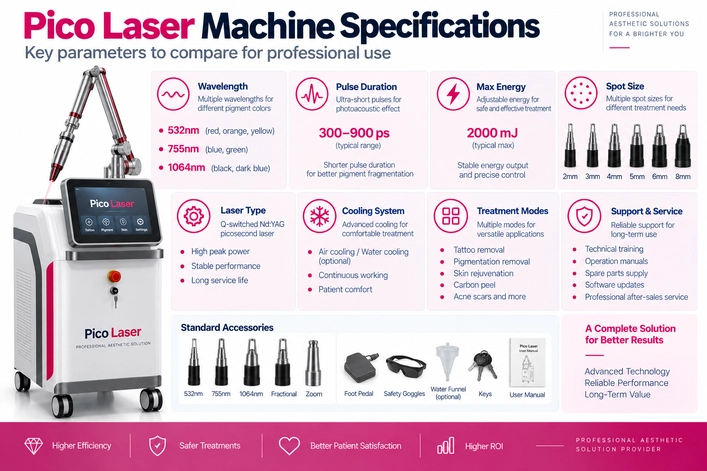
Professional Pico Laser vs Consumer Pico Devices
Search results for pico laser increasingly include both professional aesthetic equipment and smaller consumer beauty devices. These products should not automatically be treated as equivalent.
| Feature | Professional Pico Laser Machine | Consumer Beauty Device |
|---|---|---|
| Intended User | Trained professional | Individual consumer |
| Operating Environment | Clinic, medical aesthetic practice, or professional facility | Home |
| Laser Specifications | Professional device-specific parameters | Varies significantly by product |
| Treatment Flexibility | Designed around professional applications | Generally more limited |
| Training | Professional training may be required | Consumer instructions |
| Purchase Decision | Technical, clinical, regulatory, and business evaluation | Personal-use purchasing decision |
A product using words such as “pico” or “laser” in consumer marketing does not necessarily have the same architecture or intended use as professional pico laser equipment. Always verify the actual technology and documentation of the device being considered.
Who Should Consider a Pico Laser Machine?
Professional picosecond equipment may be relevant to businesses that intend to offer tattoo- or pigment-related aesthetic services within the scope permitted by their local regulations and professional qualifications.
- Dermatology and aesthetic clinics
- Medical spas
- Professional tattoo removal centers
- Beauty hospitals and aesthetic medical centers
- Laser treatment practices
- Aesthetic equipment distributors
- OEM and private-label equipment businesses
Whether a particular machine is appropriate depends on its intended use, local regulations, operator qualifications, available training, and the treatments the business plans to provide.
Common Mistakes When Buying Pico Laser Equipment
The rapidly growing market for picosecond equipment has created a large number of systems with similar marketing descriptions. Avoiding a few common mistakes can make equipment comparison much easier.
- Assuming every “pico” machine has the same pulse specifications. Always verify documented technical parameters.
- Choosing only by maximum energy. Energy should be evaluated together with fluence, spot size, repetition rate, beam characteristics, and the intended treatment.
- Ignoring wavelength configuration. Different tattoo pigments and chromophores interact differently with different wavelengths.
- Buying solely on price. Service, training, warranty, replacement parts, and downtime can affect long-term ownership costs.
- Confusing PicoSure with the entire pico laser category. PicoSure is a specific commercial system; picosecond laser is the broader technology category.
- Ignoring regulatory requirements. Equipment requirements and permitted uses differ between markets.
- Expecting one treatment to remove every tattoo. Tattoo response varies, and multiple sessions may be necessary.
Piko Lazer, Picolazer, Picolaser, and Pico Laser: Why the Different Names?
Searches for picosecond technology often use several different spellings. Terms such as Piko Lazer, piko laser, picolazer, picolaser, and pico laser may lead users to similar information about picosecond aesthetic laser technology.
From a technical perspective, picosecond laser is the more precise general term because it describes laser pulse duration in the picosecond time domain. “Piko Lazer” and similar variations are better understood as common search and spelling variations rather than separate laser technologies.
Regardless of terminology, anyone evaluating a machine should focus on its documented specifications and intended applications rather than the spelling used in marketing materials.
Frequently Asked Questions
What is Piko Lazer?
Piko Lazer is commonly used as a search variation for pico laser or picosecond laser technology. Picosecond lasers deliver ultrashort laser pulses measured in picoseconds and are commonly associated with professional tattoo removal and selected pigmentation applications.
Is Piko Lazer the same as pico laser?
In general online search usage, Piko Lazer and pico laser usually refer to the same broad technology category. The more precise technical term is picosecond laser. Individual machines can still differ substantially in wavelength, pulse duration, energy, spot size, and intended use.
What is a pico laser machine used for?
Professional pico laser machines are commonly used for tattoo removal and selected pigment-related aesthetic applications. Exact indications depend on the individual machine, its wavelength configuration, intended use, and regulatory status.
Is a pico laser good for tattoo removal?
Picosecond lasers are widely associated with tattoo removal because their ultrashort pulses can create rapid interactions with targeted tattoo pigment. Results vary according to tattoo color, pigment composition, depth, skin characteristics, wavelength, treatment parameters, and individual response.
What is a pico tattoo removal machine?
A pico tattoo removal machine is a professional picosecond laser platform configured to target tattoo pigments. Systems may provide wavelengths such as 1064nm and 532nm to address different pigment colors, depending on the device.
What is the difference between pico laser and PicoSure?
Pico laser describes the broader category of picosecond laser technology. PicoSure is the name of a specific commercial laser platform. Other picosecond laser machines should not be described as PicoSure systems unless they are actually that product.
How much does a pico laser machine cost?
Professional pico laser machine prices vary widely. Entry-level systems may begin at several thousand dollars, while premium professional platforms can cost tens of thousands of dollars or more. Wavelengths, laser architecture, specifications, accessories, manufacturer, warranty, training, and support all affect the final price.
What is the best pico laser machine?
The best pico laser machine depends on the intended applications. Buyers should compare wavelengths, documented pulse duration, energy delivery, spot sizes, cooling, treatment modes, manufacturer support, training, warranty, and regulatory documentation rather than choosing by one specification alone.
Where can I buy a professional pico laser machine?
Professional pico laser machines are available from aesthetic laser manufacturers and authorized equipment distributors. Before purchasing, verify the supplier, technical documentation, warranty, training, after-sales support, and regulatory requirements for your market.
Final Verdict
Piko Lazer, piko laser, picolazer, and picolaser are commonly encountered search terms for the broader field of picosecond laser technology. For professional buyers, however, terminology is much less important than the engineering and support behind the actual machine.
A professional picosecond laser machine should be evaluated according to its wavelengths, documented pulse duration, energy delivery, spot sizes, treatment capabilities, cooling, workflow, safety features, technical documentation, warranty, and manufacturer support.
For tattoo-focused practices, wavelength versatility and treatment flexibility are particularly important. For clinics comparing a pico laser machine for sale, total ownership value should take priority over the lowest advertised purchase price.
Ultimately, the best pico laser machine is the system that matches the intended applications, professional workflow, local regulatory requirements, and long-term business needs of the buyer.