HIFU Before and After: Face, Jawline Results & Timeline
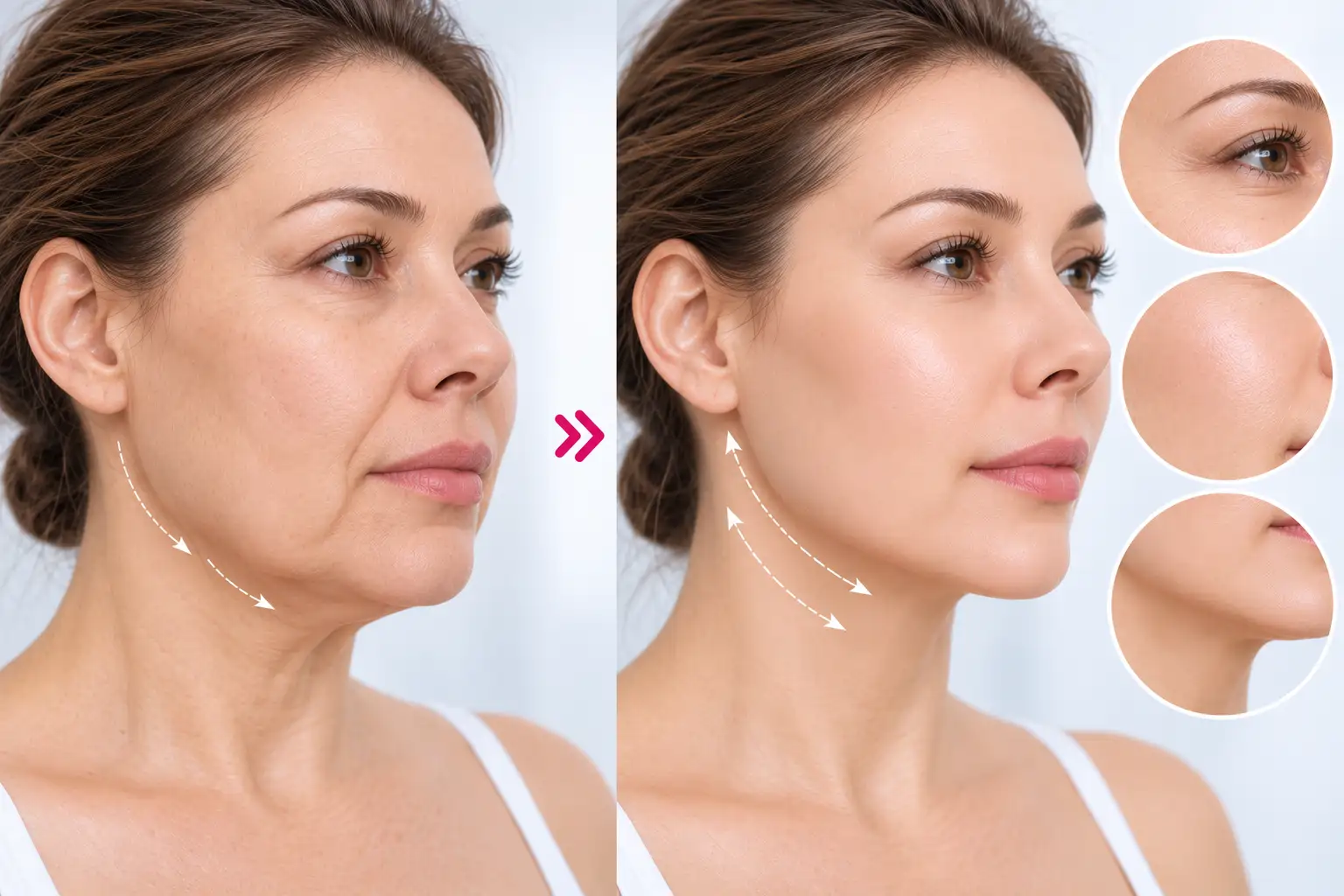
If you are researching HIFU before and after results, you are probably trying to answer a simple question: how much can HIFU actually change the face, jawline and loose skin? Before-and-after photos can make the treatment look dramatic, but they do not always explain when the photos were taken, how many treatments were performed or why one person may see more noticeable results than another.
High-intensity focused ultrasound (HIFU) is used in aesthetic treatments to deliver focused ultrasound energy beneath the skin. Unlike treatments that primarily affect the surface, HIFU is designed to create controlled thermal effects at selected tissue depths without surgically removing or repositioning skin. The subsequent healing and collagen-remodeling response develops gradually, which is why the final result is usually not visible immediately after treatment.
This guide explains realistic HIFU facial before and after changes, HIFU before and after jawline results, the treatment timeline and the factors that determine whether improvement is subtle or more noticeable.
Quick Answer: What Do HIFU Before and After Results Look Like?
HIFU before and after results usually appear as gradual tightening and improved facial definition rather than an immediate surgical-style facelift. Depending on the treatment area and individual response, improvements may include a more defined jawline, reduced appearance of mild jowling, firmer-looking skin and better contour beneath the chin.
Some people notice an early tightening effect, but collagen remodeling takes time. More meaningful changes are generally evaluated over the following weeks and months rather than immediately after the procedure. The amount of improvement varies with age, baseline skin laxity, treatment depth, energy delivery, treatment coverage, device characteristics and operator technique.
| Question | What to Expect |
|---|---|
| Are HIFU results immediate? | Some early firmness may be noticeable, but progressive changes can develop over the following weeks and months. |
| Can HIFU improve the jawline? | It may improve jawline definition in appropriately selected people with mild to moderate skin laxity. |
| Does HIFU work on jowls? | HIFU may improve the appearance of mild laxity around the lower face, but it cannot reproduce surgical lifting. |
| When should before-and-after photos be compared? | Photos taken immediately after treatment alone are not enough. Later standardized photographs provide a more useful comparison. |
| Are results the same for everyone? | No. Anatomy, age, skin condition, treatment parameters and technique can substantially affect the outcome. |
HIFU Before and After: What Actually Changes?
The most important thing to understand when evaluating HIFU before and after photographs is that HIFU does not work by removing excess skin. It also does not physically reposition facial tissues in the same way as surgery.
Instead, focused ultrasound energy is delivered to selected depths beneath the skin. Controlled thermal coagulation points can trigger a wound-healing response and subsequent collagen remodeling. As this process develops, treated tissue may appear firmer and facial contours may become better defined.
Therefore, realistic HIFU results are usually better described as tightening, firming and contour refinement rather than a dramatic transformation.
1. Skin Tightening
One of the most common changes is a firmer appearance in areas affected by mild skin laxity. This can be particularly noticeable along the lower face, jawline and upper neck.
The degree of tightening depends heavily on the starting condition of the skin. Someone with relatively mild laxity may notice clearer improvement than someone with substantial redundant skin that would be difficult to address with a non-surgical energy-based procedure.
2. Jawline Definition
Improved jawline definition is one of the most frequently sought HIFU results. Tightening the tissues around the lower face can make the transition between the face and neck appear cleaner in suitable candidates.
However, a poorly defined jawline is not always caused by loose skin. Submental fat, skeletal anatomy, muscle position and overall facial structure can also affect the contour. HIFU cannot correct every cause of an indistinct jawline.
3. Appearance of Mild Jowls
Mild jowling may appear less prominent when surrounding skin becomes firmer. This is one reason lower-face HIFU is often evaluated using frontal and three-quarter-view photographs.
More advanced jowling, however, may involve a combination of skin laxity, changes in facial fat compartments and deeper structural aging. In these situations, HIFU alone may provide limited visible improvement.
4. Under-Chin Contour
Some before-and-after comparisons show a cleaner contour beneath the chin. Whether this happens depends on what is creating the fullness in the first place.
Skin laxity may respond differently from significant submental fat. This distinction matters because tightening loose tissue and reducing a substantial fat deposit are not the same treatment objective.
5. Neck Appearance
HIFU may also be used on selected areas of the neck when the treatment goal is improved firmness. As with the face, expectations should depend on the severity and cause of the laxity rather than assuming every neck can achieve the same result.
HIFU Facial Before and After: What Can Change on the Face?
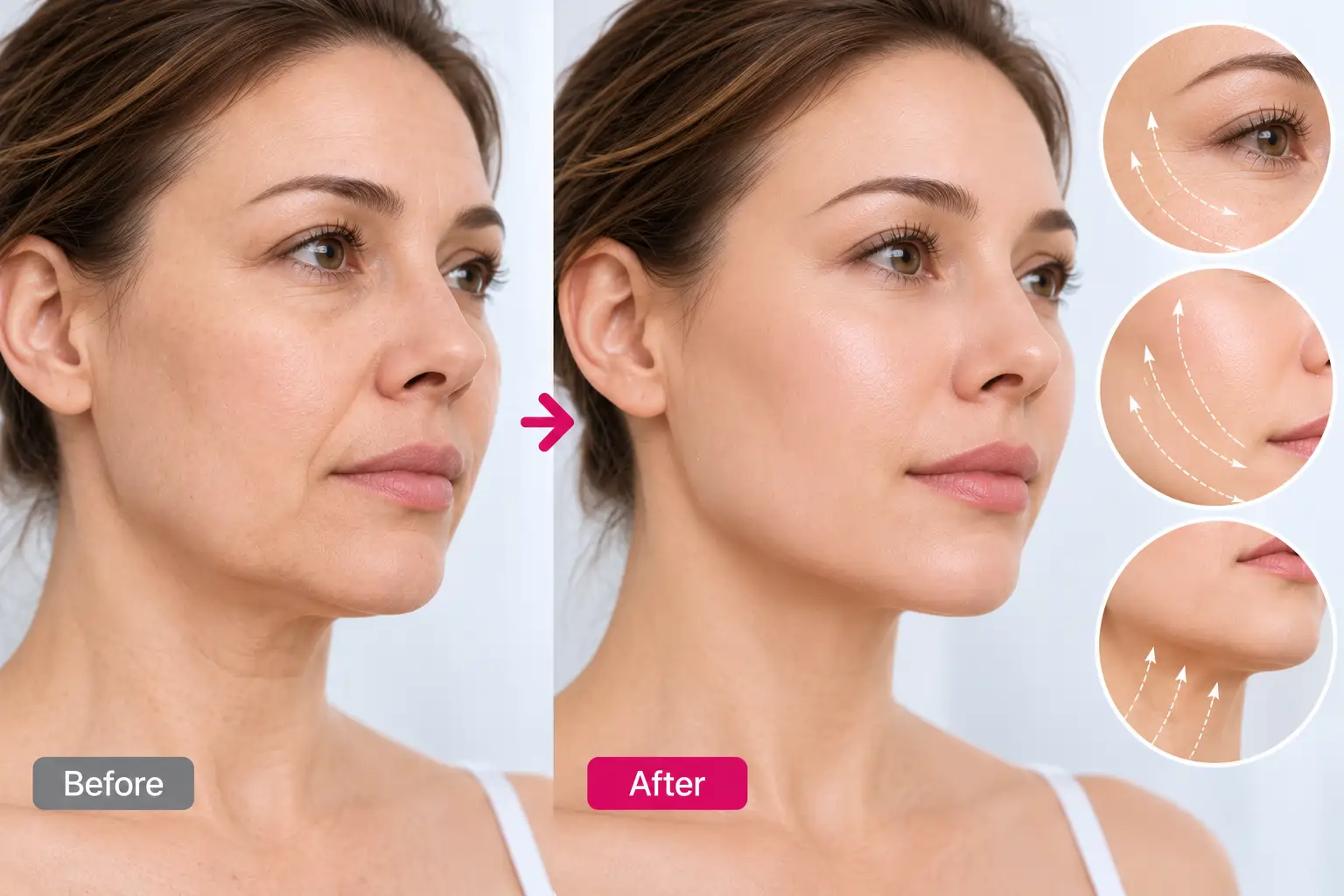
Searches for HIFU facial before and after results often show the entire face, but the visible improvement is usually concentrated in specific treatment areas. The lower face, jawline and areas affected by mild laxity are commonly evaluated because relatively small contour changes can influence the overall appearance of the face.
A successful facial treatment does not necessarily mean that the person looks dramatically different. In many cases, a good result means the face looks slightly firmer and better defined while still appearing natural.
Lower Face
The lower face is an important treatment area because skin laxity can soften the transition from the cheeks into the jawline. Appropriate HIFU treatment may help improve firmness in this region, although the degree of improvement varies considerably between individuals.
Cheeks
Treatment planning around the cheeks requires careful consideration of facial anatomy and tissue thickness. The goal should not simply be to apply as much energy as possible. Appropriate treatment depth, coverage and patient selection matter when trying to achieve a balanced result.
Under the Chin
The submental area can strongly influence facial profile. When mild tissue laxity contributes to poor definition, tightening may make the lower face look more structured. When fullness is primarily caused by fat or anatomy, the visible effect of HIFU may be different.
Upper Neck
The upper neck is often evaluated together with the jawline because these areas visually connect. Improvement in one area can influence how defined the other appears.
HIFU Before and After Jawline: How Much Definition Is Realistic?
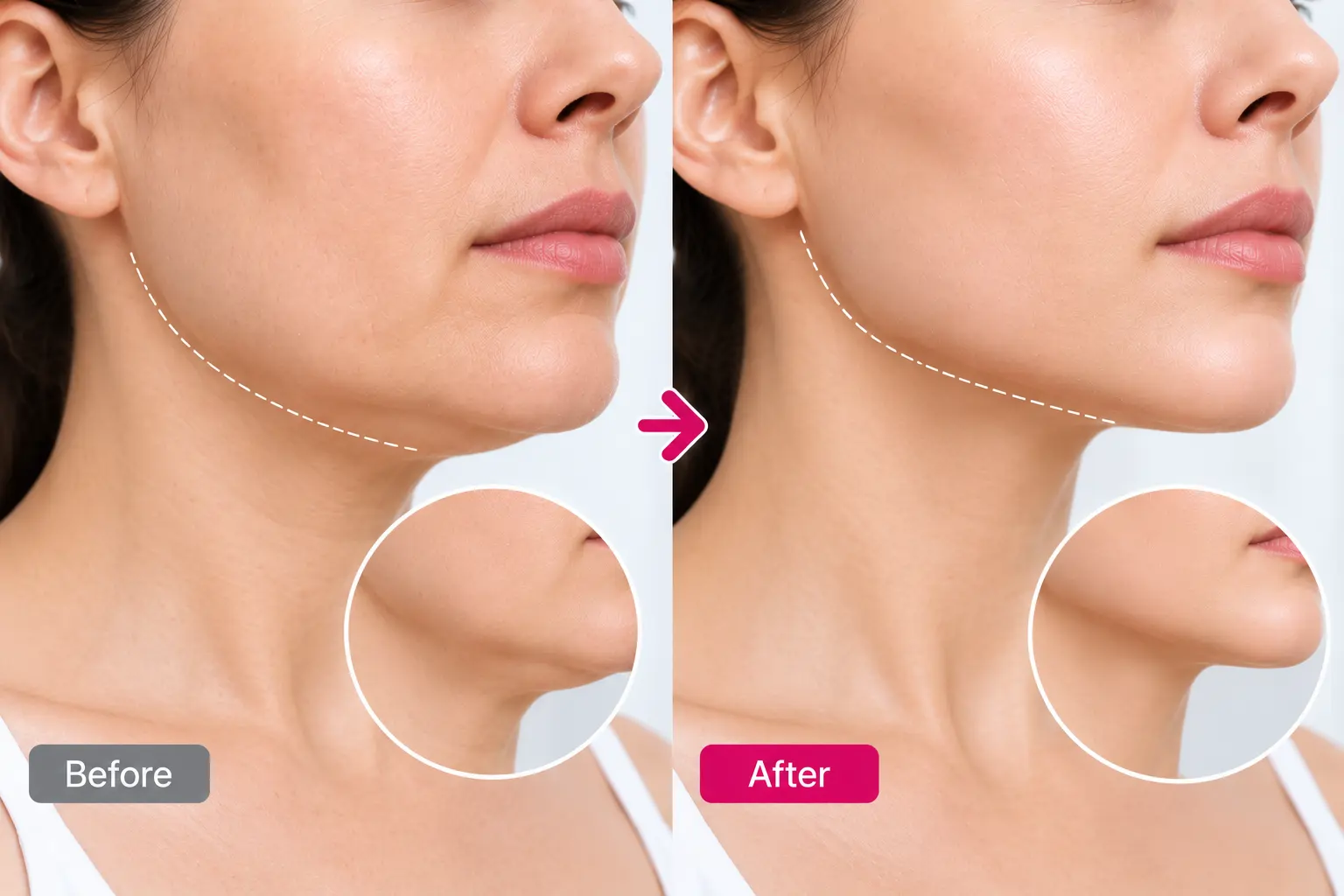
HIFU before and after jawline is one of the most useful comparisons for understanding what aesthetic HIFU can and cannot do. A slightly sharper mandibular border can make a meaningful visual difference even when the total amount of tissue change is relatively small.
HIFU may help improve jawline definition when mild or moderate tissue laxity is contributing to a softer lower-face contour. As the treated tissue responds and remodels, the border between the jaw and neck may become more apparent.
This should not be confused with changing the underlying bone structure. HIFU does not create a new jaw shape. It may improve the appearance of the existing jawline by addressing appropriate soft-tissue concerns.
What Jawline Changes Are Realistic?
Realistic changes may include a slightly cleaner jaw border, improved lower-face firmness and a reduction in the appearance of mild sagging. These changes can make the face appear more defined without producing an obviously “treated” look.
People expecting HIFU to produce the same degree of tissue repositioning as a surgical facelift are likely to be disappointed. The two procedures operate differently and should not be evaluated against identical expectations.
Who May See Better HIFU Jawline Results?
People with mild to moderate laxity and a treatment indication that matches the capabilities of focused ultrasound may be more suitable candidates than those with substantial excess skin. Treatment planning also matters: depth selection, treatment-line distribution, energy settings and anatomical knowledge can all influence the result.
Age alone does not determine the outcome. Two people of the same age can have very different skin quality, facial anatomy and degrees of laxity.
HIFU Treatment Before and After: Results Timeline
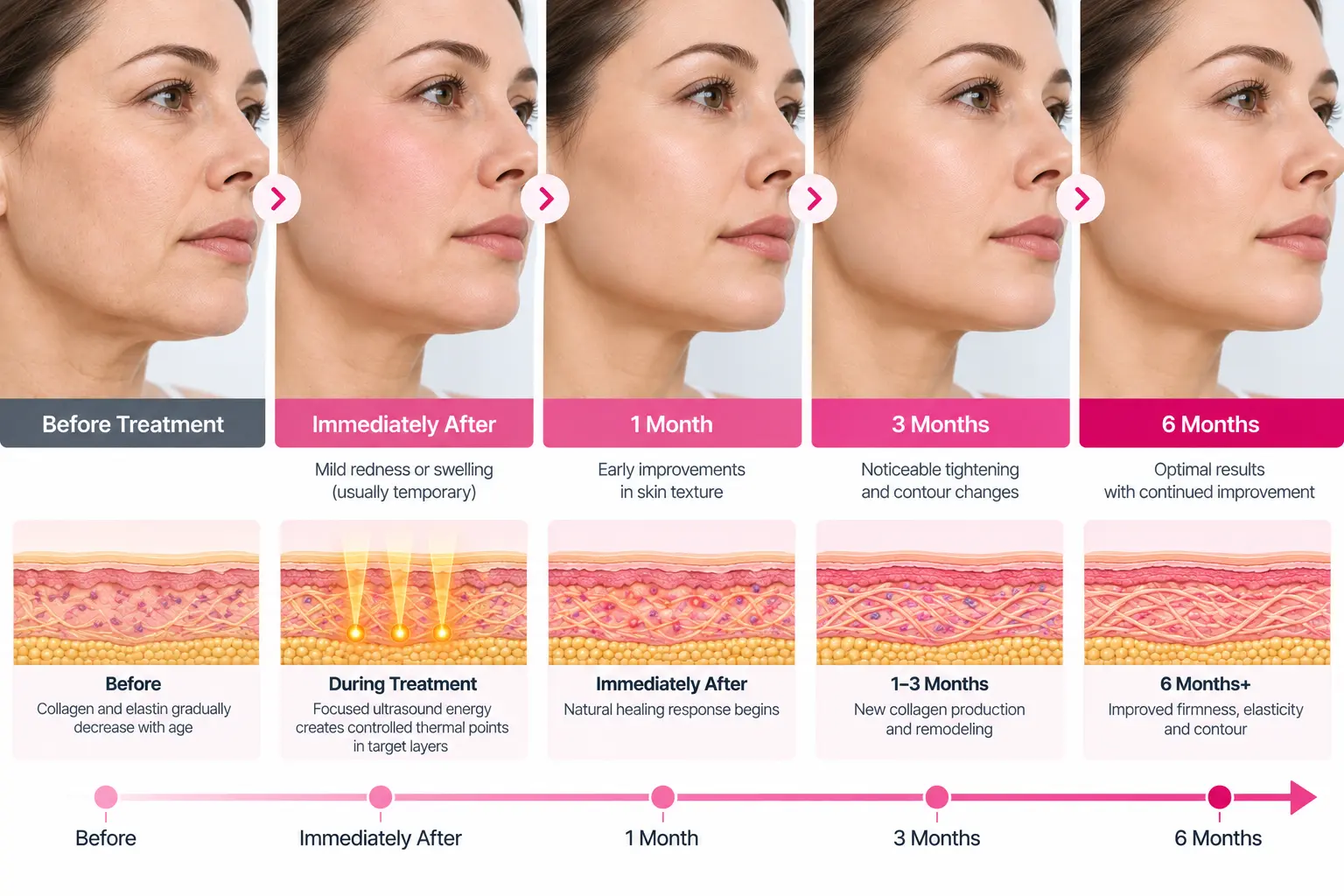
Understanding the HIFU treatment before and after timeline is essential because evaluating the treatment too early can create unrealistic conclusions. HIFU produces controlled thermal effects in targeted tissue, while part of the visible outcome depends on the biological response that follows.
That means a photograph taken immediately after treatment and another taken several months later are measuring very different stages of the process.
| Time After HIFU | What May Be Happening | What You May Notice |
|---|---|---|
| Immediately | Initial tissue response to focused ultrasound energy | Possible temporary firmness, redness or mild swelling; final results should not be judged yet |
| First Week | Early recovery and tissue response | The face may look close to baseline as temporary treatment effects settle |
| 2–4 Weeks | Early remodeling processes continue | Some people begin noticing subtle improvements in firmness or contour |
| 1–3 Months | Collagen remodeling continues | Changes in tightening and jawline definition may become easier to evaluate |
| 3–6 Months | Later-stage remodeling and maturation | A more meaningful assessment of the overall response can often be made |
Immediately After HIFU
Immediately after treatment, the skin may look slightly different, but this is not a reliable representation of the final result. Temporary redness, mild swelling or an early sensation of tightness can influence appearance.
This is why dramatic “immediate before and after” photographs should be interpreted carefully. An immediate photograph primarily documents the early post-treatment state rather than completed collagen remodeling.
HIFU Results After 1 Week
During the first week, temporary treatment-related changes generally begin to settle. Some people may notice subtle firmness, while others may see little obvious visual difference at this stage. A lack of dramatic improvement after one week does not necessarily indicate that the treatment has failed.
HIFU Results After 2 to 4 Weeks
Over the following weeks, early remodeling continues. Subtle changes in lower-face firmness, skin texture or jawline definition may become easier to notice, although the response is highly individual.
HIFU Results After 1 to 3 Months
The one-to-three-month period is particularly important when comparing high intensity focused ultrasound before and after results. Progressive collagen remodeling means that the appearance can continue changing after the initial treatment session.
Standardized photographs taken during this period can be more informative than immediate post-treatment photos because they provide time for the biological response to develop.
HIFU Results After 3 to 6 Months
Later follow-up provides a better opportunity to evaluate the overall treatment response. Depending on the individual and treatment protocol, improvements may have developed gradually rather than appearing at a single identifiable moment.
This delayed progression is one of the most important differences between HIFU and treatments designed primarily to create an immediate cosmetic change.
High Intensity Focused Ultrasound Before and After: Why Results Take Time
Understanding high intensity focused ultrasound before and after results requires understanding the biology behind the treatment. HIFU does not depend only on an immediate mechanical change in the face. A significant part of the visible result develops through the tissue response that follows controlled thermal stimulation.
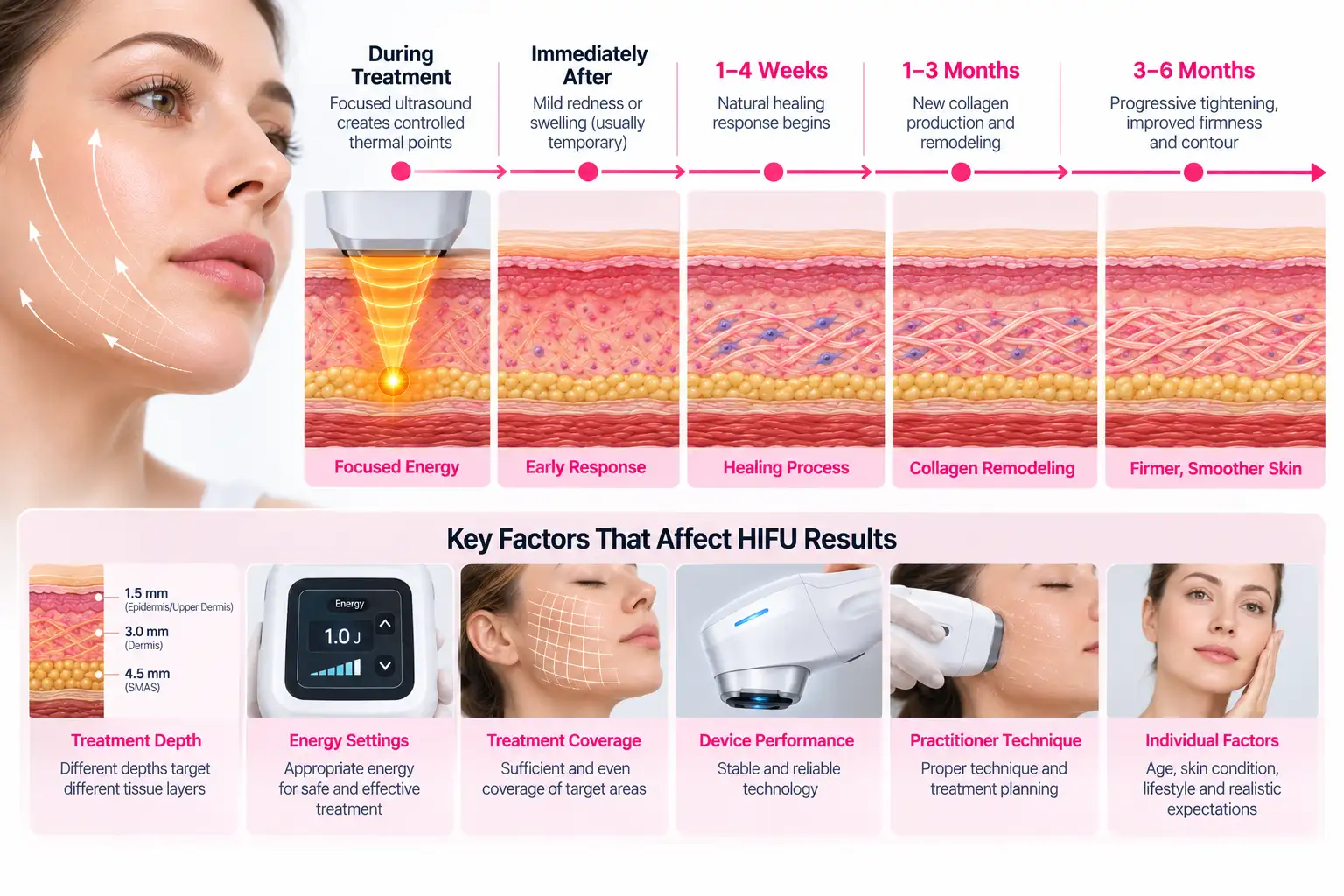
Focused ultrasound energy creates small thermal coagulation zones at selected depths. These controlled treatment points trigger a repair response that can include collagen contraction, remodeling and new collagen formation over time.
This is why the final appearance can continue developing after the treatment session has ended. The skin may look relatively unchanged during the early days, while deeper remodeling is still occurring beneath the surface.
In practical terms, HIFU should be evaluated as a progressive tightening treatment rather than an instant lifting procedure.
When Do HIFU Results Start to Show?
There is no single day when HIFU results suddenly appear. Some people may notice an early feeling of firmness shortly after treatment, while others may not see obvious visual changes for several weeks.
Early visible changes may begin during the first few weeks as the tissue response develops. However, more meaningful assessment often occurs later, once collagen remodeling has had more time to progress.
This is why comparing a photograph taken before treatment with one taken only several days later can underestimate the eventual result—or overestimate it if temporary swelling changes facial contours.
When Are HIFU Results Usually Most Visible?
For many aesthetic HIFU treatments, the period between approximately one and three months is particularly useful for evaluating visible changes. Some remodeling may continue beyond this period.
The exact timeline depends on:
- Age
- Baseline skin condition
- Degree of laxity
- Treatment area
- Energy settings
- Treatment depth
- Number and distribution of treatment lines
- Device characteristics
- Individual collagen response
A person with mild lower-face laxity may notice a relatively clear jawline change, while another person with more advanced tissue descent may experience a subtler result even after an appropriately performed treatment.
How Long Do HIFU Results Last?
HIFU results are not permanent because the treatment does not stop the natural aging process. Skin, collagen and deeper facial tissues continue to change over time.
The duration of visible improvement varies between individuals. Factors such as age, skin quality, lifestyle, baseline laxity and the original treatment response can all influence how long the tightening effect remains noticeable.
Some people may later choose maintenance treatment after professional reassessment, but there is no universal schedule that should automatically be applied to everyone.
How Much Can HIFU Tighten the Face?
HIFU can create visible tightening in appropriate candidates, but the degree of improvement should be described realistically.
The treatment is generally best suited to mild to moderate skin laxity. It can improve firmness and contour, but it cannot remove large amounts of excess skin or surgically reposition facial tissues.
Realistic HIFU before-and-after changes may include:
- A slightly sharper jawline
- Improved lower-face firmness
- Reduced appearance of mild jowling
- A firmer-looking submental contour
- Subtle improvement in neck laxity
- A more lifted overall facial appearance
The goal should be natural-looking improvement rather than dramatic anatomical change.
Why Do HIFU Before and After Results Vary?
One of the biggest mistakes when evaluating HIFU before and after photos is assuming that the treatment should produce the same visible improvement for every person.
HIFU results vary because people do not begin with identical anatomy, skin quality or tissue laxity. The treatment itself can also vary according to the system used and how the procedure is performed.
What Affects HIFU Results?
Age and Skin Quality
Age influences collagen quality, elasticity and the way facial tissues respond to energy-based treatments. However, age alone does not determine whether HIFU will work.
Skin quality, sun exposure history, tissue thickness and overall facial anatomy can be just as important.
Degree of Skin Laxity
HIFU tends to be more suitable for mild to moderate laxity than for substantial excess skin. If tissue descent is advanced, a non-surgical tightening treatment may not create enough change to satisfy the patient’s expectations.
Facial Anatomy
Jawline definition is influenced by skin, fat, muscle, bone and connective tissue. Two people can have equally loose skin but very different visible outcomes because their underlying facial structure is different.
Treatment Depth
Different HIFU cartridges are designed to focus energy at different depths. Common facial treatment depths may include approximately 1.5 mm, 3.0 mm and 4.5 mm depending on the device.
The deepest available cartridge is not automatically the best choice. The selected depth should correspond to the intended tissue target and the anatomy of the treatment area.
Energy Settings
Energy must be sufficient to create the intended tissue response without unnecessarily increasing the risk of adverse effects.
More energy does not automatically produce more tightening. Appropriate energy delivery is more important than maximizing the numerical setting.
Number and Distribution of Treatment Lines
HIFU treatment involves more than choosing a cartridge depth. The number of treatment lines, their spacing and their anatomical placement can influence how comprehensively the intended area is treated.
Simply delivering more lines without a clear treatment plan does not guarantee a better result.
HIFU Device Quality and Performance
HIFU systems can differ in transducer design, energy delivery, focal consistency, available treatment depths, software controls and treatment workflow.
For clinics evaluating professional equipment, the AI 360 HIFU system is designed for professional face and body aesthetic applications using focused ultrasound technology.
The device itself is only one part of treatment quality. Correct cartridge selection, treatment planning and professional technique remain essential.
Operator Technique
Operator technique can significantly affect treatment consistency. Knowledge of facial anatomy, correct transducer contact, treatment-line placement and avoidance of inappropriate anatomical zones are all important.
This is one reason before-and-after outcomes should not be evaluated solely by asking which HIFU machine was used.
Can One HIFU Treatment Produce Visible Results?
Yes, some appropriately selected patients may see visible improvement after one HIFU treatment. However, this does not mean that one treatment guarantees a dramatic result for everyone.
The response depends heavily on the starting condition of the tissue and the quality of the treatment plan.
A person with mild laxity may see noticeable tightening after a single session, while someone with more advanced laxity may experience only modest improvement.
It is also important to allow enough time for remodeling before deciding that another treatment is required.
HIFU Results After Multiple Treatments
Additional HIFU treatments may be considered in some cases, but more sessions should not be treated as automatically better.
Repeating treatment too frequently may not allow enough time to evaluate the biological response from the previous session.
A more appropriate approach is:
- Perform the initial treatment according to the planned protocol.
- Allow time for tissue remodeling.
- Evaluate standardized before-and-after photographs.
- Assess the remaining treatment concern.
- Only then decide whether additional treatment is appropriate.
This avoids turning HIFU into a fixed-session program when treatment requirements actually vary between patients.
What HIFU Cannot Fix
Understanding what HIFU cannot do is just as important as understanding its potential results. Some disappointing HIFU before-and-after outcomes occur because the original concern was poorly matched to the technology.
HIFU is not designed to:
- Remove large amounts of excess skin
- Reposition facial tissues like a surgical facelift
- Change the shape of the jawbone
- Replace every form of facial fat reduction
- Correct every wrinkle or skin-texture problem
- Stop future facial aging
A weak jawline caused primarily by skeletal anatomy, for example, cannot be completely transformed through skin tightening alone.
How to Evaluate HIFU Before and After Photos
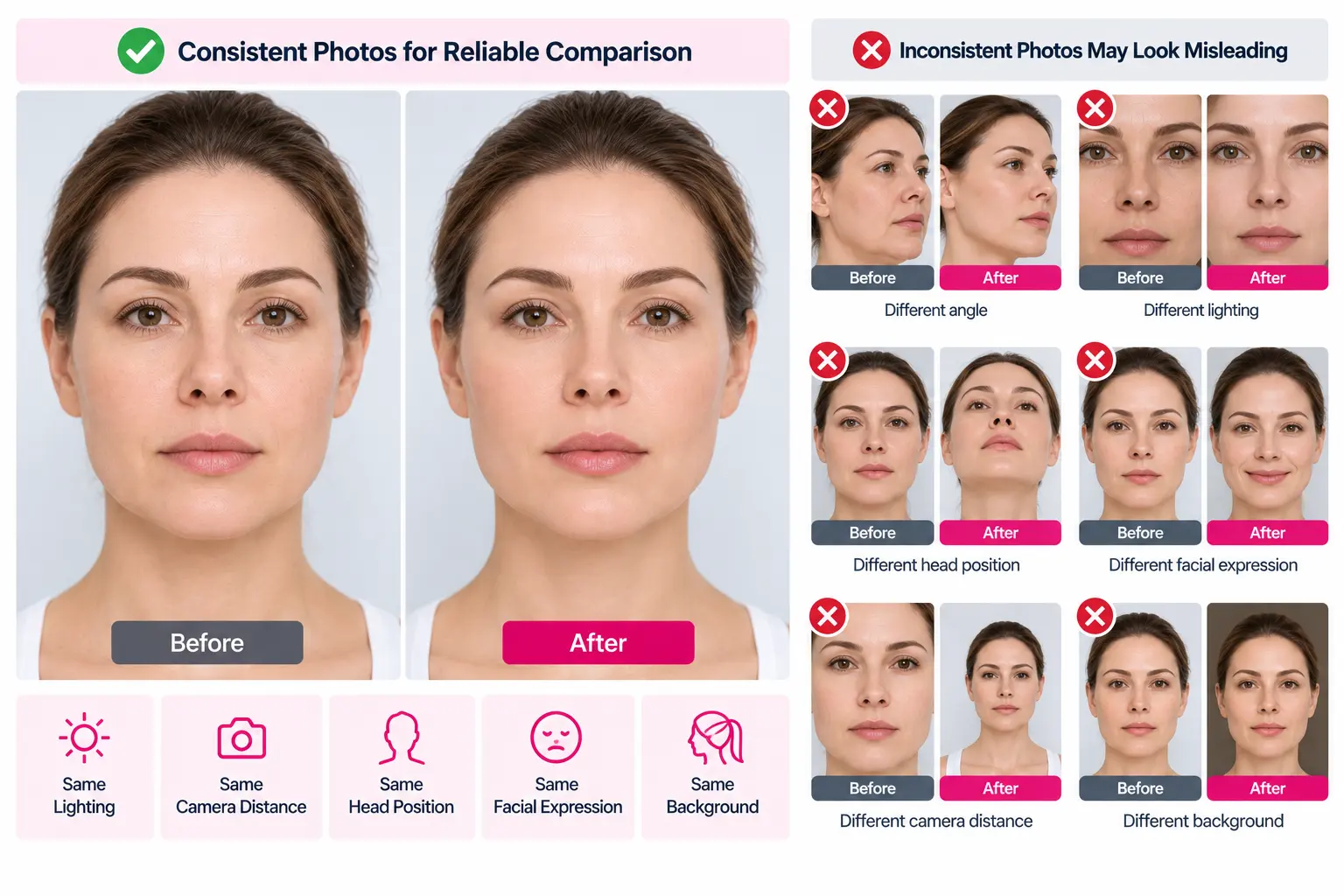
Before-and-after photography is useful only when the comparison conditions are reasonably consistent.
When evaluating HIFU photographs, look for:
- The same camera angle
- Similar head position
- Similar facial expression
- Similar camera distance
- Similar lighting
- No obvious digital reshaping or beauty filters
- Clear information about how long after treatment the “after” photo was taken
- Disclosure of whether one or multiple HIFU sessions were performed
Three-quarter and side-profile images are particularly useful for evaluating jawline and submental contour because these views can reveal changes that are difficult to judge from a frontal image alone.
Why Some HIFU Before and After Photos Can Be Misleading
Small changes in photography can create surprisingly large differences in apparent facial contour.
For example:
- Tilting the chin upward can make the jawline look sharper.
- Turning slightly away from the camera can change the appearance of jowls.
- Stronger overhead lighting can create deeper shadows beneath the jaw.
- Different focal lengths can alter facial proportions.
- Smiling or tightening facial muscles can change contour.
- Temporary swelling immediately after treatment can change appearance.
For this reason, a credible HIFU facial before and after comparison should use standardized photography and clearly identify the follow-up interval.
How to Improve the Chance of Good HIFU Results
No treatment can guarantee a specific before-and-after result, but several factors can improve the quality of treatment planning.
- Choose appropriate candidates with realistic expectations.
- Assess whether skin laxity is actually the primary concern.
- Select treatment depth according to anatomy rather than using one depth everywhere.
- Use appropriate energy parameters.
- Plan treatment lines according to facial structure.
- Use professional-quality equipment with consistent energy delivery.
- Allow adequate time before judging the final result.
- Use standardized before-and-after photography.
The best HIFU result comes from matching the technology to the patient rather than trying to force the same treatment protocol onto every face.
HIFU Side Effects During the Before and After Period
When comparing HIFU before and after results, it is also important to distinguish actual tightening from temporary post-treatment effects. The appearance of the treated area during the first hours or days may be influenced by redness, tenderness or swelling.
Temporary reactions can vary depending on the treatment area, energy settings, device, treatment technique and individual response. Mild redness, swelling, tenderness or tingling may occur after treatment and often improve with time.
Less common complications can occur, particularly when treatment parameters or anatomical placement are inappropriate. Persistent pain, burns, prolonged numbness, weakness or other unexpected symptoms should be assessed by an appropriately qualified healthcare professional.
This is another reason why professional assessment, appropriate treatment planning and knowledge of facial anatomy are important when performing aesthetic HIFU.
Common Mistakes When Judging HIFU Before and After Results
HIFU results are easy to misinterpret when expectations are based entirely on social media photographs or immediate post-treatment images. Avoiding the following mistakes can make before-and-after comparisons much more meaningful.
Judging the Result Immediately After Treatment
An immediate after photo cannot show the complete collagen-remodeling response. Temporary redness, swelling or early tissue contraction may also influence how the face looks.
Expecting Surgical Facelift Results
HIFU and facelift surgery are fundamentally different procedures. HIFU may improve firmness and contour in appropriately selected patients, but it does not surgically remove excess skin or reposition facial tissues.
Comparing Photos Taken Under Different Conditions
Lighting, head position, facial expression and camera angle can substantially change the apparent jawline. Before-and-after photographs should therefore be standardized whenever possible.
Assuming More Treatment Lines Always Mean Better Results
Treatment quality depends on appropriate depth, energy, anatomical placement and coverage. Simply increasing the number of treatment lines does not guarantee a better outcome.
Ignoring the Cause of the Cosmetic Concern
A poorly defined jawline can result from skin laxity, facial fat, muscle position, bone structure or a combination of factors. HIFU may be useful when the treatment target matches what focused ultrasound can realistically address.
HIFU Before and After: Face vs Jawline vs Neck
Different treatment areas should not be expected to respond identically. The amount and type of tissue, degree of laxity and underlying anatomy vary across the face and neck.
| Treatment Area | Common Treatment Goal | Realistic Before and After Change |
|---|---|---|
| Lower Face | Improve mild skin laxity | Firmer appearance and improved lower-face contour |
| Jawline | Improve definition | Cleaner transition between the jaw and neck in suitable candidates |
| Jowls | Improve mild tissue laxity | Reduced appearance of mild sagging; advanced jowling may respond less |
| Under Chin | Improve tissue firmness and contour | Potentially firmer submental contour when laxity is an important factor |
| Neck | Improve mild laxity | Subtle tightening and improved transition into the jawline |
Is HIFU Worth It for Face and Jawline Tightening?
HIFU may be worth considering for someone seeking non-surgical improvement in mild to moderate facial laxity and who understands that the result is generally progressive and more subtle than surgery.
It may be particularly relevant when the treatment goal is improved lower-face firmness or jawline definition without surgical tissue removal.
HIFU may be less suitable when the primary concern involves substantial excess skin, major tissue descent or an anatomical feature that cannot be meaningfully changed through focused ultrasound.
The most useful question is therefore not simply, “Does HIFU work?” but: “Is the problem I want to treat appropriate for HIFU?”
What Should You Expect From Your Own HIFU Before and After Results?
Your own results should not be predicted from another person’s photographs alone. Two people receiving treatment with the same device can experience different outcomes because their anatomy, skin quality, degree of laxity and biological responses are different.
A realistic treatment plan should begin with an assessment of the concern, followed by selection of appropriate treatment depths and parameters. Progress should then be evaluated using standardized photographs taken at meaningful follow-up intervals.
For clinics and aesthetic professionals researching the equipment used to deliver focused ultrasound treatments, you can also explore the AI 360 HIFU machine to learn more about Cocoon Laser’s professional HIFU platform.
常见问题
How long does it take to see HIFU results?
HIFU results develop progressively. Some people may notice early firmness, while more meaningful changes can become easier to evaluate over the following weeks and months as tissue remodeling progresses.
What does HIFU look like before and after?
Realistic HIFU before and after changes may include firmer-looking skin, improved lower-face contour, a more defined jawline and reduced appearance of mild laxity. The changes are generally subtler than those produced by surgical lifting.
When should HIFU before and after photos be taken?
A baseline photo should be taken before treatment. Follow-up photographs can then be taken at standardized intervals over the following weeks and months. Immediate post-treatment photographs alone are not sufficient for evaluating the final response.
Does HIFU show results immediately?
Some early firmness may be noticed, but immediate appearance should not be considered the final result. Temporary swelling and other early tissue responses can influence appearance, while collagen remodeling develops over time.
How long do HIFU results last?
The duration varies between individuals. HIFU does not stop natural aging, so skin and deeper tissues continue changing after treatment. Age, skin quality, lifestyle and the original treatment response can all affect how long improvement remains noticeable.
Does HIFU really tighten the jawline?
HIFU may improve jawline definition when mild to moderate tissue laxity contributes to a softer lower-face contour. It cannot change the underlying jawbone or correct every cause of poor jawline definition.
What are realistic HIFU before and after jawline results?
Realistic HIFU before and after jawline results may include a cleaner jaw border, firmer lower-face appearance and reduced visibility of mild sagging. The amount of improvement depends on anatomy, laxity, treatment parameters and individual response.
Are HIFU facial before and after results permanent?
No. HIFU facial before and after improvements are not permanent because natural aging continues. Maintenance treatment may be considered in some cases after professional reassessment.
Can one HIFU session be enough?
Some appropriately selected patients may experience visible improvement after one treatment. Others may require reassessment after the remodeling period before determining whether another treatment is appropriate.
Why did my HIFU treatment not work?
Limited results can have many causes, including inappropriate patient selection, advanced skin laxity, unrealistic expectations, inadequate treatment coverage, unsuitable treatment depth, treatment parameters or differences in individual biological response. A professional assessment is needed to determine the likely cause in an individual case.
Is HIFU better for the face or jawline?
HIFU is not inherently better for one area. Treatment suitability depends on the concern being addressed. The jawline is a common target because relatively small improvements in lower-face firmness can make facial contour appear more defined.
How can I tell whether HIFU before and after photos are reliable?
Look for consistent lighting, camera distance, facial expression, head position and camera angle. Reliable comparisons should also state when the after photo was taken and whether the person received one or multiple treatments.
Final Verdict: What Do HIFU Before and After Results Really Show?
HIFU before and after results can show meaningful improvements in facial firmness, jawline definition and mild skin laxity, but realistic changes are usually progressive rather than dramatic.
The most important point is timing. An immediate post-treatment photograph does not represent the complete outcome. The tissue response and collagen-remodeling process develop over the following weeks and months, making later standardized photographs more useful for evaluating results.
HIFU facial before and after and HIFU before and after jawline photographs should also be interpreted in the context of the person’s starting anatomy. Mild laxity may respond more visibly than substantial excess skin, while a poorly defined jawline caused primarily by skeletal structure or significant fat may require a different treatment strategy.
Ultimately, the quality of a HIFU treatment before and after result depends on appropriate patient selection, treatment depth, energy delivery, coverage, device performance, operator technique and the individual’s biological response. HIFU should therefore be viewed as a professional non-surgical tightening technology—not as a substitute for every type of facial rejuvenation or surgical lifting.