How to Get Rid of Hip Dips? Treatment Options, Exercises & Body Contouring Guide
Quick Answer
Hip dips cannot be completely removed because they are mainly determined by pelvic structure, muscle attachment, genetics, and fat distribution. However, the appearance of hip dips can be improved through targeted exercise, muscle development, body contouring treatments, and professional aesthetic technologies such as HIFU, RF, and EMS.
The best approach depends on what creates the visible contour difference. Some people may benefit from strengthening surrounding muscles, while others may consider professional body contouring options to improve skin firmness, muscle definition, or overall silhouette.
Hip dips are a natural variation in body shape that many people notice along the outer contour of their hips. Although social media sometimes presents hip dips as something that should be corrected, medical professionals recognize them as a normal anatomical characteristic influenced by skeletal structure and soft tissue distribution.
For individuals who want to achieve smoother-looking hip contours, modern aesthetic medicine provides multiple options ranging from exercise and muscle development to minimally invasive procedures and non-invasive body contouring technologies.
This guide explains what causes hip dips, whether they can be reduced, natural methods that may improve their appearance, and professional treatment options including HIFU, radio frequency (RF), and electrical muscle stimulation (EMS).
Key Takeaways
- Hip dips are a normal anatomical variation, not a medical condition.
- Pelvic structure, muscle attachment, genetics, and fat distribution are the main factors affecting hip shape.
- Exercise can improve muscle definition but cannot change skeletal anatomy.
- Different treatments address different concerns, including skin tightening, muscle conditioning, and soft tissue contour improvement.
- Professional evaluation helps determine the most suitable body contouring approach.
What Are Hip Dips?
Hip dips, sometimes called violin hips, are natural inward curves located between the upper thigh and outer hip area. They appear where the pelvis, femur, muscles, and surrounding soft tissues create the body's external contour.
Some individuals have more noticeable hip dips, while others have smoother outer hip lines. Both body shapes are normal and do not indicate poor health, low fitness levels, or abnormal anatomy.
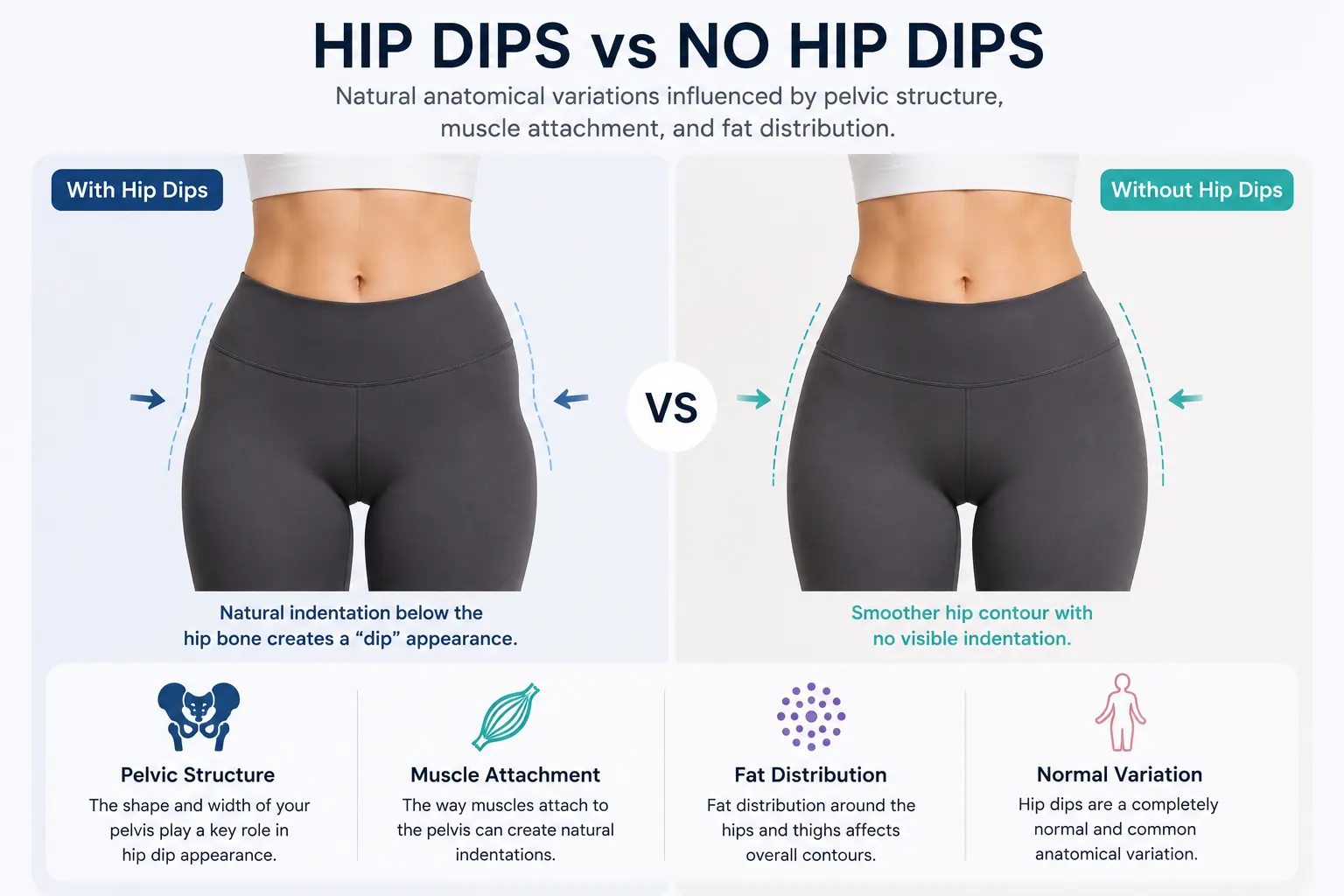
| Hip Dips | Smooth Hip Contours |
|---|---|
| Visible inward curve between the hip and thigh | More continuous outer hip silhouette |
| Skeletal anatomy may be more noticeable | Soft tissue distribution creates a smoother appearance |
| A completely normal anatomical variation | Also a completely normal anatomical variation |
| Some individuals seek aesthetic contour improvement | Usually no cosmetic concern |
What Causes Hip Dips?
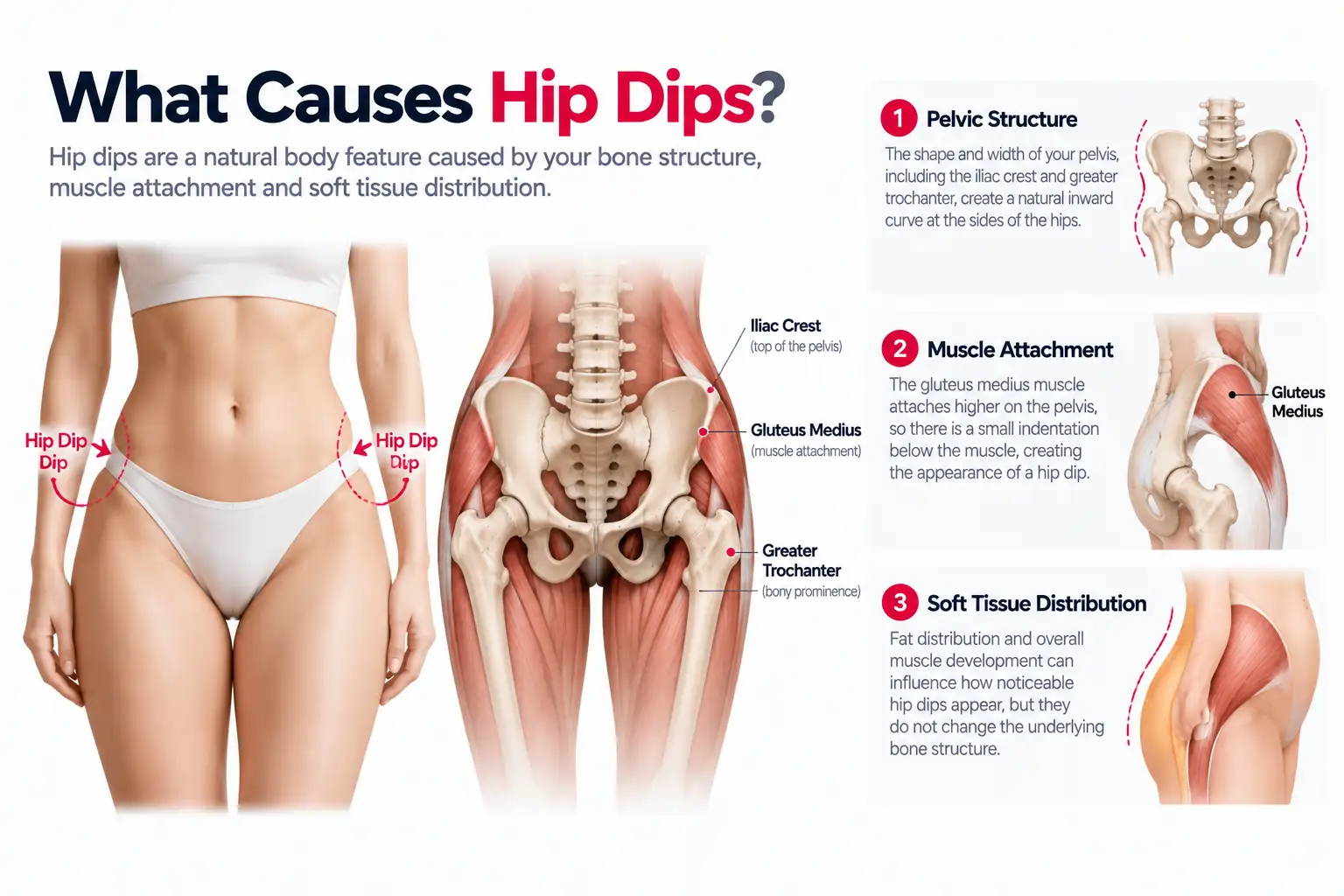
Hip dips are mainly influenced by anatomy rather than lifestyle. The shape of the pelvis, muscle structure, genetics, and the way fat is distributed around the hips all affect how visible hip dips appear.
Understanding the cause is important because different approaches can only affect certain factors. Exercise may improve muscle tone, while body contouring treatments may help improve skin firmness and overall body shape.
1. Pelvic Structure and Bone Anatomy
The width and shape of the pelvis, as well as the position of the femur, create the foundation of the outer hip contour. Because bone structure cannot be changed through exercise or non-invasive treatments, hip dips cannot be completely eliminated.
2. Muscle Development Around the Hips
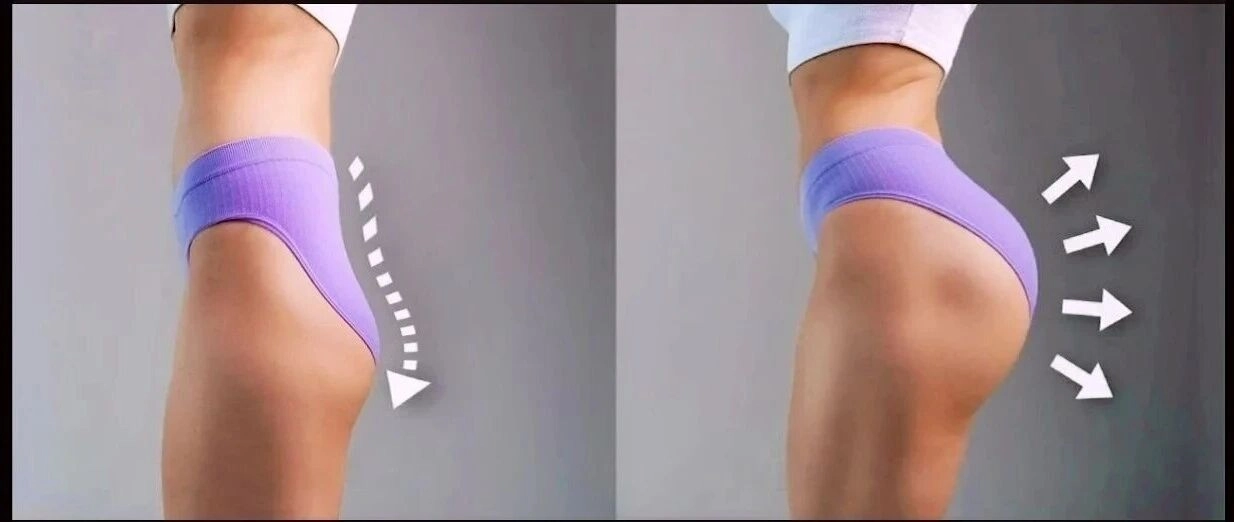
The gluteus medius, gluteus maximus, and surrounding muscles contribute to the appearance of the hip area. Developing these muscles may create a fuller and more balanced contour.
3. Fat Distribution and Body Composition
Fat distribution differs from person to person. Some individuals naturally store more fat around the hips, while others have less soft tissue in the area where hip dips appear.
Can You Get Rid of Hip Dips?
The short answer is: hip dips cannot be completely removed because they are a natural part of human anatomy. However, many people can improve the appearance of hip dips by changing the surrounding muscles, improving skin quality, or using professional body contouring treatments.
The most suitable option depends on the main reason someone wants to improve their hip contour.
| Goal | Possible Approach |
|---|---|
| Build a fuller hip appearance | Strength training and glute development |
| Improve skin firmness | RF, HIFU, and other skin tightening technologies |
| Increase soft tissue volume | Fillers or fat transfer procedures |
| Improve overall body contour | Professional body contouring programs |
How to Reduce Hip Dips Naturally
Natural methods focus on improving the muscles and body composition around the hip area. While they cannot change bone structure, they may help create a smoother and more balanced silhouette.
Hip Dip Exercises
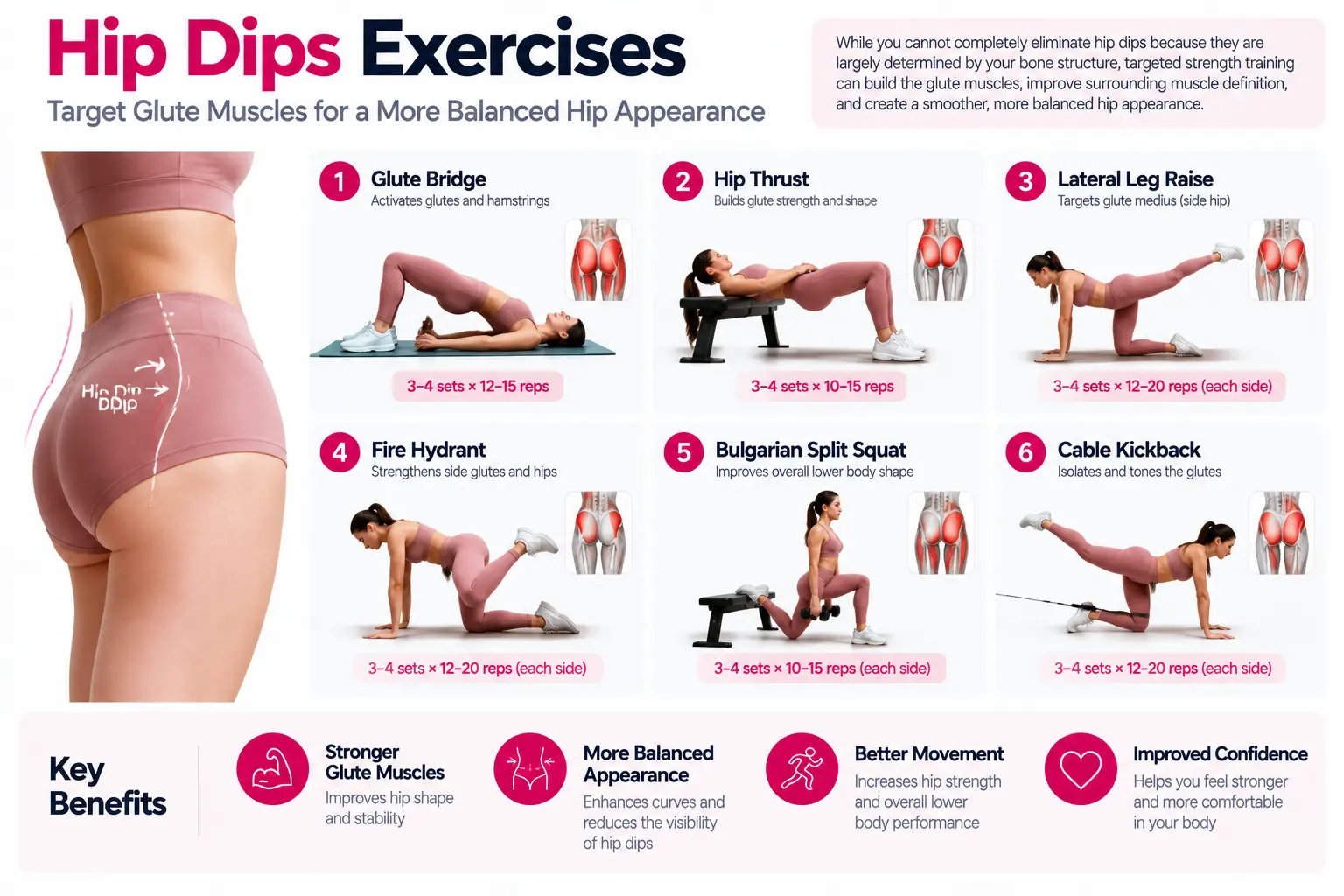
Exercises that target the glute muscles may improve muscle definition around the hips. Common movements include:
- Hip thrusts
- Glute bridges
- Side leg raises
- Lateral band walks
- Squats and lunges
Consistent strength training may gradually improve muscle shape, but results depend on individual anatomy, training consistency, and body composition.
Professional Treatment Options for Hip Dips
For people who want more noticeable contour improvement, professional aesthetic treatments provide additional options beyond exercise. The appropriate treatment depends on whether the goal is improving skin firmness, enhancing muscle definition, or changing soft tissue volume.
Modern body contouring technologies are designed to support aesthetic goals with different mechanisms, including ultrasound energy, radio frequency energy, and muscle stimulation technologies.
1. HIFU Body Contouring for Hip Dips
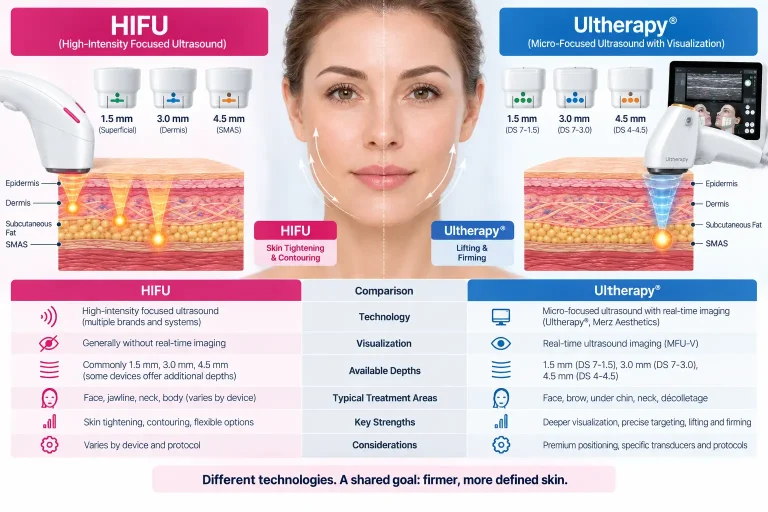
High-intensity focused ultrasound (HIFU) uses focused ultrasound energy to target deeper tissue layers. In aesthetic applications, HIFU technology is commonly used to support skin tightening and body contouring treatments.
For individuals concerned about loose skin or reduced firmness around the hip area, HIFU may be considered as part of a professional body contouring program.
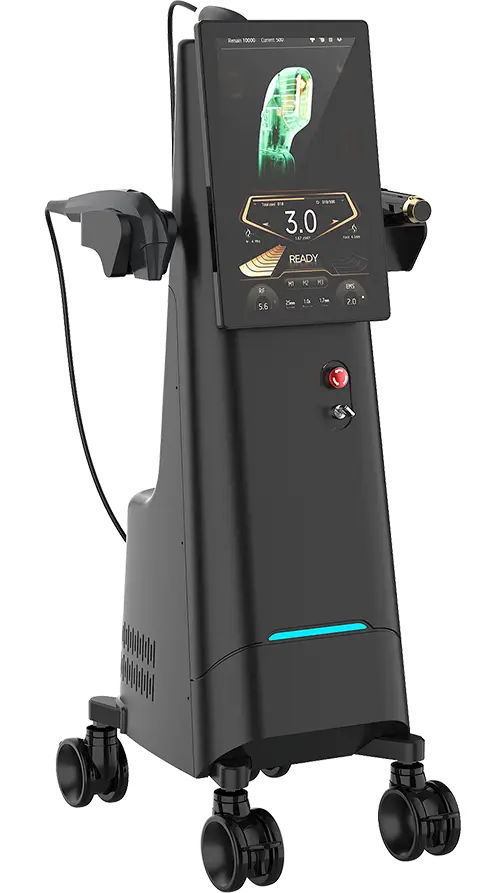
Learn more about professional HIFU technology: AI 360 HIFU Body Contouring System
2. Radio Frequency (RF) Body Contouring
Radio frequency (RF) treatments use controlled thermal energy to support skin tightening and improve skin appearance. RF technology is often used in aesthetic clinics for body contouring and skin firmness treatments.
RF may be suitable for individuals whose main concern is skin laxity rather than the underlying hip structure.
3. EMS Muscle Stimulation
Electrical muscle stimulation (EMS) technology creates controlled muscle contractions to support muscle conditioning programs.
Because muscle development influences the appearance of the hip and glute area, EMS may be combined with exercise-based approaches to support body contouring goals.
4. Fillers and Fat Transfer
Volume-enhancing procedures such as dermal fillers or fat transfer can physically add volume to areas where contour differences are more noticeable.
These procedures may provide more immediate shape changes but usually involve different considerations, including treatment suitability, maintenance, and recovery time.
Hip Dips Treatment Comparison
Different approaches address different causes of visible hip dips. The following comparison can help understand the main differences between common options.
| Method | Main Purpose | Downtime | Best For |
|---|---|---|---|
| Exercise | Improve muscle development | None | People seeking natural improvement |
| HIFU | Skin tightening and body contouring support | Minimal | Skin firmness improvement |
| RF | Improve skin appearance and firmness | Minimal | Skin quality concerns |
| EMS | Muscle stimulation and conditioning | None | Muscle definition support |
| Fat Transfer | Add volume to targeted areas | Longer recovery | Significant volume enhancement |
Who Is a Good Candidate for Hip Dips Improvement?
The best approach for improving hip dips depends on individual goals, anatomy, and expectations. A consultation with a qualified aesthetic professional can help determine which method is most suitable.
People who may consider hip contour improvement often include those who:
- Want to create a smoother-looking hip silhouette.
- Have concerns about skin firmness around the hip area.
- Want to improve body contour after weight changes.
- Prefer non-invasive options with minimal downtime.
- Understand that hip dips are a natural anatomical feature rather than a defect.
Common Mistakes When Trying to Fix Hip Dips
Expecting Exercise to Change Bone Structure
Exercise can strengthen muscles around the hips and improve body definition, but it cannot change pelvic structure. Unrealistic expectations may lead to disappointment.
Choosing a Treatment Without Understanding the Cause
Different concerns require different approaches. For example, muscle-related goals, skin laxity, and volume loss may require completely different solutions.
Focusing Only on Appearance Instead of Body Health
Hip dips are a normal body characteristic. Any aesthetic treatment decision should focus on personal goals rather than comparison with unrealistic body standards.
Common Questions About Hip Dips
Can hip dips be completely removed?
No. Hip dips are mainly related to anatomy, including pelvic structure and muscle attachment. However, their appearance may be improved through exercise, body contouring treatments, or volume-enhancing procedures.
Do hip dips mean you are unhealthy?
No. Hip dips are a normal variation in body shape and are not an indicator of health or fitness level.
How long does it take to improve hip dips naturally?
Exercise-based changes usually require consistent training over time. Results vary depending on muscle development, genetics, and body composition.
Can HIFU help with hip dips?
HIFU may support body contouring goals by helping improve skin firmness. Whether it is suitable depends on individual anatomy and treatment objectives.
Final Thoughts: Choosing the Right Approach for Hip Dips
Hip dips are a normal part of human anatomy and cannot be completely removed. However, many people can improve their overall hip appearance through a combination of exercise, healthy lifestyle choices, and professional aesthetic treatments.
The most effective approach depends on the specific reason behind the visible contour difference. Understanding whether the concern comes from muscle definition, skin firmness, or soft tissue distribution is the first step toward choosing an appropriate solution.
For aesthetic clinics and professionals, advanced body contouring technologies such as HIFU, RF, and EMS provide additional options for developing personalized treatment programs.
Explore Professional Body Contouring Technology
CocoonLaser provides professional aesthetic equipment designed for clinics and beauty practices, including advanced body contouring solutions for modern treatment programs.
Explore AI 360 HIFUReferences
- American Council on Exercise (ACE) – Strength training and body composition information.
- American Society of Plastic Surgeons (ASPS) – Information about body contouring procedures.
- Aesthetic technology research and clinical publications related to HIFU, RF, and body contouring technologies.