Demand for professional hair reduction treatments continues to grow as more patients seek long-lasting alternatives to shaving and waxing. Choosing the right hair reduction laser machine has become an important investment
for dermatology clinics, medical spas, aesthetic centers, and distributors
looking to expand their treatment portfolio.
Modern systems now offer faster treatment speeds, improved cooling technologies,
enhanced patient comfort, and better performance across different skin
types. However, selecting the ideal platform requires understanding laser
wavelengths, treatment mechanisms, safety considerations, and long-term
business value.
This guide explains how professional hair reduction laser machines work,
compares the most common technologies, and highlights the key factors buyers
should evaluate before investing in a medical aesthetic laser system.
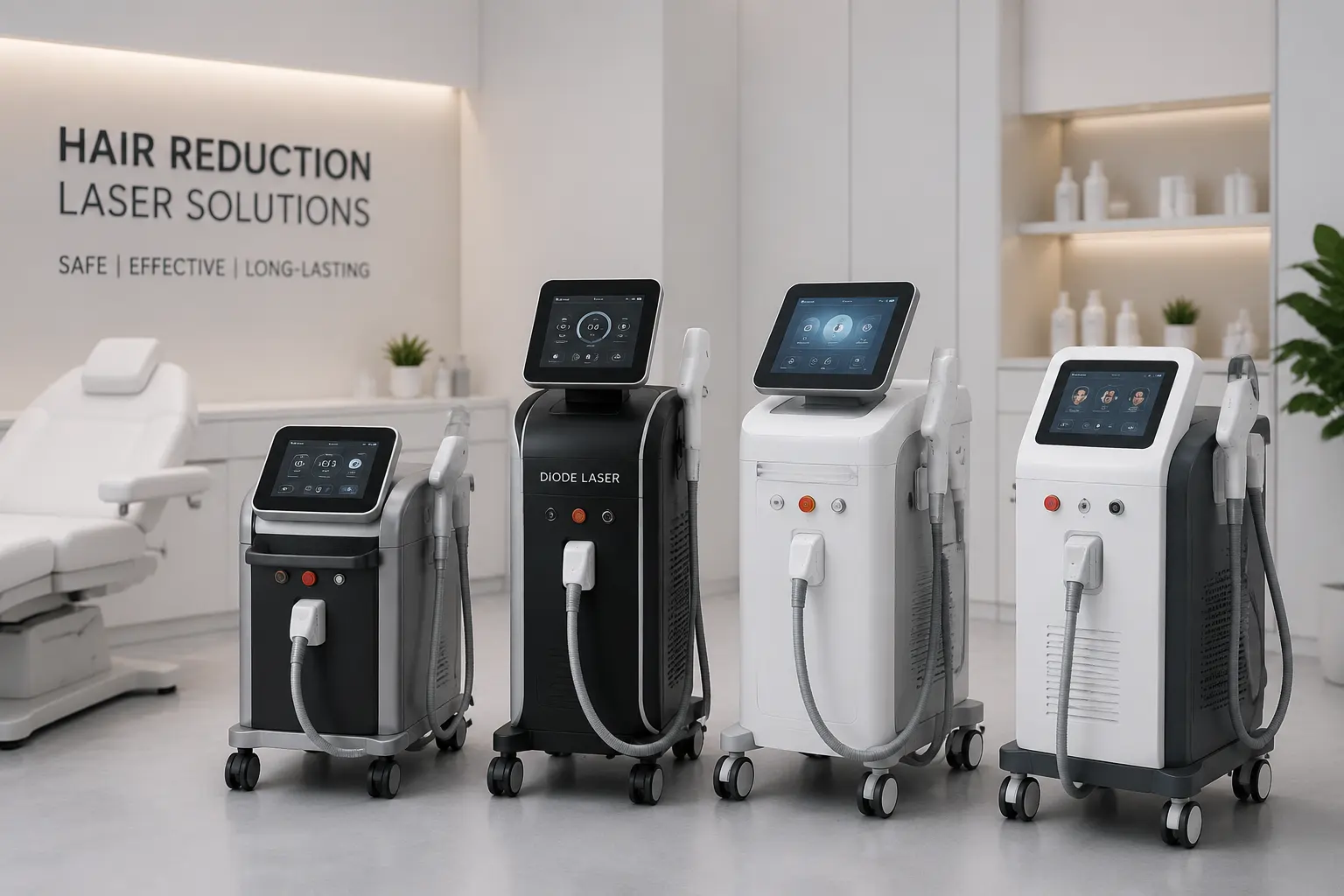
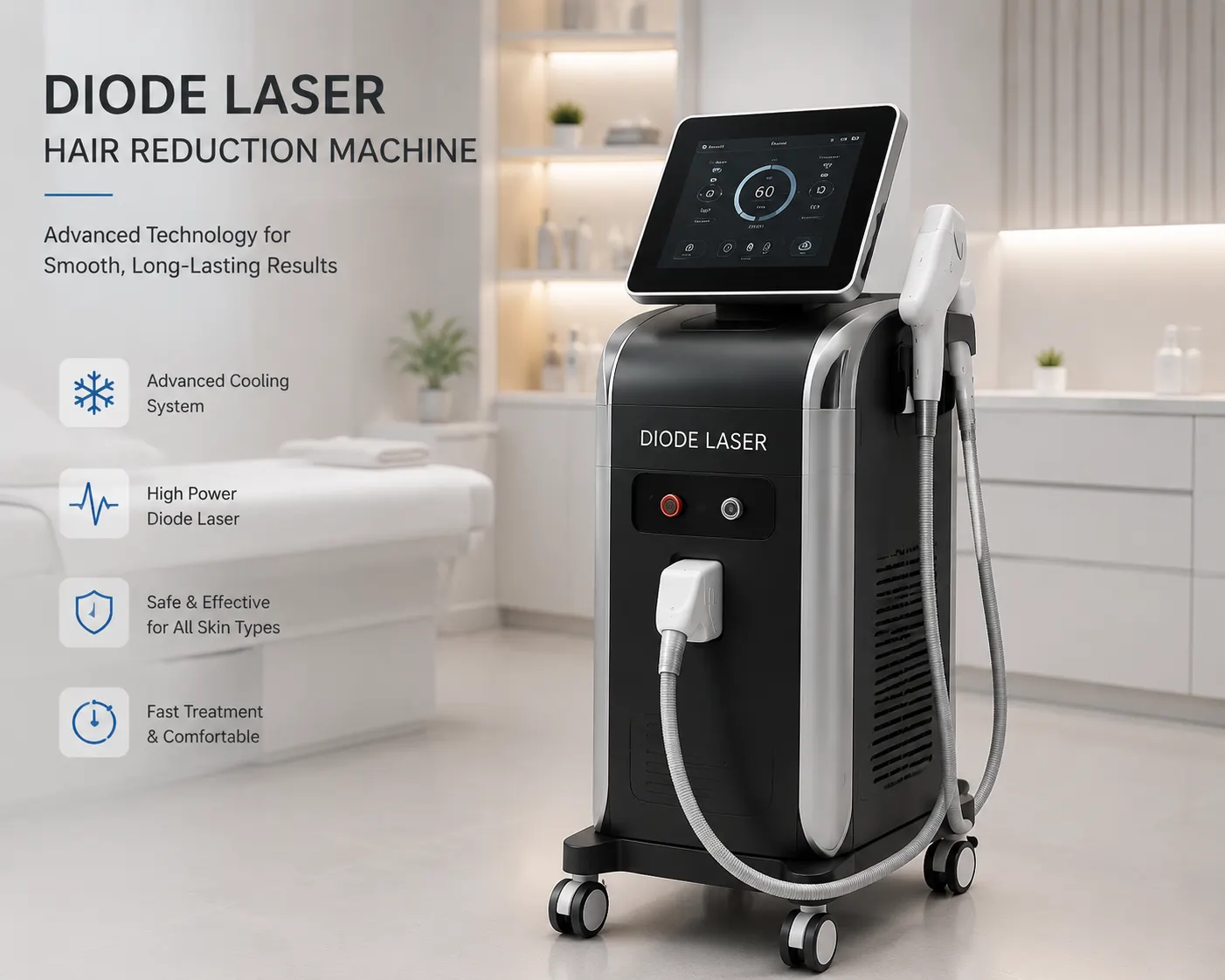
Professional hair reduction laser machines provide efficient long-term
hair reduction for clinics, medical spas, and aesthetic treatment centers.
What Are Hair Reduction Laser Machines?
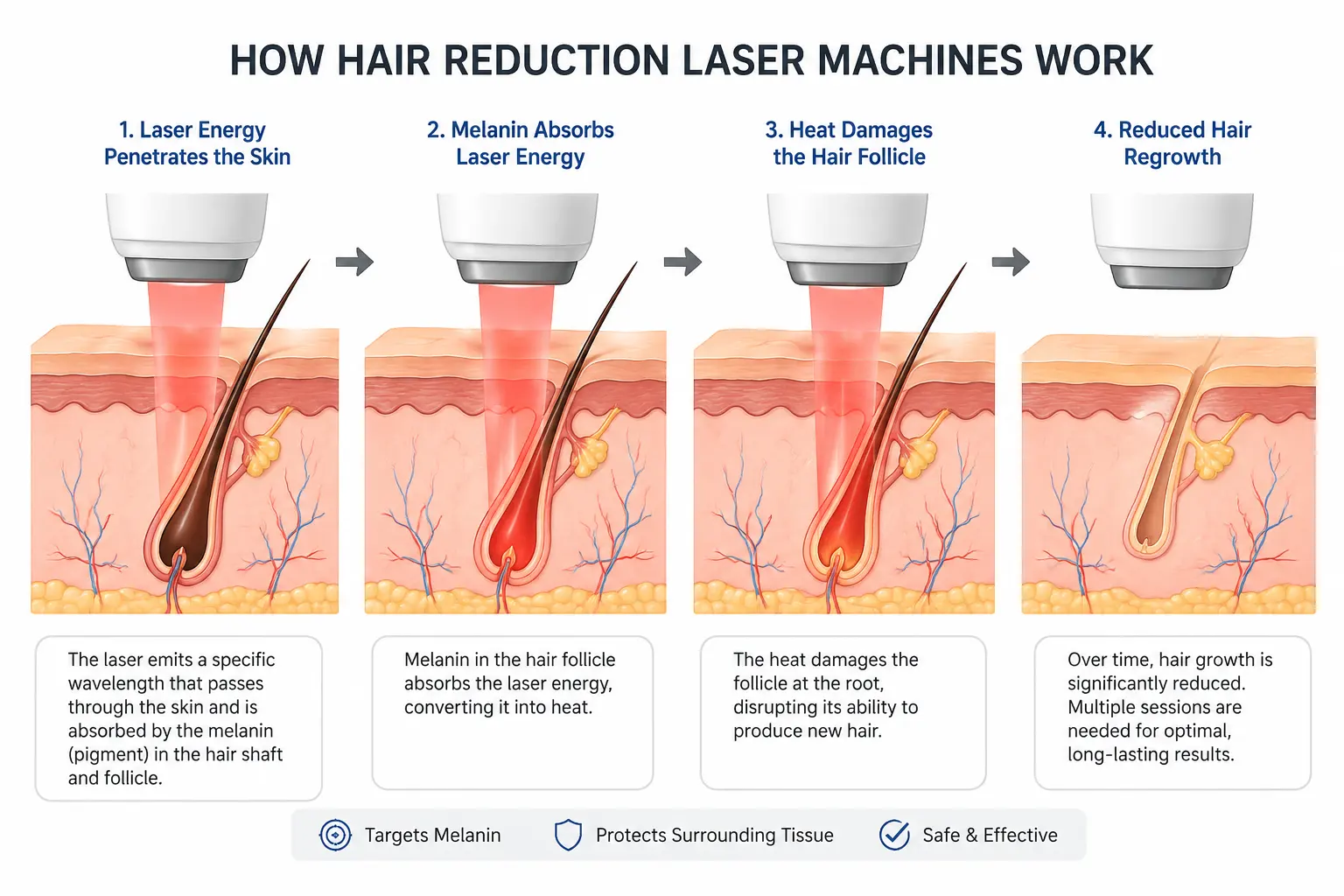
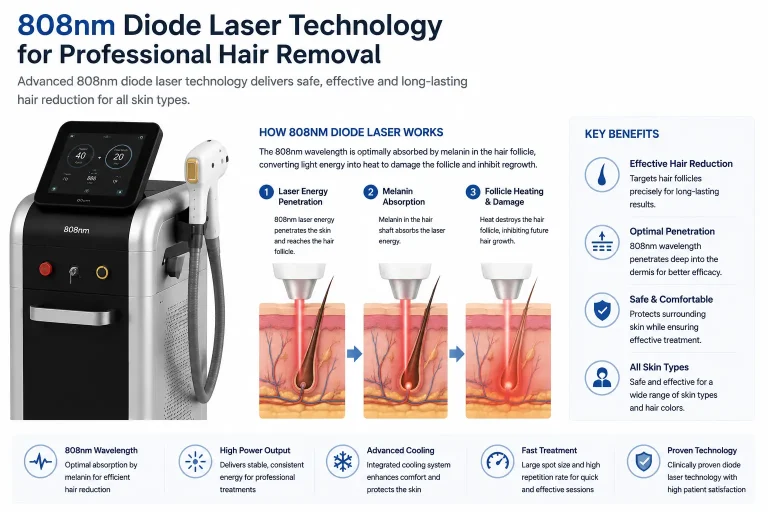
Hair reduction laser machines are professional medical aesthetic devices
designed to reduce unwanted hair by delivering concentrated light energy
into hair follicles. The laser energy is absorbed by melanin within the
hair shaft and converted into heat, damaging the follicle while minimizing
injury to the surrounding skin.
Unlike temporary methods such as shaving, waxing, or depilatory creams,
laser-based treatments provide long-term hair reduction after a series
of treatment sessions. For this reason, laser technology has become one
of the most requested procedures in dermatology clinics and aesthetic medical
centers worldwide.
Modern systems support treatments for multiple body areas including the
face, underarms, arms, legs, bikini line, chest, and back while accommodating
a wide range of Fitzpatrick skin types through different wavelengths and
cooling technologies.
Laser energy selectively targets melanin inside hair follicles, generating
controlled heat that reduces future hair growth while protecting surrounding
tissue.
How Do Hair Reduction Laser Machines Work?
Hair reduction lasers operate based on the principle of selective photothermolysis.
Specific wavelengths are preferentially absorbed by melanin in the hair
follicle while minimizing energy absorption by surrounding tissue.
When the laser pulse reaches the follicle, thermal energy damages the
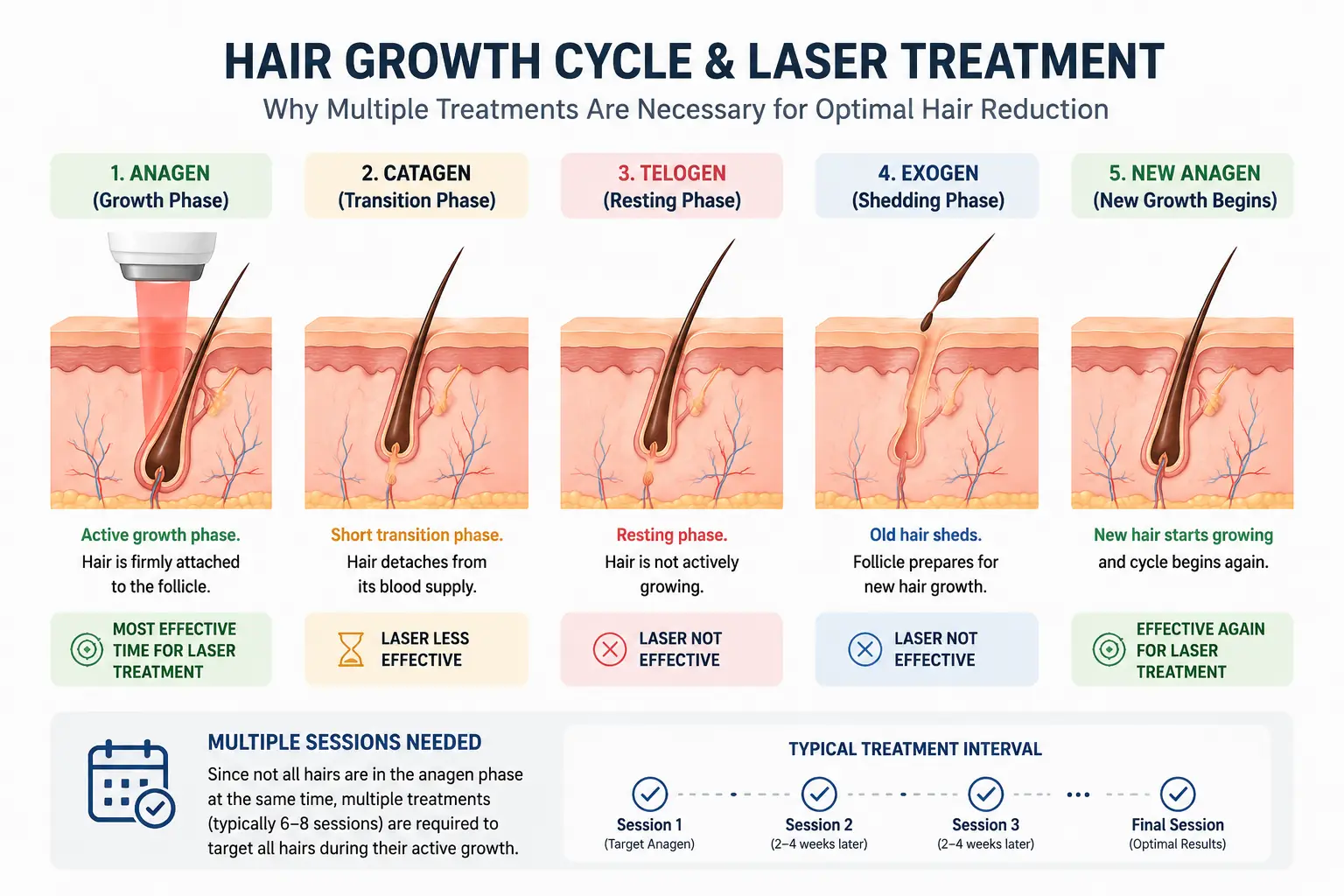
structures responsible for future hair growth. Because hair grows in different
phases, multiple treatment sessions are required to target follicles during
the active growth stage (anagen phase).
Several factors influence treatment effectiveness, including:
Laser wavelength
Pulse duration
Energy density (fluence)
Spot size
Cooling technology
Hair color and thickness
Patient skin type
Modern professional systems incorporate intelligent cooling, adjustable
pulse settings, and optimized spot sizes to improve treatment efficiency
while enhancing patient comfort.
Laser treatments are most effective during the active growth phase of
the hair cycle, making multiple sessions necessary for optimal long-term
hair reduction.
Types of Hair Reduction Laser Technologies
Selecting the right technology is one of the most important decisions
when purchasing a professional hair reduction laser machine. Each wavelength
interacts differently with melanin and skin tissue, making certain systems
more suitable for specific skin types, hair colors, and treatment objectives.
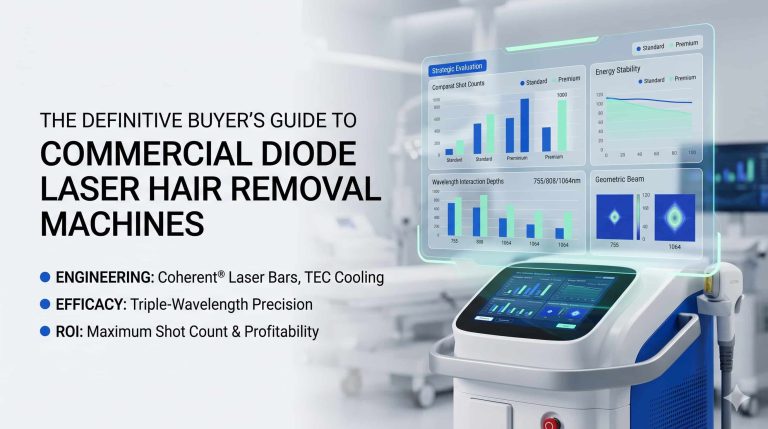
Today, the four most common technologies include Diode Laser, Alexandrite
Laser, Nd:YAG Laser, and Intense Pulsed Light (IPL/OPT). Understanding
their strengths and limitations helps clinics maximize treatment outcomes
while improving patient satisfaction.
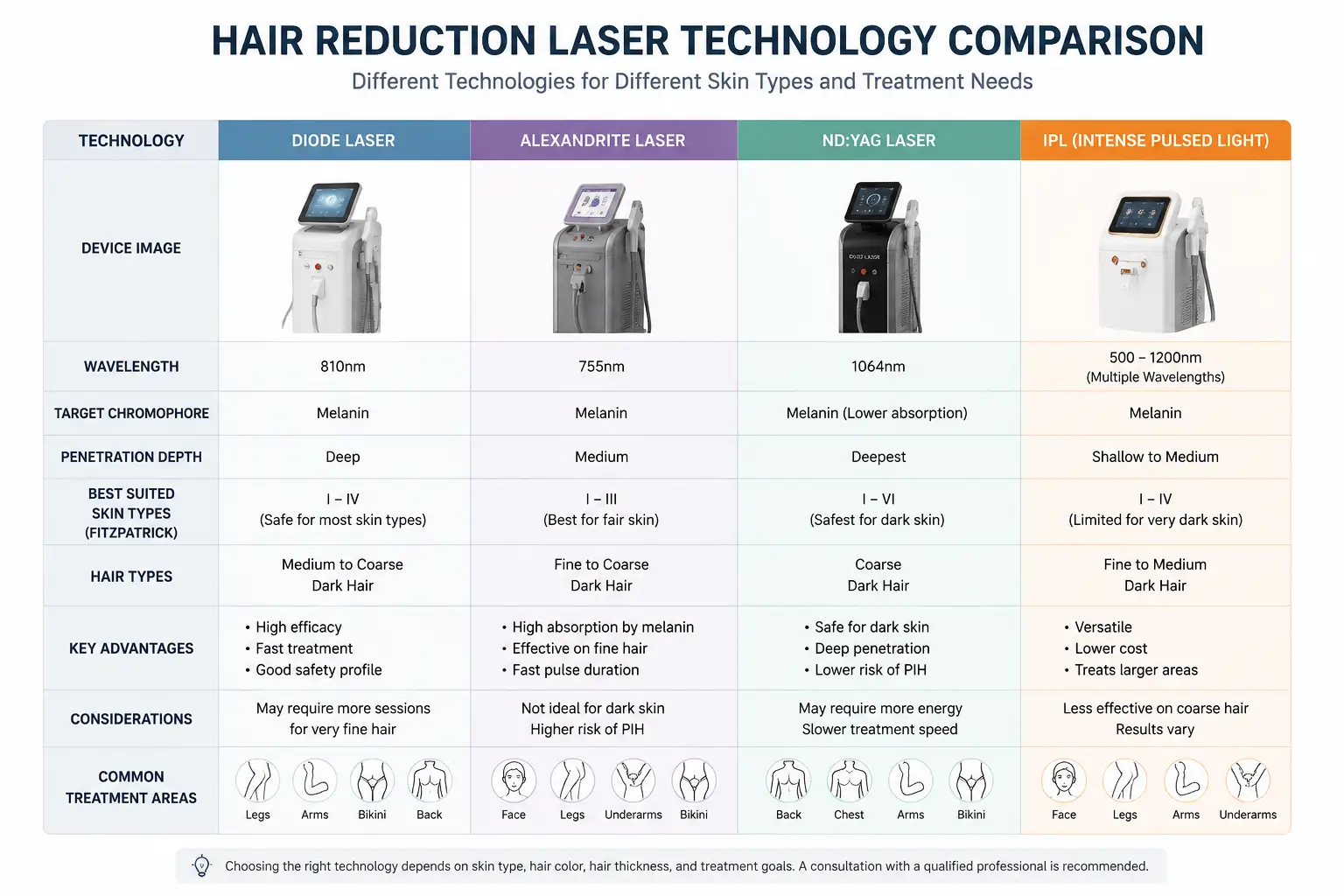
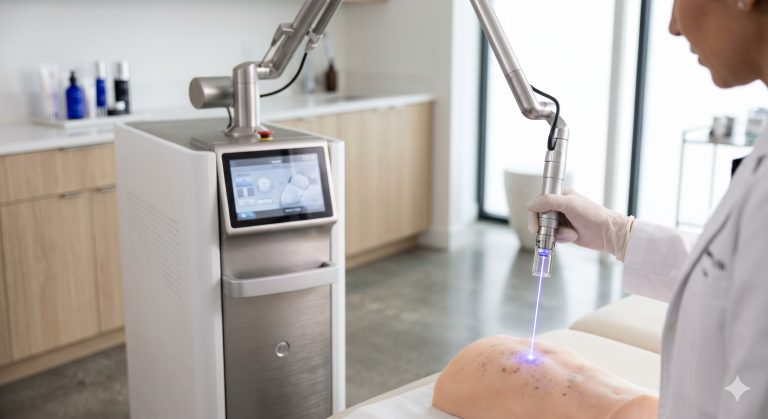
Different hair reduction technologies use different wavelengths and treatment
mechanisms to accommodate various skin types and clinical applications.
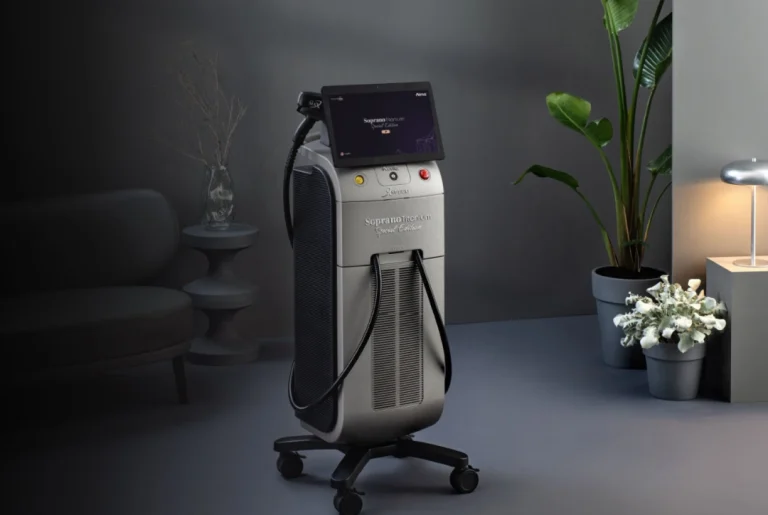
Diode Laser
Diode laser systems are among the most widely used professional hair reduction
technologies because they provide an excellent balance between efficacy,
safety, and versatility. Operating primarily at 808nm or using multi-wavelength
combinations such as 755nm + 808nm + 1064nm, diode lasers target melanin
efficiently while penetrating deeply enough to treat coarse hair.
Modern diode platforms often incorporate advanced cooling systems that
improve patient comfort and allow continuous treatment of large body areas.
As a result, diode laser technology has become the preferred choice for
many dermatology clinics, aesthetic centers, and medical spas.
Advantages
Suitable for most skin types
High treatment efficiency
Fast treatment speed
Excellent patient comfort with contact cooling
Ideal for large treatment areas
Low maintenance requirements
Diode laser technology has become one of the most popular solutions for
professional long-term hair reduction.
Alexandrite Laser
Alexandrite laser systems typically operate at a wavelength of 755nm and
are highly effective for patients with lighter skin tones and dark hair.
The shorter wavelength demonstrates strong melanin absorption, allowing
efficient treatment of fine and superficial hair.
However, because melanin is also present in darker skin, Alexandrite systems
generally require careful patient selection and conservative parameter
settings to reduce the risk of epidermal injury.
Advantages
Excellent melanin absorption
Effective for fine hair
Fast treatment speed
Commonly used for Fitzpatrick I–III skin types
Nd:YAG Laser
Nd:YAG laser systems operate at 1064nm, providing deeper penetration and
lower melanin absorption than shorter wavelengths. This makes them particularly
suitable for treating patients with darker skin types while reducing the
likelihood of epidermal overheating.
Although treatment may require higher energy settings and additional sessions
compared with Alexandrite or Diode systems, Nd:YAG technology remains an
important option for clinics serving diverse patient populations.
Advantages
Suitable for darker skin types
Deep follicle penetration
Lower epidermal melanin absorption
Broad clinical versatility
IPL and OPT Systems
Unlike true laser systems, Intense Pulsed Light (IPL) devices emit broad-spectrum
light rather than a single wavelength. Modern OPT (Optimal Pulse Technology)
platforms improve pulse consistency and patient comfort, allowing clinics
to perform hair reduction alongside skin rejuvenation, pigmentation management,
acne therapy, and vascular treatments.
Although IPL systems provide excellent versatility, dedicated diode laser
platforms generally deliver greater efficiency for long-term hair reduction
because of their wavelength specificity.
Advantages
Multiple treatment indications
Skin rejuvenation capabilities
Pigmentation treatment
Acne management
Good return on investment for multi-service clinics
Technology Comparison
Technology
Typical Wavelength
Best For
Skin Types
Main Advantages
Diode Laser
808nm / Multi-Wavelength
General Hair Reduction
I–VI
Versatile, fast, comfortable
Alexandrite
755nm
Fine Dark Hair
I–III
Excellent melanin absorption
Nd:YAG
1064nm
Darker Skin Types
IV–VI
Deep penetration and improved safety
IPL / OPT
Broad Spectrum
Multi-function Treatments
I–V
Hair reduction plus skin rejuvenation
Benefits of Professional Hair Reduction Laser Machines
For modern aesthetic clinics, investing in a professional hair reduction
laser machine is more than simply adding another treatment. It creates
opportunities to expand service offerings, increase patient retention,
and generate recurring revenue through treatment packages.
Compared with temporary hair removal methods, laser technology offers
predictable long-term results, shorter treatment times, and improved patient
satisfaction. As technology continues to evolve, today’s platforms also
deliver better cooling performance, greater energy stability, and enhanced
treatment efficiency.
Long-Term Hair Reduction
Laser energy targets actively growing hair follicles, reducing future
hair growth after multiple treatment sessions. Patients often choose laser
treatments because they provide longer-lasting results than shaving or
waxing while reducing the need for ongoing maintenance.
Improved Patient Comfort
Modern systems incorporate advanced contact cooling, sapphire cooling,
TEC cooling, or air cooling technologies that help protect the epidermis
while making treatments more comfortable.
Fast Treatment Speed
Large spot sizes, high repetition rates, and intelligent pulse control
allow practitioners to treat large body areas efficiently, increasing daily
patient capacity.
High Return on Investment
Hair reduction remains one of the most frequently requested aesthetic
procedures worldwide. Clinics can often improve equipment utilization by
combining hair removal with other aesthetic treatments depending on the
platform’s capabilities.
Clinical Applications
Professional hair reduction laser machines can be used to treat unwanted
hair across multiple anatomical regions while adapting treatment parameters
according to skin type, hair thickness, and treatment goals.
Treatment Area
Typical Hair Type
Clinical Notes
Face
Fine to Medium
Requires precise parameter selection
Upper Lip
Fine
Small spot sizes improve precision
Underarms
Medium to Coarse
One of the most commonly requested treatments
Arms
Medium
Large treatment area benefits from faster repetition rates
Legs
Medium to Coarse
Large spot sizes improve efficiency
Bikini Area
Coarse
Cooling technology enhances comfort
Chest & Back
Coarse
Common treatment for male patients
Typical Treatment Workflow
Although protocols vary depending on the technology and patient characteristics,
professional laser hair reduction generally follows a standardized clinical
workflow.
Patient consultation and medical history review
Skin type and hair assessment
Selection of wavelength and treatment parameters
Skin preparation and protective eyewear
Laser treatment
Immediate cooling if required
Post-treatment care instructions
Follow-up sessions based on the hair growth cycle
How to Choose the Right Hair Reduction Laser Machine
Purchasing a laser platform requires balancing clinical performance, operational
efficiency, and long-term business objectives. Rather than focusing solely
on price, buyers should evaluate the complete ownership experience, including
service, reliability, and manufacturer support.
Evaluate Treatment Technologies
Determine whether a diode laser, Nd:YAG laser, Alexandrite laser, or multi-function
IPL/OPT platform best aligns with your target patient population and treatment
portfolio.
Review Cooling Performance
Efficient cooling systems contribute to patient comfort, protect the epidermis,
and enable continuous operation during busy clinic schedules.
Assess Manufacturer Support
Reliable manufacturers typically provide technical documentation, operator
training, warranty support, software updates, spare parts, and responsive
after-sales service.
Consider OEM & ODM Services
Distributors and private-label brands may benefit from manufacturers offering
logo customization, machine appearance customization, packaging design,
multilingual user manuals, and software customization.
Buying Factor
Why It Matters
Laser Technology
Determines treatment effectiveness and patient suitability
Cooling System
Improves comfort and protects skin
Energy Stability
Supports consistent clinical performance
Warranty
Reduces long-term ownership risk
Technical Support
Ensures reliable operation after purchase
OEM Capability
Supports private-label business expansion
OEM & ODM Services for Global Partners
For distributors, medical device importers, and private-label brands,
selecting the right manufacturing partner is just as important as choosing
the right technology. A reliable OEM manufacturer should provide not only
high-quality equipment but also comprehensive technical support throughout
the product lifecycle.
Professional OEM and ODM services may include logo customization, machine
appearance customization, software interface localization, packaging design,
multilingual user manuals, marketing materials, operator training, and
after-sales technical support.
Working with an experienced manufacturer helps distributors shorten time
to market while building a recognizable brand in their local market.
Why Choosing the Right Manufacturer Matters
A laser platform is a long-term investment. Beyond technical specifications,
buyers should evaluate the manufacturer’s production capability, quality
management system, export experience, spare parts availability, and technical
service network.
Manufacturers with established quality control processes and international
distribution experience are generally better positioned to provide consistent
product quality and responsive after-sales support.
Stable manufacturing capacity
Strict quality inspection procedures
Professional technical documentation
Operator training programs
Spare parts availability
Long-term technical support
OEM & ODM customization
Distributor cooperation opportunities
Frequently Asked Questions
Which hair reduction laser technology is most commonly used?
Diode laser systems are widely used because they provide an effective
balance between treatment efficiency, patient comfort, and compatibility
with a broad range of skin types.
Is laser hair reduction permanent?
Laser treatments are intended to achieve long-term hair reduction. Because
hair grows in different cycles and hormonal factors vary among individuals,
maintenance treatments may be recommended depending on clinical assessment.
How many treatment sessions are usually required?
Most treatment plans involve multiple sessions scheduled according to
the hair growth cycle. The exact number varies depending on the treatment
area, hair characteristics, skin type, and individual response.
Which technology is suitable for darker skin types?
Modern diode and Nd:YAG laser systems are commonly selected for treating
darker skin types when appropriate wavelengths and treatment parameters
are used by qualified healthcare professionals.
Can one machine perform other aesthetic treatments?
Some multi-function platforms combine hair reduction with skin rejuvenation,
pigmentation management, vascular therapy, or acne treatment. Buyers should
evaluate clinical needs before selecting a multifunction or dedicated system.
Conclusion
Hair reduction laser machines have become essential equipment for modern
dermatology clinics, aesthetic medical centers, and medical spas. Advances
in diode laser, Alexandrite, Nd:YAG, and OPT technologies have expanded
treatment options while improving patient comfort and clinical efficiency.
When selecting a system, buyers should evaluate laser technology, cooling
performance, treatment versatility, manufacturer experience, technical
support, and long-term operating costs rather than focusing solely on purchase
price.
Choosing the right equipment and a reliable manufacturing partner helps
clinics deliver consistent treatment quality while supporting sustainable
business growth.
Looking for a Professional Hair Reduction Laser Machine?
Whether you are establishing a new aesthetic clinic, expanding your treatment
portfolio, or searching for an experienced OEM manufacturer, selecting
the right laser platform is a critical investment.
Contact the Cocoon Laser team to discuss your clinical requirements, request
product specifications, or learn more about OEM and distributor cooperation
opportunities.