
Thermal Relaxation Time in Laser Hair Removal Physics Guide – Official Clinical Overview & Technical Datasheet
THERMAL RELAXATION TIME IN LASER HAIR REMOVAL PHYSICS GUIDE
OFFICIAL CLINICAL OVERVIEW & TECHNICAL DATASHEET
EXECUTIVE SUMMARY
This document provides a comprehensive clinical and technical overview of Thermal Relaxation Time (TRT) and its critical application in modern laser hair removal systems. As an elite OEM manufacturer, we present the foundational physics governing selective photothermolysis, the engineering principles behind optimal pulse duration selection, and the clinical implications for safe, effective treatment across diverse patient populations. This whitepaper serves as an authoritative reference for clinicians, med spa operators, and procurement specialists seeking to understand the core mechanisms that define treatment efficacy and patient safety in aesthetic laser devices.
The concept of Thermal Relaxation Time is central to the clinical architecture of laser hair removal. TRT is defined as the duration required for a target chromophore—in this case, melanin within the hair follicle—to dissipate 50% of its peak temperature following laser exposure . The fundamental treatment goal is to deliver energy with a pulse duration that matches or is strategically adjusted relative to the TRT of the target tissue, thereby confining thermal damage to the hair follicle while sparing the surrounding epidermis and dermis.
CLINICAL ARCHITECTURE & DESIGN
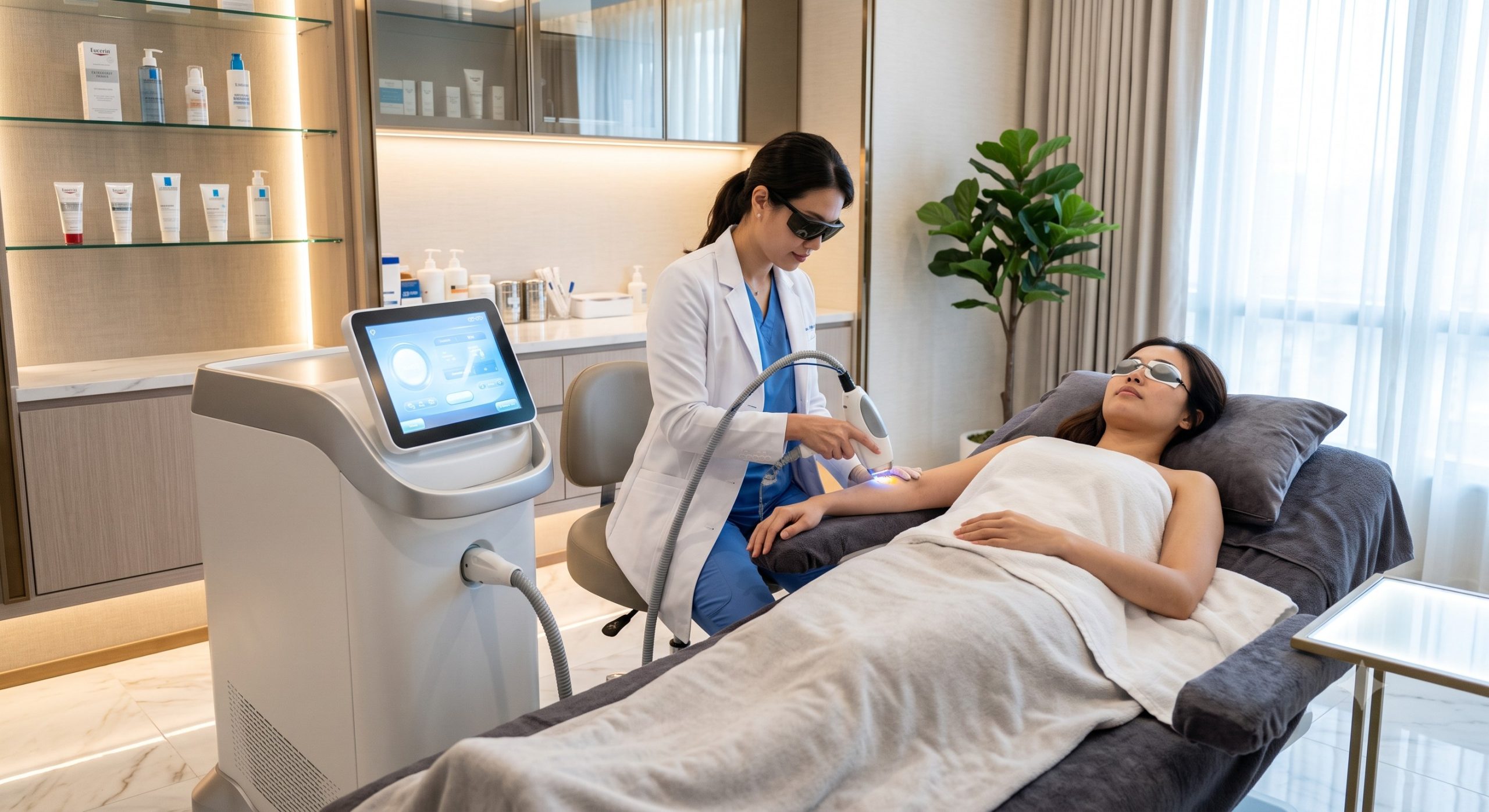 Our platform is engineered around the validated principles of Selective Photothermolysis, ensuring that laser energy is preferentially absorbed by the melanin chromophore within the hair shaft and bulb . The system architecture incorporates advanced diode laser technology with precisely controllable pulse durations, allowing clinicians to adapt treatment parameters to the unique biophysical characteristics of each patient’s hair and skin type.
The clinical efficacy of laser hair removal is governed by several interrelated parameters: wavelength, fluence, spot size, and pulse duration. Among these, pulse duration—defined as the time over which laser energy is delivered to the tissue—is directly linked to the Thermal Relaxation Time of the target. To achieve permanent hair reduction, the delivered pulse must generate sufficient thermal energy to induce coagulative necrosis of the follicular stem cells located in the bulge region of the outer root sheath . This requires heat to diffuse from the primary chromophore (melanin in the hair bulb) to the secondary target (stem cells), a process that occurs over a time frame that may be significantly longer than the TRT of the hair shaft itself .
KEY INDICATIONS & CAPABILITIES
The system is indicated for the treatment of unwanted hair in patients with Fitzpatrick Skin Types I-VI. The advanced pulse duration architecture enables safe and effective treatment across a broad spectrum of hair colors and textures, including fine, coarse, light, and dark hair types. The platform’s versatility is further enhanced by its ability to deliver super-long pulse durations (up to 1000 ms), which have been clinically validated for safe hair removal in darker skin types by minimizing epidermal melanin absorption and reducing the risk of post-inflammatory hyperpigmentation .
COMPLIANCE & STANDARDS
The device is manufactured in accordance with stringent quality management systems and complies with all applicable medical device regulations, including CE marking and FDA clearance. The system meets or exceeds the requirements of IEC 60601-1 for medical electrical equipment and IEC 60601-2-22 for laser safety. Comprehensive safety features, including integrated contact cooling, real-time skin temperature monitoring, and automatic energy calibration, ensure that the device operates within clinically safe parameters across all treatment settings.
TECHNICAL SPECIFICATIONS
Our platform is engineered around the validated principles of Selective Photothermolysis, ensuring that laser energy is preferentially absorbed by the melanin chromophore within the hair shaft and bulb . The system architecture incorporates advanced diode laser technology with precisely controllable pulse durations, allowing clinicians to adapt treatment parameters to the unique biophysical characteristics of each patient’s hair and skin type.
The clinical efficacy of laser hair removal is governed by several interrelated parameters: wavelength, fluence, spot size, and pulse duration. Among these, pulse duration—defined as the time over which laser energy is delivered to the tissue—is directly linked to the Thermal Relaxation Time of the target. To achieve permanent hair reduction, the delivered pulse must generate sufficient thermal energy to induce coagulative necrosis of the follicular stem cells located in the bulge region of the outer root sheath . This requires heat to diffuse from the primary chromophore (melanin in the hair bulb) to the secondary target (stem cells), a process that occurs over a time frame that may be significantly longer than the TRT of the hair shaft itself .
KEY INDICATIONS & CAPABILITIES
The system is indicated for the treatment of unwanted hair in patients with Fitzpatrick Skin Types I-VI. The advanced pulse duration architecture enables safe and effective treatment across a broad spectrum of hair colors and textures, including fine, coarse, light, and dark hair types. The platform’s versatility is further enhanced by its ability to deliver super-long pulse durations (up to 1000 ms), which have been clinically validated for safe hair removal in darker skin types by minimizing epidermal melanin absorption and reducing the risk of post-inflammatory hyperpigmentation .
COMPLIANCE & STANDARDS
The device is manufactured in accordance with stringent quality management systems and complies with all applicable medical device regulations, including CE marking and FDA clearance. The system meets or exceeds the requirements of IEC 60601-1 for medical electrical equipment and IEC 60601-2-22 for laser safety. Comprehensive safety features, including integrated contact cooling, real-time skin temperature monitoring, and automatic energy calibration, ensure that the device operates within clinically safe parameters across all treatment settings.
TECHNICAL SPECIFICATIONS
CLINICAL PROTOCOLS
Optimal treatment outcomes are achieved by selecting pulse durations that are appropriately matched to the Thermal Relaxation Time of the target hair follicle while also considering the patient’s skin phototype and hair characteristics. The following clinical guidelines are based on established principles of laser-tissue interaction:
– For fine, light-colored hair, shorter pulse durations are recommended to ensure rapid heating of smaller follicular structures .
– For coarse, thick hair, longer pulse durations (approaching the thermal damage time of the follicle) are required to allow sufficient heat diffusion to the stem cell region .
– For darker skin types (Fitzpatrick IV-VI), longer pulse durations are essential to reduce the risk of epidermal injury by allowing the epidermis to cool more effectively during the pulse .
– Clinical endpoints such as perifollicular erythema and edema serve as indicators of adequate thermal delivery and should be monitored to guide parameter adjustments .
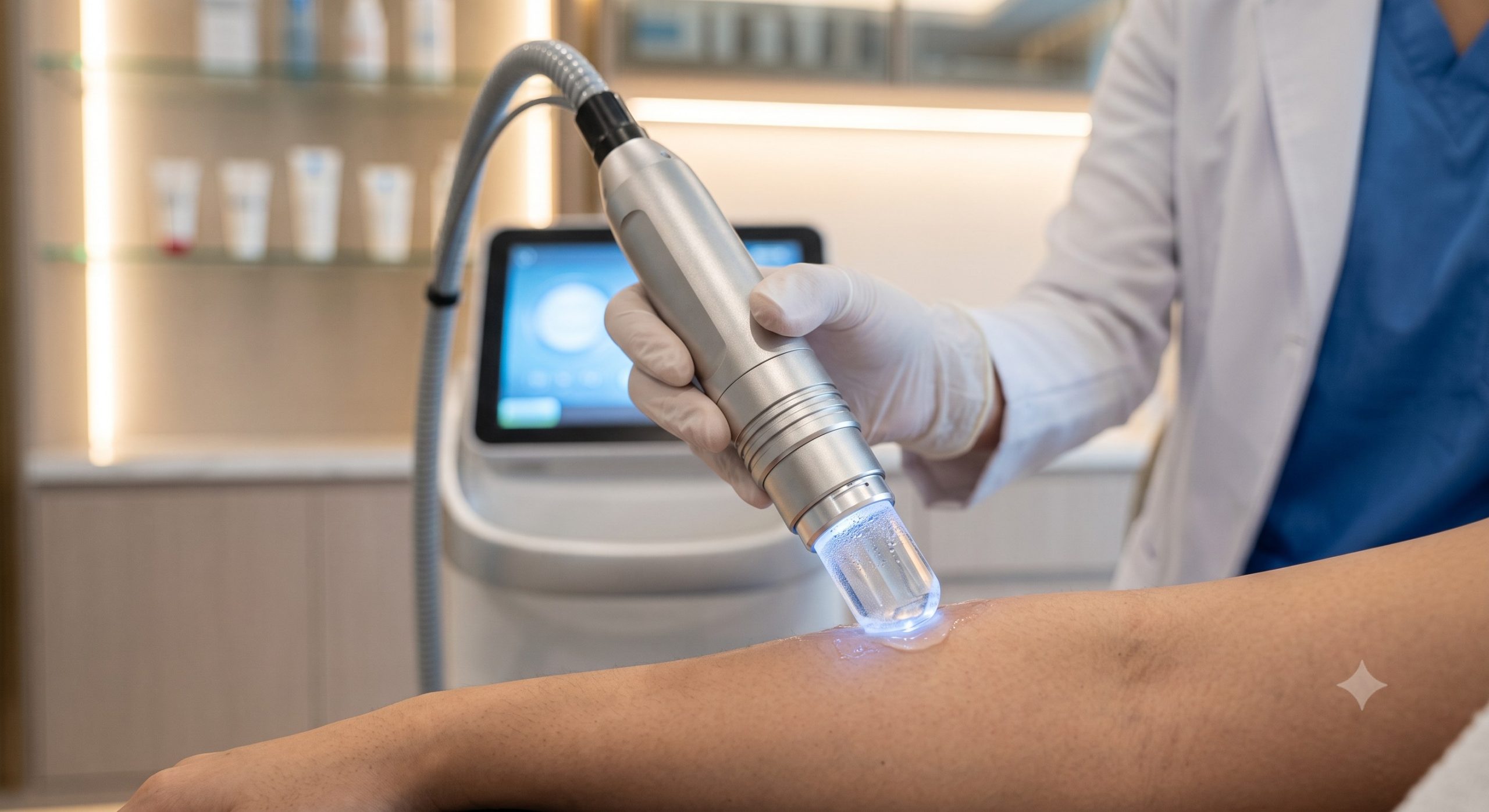 Advanced cooling mechanisms, including sapphire contact cooling, thermoelectric cooling (TEC), and dynamic water circulation, are integrated into the handpiece to protect the epidermis during treatment. These systems work in concert with the selected pulse duration to ensure that the target follicle reaches the therapeutic temperature threshold (typically 65-75°C) while the overlying skin remains at a safe temperature below the threshold for thermal injury .
The clinical protocols outlined in this datasheet are designed to maximize treatment efficacy while maintaining the highest standards of patient safety and comfort. Clinicians are advised to consult the full user manual for detailed parameter selection guides and treatment algorithms tailored to specific patient demographics.
Advanced cooling mechanisms, including sapphire contact cooling, thermoelectric cooling (TEC), and dynamic water circulation, are integrated into the handpiece to protect the epidermis during treatment. These systems work in concert with the selected pulse duration to ensure that the target follicle reaches the therapeutic temperature threshold (typically 65-75°C) while the overlying skin remains at a safe temperature below the threshold for thermal injury .
The clinical protocols outlined in this datasheet are designed to maximize treatment efficacy while maintaining the highest standards of patient safety and comfort. Clinicians are advised to consult the full user manual for detailed parameter selection guides and treatment algorithms tailored to specific patient demographics.
Our platform is engineered around the validated principles of Selective Photothermolysis, ensuring that laser energy is preferentially absorbed by the melanin chromophore within the hair shaft and bulb . The system architecture incorporates advanced diode laser technology with precisely controllable pulse durations, allowing clinicians to adapt treatment parameters to the unique biophysical characteristics of each patient’s hair and skin type.
The clinical efficacy of laser hair removal is governed by several interrelated parameters: wavelength, fluence, spot size, and pulse duration. Among these, pulse duration—defined as the time over which laser energy is delivered to the tissue—is directly linked to the Thermal Relaxation Time of the target. To achieve permanent hair reduction, the delivered pulse must generate sufficient thermal energy to induce coagulative necrosis of the follicular stem cells located in the bulge region of the outer root sheath . This requires heat to diffuse from the primary chromophore (melanin in the hair bulb) to the secondary target (stem cells), a process that occurs over a time frame that may be significantly longer than the TRT of the hair shaft itself .
KEY INDICATIONS & CAPABILITIES
The system is indicated for the treatment of unwanted hair in patients with Fitzpatrick Skin Types I-VI. The advanced pulse duration architecture enables safe and effective treatment across a broad spectrum of hair colors and textures, including fine, coarse, light, and dark hair types. The platform’s versatility is further enhanced by its ability to deliver super-long pulse durations (up to 1000 ms), which have been clinically validated for safe hair removal in darker skin types by minimizing epidermal melanin absorption and reducing the risk of post-inflammatory hyperpigmentation .
COMPLIANCE & STANDARDS
The device is manufactured in accordance with stringent quality management systems and complies with all applicable medical device regulations, including CE marking and FDA clearance. The system meets or exceeds the requirements of IEC 60601-1 for medical electrical equipment and IEC 60601-2-22 for laser safety. Comprehensive safety features, including integrated contact cooling, real-time skin temperature monitoring, and automatic energy calibration, ensure that the device operates within clinically safe parameters across all treatment settings.
TECHNICAL SPECIFICATIONS
| Parameter | Specification |
|---|---|
| Laser Type | Medical-Grade Diode Laser (e.g., 808nm, 755nm, 1064nm) |
| Pulse Duration Range | Standard: 2-100 ms; Super-Long: 200-1000 ms |
| Target Thermal Relaxation Time (TRT) | Terminal Hair Follicle: approx. 100 ms ; Cylindrical Targets (60-100 μm): 5-10 ms |
| Optimal Pulse Duration (Clinical) | Therapeutic Window: 3-5 ms for small vessels/pigment; Up to 400 ms for long-pulse hair removal |
| Cooling System | Sapphire Contact Cooling + TEC + Water Circulation + Air Cooling |
| Spot Size | Range: 10×10 mm to 15×15 mm (Dependent on Handpiece) |
| Fluence Range | 10-115 J/cm² (Dependent on Pulse Duration and Skin Type) |
| Epidermal Protection | Dynamic Temperature Monitoring & Real-Time Impedance Adjustment |
| Regulatory Compliance | CE, FDA, IEC 60601-1, IEC 60601-2-22 |
Advanced cooling mechanisms, including sapphire contact cooling, thermoelectric cooling (TEC), and dynamic water circulation, are integrated into the handpiece to protect the epidermis during treatment. These systems work in concert with the selected pulse duration to ensure that the target follicle reaches the therapeutic temperature threshold (typically 65-75°C) while the overlying skin remains at a safe temperature below the threshold for thermal injury .
The clinical protocols outlined in this datasheet are designed to maximize treatment efficacy while maintaining the highest standards of patient safety and comfort. Clinicians are advised to consult the full user manual for detailed parameter selection guides and treatment algorithms tailored to specific patient demographics.
📥 Download Technical Specification
Click the button below to view or download the full official PDF datasheet.
⬇️ Download Official PDF