
Selective Photothermolysis Architecture Reference Document: Portable Carbon Peel Laser Unit
SELECTIVE PHOTOTHERMOLYSIS ARCHITECTURE REFERENCE DOCUMENT: PORTABLE CARBON PEEL LASER UNIT
1. MECHANISM PHILOSOPHY
The Portable Carbon Peel Laser Unit operationalizes the principle of selective photothermolysis via a dual-phase chromophore amplification cascade. In Phase One, a topical carbon-based suspension (nanoparticle lotion) is applied to the epidermis, where it passively diffuses into sebaceous follicles, intercellular crevices, and comedonal openings. In Phase Two, the Q-switched or long-pulsed neodymium:yttrium-aluminum-garnet (Nd:YAG) 1064 nm or 532 nm emission interacts with the exogenous carbon chromophore. The resultant rapid thermoelastic expansion generates a micro-acoustic shockwave, mechanically lysing the carbon particles while transferring kinetic energy to adjacent sebum, keratinous debris, and cellular membranes. This mechanism spares surrounding water and melanin absorbers, enabling a non-ablative epidermal clearance profile.
 2. ENERGY TRANSMISSION DYNAMICS
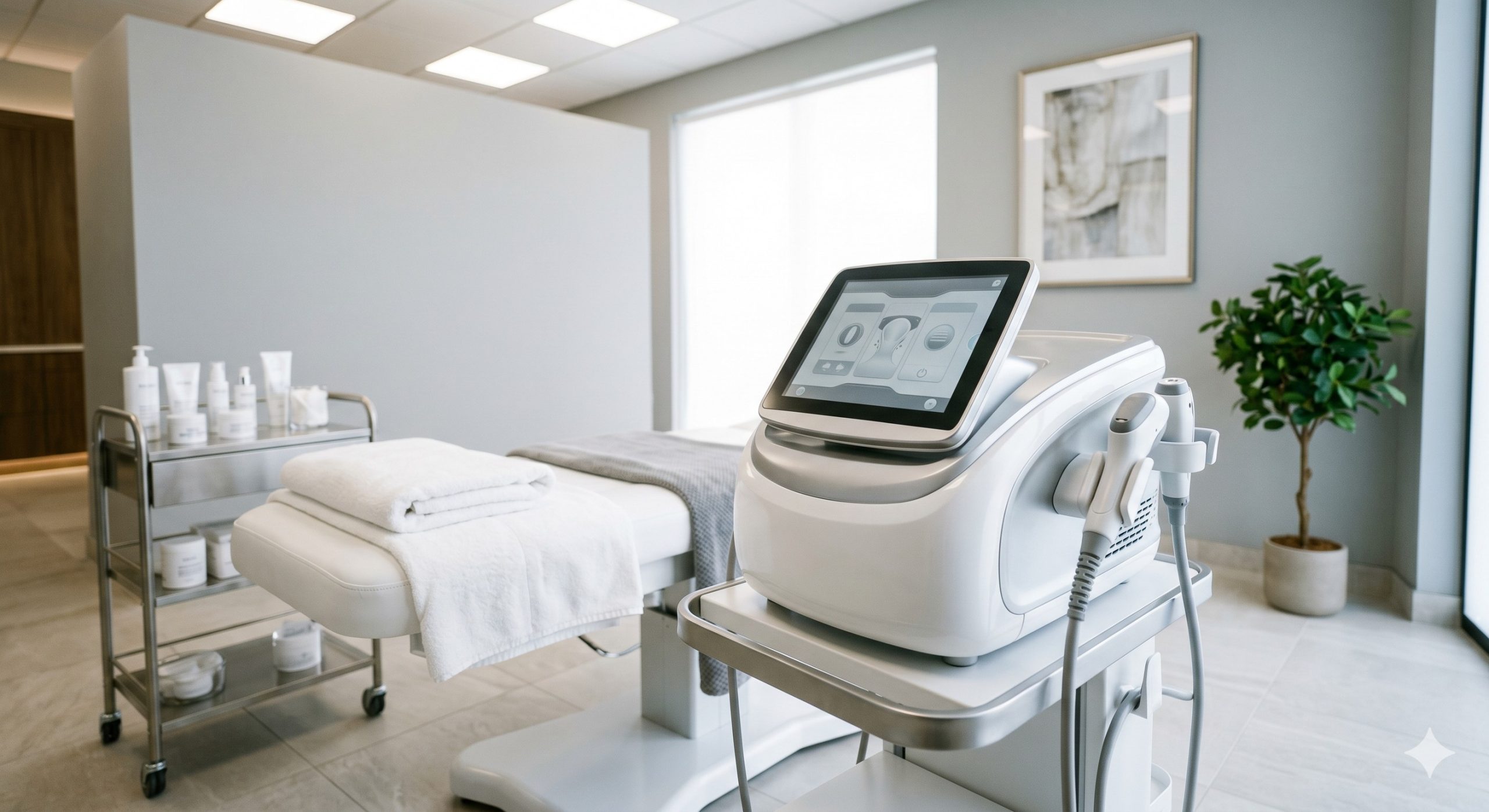
The unit deploys a compact articulating arm or lightweight flexible waveguide terminating in a precision-machined, ergonomic handpiece. Energy density (fluence) is digitally regulated from 0.5 J/cm² to 5.0 J/cm² in 0.1 J/cm² increments, with a nominal spot size of 3 mm to 6 mm (circular or hexagonal). Pulse duration is fixed in the nanosecond regime (5-20 ns for Q-switched variants) or selectable picosecond extension (350-450 ps) depending on configuration. Repetition rate is adjustable from 1 Hz to 10 Hz, enabling controlled sweeping motion. The system incorporates a real-time fluence feedback loop via a pyroelectric sensor, maintaining output stability within ±5% over 8-hour operational cycles.
3. CLINICAL ADVANTAGES
– Non-ablative clearance: No frank wounding of stratum corneum, reducing post-inflammatory hyperpigmentation risk in Fitzpatrick skin types III-V.
– Dual-action debridement: Simultaneous exfoliation of surface debris and sebaceous gland expression.
– Minimally invasive alternative to microdermabrasion and chemical peels with comparable efficacy for comedonal acne and photoaging.
– Rapid treatment sessions: 15-20 minutes for full-face application, enabling high patient throughput.
– No consumable carbon supply required beyond standard topical suspension; handpiece lens is self-cleaning with integrated air purge.
4. CERTIFICATIONS MATRIX
2. ENERGY TRANSMISSION DYNAMICS
The unit deploys a compact articulating arm or lightweight flexible waveguide terminating in a precision-machined, ergonomic handpiece. Energy density (fluence) is digitally regulated from 0.5 J/cm² to 5.0 J/cm² in 0.1 J/cm² increments, with a nominal spot size of 3 mm to 6 mm (circular or hexagonal). Pulse duration is fixed in the nanosecond regime (5-20 ns for Q-switched variants) or selectable picosecond extension (350-450 ps) depending on configuration. Repetition rate is adjustable from 1 Hz to 10 Hz, enabling controlled sweeping motion. The system incorporates a real-time fluence feedback loop via a pyroelectric sensor, maintaining output stability within ±5% over 8-hour operational cycles.
3. CLINICAL ADVANTAGES
– Non-ablative clearance: No frank wounding of stratum corneum, reducing post-inflammatory hyperpigmentation risk in Fitzpatrick skin types III-V.
– Dual-action debridement: Simultaneous exfoliation of surface debris and sebaceous gland expression.
– Minimally invasive alternative to microdermabrasion and chemical peels with comparable efficacy for comedonal acne and photoaging.
– Rapid treatment sessions: 15-20 minutes for full-face application, enabling high patient throughput.
– No consumable carbon supply required beyond standard topical suspension; handpiece lens is self-cleaning with integrated air purge.
4. CERTIFICATIONS MATRIX
Regulatory / Safety | Compliance Status
FDA 21 CFR 1040.10 | Class II (with CDRH variance)
IEC 60825-1:2014 | Class 4 Laser Product (certified)
ISO 13485:2016 | Full Quality Management System
MDR (EU) 2017/745 | CE 2797 (Class IIb)
IEC 60601-2-22:2019 | Surgical laser equipment safety
RoHS 3 (EU) 2015/863 | Compliant, lead-free solder
5. EXACT SPECIFICATIONS
– Laser Medium: Nd:YAG, diode-pumped, air-cooled
– Wavelengths: 1064 nm (primary carbon peel); optional 532 nm (superficial pigmentation)
– Output Mode: Q-switched (standard) or Pico-second (optional module)
– Max Fluence: 5.0 J/cm² (1064 nm) / 2.5 J/cm² (532 nm)
– Spot Size: 3 mm, 4 mm, 5 mm (interchangeable handpiece caps)
– Pulse Width: ≤ 10 ns (Q-switched) or 380 ps (Pico option)
– Repetition Rate: 1-10 Hz, adjustable via footswitch or touchscreen
– Aiming Beam: 635 nm, <1 mW, Class 2 laser diode
- Cooling: Forced air + TEC (thermoelectric) handpiece tip cooling (0°C to 5°C contact)
- Dimensions (base unit): 320 mm (W) x 240 mm (D) x 260 mm (H)
- Weight: 8.5 kg (including integrated battery backup, 15 min runtime)
- Input Power: 100-240 VAC, 50/60 Hz, 200 VA
6. OPERATIONAL ROI SCHEMATIC
Treatment volume estimation (single operator, 8-hour clinical day):
- Setup & patient intake: 5 min per patient
- Carbon suspension application: 5 min
- Laser pass (full-face, 3 mm spot, 50% overlap): 12 min (approx. 1200 pulses at 2 Hz)
- Post-treatment cooling & removal: 5 min
- Total cycle time: 27 min → 17 patients per 8-hour shift (assuming 15 min buffer for room turnover).
Per-treatment consumable cost: USD $2.50 (carbon lotion, disposable eye shields, tip covers). Average clinic charge per carbon peel: USD $200–$350. Gross margin per session: $197.50–$347.50. Payback period at 12 sessions/week (2.5 days): 4-6 months.
2. ENERGY TRANSMISSION DYNAMICS
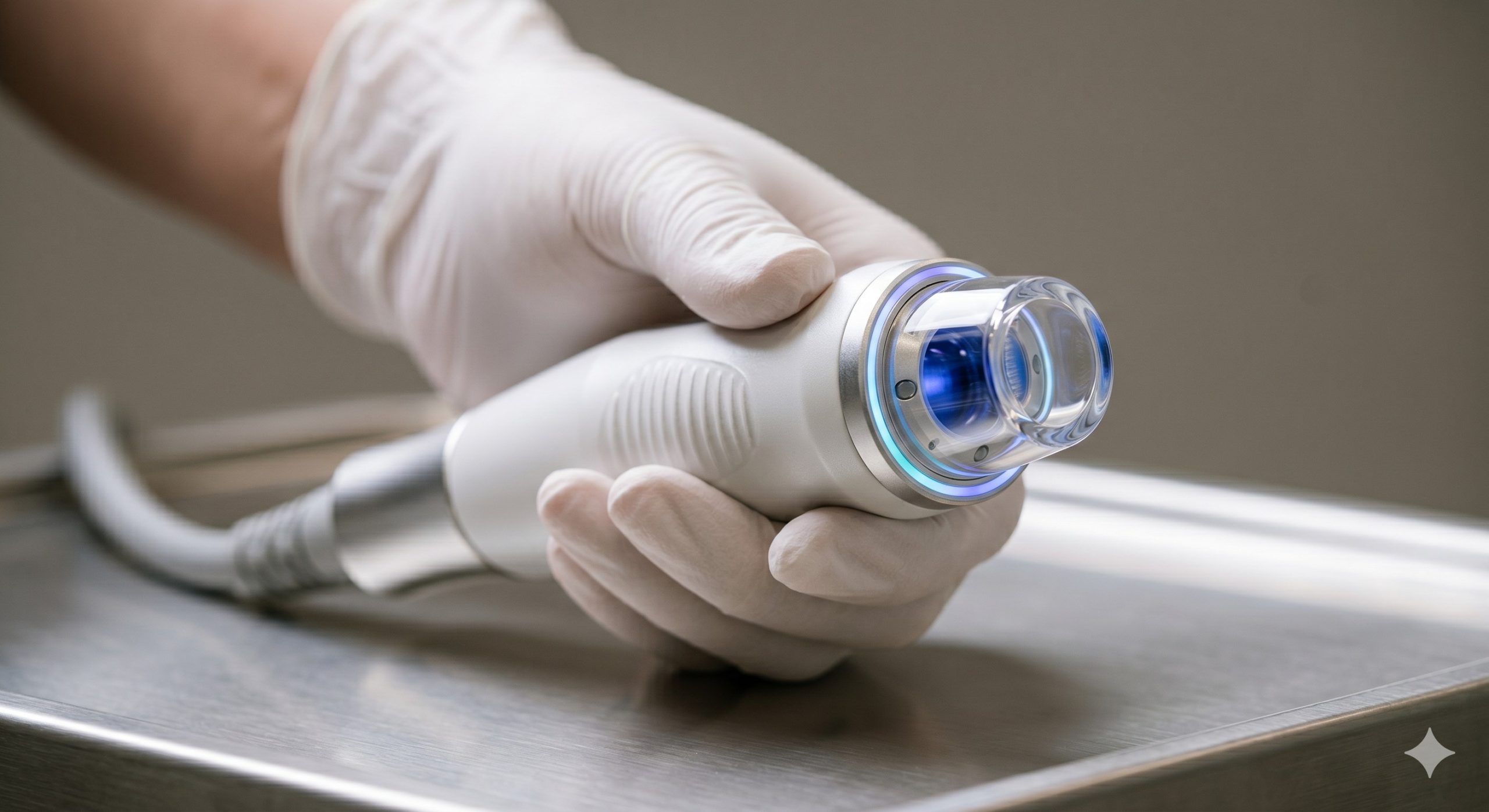
The unit deploys a compact articulating arm or lightweight flexible waveguide terminating in a precision-machined, ergonomic handpiece. Energy density (fluence) is digitally regulated from 0.5 J/cm² to 5.0 J/cm² in 0.1 J/cm² increments, with a nominal spot size of 3 mm to 6 mm (circular or hexagonal). Pulse duration is fixed in the nanosecond regime (5-20 ns for Q-switched variants) or selectable picosecond extension (350-450 ps) depending on configuration. Repetition rate is adjustable from 1 Hz to 10 Hz, enabling controlled sweeping motion. The system incorporates a real-time fluence feedback loop via a pyroelectric sensor, maintaining output stability within ±5% over 8-hour operational cycles.
3. CLINICAL ADVANTAGES
– Non-ablative clearance: No frank wounding of stratum corneum, reducing post-inflammatory hyperpigmentation risk in Fitzpatrick skin types III-V.
– Dual-action debridement: Simultaneous exfoliation of surface debris and sebaceous gland expression.
– Minimally invasive alternative to microdermabrasion and chemical peels with comparable efficacy for comedonal acne and photoaging.
– Rapid treatment sessions: 15-20 minutes for full-face application, enabling high patient throughput.
– No consumable carbon supply required beyond standard topical suspension; handpiece lens is self-cleaning with integrated air purge.
4. CERTIFICATIONS MATRIX
| Parameter | Specification |
|---|---|
| Laser Type / Wavelength | Nd:YAG / 1064 nm (primary), 532 nm (optional) |
| Pulse Duration | ≤ 10 ns (Q-switched) or 380 ps (Pico option) |
| Spot Size | 3 mm, 4 mm, 5 mm (interchangeable caps) |
| Max Fluence (1064 nm) | 5.0 J/cm² |
| Repetition Rate | 1-10 Hz (adjustable) |
| Cooling System | Forced air + TEC contact cooling (0-5°C) |
| Dimensions (WxDxH) | 320 x 240 x 260 mm |
| Weight | 8.5 kg (includes battery backup) |
| Power Input | 100-240 VAC, 50/60 Hz, 200 VA |
| Aiming Beam | 635 nm, <1 mW, Class 2 |
📥 Download Technical Specification
Click the button below to view or download the full official PDF datasheet.
⬇️ Download Official PDF