
Selective Photothermolysis Architecture Reference Document: Picosecond vs Nanosecond Laser Physics and Mechanism Report
EXECUTIVE SUMMARY
This document provides a comprehensive clinical and technical overview of the fundamental physics, tissue interaction mechanisms, and resultant clinical applications distinguishing picosecond (ps) and nanosecond (ns) laser systems. As a premier OEM manufacturer of medical aesthetic devices, we delineate the critical operational parameters that define treatment efficacy, safety profiles, and patient outcomes. This whitepaper serves as an authoritative reference for clinicians, medical physicists, and procurement specialists, elucidating the transition from thermal confinement to photoacoustic disruption as a paradigm shift in selective photothermolysis.
 CLINICAL ARCHITECTURE & DESIGN
The core differentiator between picosecond and nanosecond laser platforms resides in the pulse duration relative to the thermal relaxation time (TRT) of target chromophores. Nanosecond lasers (typically 5-100 ns) operate on the principle of thermal confinement, where the pulse duration is less than the TRT of melanosomes and tattoo ink particles (~1-10 microseconds), but long enough to generate significant heat and subsequent thermal injury.
In contrast, picosecond lasers (typically 300-900 ps) achieve a state of mechanical or photoacoustic confinement. The pulse duration is shorter than the stress relaxation time of the target, leading to a rapid, adiabatic heating event. This generates a high-amplitude pressure wave that shatters the target via photomechanical effects—predominantly stress-induced fragmentation and cavitation—rather than thermal coagulation.
This architectural advancement translates into a significant reduction in the threshold fluence required for target destruction. Clinically, this allows for the use of lower fluences with picosecond devices to achieve equivalent or superior clearance rates, while simultaneously minimizing collateral thermal damage to the surrounding dermal and epidermal tissue. The OEM design must incorporate robust, thermally managed optical components to sustain the extreme peak powers (Megawatts to Gigawatts) generated by these ultra-short pulses without compromising beam quality or system longevity.
KEY INDICATIONS & CAPABILITIES
Picosecond Laser (ps): Unlocks superior clearance for multi-colored tattoos (including blue, green, and purple, which are historically resistant to nanosecond modalities) and benign pigmented lesions (e.g., solar lentigines, ephelides, and dermal melasma). Additionally, the photoacoustic effects stimulate a robust neocollagenesis and elastogenesis cascade with less off-target thermal injury, making it the benchmark for skin rejuvenation with reduced purpura and shorter downtime compared to ablative or non-ablative fractional technologies.
Nanosecond Laser (ns): Retains a vital role in the clinical armamentarium, offering proven, predictable clearance for black and blue tattoos, and remains an extremely cost-effective, high-throughput solution for hair reduction. The thermal effect is more pronounced, making it suited for vascular indications where selective thermocoagulation of hemoglobin is the primary mechanism of action.
COMPLIANCE & STANDARDS
Our manufacturing facilities operate in strict adherence to ISO 13485:2016 and 21 CFR Part 820. All systems are engineered to meet the rigorous safety requirements of IEC 60601-2-22. The optical, mechanical, and electrical subsystems are subjected to extensive accelerated life and stress testing to guarantee performance stability over the product lifecycle. The platform incorporates multiple redundant safety interlocks, including real-time epidermal temperature monitoring and a fail-safe energy delivery shut-off mechanism, ensuring compliance with global regulatory directives for Class IV medical laser devices.
TECHNICAL SPECIFICATIONS
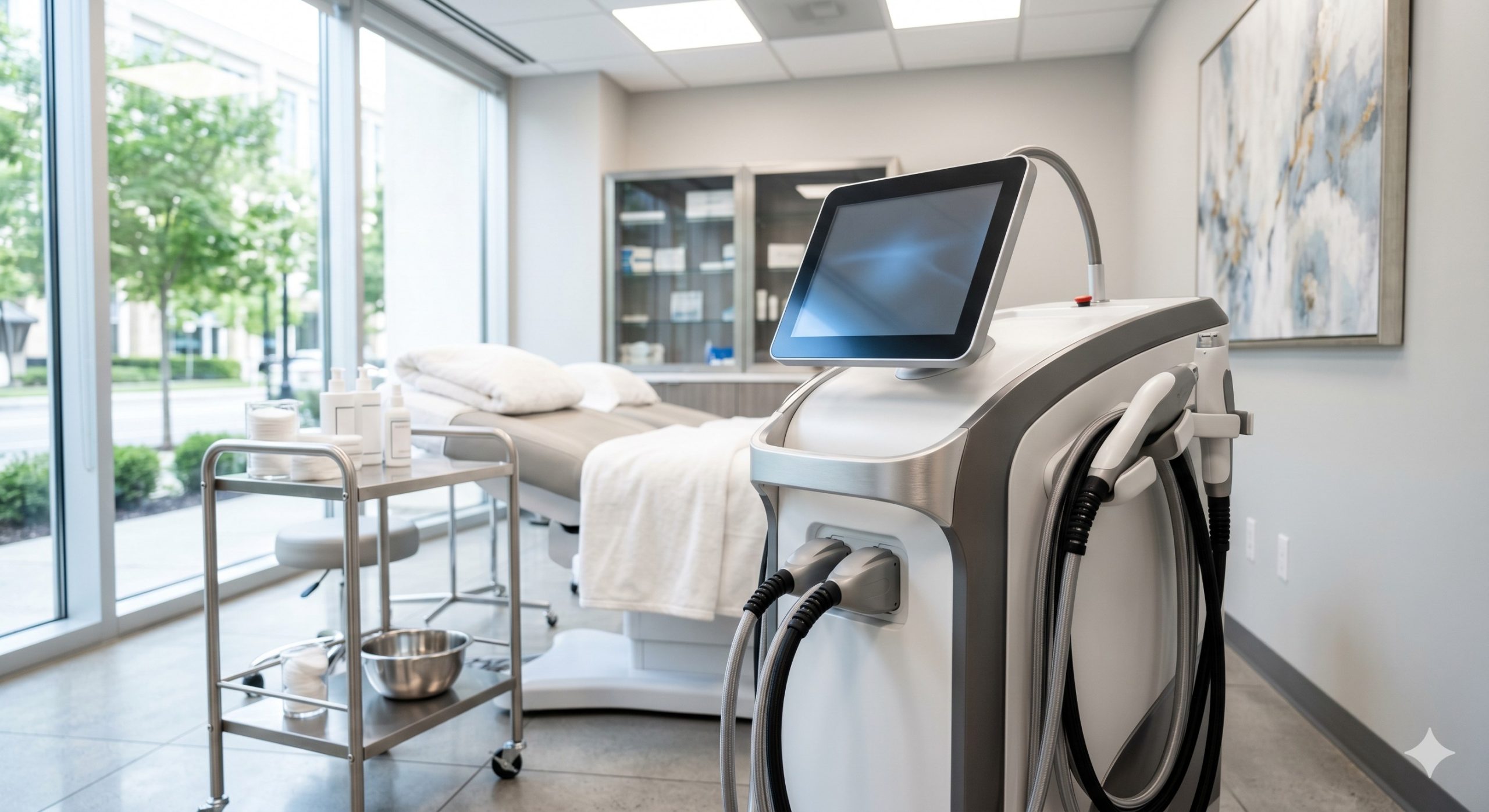
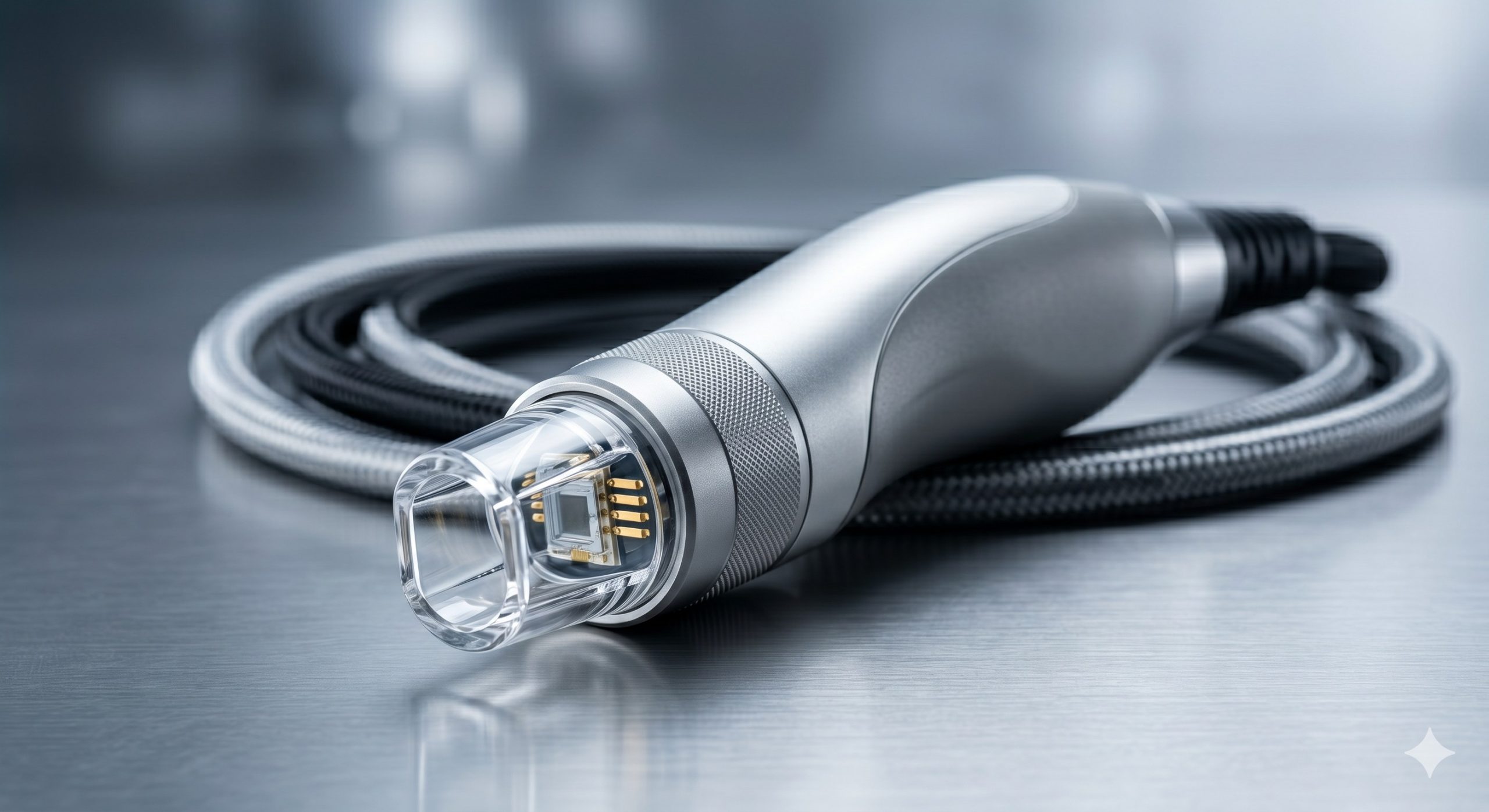
The proprietary OEM optical train is designed to preserve the spatial and temporal integrity of the picosecond pulse. Key specifications include an integrated beam profiler and a closed-loop energy control system that compensates for thermal drift, ensuring shot-to-shot consistency. The system incorporates a high-efficiency, dielectrically coated articulating arm or advanced fiber-optic delivery system, coupled with a range of precision spot-size handpieces designed for maximal geometric flexibility.
CLINICAL ARCHITECTURE & DESIGN
The core differentiator between picosecond and nanosecond laser platforms resides in the pulse duration relative to the thermal relaxation time (TRT) of target chromophores. Nanosecond lasers (typically 5-100 ns) operate on the principle of thermal confinement, where the pulse duration is less than the TRT of melanosomes and tattoo ink particles (~1-10 microseconds), but long enough to generate significant heat and subsequent thermal injury.
In contrast, picosecond lasers (typically 300-900 ps) achieve a state of mechanical or photoacoustic confinement. The pulse duration is shorter than the stress relaxation time of the target, leading to a rapid, adiabatic heating event. This generates a high-amplitude pressure wave that shatters the target via photomechanical effects—predominantly stress-induced fragmentation and cavitation—rather than thermal coagulation.
This architectural advancement translates into a significant reduction in the threshold fluence required for target destruction. Clinically, this allows for the use of lower fluences with picosecond devices to achieve equivalent or superior clearance rates, while simultaneously minimizing collateral thermal damage to the surrounding dermal and epidermal tissue. The OEM design must incorporate robust, thermally managed optical components to sustain the extreme peak powers (Megawatts to Gigawatts) generated by these ultra-short pulses without compromising beam quality or system longevity.
KEY INDICATIONS & CAPABILITIES
Picosecond Laser (ps): Unlocks superior clearance for multi-colored tattoos (including blue, green, and purple, which are historically resistant to nanosecond modalities) and benign pigmented lesions (e.g., solar lentigines, ephelides, and dermal melasma). Additionally, the photoacoustic effects stimulate a robust neocollagenesis and elastogenesis cascade with less off-target thermal injury, making it the benchmark for skin rejuvenation with reduced purpura and shorter downtime compared to ablative or non-ablative fractional technologies.
Nanosecond Laser (ns): Retains a vital role in the clinical armamentarium, offering proven, predictable clearance for black and blue tattoos, and remains an extremely cost-effective, high-throughput solution for hair reduction. The thermal effect is more pronounced, making it suited for vascular indications where selective thermocoagulation of hemoglobin is the primary mechanism of action.
COMPLIANCE & STANDARDS
Our manufacturing facilities operate in strict adherence to ISO 13485:2016 and 21 CFR Part 820. All systems are engineered to meet the rigorous safety requirements of IEC 60601-2-22. The optical, mechanical, and electrical subsystems are subjected to extensive accelerated life and stress testing to guarantee performance stability over the product lifecycle. The platform incorporates multiple redundant safety interlocks, including real-time epidermal temperature monitoring and a fail-safe energy delivery shut-off mechanism, ensuring compliance with global regulatory directives for Class IV medical laser devices.
TECHNICAL SPECIFICATIONS
The proprietary OEM optical train is designed to preserve the spatial and temporal integrity of the picosecond pulse. Key specifications include an integrated beam profiler and a closed-loop energy control system that compensates for thermal drift, ensuring shot-to-shot consistency. The system incorporates a high-efficiency, dielectrically coated articulating arm or advanced fiber-optic delivery system, coupled with a range of precision spot-size handpieces designed for maximal geometric flexibility.
CLINICAL PROTOCOLS
Pre-Treatment: A standard Fitzpatrick Skin Type assessment and a subsequent test spot are mandatory. For picosecond treatments, the focus is on optimizing the spot size to maximize the photoacoustic pressure at the target depth while preserving the epidermis.
Intra-Treatment: The system is administered with a steady, non-overlapping pulse distribution. The integrated Dynamic Cooling Device (DCD) or sapphire contact cooling is activated to provide a protective thermal buffer. The endpoint of treatment for tattoos is observed as an immediate, fine whitening (frosting) of the treatment site, indicative of tissue cavitation.
Post-Treatment: Immediate application of a cold compress to alleviate any residual erythema. Patients are advised on strict sun avoidance and a gentle skincare regimen. Adverse events, including transient hyperpigmentation or mild purpura, are rare and resolve without sequelae.
CLINICAL ARCHITECTURE & DESIGN
The core differentiator between picosecond and nanosecond laser platforms resides in the pulse duration relative to the thermal relaxation time (TRT) of target chromophores. Nanosecond lasers (typically 5-100 ns) operate on the principle of thermal confinement, where the pulse duration is less than the TRT of melanosomes and tattoo ink particles (~1-10 microseconds), but long enough to generate significant heat and subsequent thermal injury.
In contrast, picosecond lasers (typically 300-900 ps) achieve a state of mechanical or photoacoustic confinement. The pulse duration is shorter than the stress relaxation time of the target, leading to a rapid, adiabatic heating event. This generates a high-amplitude pressure wave that shatters the target via photomechanical effects—predominantly stress-induced fragmentation and cavitation—rather than thermal coagulation.
This architectural advancement translates into a significant reduction in the threshold fluence required for target destruction. Clinically, this allows for the use of lower fluences with picosecond devices to achieve equivalent or superior clearance rates, while simultaneously minimizing collateral thermal damage to the surrounding dermal and epidermal tissue. The OEM design must incorporate robust, thermally managed optical components to sustain the extreme peak powers (Megawatts to Gigawatts) generated by these ultra-short pulses without compromising beam quality or system longevity.
KEY INDICATIONS & CAPABILITIES
Picosecond Laser (ps): Unlocks superior clearance for multi-colored tattoos (including blue, green, and purple, which are historically resistant to nanosecond modalities) and benign pigmented lesions (e.g., solar lentigines, ephelides, and dermal melasma). Additionally, the photoacoustic effects stimulate a robust neocollagenesis and elastogenesis cascade with less off-target thermal injury, making it the benchmark for skin rejuvenation with reduced purpura and shorter downtime compared to ablative or non-ablative fractional technologies.
Nanosecond Laser (ns): Retains a vital role in the clinical armamentarium, offering proven, predictable clearance for black and blue tattoos, and remains an extremely cost-effective, high-throughput solution for hair reduction. The thermal effect is more pronounced, making it suited for vascular indications where selective thermocoagulation of hemoglobin is the primary mechanism of action.
COMPLIANCE & STANDARDS
Our manufacturing facilities operate in strict adherence to ISO 13485:2016 and 21 CFR Part 820. All systems are engineered to meet the rigorous safety requirements of IEC 60601-2-22. The optical, mechanical, and electrical subsystems are subjected to extensive accelerated life and stress testing to guarantee performance stability over the product lifecycle. The platform incorporates multiple redundant safety interlocks, including real-time epidermal temperature monitoring and a fail-safe energy delivery shut-off mechanism, ensuring compliance with global regulatory directives for Class IV medical laser devices.
TECHNICAL SPECIFICATIONS
The proprietary OEM optical train is designed to preserve the spatial and temporal integrity of the picosecond pulse. Key specifications include an integrated beam profiler and a closed-loop energy control system that compensates for thermal drift, ensuring shot-to-shot consistency. The system incorporates a high-efficiency, dielectrically coated articulating arm or advanced fiber-optic delivery system, coupled with a range of precision spot-size handpieces designed for maximal geometric flexibility.
| Parameter | Picosecond Laser (ps) | Nanosecond Laser (ns) |
|---|---|---|
| Pulse Duration | 300 – 900 picoseconds | 5 – 100 nanoseconds |
| Primary Mechanism | Photoacoustic / Photomechanical (Stress Confinement) | Photothermal (Thermal Confinement) |
| Clinical Indications – Tattoos | Superior for multi-colored (blues, greens, yellows) | Optimal for black, blue, red |
| Clinical Indications – Skin | Rejuvenation, Pigmentation (Solar Lentigines), Melasma | Hair Reduction, Vascular Lesions |
| Fluence Range | 0.5 – 2.5 J/cm² | 3 – 10 J/cm² |
| Spot Sizes | 2 – 6 mm (with zoom handpiece options) | 3 – 12 mm (with fixed spot handpieces) |
| Tissue Effect | Minimal thermal damage, subtle epidermal response | Pronounced thermal coagulation, visible blistering / purpura |
📥 Download Technical Specification
Click the button below to view or download the full official PDF datasheet.
⬇️ Download Official PDF