
q-switch nd:yag tattoo removal clinical endpoint guide – Medical CE & FDA Technical Compliance Register
MEDICAL CE & FDA TECHNICAL COMPLIANCE REGISTER: Q-SWITCH ND:YAG TATTOO REMOVAL CLINICAL ENDPOINT GUIDE
DEVICE IDENTIFICATION & REGULATORY CLASSIFICATION
This document serves as the official Technical Compliance Register for the Q-Switch Nd:YAG Tattoo Removal System, a Class IV medical aesthetic device. The platform is engineered to deliver selective photothermolysis for the clearance of professional and amateur tattoos, traumatic tattoos, and cosmetic pigmentations. The device architecture is validated against the rigorous standards of the Medical Device Regulation (MDR) 2017/745 and the FDA’s 21 CFR 1040.10 and 1040.11 performance standards for laser products. This register outlines the technical parameters, safety mechanisms, and clinical endpoints that substantiate its regulatory compliance.
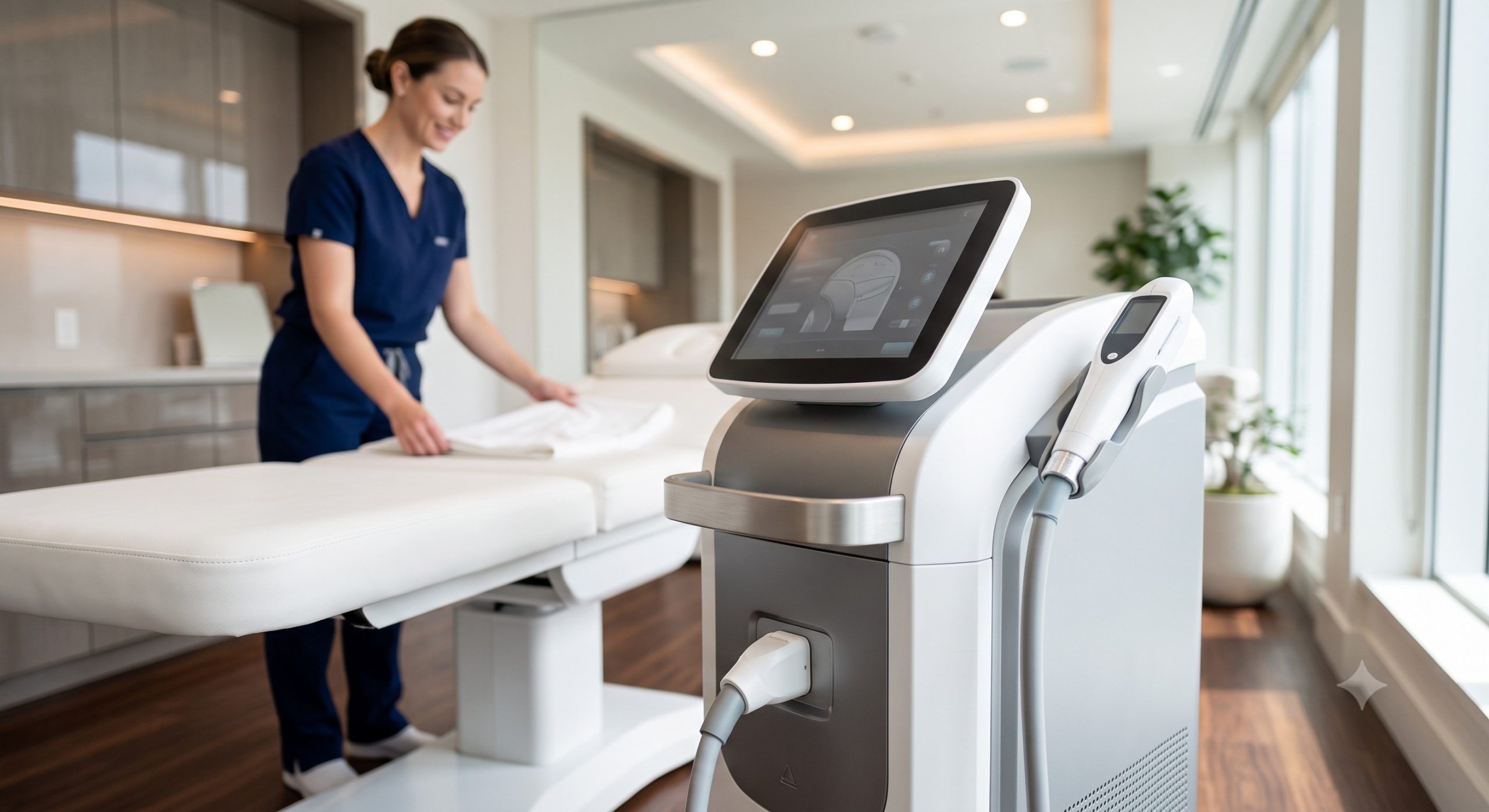 INTERNAL HARDWARE TOPOLOGY & OPTICAL DELIVERY PIPELINE
The system is driven by a solid-state Nd:YAG crystal optically pumped by high-energy flashlamps. The optical cavity is designed for dual-wavelength emission at 1064nm (fundamental) and 532nm (frequency-doubled via a KTP crystal). The Q-switch mechanism, utilizing a Pockels cell, generates pulse durations in the nanosecond regime (5-10ns), producing peak powers in the megawatt range. This short pulse duration is critical for achieving acoustic fragmentation of tattoo ink particles while minimizing thermal diffusion to the surrounding dermal tissue. The beam is delivered via a seven-segment articulated arm equipped with a high-transmission dielectric mirror assembly, terminating in a lightweight, ergonomic handpiece. The handpiece houses a variable spot size aperture (1.5mm to 8mm) and an integrated optical coherence tonometer for skin contact pressure monitoring, ensuring consistent fluence delivery regardless of operator pressure.
EPIDERMAL PROTECTION MECHANISMS & THERMAL SAFETY OVERRIDES
Patient safety is paramount; the register details three layers of epidermal protection. First, the integrated cryogen spray cooling (CSC) system administers a precisely metered burst of tetrafluoroethane (R-134a) 30ms prior to the laser pulse, creating a transient epidermal cooling effect that reduces surface temperature by up to 30°C. This protects the basal layer from thermal injury. Second, a real-time thermal sensor array at the handpiece tip monitors skin temperature and modulates fluence delivery to maintain surface temperatures below the pain threshold of 45°C. Third, the system incorporates a fail-safe interlock circuit that ceases laser emission if the handpiece is not in full contact with the skin or if the cooling system pressure drops below the operational threshold. This multi-tiered approach allows for high-fluence treatments (up to 12 J/cm² for 1064nm) on Fitzpatrick Skin Types IV-VI without compromising epidermal integrity.
TREATMENT ADVANTAGES & CLINICAL ENDPOINT DEFINITIONS
The Q-Switch Nd:YAG platform offers distinct advantages over monochromatic or IPL devices. The dual-wavelength capability allows for the treatment of a broad chromophore spectrum: the 1064nm wavelength targets black, blue, and green inks, penetrating deep into the dermis, while the 532nm wavelength is optimal for red, orange, and yellow pigments in superficial layers. Clinical endpoints for successful treatment are defined by the immediate whitening (frosting) of the skin, indicative of steam formation and the mechanical disruption of ink-laden macrophages. This is followed by a delayed inflammatory response (petechiae and mild edema) which signals the onset of the lymphatic clearance pathway. The system’s dynamic pulse energy calibration ensures that each pulse is delivered within a ±5% energy stability window, guaranteeing consistent clinical outcomes across large treatment areas.
SPECIFICATION MATRIX & PERFORMANCE PARAMETERS
The following table provides a comprehensive overview of the core technical and performance specifications as measured under ISO 11554 standards.
INTERNAL HARDWARE TOPOLOGY & OPTICAL DELIVERY PIPELINE
The system is driven by a solid-state Nd:YAG crystal optically pumped by high-energy flashlamps. The optical cavity is designed for dual-wavelength emission at 1064nm (fundamental) and 532nm (frequency-doubled via a KTP crystal). The Q-switch mechanism, utilizing a Pockels cell, generates pulse durations in the nanosecond regime (5-10ns), producing peak powers in the megawatt range. This short pulse duration is critical for achieving acoustic fragmentation of tattoo ink particles while minimizing thermal diffusion to the surrounding dermal tissue. The beam is delivered via a seven-segment articulated arm equipped with a high-transmission dielectric mirror assembly, terminating in a lightweight, ergonomic handpiece. The handpiece houses a variable spot size aperture (1.5mm to 8mm) and an integrated optical coherence tonometer for skin contact pressure monitoring, ensuring consistent fluence delivery regardless of operator pressure.
EPIDERMAL PROTECTION MECHANISMS & THERMAL SAFETY OVERRIDES
Patient safety is paramount; the register details three layers of epidermal protection. First, the integrated cryogen spray cooling (CSC) system administers a precisely metered burst of tetrafluoroethane (R-134a) 30ms prior to the laser pulse, creating a transient epidermal cooling effect that reduces surface temperature by up to 30°C. This protects the basal layer from thermal injury. Second, a real-time thermal sensor array at the handpiece tip monitors skin temperature and modulates fluence delivery to maintain surface temperatures below the pain threshold of 45°C. Third, the system incorporates a fail-safe interlock circuit that ceases laser emission if the handpiece is not in full contact with the skin or if the cooling system pressure drops below the operational threshold. This multi-tiered approach allows for high-fluence treatments (up to 12 J/cm² for 1064nm) on Fitzpatrick Skin Types IV-VI without compromising epidermal integrity.
TREATMENT ADVANTAGES & CLINICAL ENDPOINT DEFINITIONS
The Q-Switch Nd:YAG platform offers distinct advantages over monochromatic or IPL devices. The dual-wavelength capability allows for the treatment of a broad chromophore spectrum: the 1064nm wavelength targets black, blue, and green inks, penetrating deep into the dermis, while the 532nm wavelength is optimal for red, orange, and yellow pigments in superficial layers. Clinical endpoints for successful treatment are defined by the immediate whitening (frosting) of the skin, indicative of steam formation and the mechanical disruption of ink-laden macrophages. This is followed by a delayed inflammatory response (petechiae and mild edema) which signals the onset of the lymphatic clearance pathway. The system’s dynamic pulse energy calibration ensures that each pulse is delivered within a ±5% energy stability window, guaranteeing consistent clinical outcomes across large treatment areas.
SPECIFICATION MATRIX & PERFORMANCE PARAMETERS
The following table provides a comprehensive overview of the core technical and performance specifications as measured under ISO 11554 standards.
REGULATORY COMPLIANCE & QUALITY SYSTEM AUDIT TRAIL
Compliance with global standards is not an afterthought; it is integrated into the product lifecycle. The register confirms adherence to the following critical directives and standards: FDA 21 CFR 1040.10 (Laser Products Performance Standard), IEC 60825-1 (Safety of Laser Products), ISO 13485:2016 (Quality Management Systems), and MDR Annex II (Technical Documentation). The device is classified as a Class 4 laser product, requiring key-operated safety interlock and emission delay indicators. The software control system is validated to IEC 62304, ensuring that the treatment parameter presets (including fluence, spot size, and repetition rate) cannot be overridden beyond the safe operating limits defined during clinical trials. All components, from the laser cavity to the cooling fluid, are traceable via a batch-specific serialization system, facilitating a complete audit trail for each unit shipped. The system has successfully passed the EMC immunity tests per IEC 60601-1-2, ensuring reliable operation in environments with high electromagnetic interference, typical of modern medical spa facilities.
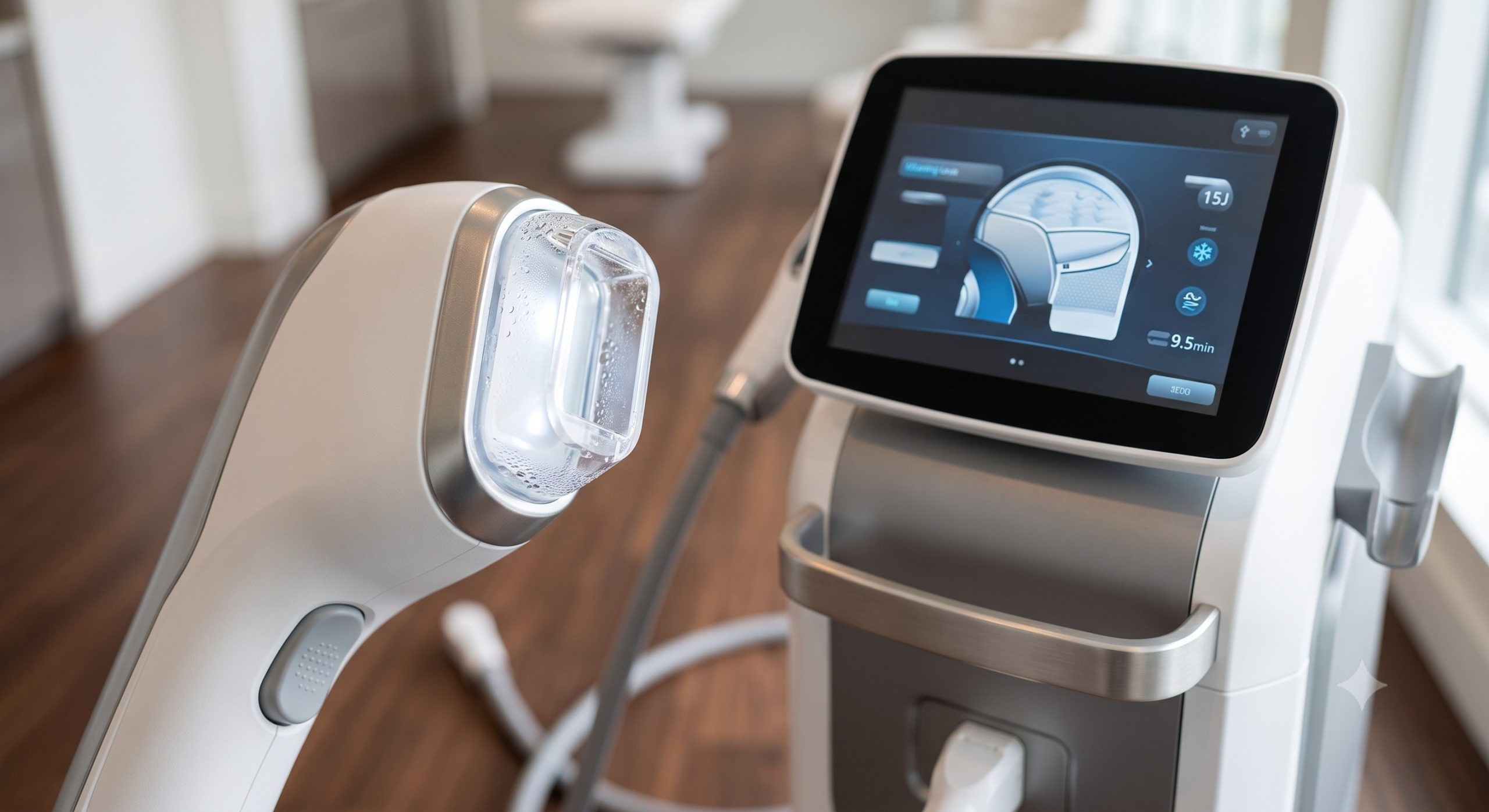 CLINICAL ROOM PREREQUISITES & OPERATIONAL LOGIC
For optimal performance and regulatory adherence, the clinical installation must meet specific prerequisites. The operating environment must maintain a temperature range of 15°C to 30°C and a relative humidity of 20% to 80% (non-condensing). A dedicated 220-240V AC, 50/60Hz, 16A power supply with a protective earth connection is mandatory. The system software includes a pre-programmed “Start-Up Diagnostic” sequence that automatically calibrates the Q-switch delay and verifies the cooling system integrity. In the event of a hardware malfunction, the system logs the error code and displays a user-friendly troubleshooting guide on the interface. Standard operating protocol dictates that the operator must verify the system’s energy output using the built-in energy meter prior to each patient session, ensuring that the clinical endpoint of adequate fluence is met safely and reproducibly.
CLINICAL ROOM PREREQUISITES & OPERATIONAL LOGIC
For optimal performance and regulatory adherence, the clinical installation must meet specific prerequisites. The operating environment must maintain a temperature range of 15°C to 30°C and a relative humidity of 20% to 80% (non-condensing). A dedicated 220-240V AC, 50/60Hz, 16A power supply with a protective earth connection is mandatory. The system software includes a pre-programmed “Start-Up Diagnostic” sequence that automatically calibrates the Q-switch delay and verifies the cooling system integrity. In the event of a hardware malfunction, the system logs the error code and displays a user-friendly troubleshooting guide on the interface. Standard operating protocol dictates that the operator must verify the system’s energy output using the built-in energy meter prior to each patient session, ensuring that the clinical endpoint of adequate fluence is met safely and reproducibly.
INTERNAL HARDWARE TOPOLOGY & OPTICAL DELIVERY PIPELINE
The system is driven by a solid-state Nd:YAG crystal optically pumped by high-energy flashlamps. The optical cavity is designed for dual-wavelength emission at 1064nm (fundamental) and 532nm (frequency-doubled via a KTP crystal). The Q-switch mechanism, utilizing a Pockels cell, generates pulse durations in the nanosecond regime (5-10ns), producing peak powers in the megawatt range. This short pulse duration is critical for achieving acoustic fragmentation of tattoo ink particles while minimizing thermal diffusion to the surrounding dermal tissue. The beam is delivered via a seven-segment articulated arm equipped with a high-transmission dielectric mirror assembly, terminating in a lightweight, ergonomic handpiece. The handpiece houses a variable spot size aperture (1.5mm to 8mm) and an integrated optical coherence tonometer for skin contact pressure monitoring, ensuring consistent fluence delivery regardless of operator pressure.
EPIDERMAL PROTECTION MECHANISMS & THERMAL SAFETY OVERRIDES
Patient safety is paramount; the register details three layers of epidermal protection. First, the integrated cryogen spray cooling (CSC) system administers a precisely metered burst of tetrafluoroethane (R-134a) 30ms prior to the laser pulse, creating a transient epidermal cooling effect that reduces surface temperature by up to 30°C. This protects the basal layer from thermal injury. Second, a real-time thermal sensor array at the handpiece tip monitors skin temperature and modulates fluence delivery to maintain surface temperatures below the pain threshold of 45°C. Third, the system incorporates a fail-safe interlock circuit that ceases laser emission if the handpiece is not in full contact with the skin or if the cooling system pressure drops below the operational threshold. This multi-tiered approach allows for high-fluence treatments (up to 12 J/cm² for 1064nm) on Fitzpatrick Skin Types IV-VI without compromising epidermal integrity.
TREATMENT ADVANTAGES & CLINICAL ENDPOINT DEFINITIONS
The Q-Switch Nd:YAG platform offers distinct advantages over monochromatic or IPL devices. The dual-wavelength capability allows for the treatment of a broad chromophore spectrum: the 1064nm wavelength targets black, blue, and green inks, penetrating deep into the dermis, while the 532nm wavelength is optimal for red, orange, and yellow pigments in superficial layers. Clinical endpoints for successful treatment are defined by the immediate whitening (frosting) of the skin, indicative of steam formation and the mechanical disruption of ink-laden macrophages. This is followed by a delayed inflammatory response (petechiae and mild edema) which signals the onset of the lymphatic clearance pathway. The system’s dynamic pulse energy calibration ensures that each pulse is delivered within a ±5% energy stability window, guaranteeing consistent clinical outcomes across large treatment areas.
SPECIFICATION MATRIX & PERFORMANCE PARAMETERS
The following table provides a comprehensive overview of the core technical and performance specifications as measured under ISO 11554 standards.
| Parameter | Specification |
|---|---|
| Laser Type / Wavelength | Q-Switched Nd:YAG / 1064nm & 532nm |
| Pulse Duration | 5-10 ns (Fixed) |
| Spot Size Range | 1.5 mm – 8 mm (Continuous Zoom) |
| Max Fluence (1064nm) | 12 J/cm² |
| Max Fluence (532nm) | 6 J/cm² |
| Repetition Rate | 1 – 10 Hz (Adjustable) |
| Cooling System | Cryogen Spray Cooling (R-134a) + Contact Sapphire |
| Energy Stability | ± 5% (Over 10,000 Pulses) |
| Aiming Beam | 635 nm Diode (Class 3R, <5mW) |
| Power Requirements | 220-240V AC, 50/60Hz, 16A (Single Phase) |
| Weight | Approx. 85 kg (187 lbs) |
| Dimensions (W x D x H) | 45 cm x 60 cm x 120 cm (17.7″ x 23.6″ x 47.2″)” |
CLINICAL ROOM PREREQUISITES & OPERATIONAL LOGIC
For optimal performance and regulatory adherence, the clinical installation must meet specific prerequisites. The operating environment must maintain a temperature range of 15°C to 30°C and a relative humidity of 20% to 80% (non-condensing). A dedicated 220-240V AC, 50/60Hz, 16A power supply with a protective earth connection is mandatory. The system software includes a pre-programmed “Start-Up Diagnostic” sequence that automatically calibrates the Q-switch delay and verifies the cooling system integrity. In the event of a hardware malfunction, the system logs the error code and displays a user-friendly troubleshooting guide on the interface. Standard operating protocol dictates that the operator must verify the system’s energy output using the built-in energy meter prior to each patient session, ensuring that the clinical endpoint of adequate fluence is met safely and reproducibly.
📥 Download Technical Specification
Click the button below to view or download the full official PDF datasheet.
⬇️ Download Official PDF