Non-Surgical Liposuction Equipment – Official Clinical Overview & Technical Datasheet
EXECUTIVE SUMMARY
This document provides a definitive technical and clinical overview of the Non-Surgical Liposuction Equipment, a high-power diode laser platform engineered for transdermal adipocyte disruption and circumferential reduction. The system leverages optimized wavelengths (755nm, 808nm, 1064nm) to achieve selective photothermolysis of subcutaneous adipose tissue while preserving epidermal integrity via an integrated contact cooling engine. Designed for outpatient aesthetic medicine, the device delivers reproducible outcomes with minimal patient downtime.
 CLINICAL ARCHITECTURE & DESIGN
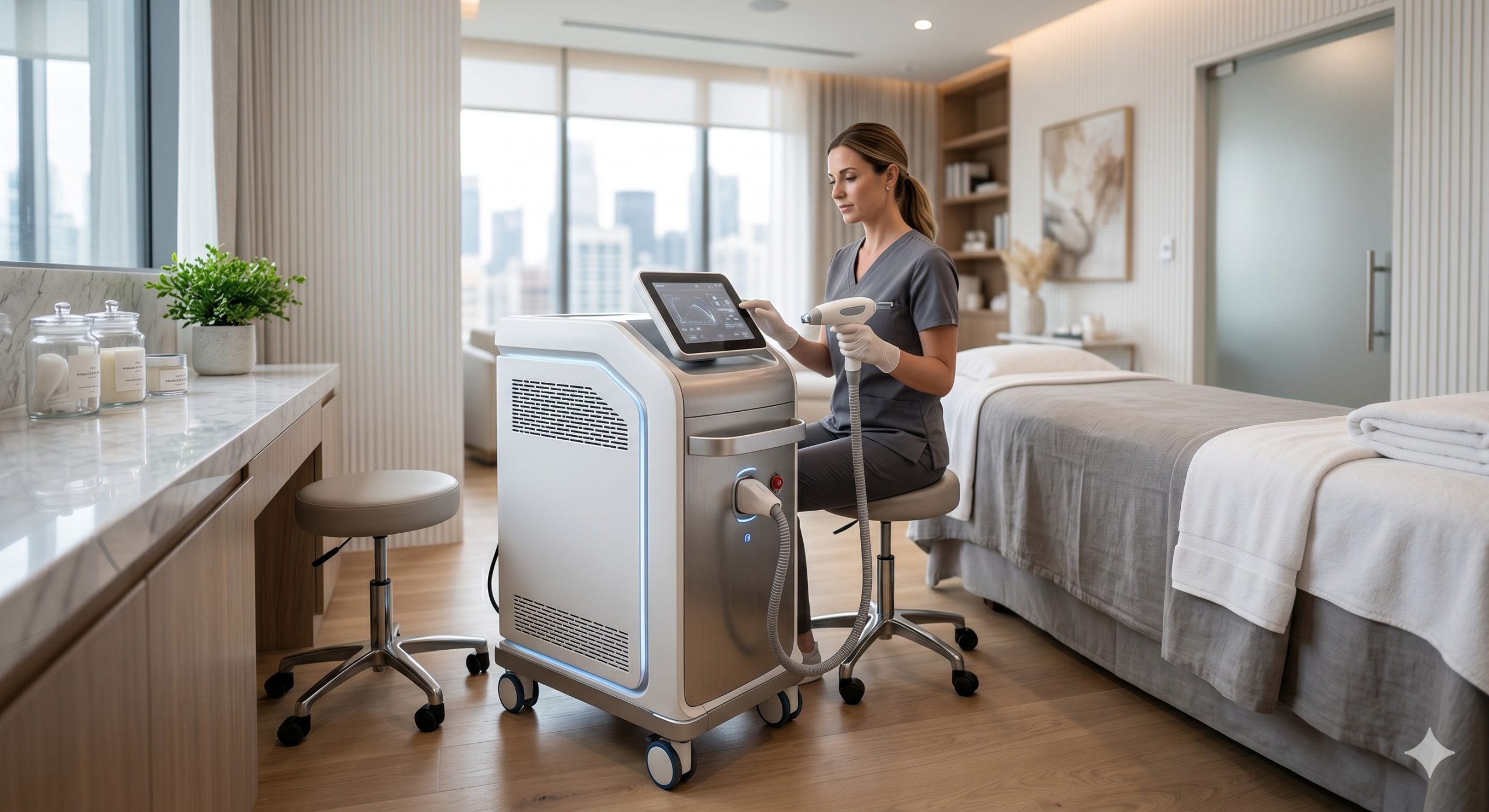
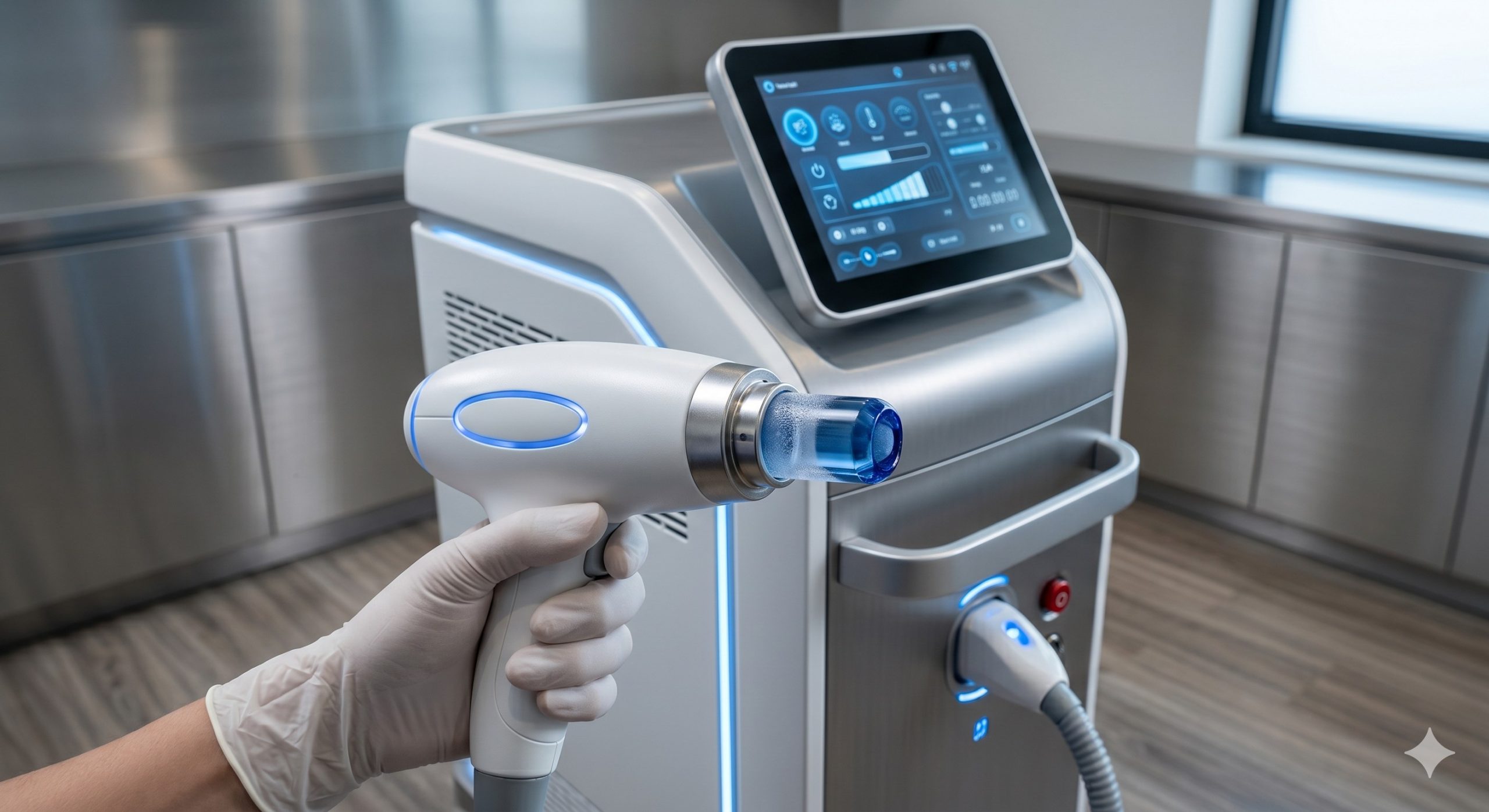
The platform is built around a medical-grade diode laser stack with a maximum optical output of up to 60W per wavelength channel. A precision-aligned handpiece delivers energy through a 15mm x 15mm sapphire therapeutic window that simultaneously provides active cooling (down to +2°C). The system incorporates a closed-loop water-to-air thermal management module, ensuring stable energy emission over extended treatment sessions. An intuitive 10.4-inch color touchscreen UI supports pre-programmed treatment protocols based on body region, skin type (Fitzpatrick II-VI), and fat layer depth estimation.
KEY INDICATIONS & CAPABILITIES
Primary indications include non-invasive reduction of abdominal, flank, lateral thigh, submental, and brachial adipose deposits. The triple-wavelength architecture allows synergistic targeting: 755nm for superficial fat layers, 808nm for mid-depth adipocyte coagulation, and 1064nm for deeper septal heating and mild dermal tightening. Typical treatment sessions range from 20 to 40 minutes per region. Clinical data indicates a mean circumferential reduction of 2.5–4.0 cm after three to four sessions spaced 30 days apart.
COMPLIANCE & STANDARDS
The device holds CE (Medical Device Regulation 2017/745) and FDA 510(k) clearance for non-invasive fat reduction. It complies with IEC 60825-1 (Class 4 laser safety), IEC 60601-1 (electrical medical equipment safety), and IEC 60601-2-22 (laser device specific standards). Each system includes a multi-factor interlock system, emergency laser stop, and audible emission alerts.
TECHNICAL SPECIFICATIONS
Laser Classification: Class 4 Diode Laser
Emission Modes: Continuous Wave, Pulsed (1–500ms)
Beam Delivery: Direct contact sapphire via articulated handpiece
Cooling Technology: Contact TEC (Thermoelectric) + Sapphire + Closed-loop water circulation + Forced air
Display: 10.4″ LCD resistive touch, graphical treatment mapping
Power Supply: Universal AC input 100–240V, 50/60Hz, 600VA max
Dimensions (W x D x H): 450mm x 380mm x 850mm (console)
Weight: 32 kg (console only)
CLINICAL ARCHITECTURE & DESIGN
The platform is built around a medical-grade diode laser stack with a maximum optical output of up to 60W per wavelength channel. A precision-aligned handpiece delivers energy through a 15mm x 15mm sapphire therapeutic window that simultaneously provides active cooling (down to +2°C). The system incorporates a closed-loop water-to-air thermal management module, ensuring stable energy emission over extended treatment sessions. An intuitive 10.4-inch color touchscreen UI supports pre-programmed treatment protocols based on body region, skin type (Fitzpatrick II-VI), and fat layer depth estimation.
KEY INDICATIONS & CAPABILITIES
Primary indications include non-invasive reduction of abdominal, flank, lateral thigh, submental, and brachial adipose deposits. The triple-wavelength architecture allows synergistic targeting: 755nm for superficial fat layers, 808nm for mid-depth adipocyte coagulation, and 1064nm for deeper septal heating and mild dermal tightening. Typical treatment sessions range from 20 to 40 minutes per region. Clinical data indicates a mean circumferential reduction of 2.5–4.0 cm after three to four sessions spaced 30 days apart.
COMPLIANCE & STANDARDS
The device holds CE (Medical Device Regulation 2017/745) and FDA 510(k) clearance for non-invasive fat reduction. It complies with IEC 60825-1 (Class 4 laser safety), IEC 60601-1 (electrical medical equipment safety), and IEC 60601-2-22 (laser device specific standards). Each system includes a multi-factor interlock system, emergency laser stop, and audible emission alerts.
TECHNICAL SPECIFICATIONS
Laser Classification: Class 4 Diode Laser
Emission Modes: Continuous Wave, Pulsed (1–500ms)
Beam Delivery: Direct contact sapphire via articulated handpiece
Cooling Technology: Contact TEC (Thermoelectric) + Sapphire + Closed-loop water circulation + Forced air
Display: 10.4″ LCD resistive touch, graphical treatment mapping
Power Supply: Universal AC input 100–240V, 50/60Hz, 600VA max
Dimensions (W x D x H): 450mm x 380mm x 850mm (console)
Weight: 32 kg (console only)
CLINICAL PROTOCOLS
Standard treatment protocol: Patient skin is marked into 15mm x 15mm grids. Handpiece applied with firm contact to ensure complete sapphire window adherence. Energy density (fluence) initiated at 8–12 J/cm² per pulse, titrated to patient tolerance (maximum 25 J/cm²). Overlap between adjacent pulses ≤10%. Treatment endpoint is a palpable mild warmth (skin surface temperature maintained ≤42°C via real-time monitoring). Post-treatment: immediate erythema (resolves within 1–4 hours). No compulsory compression garment required. Recommended treatment interval: 28–35 days for three to six total sessions.
 Follow-up and maintenance: Circumferential measurement and photographic documentation performed before each session. Patients advised to maintain stable hydration and moderate physical activity. Contraindications: pregnancy, active infection in treatment area, implanted electronic devices, bleeding disorders, or recent surgical intervention in the same anatomical zone. Adverse events are transient and include mild edema, ecchymosis, or temporary dysesthesia (<5% incidence).
CLINICAL ARCHITECTURE & DESIGN
The platform is built around a medical-grade diode laser stack with a maximum optical output of up to 60W per wavelength channel. A precision-aligned handpiece delivers energy through a 15mm x 15mm sapphire therapeutic window that simultaneously provides active cooling (down to +2°C). The system incorporates a closed-loop water-to-air thermal management module, ensuring stable energy emission over extended treatment sessions. An intuitive 10.4-inch color touchscreen UI supports pre-programmed treatment protocols based on body region, skin type (Fitzpatrick II-VI), and fat layer depth estimation.
KEY INDICATIONS & CAPABILITIES
Primary indications include non-invasive reduction of abdominal, flank, lateral thigh, submental, and brachial adipose deposits. The triple-wavelength architecture allows synergistic targeting: 755nm for superficial fat layers, 808nm for mid-depth adipocyte coagulation, and 1064nm for deeper septal heating and mild dermal tightening. Typical treatment sessions range from 20 to 40 minutes per region. Clinical data indicates a mean circumferential reduction of 2.5–4.0 cm after three to four sessions spaced 30 days apart.
COMPLIANCE & STANDARDS
The device holds CE (Medical Device Regulation 2017/745) and FDA 510(k) clearance for non-invasive fat reduction. It complies with IEC 60825-1 (Class 4 laser safety), IEC 60601-1 (electrical medical equipment safety), and IEC 60601-2-22 (laser device specific standards). Each system includes a multi-factor interlock system, emergency laser stop, and audible emission alerts.
TECHNICAL SPECIFICATIONS
Laser Classification: Class 4 Diode Laser
Emission Modes: Continuous Wave, Pulsed (1–500ms)
Beam Delivery: Direct contact sapphire via articulated handpiece
Cooling Technology: Contact TEC (Thermoelectric) + Sapphire + Closed-loop water circulation + Forced air
Display: 10.4″ LCD resistive touch, graphical treatment mapping
Power Supply: Universal AC input 100–240V, 50/60Hz, 600VA max
Dimensions (W x D x H): 450mm x 380mm x 850mm (console)
Weight: 32 kg (console only)
| Parameter | Specification |
|---|---|
| Laser Type / Wavelength | Diode laser, triple wavelength: 755nm / 808nm / 1064nm (selectable or blended) |
| Spot Size | 15 mm x 15 mm (square geometry via sapphire window) |
| Cooling System | TEC + Sapphire contact + Closed-loop water + Forced air (skin surface maintained 2–8°C) |
| Max Output Power | Up to 60W per wavelength channel (combined max 120W) |
| Pulse Duration | CW or pulsed: 1ms – continuous (500ms max in pulsed mode) |
| Fluence Range | 5 – 25 J/cm² per pulse |
| Repetition Rate | Single shot to 5 Hz |
| Operating Interfaces | 10.4″ touchscreen, footswitch, emergency laser stop |
| Environmental Conditions | Operating: 15–30°C, 30–70% RH non-condensing. Storage: -10–50°C |
| Electrical Ratings | 100–240V AC, 50/60Hz, 600VA (max) |
Follow-up and maintenance: Circumferential measurement and photographic documentation performed before each session. Patients advised to maintain stable hydration and moderate physical activity. Contraindications: pregnancy, active infection in treatment area, implanted electronic devices, bleeding disorders, or recent surgical intervention in the same anatomical zone. Adverse events are transient and include mild edema, ecchymosis, or temporary dysesthesia (<5% incidence).
📥 Download Technical Specification
Click the button below to view or download the full official PDF datasheet.
⬇️ Download Official PDF