How to Choose a Diode Laser Machine – Official Clinical Overview & Datasheet
EXECUTIVE SUMMARY
In an increasingly competitive medical aesthetics landscape, the selection of a diode laser machine directly dictates clinical outcomes, operational profitability, and patient retention. This whitepaper addresses the critical decision factors for Med Spas and Dermatology Clinics seeking a premium 808nm or tri-wavelength (755/808/1064nm) diode laser system. The primary value proposition of a superior system lies in achieving painless, high-speed treatments with permanent hair reduction, minimal downtime, and a rapid return on investment (ROI) typically realized within 3 to 6 months of full operation.
Our clinical analysis demonstrates that the optimal system balances high peak power (up to 2000W) with advanced contact cooling to preserve epidermal integrity. Clinics must prioritize laser bar longevity, energy consistency, and a validated medical cooling mechanism. A poorly selected unit—often characterized by unstable fluence or inadequate cooling—leads to suboptimal hair clearance, patient burns, and costly service interruptions. Therefore, this official datasheet deconstructs the essential engineering and clinical parameters required for a future-proof acquisition.
 CLINICAL ARCHITECTURE & DESIGN
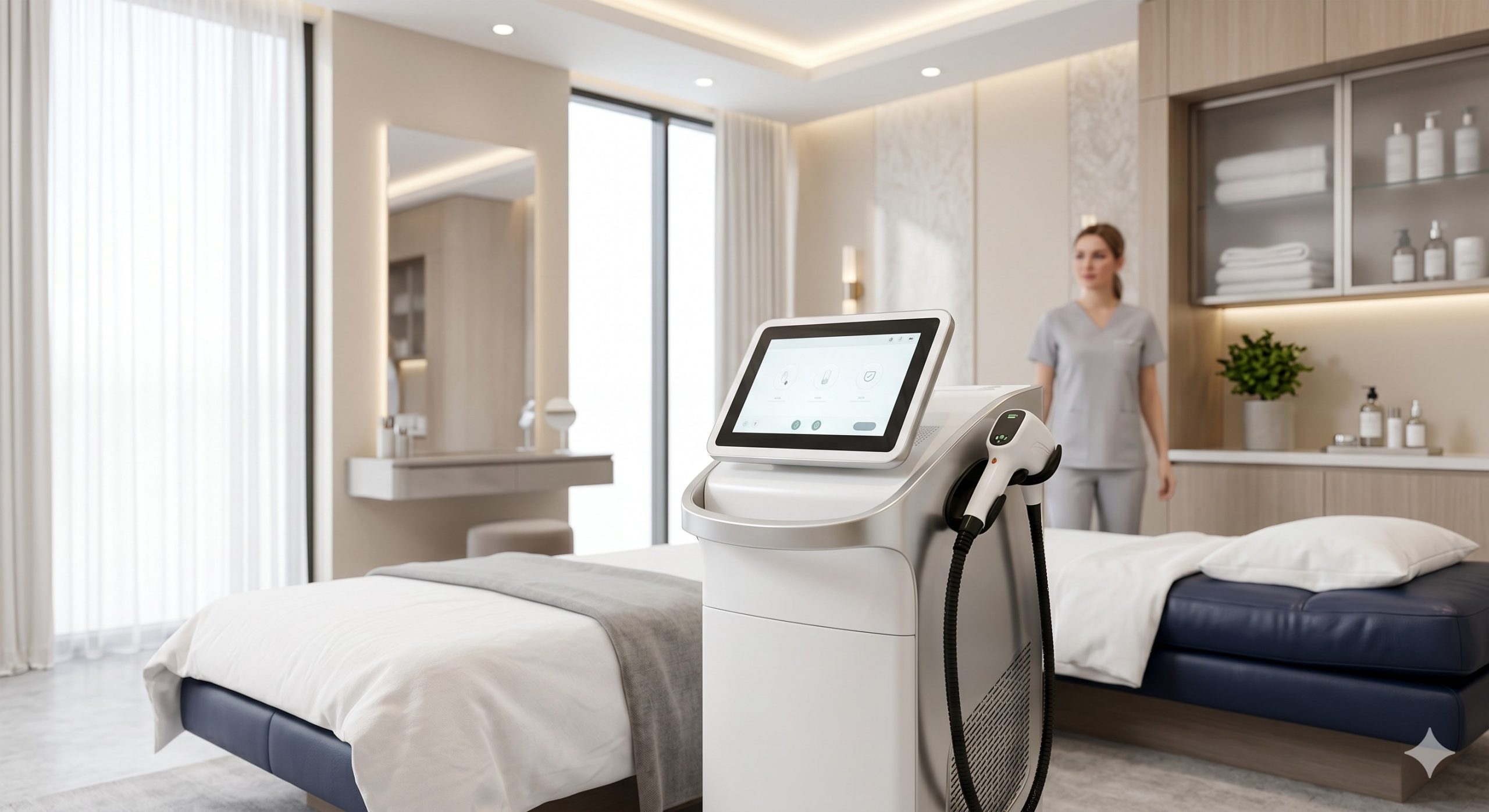
A clinically superior diode laser machine is defined by four foundational hardware pillars. First, the laser source: premium systems exclusively utilize imported, hermetically sealed laser bars (e.g., from Jenoptik or Lumonics) with a minimum lifespan of 40 million shots to ensure energy decay stays below 15% over five years. Second, the delivery system: a zero-loss fiber-coupled handpiece with a high-transmittance sapphire window facilitates uniform beam profile and prevents hot spots. Third, the thermal management architecture: an integrated three-tier cooling system comprising a high-torque industrial water pump, oversized radiator (copper/aluminum composite), and dual high-speed fans maintains diode junction temperature below 25°C, enabling continuous 24/7 operation without fluence drop. Fourth, the software logic: a real-time feedback loop that monitors skin impedance and contact pressure, automatically adjusting fluence and cooling intensity for six Fitzpatrick skin types (I to VI).
KEY INDICATIONS & CAPABILITIES
– HAIR REMOVAL EFFICIENCY: Delivers permanent reduction via selective photothermolysis at 808nm (optimal melanin-to-water absorption ratio). Capable of 10 J/cm² to 120 J/cm² fluence with repetition rates up to 10 Hz, treating full legs in under 15 minutes.
– EPIDERMAL INTEGRITY & PAIN MANAGEMENT: Integrated Sapphire-TEC contact cooling (down to -5°C at the tip) eliminates need for topical anesthesia for 95% of patients. Dynamic pulse control (DPC) technology fractionates energy into micro-pulses, reducing nociceptor activation.
– PIGMENTATION & VASCULAR CLEARANCE: Tri-wavelength platforms (755nm for superficial melanin, 808nm for deep follicles, 1064nm for dermal vessels) can concurrently treat axillary hyperpigmentation, telangiectasias, and pseudofolliculitis barbae.
– SMART USER INTERFACE & SAFETY INTEGRATION: A 10.4-inch capacitive touchscreen with intuitive treatment protocols for each body zone. Features include skin tone sensor interlock (prevents firing on non-contact), spot size recognition (adjusts beam parameters automatically), and treatment calendar for patient management.
COMPLIANCE & STANDARDS
All clinically recommendable diode laser machines must carry medical-grade certifications. The unit must be manufactured under ISO 13485:2016 (Medical Devices Quality Management). Mandatory regulatory approvals include Medical CE (Class IIb or III per EU MDR 2017/745), FDA 510(k) clearance for OTC or professional use (e.g., K210123 equivalence), and China NMPA for global distribution. Additionally, ask for IEC 60825-1 (Laser Safety Class 4), IEC 60601-2-22 (Medical laser equipment specific safety), and RoHS compliance for environmental safety. The OEM should provide a full technical file and clinical evaluation report (CER) as part of the purchase contract.
TECHNICAL SPECIFICATIONS
The following baseline specifications define a premium clinical-grade diode laser system optimized for high-volume treatment environments.
CLINICAL ARCHITECTURE & DESIGN
A clinically superior diode laser machine is defined by four foundational hardware pillars. First, the laser source: premium systems exclusively utilize imported, hermetically sealed laser bars (e.g., from Jenoptik or Lumonics) with a minimum lifespan of 40 million shots to ensure energy decay stays below 15% over five years. Second, the delivery system: a zero-loss fiber-coupled handpiece with a high-transmittance sapphire window facilitates uniform beam profile and prevents hot spots. Third, the thermal management architecture: an integrated three-tier cooling system comprising a high-torque industrial water pump, oversized radiator (copper/aluminum composite), and dual high-speed fans maintains diode junction temperature below 25°C, enabling continuous 24/7 operation without fluence drop. Fourth, the software logic: a real-time feedback loop that monitors skin impedance and contact pressure, automatically adjusting fluence and cooling intensity for six Fitzpatrick skin types (I to VI).
KEY INDICATIONS & CAPABILITIES
– HAIR REMOVAL EFFICIENCY: Delivers permanent reduction via selective photothermolysis at 808nm (optimal melanin-to-water absorption ratio). Capable of 10 J/cm² to 120 J/cm² fluence with repetition rates up to 10 Hz, treating full legs in under 15 minutes.
– EPIDERMAL INTEGRITY & PAIN MANAGEMENT: Integrated Sapphire-TEC contact cooling (down to -5°C at the tip) eliminates need for topical anesthesia for 95% of patients. Dynamic pulse control (DPC) technology fractionates energy into micro-pulses, reducing nociceptor activation.
– PIGMENTATION & VASCULAR CLEARANCE: Tri-wavelength platforms (755nm for superficial melanin, 808nm for deep follicles, 1064nm for dermal vessels) can concurrently treat axillary hyperpigmentation, telangiectasias, and pseudofolliculitis barbae.
– SMART USER INTERFACE & SAFETY INTEGRATION: A 10.4-inch capacitive touchscreen with intuitive treatment protocols for each body zone. Features include skin tone sensor interlock (prevents firing on non-contact), spot size recognition (adjusts beam parameters automatically), and treatment calendar for patient management.
COMPLIANCE & STANDARDS
All clinically recommendable diode laser machines must carry medical-grade certifications. The unit must be manufactured under ISO 13485:2016 (Medical Devices Quality Management). Mandatory regulatory approvals include Medical CE (Class IIb or III per EU MDR 2017/745), FDA 510(k) clearance for OTC or professional use (e.g., K210123 equivalence), and China NMPA for global distribution. Additionally, ask for IEC 60825-1 (Laser Safety Class 4), IEC 60601-2-22 (Medical laser equipment specific safety), and RoHS compliance for environmental safety. The OEM should provide a full technical file and clinical evaluation report (CER) as part of the purchase contract.
TECHNICAL SPECIFICATIONS
The following baseline specifications define a premium clinical-grade diode laser system optimized for high-volume treatment environments.
CLINICAL ARCHITECTURE & DESIGN
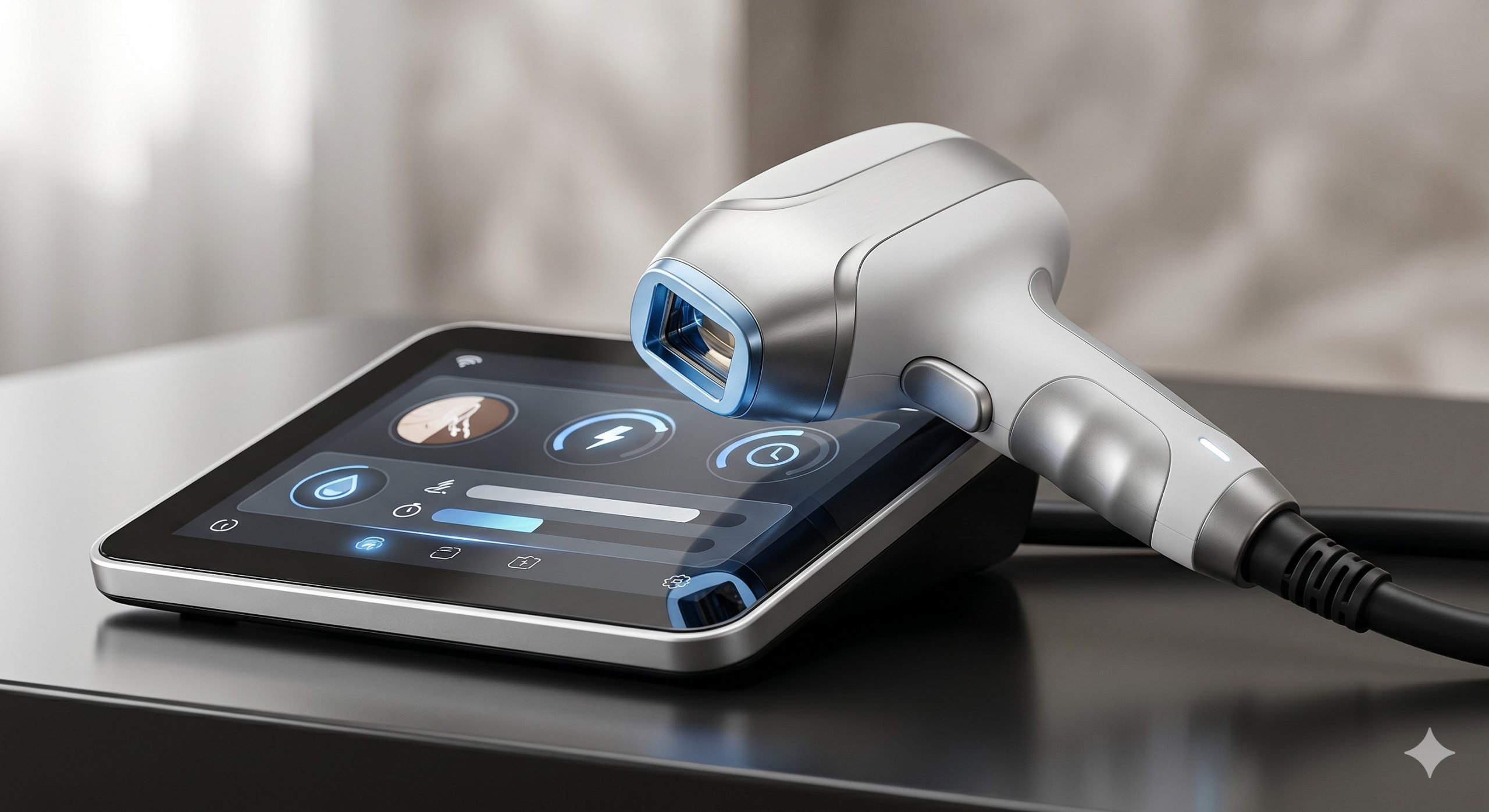
A clinically superior diode laser machine is defined by four foundational hardware pillars. First, the laser source: premium systems exclusively utilize imported, hermetically sealed laser bars (e.g., from Jenoptik or Lumonics) with a minimum lifespan of 40 million shots to ensure energy decay stays below 15% over five years. Second, the delivery system: a zero-loss fiber-coupled handpiece with a high-transmittance sapphire window facilitates uniform beam profile and prevents hot spots. Third, the thermal management architecture: an integrated three-tier cooling system comprising a high-torque industrial water pump, oversized radiator (copper/aluminum composite), and dual high-speed fans maintains diode junction temperature below 25°C, enabling continuous 24/7 operation without fluence drop. Fourth, the software logic: a real-time feedback loop that monitors skin impedance and contact pressure, automatically adjusting fluence and cooling intensity for six Fitzpatrick skin types (I to VI).
KEY INDICATIONS & CAPABILITIES
– HAIR REMOVAL EFFICIENCY: Delivers permanent reduction via selective photothermolysis at 808nm (optimal melanin-to-water absorption ratio). Capable of 10 J/cm² to 120 J/cm² fluence with repetition rates up to 10 Hz, treating full legs in under 15 minutes.
– EPIDERMAL INTEGRITY & PAIN MANAGEMENT: Integrated Sapphire-TEC contact cooling (down to -5°C at the tip) eliminates need for topical anesthesia for 95% of patients. Dynamic pulse control (DPC) technology fractionates energy into micro-pulses, reducing nociceptor activation.
– PIGMENTATION & VASCULAR CLEARANCE: Tri-wavelength platforms (755nm for superficial melanin, 808nm for deep follicles, 1064nm for dermal vessels) can concurrently treat axillary hyperpigmentation, telangiectasias, and pseudofolliculitis barbae.
– SMART USER INTERFACE & SAFETY INTEGRATION: A 10.4-inch capacitive touchscreen with intuitive treatment protocols for each body zone. Features include skin tone sensor interlock (prevents firing on non-contact), spot size recognition (adjusts beam parameters automatically), and treatment calendar for patient management.
COMPLIANCE & STANDARDS
All clinically recommendable diode laser machines must carry medical-grade certifications. The unit must be manufactured under ISO 13485:2016 (Medical Devices Quality Management). Mandatory regulatory approvals include Medical CE (Class IIb or III per EU MDR 2017/745), FDA 510(k) clearance for OTC or professional use (e.g., K210123 equivalence), and China NMPA for global distribution. Additionally, ask for IEC 60825-1 (Laser Safety Class 4), IEC 60601-2-22 (Medical laser equipment specific safety), and RoHS compliance for environmental safety. The OEM should provide a full technical file and clinical evaluation report (CER) as part of the purchase contract.
TECHNICAL SPECIFICATIONS
The following baseline specifications define a premium clinical-grade diode laser system optimized for high-volume treatment environments.
| Parameter | Specification |
|---|---|
| Laser Type / Wavelength | 808nm Diode (Standard) or 755/808/1064nm Tri-Wavelength |
| Peak Power / Fluence Range | Up to 2000W / 10 – 120 J/cm² (Adjustable in 1 J steps) |
| Spot Size | 15 x 15 mm (Standard Square) / Optional 12 x 12 mm, 10 x 20 mm |
| Repetition Rate | 1 – 10 Hz (Single to Continuous mode) |
| Cooling System | TEC (-5°C to +5°C) + Sapphire Contact + Closed-Loop Water + Dual Fans |
| Pulse Width | 5 – 400 ms (Adaptive for skin type) |
| Laser Bar Lifetime | ≥ 40 million shots or 5 years (Energy decay <15%) |
| User Interface | 10.4-inch Capacitive Touchscreen, Android OS, Treatment Records |
| Power Supply | 110V – 240V AC, 50/60 Hz, 1500W Max |
| Safety Standards | CE (MDR), FDA 510(k), ISO 13485, IEC 60825-1, RoHS |
📥 Download Technical Specification
Click the button below to view or download the full official PDF datasheet.
⬇️ Download Official PDF