B2B Buyer’s Guide: Warranty, Training, and Shipping FAQ for Aesthetic Equipment Manufacturer
Overview
Selecting the right aesthetic equipment manufacturer is a strategic decision that impacts your clinic’s clinical outcomes, patient safety, and bottom line. Below are the most frequently asked questions from B2B buyers—covering everything from pre-sales technical validation to long-term maintenance and ROI. This guide is designed to help dermatologists and clinic owners make a data-driven, compliant purchase.
Frequently Asked Questions
Q1: What is the typical warranty period offered by a reliable aesthetic equipment manufacturer, and what does it cover?
A reliable manufacturer offers a minimum 2-year comprehensive warranty covering parts, labor, and the laser handpiece. Premium manufacturers may extend core components (e.g., laser bars, pumps) to 3–5 years. The warranty should explicitly include the energy source (diodes, flashlamps) and cooling system, excluding only consumables like disposable tips or water filters. Always verify if the warranty is global or region-specific, and whether loaner units are provided during repairs.
Q2: How do I verify if the manufacturer holds valid medical certifications like FDA, CE, or ISO 13485?
You should request the Declaration of Conformity and device-specific FDA 510(k) or CE-MDR certificate numbers before signing any agreement. A legitimate aesthetic equipment manufacturer will publicly list their ISO 13485 (quality management for medical devices) and ISO 9001 certifications. Cross-check these numbers on the Notified Body’s or FDA’s online database. Avoid suppliers who only provide ‘test reports’ or generic CE marks without a Notified Body number.
Q3: What post-sales technical support and clinical training are included with the purchase?
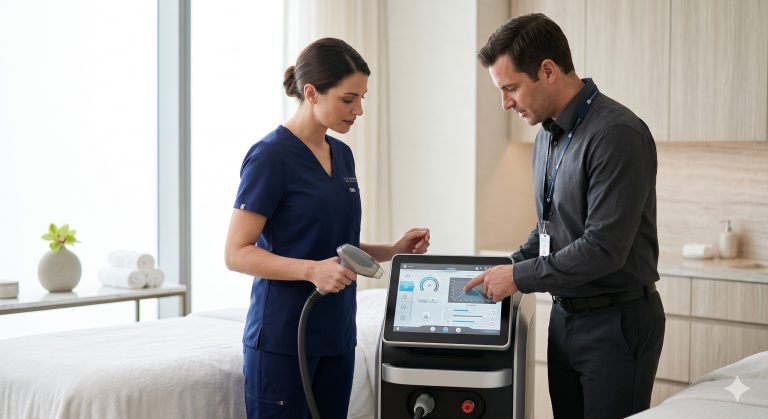
Professional manufacturers include on-site installation, 2–3 days of clinical training for your staff, and remote troubleshooting via video or ticketing system. Post-sales support must cover: laser parameter adjustments for different skin types, handpiece calibration, software updates, and emergency hotline access (24h response SLA). Avoid suppliers who charge separately for basic parameter guidance or who have no local field service engineers in your region.
Q4: How do I calculate the true ROI when comparing different aesthetic equipment manufacturers?
True ROI = (per-session revenue × avg. monthly sessions) – (equipment depreciation + maintenance contract + consumable costs + financing interest) over 36 months. Request a detailed cost-per-shot breakdown from each manufacturer: handpiece lifespan (e.g., 1 million shots), replacement cost, and water or tip refill intervals. A cheaper purchase price often hides expensive consumables or mandatory service lock-ins. Use a 3-year payback period as your benchmark.
Q5: What is the typical lead time and shipping process for large aesthetic laser systems?
Standard lead time is 15–30 working days after deposit, depending on customization and stock. A professional manufacturer will provide: Proforma Invoice with Incoterms (e.g., EXW, CIF), photos of the packed unit, and a tracking number via air or sea freight. They should also supply a pre-shipment video showing the device operating at full energy. For customs clearance, they must provide a CE/FDA declaration and a unique device identifier (UDI) label.
Q6: Does the manufacturer offer a trial unit or a demo program before full purchase?
Yes, most established manufacturers offer an in-clinic demo (30–60 days) under a rental or fully refundable deposit agreement. The demo should include: clinical protocols for your most common treatments (e.g., hair removal, pigmentation), a loaner agreement, and remote performance monitoring. If a manufacturer refuses any form of demo or site visit, that is a major red flag.
Q7: What are the hidden costs of ownership I should ask about before buying?
The three most overlooked costs are: (1) mandatory annual calibration fees, (2) water circuit cleaning or deionized water refill costs, and (3) software upgrade licenses. Also ask about: shipping cost for repairs, restocking fees, and whether the handpiece is prorated for early failure. A transparent manufacturer will provide a ‘Total Cost of Ownership (TCO)’ sheet with line items for 36 months.
Q8: How can I verify the manufacturer’s reputation and financial stability for long-term parts availability?
Request at least three clinic references that have used their equipment for over 24 months and contact them directly. Check for legal disputes on local trade portals. Ask for a written ‘End-of-Life Parts Policy’ stating that spare parts (handpieces, displays, power supplies) will be available for 7 years after model discontinuation. Stable manufacturers also publish annual reports or have verifiable bank references.