
Selective Photothermolysis Architecture Reference Document: Diode Laser Hair Removal Clinical Parameters Guide
SELECTIVE PHOTOTHERMOLYSIS ARCHITECTURE REFERENCE DOCUMENT: DIODE LASER HAIR REMOVAL CLINICAL PARAMETERS GUIDE
EXECUTIVE SUMMARY
This document serves as the definitive clinical and technical reference for the deployment of high-power diode laser systems in permanent hair reduction procedures. The architecture detailed herein is predicated on the principle of selective photothermolysis, utilizing a specific wavelength, pulse duration, and fluence to achieve irreversible thermal damage to the hair follicle bulb and bulge while preserving the integrity of the surrounding cutaneous tissues. This guide provides a comprehensive overview of the system’s optical delivery, epidermal cooling mechanisms, and a structured parameter registry designed to optimize clinical outcomes across a diverse range of Fitzpatrick skin types. The integration of advanced thermal management and precision-engineered handpieces ensures consistent, efficacious, and safe treatment sessions, establishing this platform as a premium asset for medical aesthetic practices.
 CLINICAL ARCHITECTURE & DESIGN
The diode laser hair removal system is engineered around a resonant cavity that produces a coherent, monochromatic beam of light, typically at the 808nm wavelength, which is highly absorbed by melanin within the anagen-phase hair follicle. The system architecture prioritizes a high peak power output, enabling the delivery of therapeutic fluences within a short pulse duration to minimize thermal diffusion to the epidermis. The optical train, comprising a series of high-transmission lenses and a reflective waveguide, ensures homogeneous energy distribution across the designated treatment spot. This precise engineering mitigates the risk of hot spots, a common cause of adverse events in sub-optimal systems, and is integral to the device’s Class 4 laser classification, demanding stringent safety interlocks and user controls. The chassis is configured for optimal heat dissipation, incorporating a sophisticated air and water cooling loop that maintains the laser diode bars at an operational temperature, which is critical for wavelength stability and long-term component longevity.
KEY INDICATIONS & CAPABILITIES
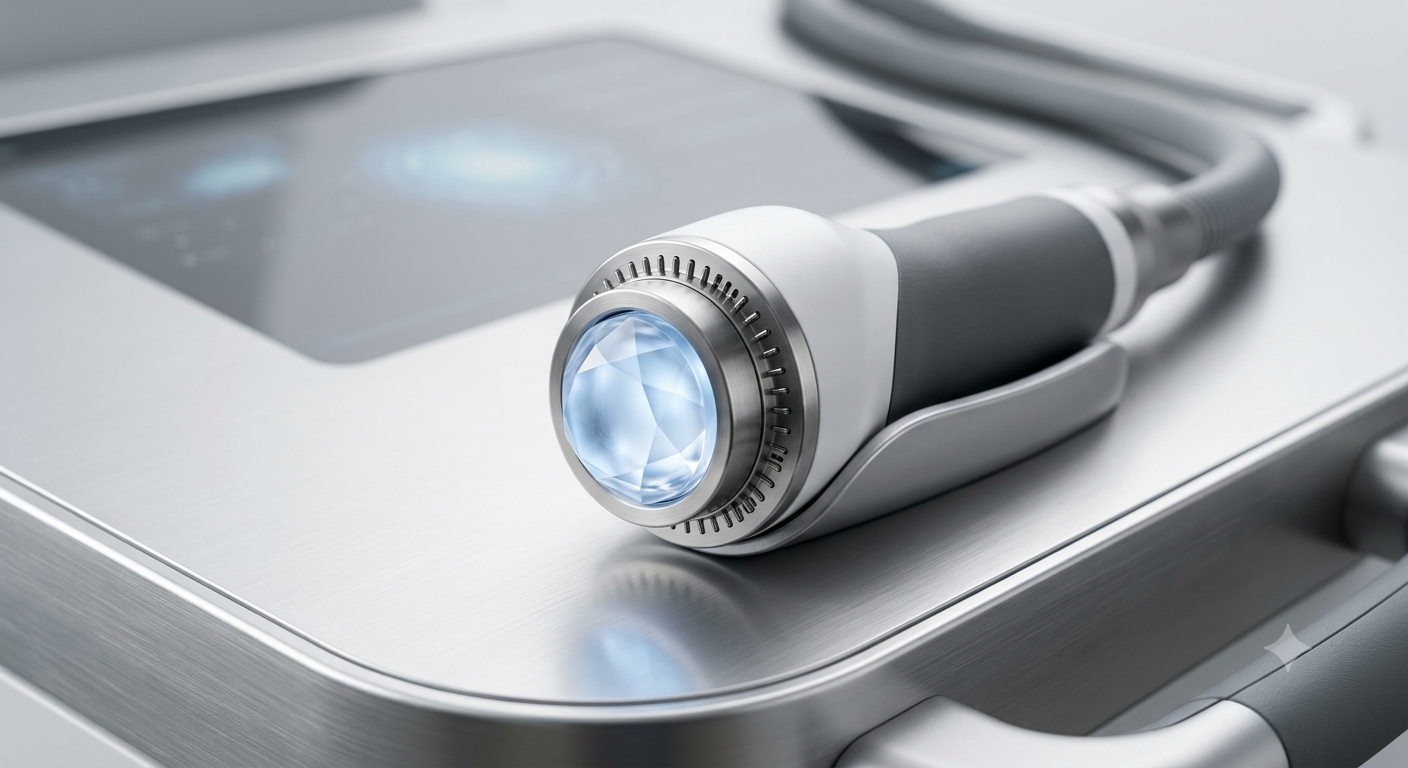
The primary indication for this system is the permanent reduction of unwanted hair on all skin types, including tanned skin, when used with appropriate parameters. The device is indicated for use on the face, legs, arms, underarms, back, chest, and bikini area, addressing a broad spectrum of patient demographics. A key capability is the integration of a dynamic cooling device (DCD) or a sapphire contact cooling plate, which provides a protective thermal sink at the skin surface. This active cooling system, often combined with a vacuum-assisted handpiece or a chilled tip, allows for the safe delivery of high fluences, thereby increasing efficacy on coarse and deep hair follicles while ensuring patient comfort. The system’s versatility is further enhanced by its adjustable pulse width and repetition rate, enabling practitioners to tailor treatments for fine vellus hair or thick terminal hair, adapting to the individual’s unique hair growth cycle and biological characteristics.
COMPLIANCE & STANDARDS
This medical device is manufactured in accordance with the highest international standards for safety and performance. It holds the necessary certifications for sale and operation in key global markets, signifying a rigorous adherence to quality management systems, electrical safety, and laser product radiation safety. The system is classified as a Class IIa medical device under the European Medical Device Regulation (MDR) and is compliant with the FDA’s Center for Devices and Radiological Health (CDRH) performance standards for laser products. These certifications attest to the system’s compliance with ISO 13485 for design and manufacture, and IEC 60825-1 for laser safety. The integrated safety features, including a key switch, emergency stop button, and a patient-activated safety interlock, are designed to prevent inadvertent firing and ensure the highest level of operational safety for both the operator and the patient.
TECHNICAL SPECIFICATIONS
The system’s performance is predicated on several key technical parameters, outlined below. Precise specification is critical for treatment planning and ensuring the device operates within its intended therapeutic window.
CLINICAL ARCHITECTURE & DESIGN
The diode laser hair removal system is engineered around a resonant cavity that produces a coherent, monochromatic beam of light, typically at the 808nm wavelength, which is highly absorbed by melanin within the anagen-phase hair follicle. The system architecture prioritizes a high peak power output, enabling the delivery of therapeutic fluences within a short pulse duration to minimize thermal diffusion to the epidermis. The optical train, comprising a series of high-transmission lenses and a reflective waveguide, ensures homogeneous energy distribution across the designated treatment spot. This precise engineering mitigates the risk of hot spots, a common cause of adverse events in sub-optimal systems, and is integral to the device’s Class 4 laser classification, demanding stringent safety interlocks and user controls. The chassis is configured for optimal heat dissipation, incorporating a sophisticated air and water cooling loop that maintains the laser diode bars at an operational temperature, which is critical for wavelength stability and long-term component longevity.
KEY INDICATIONS & CAPABILITIES
The primary indication for this system is the permanent reduction of unwanted hair on all skin types, including tanned skin, when used with appropriate parameters. The device is indicated for use on the face, legs, arms, underarms, back, chest, and bikini area, addressing a broad spectrum of patient demographics. A key capability is the integration of a dynamic cooling device (DCD) or a sapphire contact cooling plate, which provides a protective thermal sink at the skin surface. This active cooling system, often combined with a vacuum-assisted handpiece or a chilled tip, allows for the safe delivery of high fluences, thereby increasing efficacy on coarse and deep hair follicles while ensuring patient comfort. The system’s versatility is further enhanced by its adjustable pulse width and repetition rate, enabling practitioners to tailor treatments for fine vellus hair or thick terminal hair, adapting to the individual’s unique hair growth cycle and biological characteristics.
COMPLIANCE & STANDARDS
This medical device is manufactured in accordance with the highest international standards for safety and performance. It holds the necessary certifications for sale and operation in key global markets, signifying a rigorous adherence to quality management systems, electrical safety, and laser product radiation safety. The system is classified as a Class IIa medical device under the European Medical Device Regulation (MDR) and is compliant with the FDA’s Center for Devices and Radiological Health (CDRH) performance standards for laser products. These certifications attest to the system’s compliance with ISO 13485 for design and manufacture, and IEC 60825-1 for laser safety. The integrated safety features, including a key switch, emergency stop button, and a patient-activated safety interlock, are designed to prevent inadvertent firing and ensure the highest level of operational safety for both the operator and the patient.
TECHNICAL SPECIFICATIONS
The system’s performance is predicated on several key technical parameters, outlined below. Precise specification is critical for treatment planning and ensuring the device operates within its intended therapeutic window.
CLINICAL PROTOCOLS
Treatment protocols are established based on the Fitzpatrick skin type and hair color, dictating the fluence, pulse width, and repetition rate. For lighter skin types (I-III), higher fluences can be utilized with shorter pulse widths to effectively target the melanin-rich follicle. Conversely, for darker skin types (IV-VI), a lower fluence with a longer pulse width is recommended to allow for preferential cooling of the epidermis and to reduce the risk of post-inflammatory hyperpigmentation. The practitioner must perform a test spot in an inconspicuous area prior to full treatment to assess the individual’s skin response. The treatment endpoint is typically a mild erythema and perifollicular edema, indicating that the thermal energy has reached the target tissue. A standard treatment interval of 4-6 weeks is recommended to coincide with the anagen phase of the hair cycle, ensuring maximum follicular destruction. The following table presents a foundational guide for initial parameter selection, which should be adjusted based on clinical judgment and patient feedback.
CLINICAL PARAMETER QUICK REFERENCE GUIDE
Patient Skin Type (Fitzpatrick) | Fluence (J/cm²) | Pulse Width (ms) | Spot Size (mm)
I-II (Light/White) | 20-30 | 5-15 | 15×15
III-IV (Medium/Olive) | 16-24 | 10-20 | 15×15
IV-V (Brown/Dark Brown) | 12-18 | 15-30 | 15×15
VI (Black/Deeply Pigmented) | 8-14 | 20-40 | 15×15
CLINICAL ARCHITECTURE & DESIGN
The diode laser hair removal system is engineered around a resonant cavity that produces a coherent, monochromatic beam of light, typically at the 808nm wavelength, which is highly absorbed by melanin within the anagen-phase hair follicle. The system architecture prioritizes a high peak power output, enabling the delivery of therapeutic fluences within a short pulse duration to minimize thermal diffusion to the epidermis. The optical train, comprising a series of high-transmission lenses and a reflective waveguide, ensures homogeneous energy distribution across the designated treatment spot. This precise engineering mitigates the risk of hot spots, a common cause of adverse events in sub-optimal systems, and is integral to the device’s Class 4 laser classification, demanding stringent safety interlocks and user controls. The chassis is configured for optimal heat dissipation, incorporating a sophisticated air and water cooling loop that maintains the laser diode bars at an operational temperature, which is critical for wavelength stability and long-term component longevity.
KEY INDICATIONS & CAPABILITIES
The primary indication for this system is the permanent reduction of unwanted hair on all skin types, including tanned skin, when used with appropriate parameters. The device is indicated for use on the face, legs, arms, underarms, back, chest, and bikini area, addressing a broad spectrum of patient demographics. A key capability is the integration of a dynamic cooling device (DCD) or a sapphire contact cooling plate, which provides a protective thermal sink at the skin surface. This active cooling system, often combined with a vacuum-assisted handpiece or a chilled tip, allows for the safe delivery of high fluences, thereby increasing efficacy on coarse and deep hair follicles while ensuring patient comfort. The system’s versatility is further enhanced by its adjustable pulse width and repetition rate, enabling practitioners to tailor treatments for fine vellus hair or thick terminal hair, adapting to the individual’s unique hair growth cycle and biological characteristics.
COMPLIANCE & STANDARDS
This medical device is manufactured in accordance with the highest international standards for safety and performance. It holds the necessary certifications for sale and operation in key global markets, signifying a rigorous adherence to quality management systems, electrical safety, and laser product radiation safety. The system is classified as a Class IIa medical device under the European Medical Device Regulation (MDR) and is compliant with the FDA’s Center for Devices and Radiological Health (CDRH) performance standards for laser products. These certifications attest to the system’s compliance with ISO 13485 for design and manufacture, and IEC 60825-1 for laser safety. The integrated safety features, including a key switch, emergency stop button, and a patient-activated safety interlock, are designed to prevent inadvertent firing and ensure the highest level of operational safety for both the operator and the patient.
TECHNICAL SPECIFICATIONS
The system’s performance is predicated on several key technical parameters, outlined below. Precise specification is critical for treatment planning and ensuring the device operates within its intended therapeutic window.
| Parameter | Specification |
|---|---|
| Laser Type / Wavelength | 808nm Diode (Standard) / 755nm, 808nm, 1064nm (Multiplex) |
| Peak Power | Up to 1200W |
| Spot Size | 15mm x 15mm (Standard), 10mm x 10mm, 15mm x 20mm |
| Pulse Width | 5ms – 400ms (Adjustable) |
| Repetition Rate | Up to 10Hz |
| Cooling System | Sapphire Contact Cooling (-5°C to +10°C) + TEC + Air + Water |
| Cooling Duration | Continuous / Adjustable Pre, During, and Post Pulse |
| Fluence Range | 1 – 50 J/cm² |
| Interface | 10.4″ High-Resolution Color Touchscreen |
| Power Requirements | 100-240V AC, 50/60Hz, 15A |
| Dimensions | 450mm x 400mm x 1050mm (Approx.) |
| Weight | 45kg (Approx.) |
📥 Download Technical Specification
Click the button below to view or download the full official PDF datasheet.
⬇️ Download Official PDF