
fractional co2 laser acne scar parameter settings – Official Clinical Overview & Technical Datasheet
EXECUTIVE SUMMARY
This document provides a comprehensive technical and clinical overview of fractional CO2 laser parameter settings for the efficacious treatment of atrophic acne scars. As a leading OEM manufacturer, we present evidence-based guidelines, hardware specifications, and clinical architectures designed to optimize patient outcomes while ensuring the highest standards of safety and regulatory compliance. The 10,600 nm wavelength fractional CO2 laser remains the gold standard for dermal remodeling, leveraging fractional photothermolysis to create microscopic thermal zones (MTZs) that stimulate neocollagenesis and epidermal resurfacing .
 CLINICAL ARCHITECTURE & DESIGN
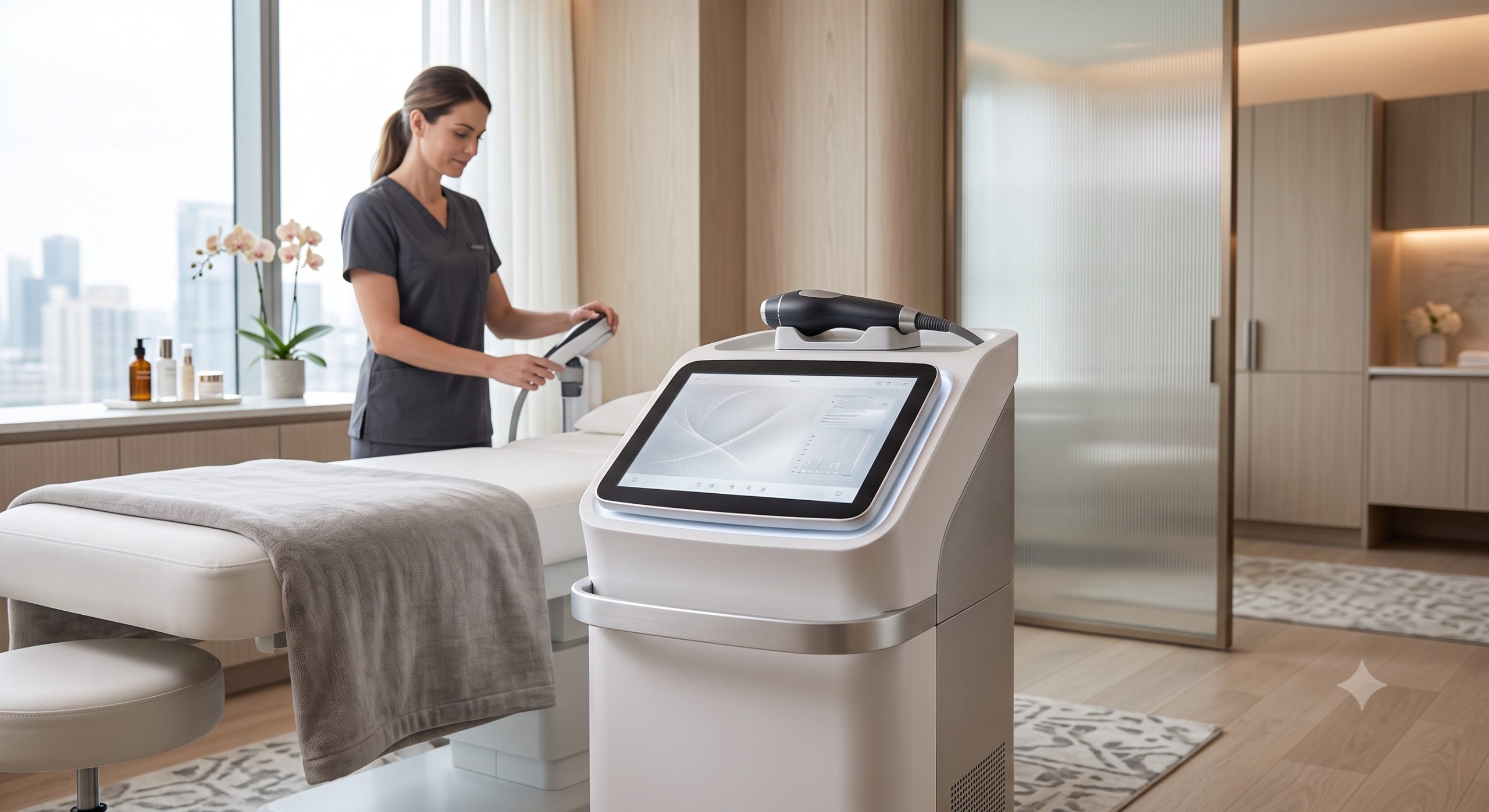
The clinical efficacy of fractional CO2 laser systems is predicated on precise parameter calibration. Our platform delivers controlled, ablative fractional resurfacing, combining the efficacy of fully ablative lasers with the reduced downtime of non-ablative modalities. The system generates high-energy pulses (up to 600W) at a 10,600 nm wavelength, which are scattered into an array of microscopic beams to treat a fraction of the skin at a time. This architecture preserves untreated tissue bridges that facilitate rapid healing and minimize adverse events .
The device supports multiple treatment modes, including a stamping technique for precise, non-overlapping pulse placement, which is critical for consistent energy delivery and predictable clinical outcomes .
KEY INDICATIONS & CAPABILITIES
The system is primarily indicated for the treatment of atrophic acne scars, including icepick, boxcar, and rolling subtypes. It is also effective for skin rejuvenation, enlarged pores, and general textural irregularities. The platform is designed to accommodate a wide range of skin phototypes (Fitzpatrick I-VI) through adjustable parameter sets that allow for customized treatment protocols. For skin of color, the system facilitates the use of lower fluences, lower densities, and long-pulse modes to mitigate the risk of post-inflammatory hyperpigmentation (PIH) .
COMPLIANCE & STANDARDS
This device and its accessories are manufactured in compliance with rigorous international standards for medical electrical equipment and laser safety. The system is designed to meet the requirements for CE marking and FDA clearance. The integrated safety systems include real-time temperature monitoring, a patient-activated emergency stop, and key-lock controls to ensure safe operation in clinical environments.
TECHNICAL SPECIFICATIONS
CLINICAL ARCHITECTURE & DESIGN
The clinical efficacy of fractional CO2 laser systems is predicated on precise parameter calibration. Our platform delivers controlled, ablative fractional resurfacing, combining the efficacy of fully ablative lasers with the reduced downtime of non-ablative modalities. The system generates high-energy pulses (up to 600W) at a 10,600 nm wavelength, which are scattered into an array of microscopic beams to treat a fraction of the skin at a time. This architecture preserves untreated tissue bridges that facilitate rapid healing and minimize adverse events .
The device supports multiple treatment modes, including a stamping technique for precise, non-overlapping pulse placement, which is critical for consistent energy delivery and predictable clinical outcomes .
KEY INDICATIONS & CAPABILITIES
The system is primarily indicated for the treatment of atrophic acne scars, including icepick, boxcar, and rolling subtypes. It is also effective for skin rejuvenation, enlarged pores, and general textural irregularities. The platform is designed to accommodate a wide range of skin phototypes (Fitzpatrick I-VI) through adjustable parameter sets that allow for customized treatment protocols. For skin of color, the system facilitates the use of lower fluences, lower densities, and long-pulse modes to mitigate the risk of post-inflammatory hyperpigmentation (PIH) .
COMPLIANCE & STANDARDS
This device and its accessories are manufactured in compliance with rigorous international standards for medical electrical equipment and laser safety. The system is designed to meet the requirements for CE marking and FDA clearance. The integrated safety systems include real-time temperature monitoring, a patient-activated emergency stop, and key-lock controls to ensure safe operation in clinical environments.
TECHNICAL SPECIFICATIONS
CLINICAL PROTOCOLS
Optimal treatment parameters are determined based on scar morphology, skin phototype, and patient tolerance. A staged treatment approach is recommended, typically consisting of 2-4 sessions at 4- to 6-week intervals .
– **Deep Scarring (Rolling/Boxcar):** Higher fluence (20-30 mJ/MTZ) and lower density (64-100 spots/cm²) settings are generally employed to induce more significant dermal remodeling. The Deep FX mode with 20-30 mJ per MTZ and a density of 10-20% is a common starting point .
– **Mild Scarring and Rejuvenation:** Lower fluence (10-15 mJ/MTZ) and higher density settings (250-300 spots/cm²) can be used for more superficial resurfacing, focusing on textural improvement with reduced downtime .
– **Skin of Color (Fitzpatrick IV-VI):** It is critical to use more conservative parameters to prevent PIH. The long-pulse mode is preferred over the short-pulse mode, along with lower fluence and lower density. Interventional priming with chemical peels or laser toning before the treatment session can also reduce the risk of adverse effects .
CLINICAL ARCHITECTURE & DESIGN
The clinical efficacy of fractional CO2 laser systems is predicated on precise parameter calibration. Our platform delivers controlled, ablative fractional resurfacing, combining the efficacy of fully ablative lasers with the reduced downtime of non-ablative modalities. The system generates high-energy pulses (up to 600W) at a 10,600 nm wavelength, which are scattered into an array of microscopic beams to treat a fraction of the skin at a time. This architecture preserves untreated tissue bridges that facilitate rapid healing and minimize adverse events .
The device supports multiple treatment modes, including a stamping technique for precise, non-overlapping pulse placement, which is critical for consistent energy delivery and predictable clinical outcomes .
KEY INDICATIONS & CAPABILITIES
The system is primarily indicated for the treatment of atrophic acne scars, including icepick, boxcar, and rolling subtypes. It is also effective for skin rejuvenation, enlarged pores, and general textural irregularities. The platform is designed to accommodate a wide range of skin phototypes (Fitzpatrick I-VI) through adjustable parameter sets that allow for customized treatment protocols. For skin of color, the system facilitates the use of lower fluences, lower densities, and long-pulse modes to mitigate the risk of post-inflammatory hyperpigmentation (PIH) .
COMPLIANCE & STANDARDS
This device and its accessories are manufactured in compliance with rigorous international standards for medical electrical equipment and laser safety. The system is designed to meet the requirements for CE marking and FDA clearance. The integrated safety systems include real-time temperature monitoring, a patient-activated emergency stop, and key-lock controls to ensure safe operation in clinical environments.
TECHNICAL SPECIFICATIONS
| Parameter | Specification / Range |
|---|---|
| Laser Type / Wavelength | Fractional CO2 / 10,600 nm |
| Power / Pulse Energy | Up to 600 W / 10 – 160 mJ per MTZ |
| Spot Size / MTZ Diameter | 80 – 300 μm |
| Density (Coverage) | 64 – 1600 MTZ/cm² (Variable) |
| Pulse Width / Dwell Time | 0.04 ms – 3 ms (Selectable) |
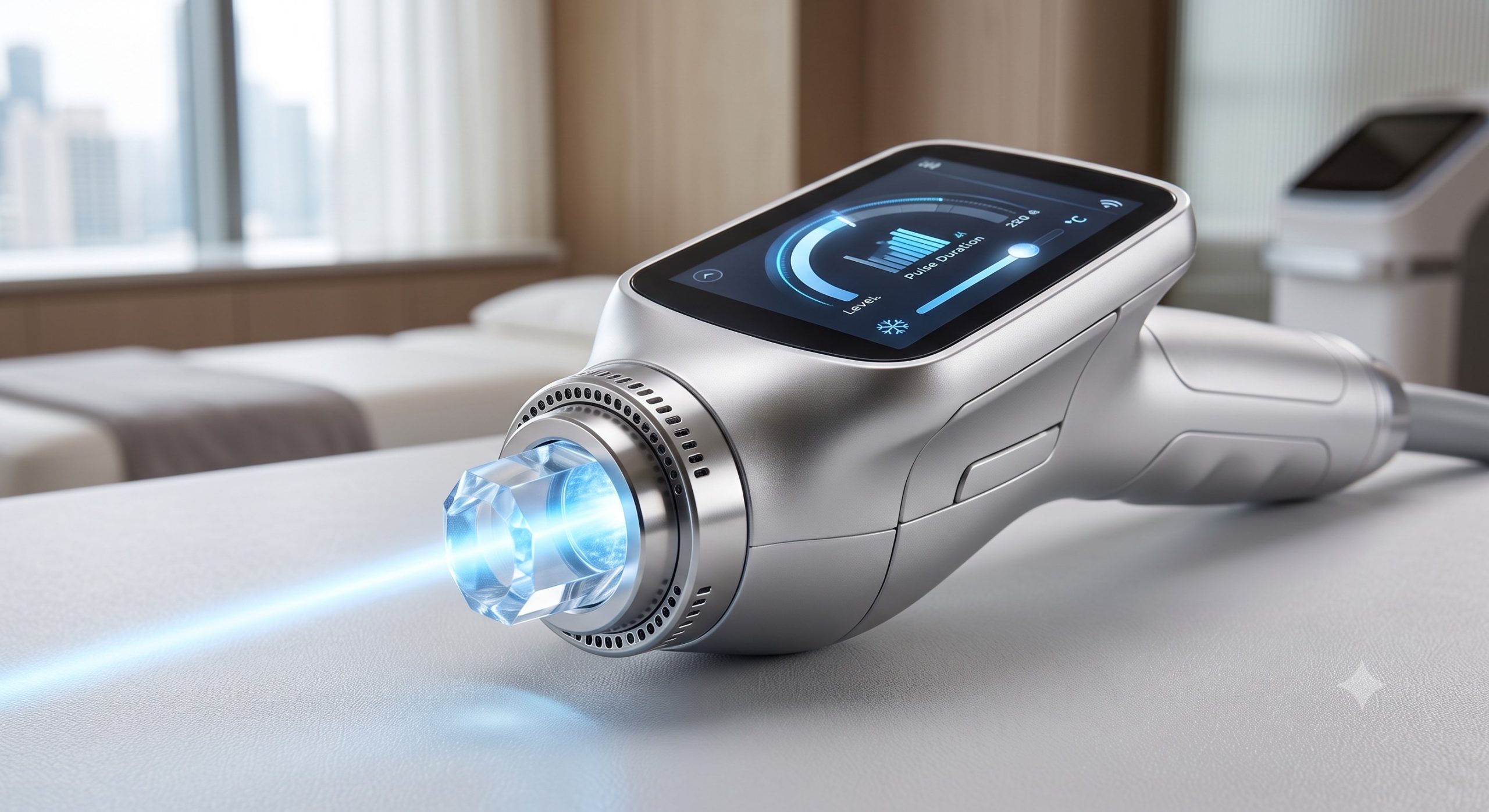
| Cooling System | TEC + Sapphire + Water + Wind |
| Treatment Modes | Stamping, Scanning, Deep FX |
| Repetition Rate | Up to 10 kHz |
| Recommended Treatment Interval | 4 – 6 Weeks |
📥 Download Technical Specification
Click the button below to view or download the full official PDF datasheet.
⬇️ Download Official PDF