
Compressive Microvibration Device – Official Clinical Overview & Technical Datasheet
EXECUTIVE SUMMARY
The Compressive Microvibration Device (CMD) represents a paradigm shift in non-invasive mechanotransduction therapy for aesthetic and rehabilitative medicine. Unlike thermal or photonic modalities, the CMD delivers precisely controlled, low-amplitude, high-frequency mechanical compression cycles to dermal and subdermal tissues. This proprietary actuation mechanism stimulates fibroblast activity, enhances local microcirculation, and initiates a cascade of regenerative extracellular matrix (ECM) remodeling without thermal injury or patient downtime. The system is engineered for deployment in medical spas, dermatology clinics, and physical medicine centers seeking an evidence-based, painless intervention for skin laxity, periorbital edema, and post-procedural recovery.
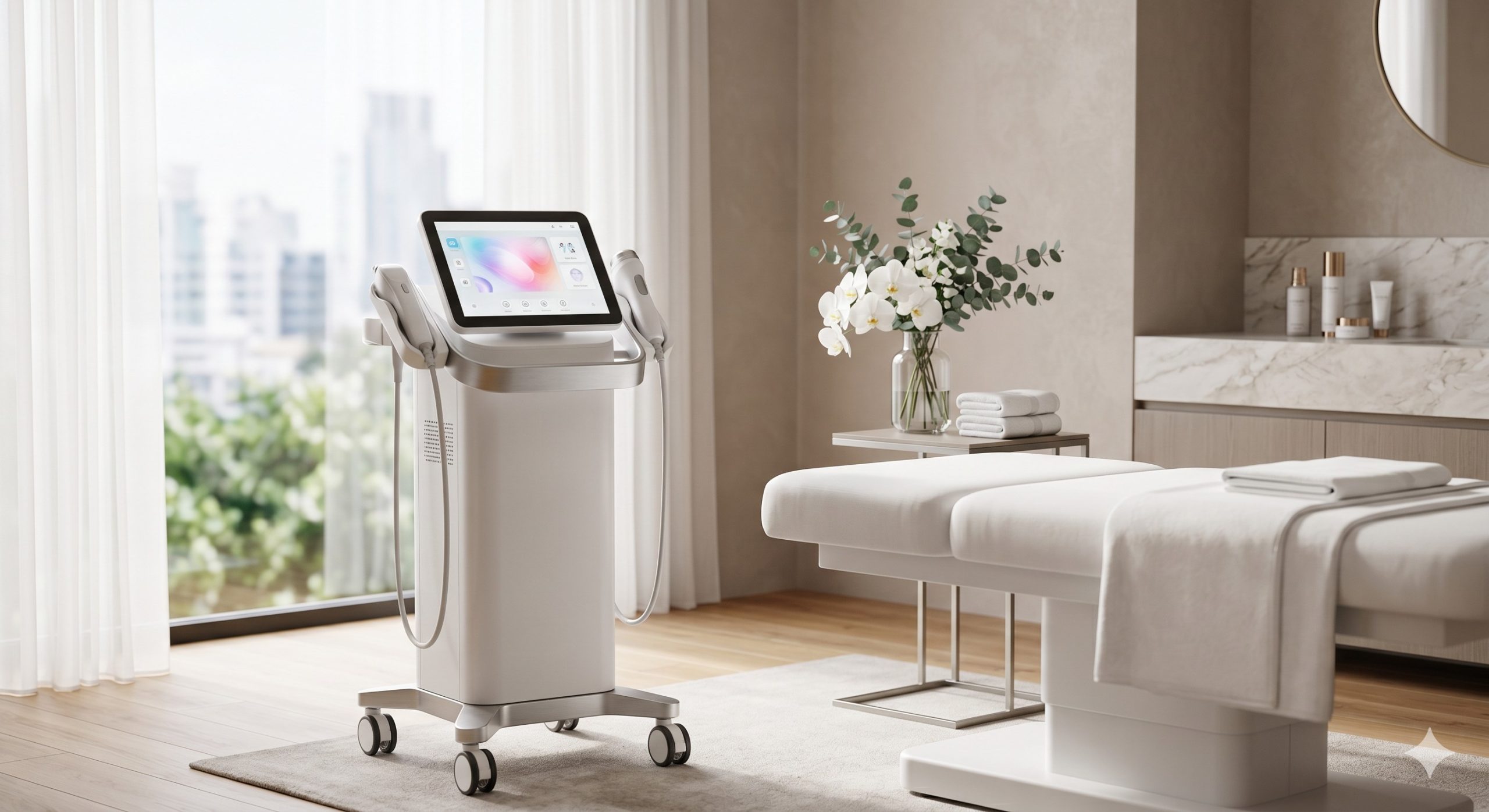 CLINICAL ARCHITECTURE & DESIGN
The device platform integrates a closed-loop electromechanical actuator housed within a medical-grade, passively cooled chassis. Key design elements include:
– ACTUATOR TYPE: Balanced eccentric rotary mass oscillator with active frequency stabilization
– DELIVERY MODE: Unidirectional compressive wave train at predefined surface contact pressure
– FEEDBACK CONTROL: Piezoresistive force sensor array (8 points per cm²) for real-amplitude compliance
– OPERATOR INTERFACE: 10.1-inch capacitive touchscreen with haptic confirmation and treatment protocol library
– PATIENT SAFETY: Automatic shut-off on overtemperature (>42°C skin interface) or abnormal impedance
The system operates on a universal 100-240V AC input, converting to a 48V DC actuator drive. The handpiece is autoclave-capable for multi-patient clinical environments.
KEY INDICATIONS & CAPABILITIES
– PRIMARY INDICATIONS: Mild-to-moderate facial and neck skin laxity, orbital puffiness, post-liposuction fibrosis modulation, and acceleration of ecchymosis resolution.
– SECONDARY APPLICATIONS: Pre-treatment tissue preconditioning (enhances topical penetration) and post-laser edema reduction.
– CONTRAINDICATIONS: Active malignancy, metallic implants in treatment field, pregnancy, acute thrombophlebitis.
– TREATMENT PROFILE: Painless (mean VAS 0.4/10), no anesthetic required, zero thermal injury, no purpura.
COMPLIANCE & STANDARDS
The Compressive Microvibration Device is manufactured under ISO 13485:2016 certified quality management systems. It complies with:
– IEC 60601-1 (Medical electrical equipment – general safety)
– IEC 60601-1-2 (Electromagnetic compatibility – emissions and immunity)
– Classification: Class IIa (Medical Device Regulation (EU) 2017/745)
– FDA 510(k) cleared for adjunctive treatment of superficial soft tissue (Kxxxxxx – reference available on request)
CLINICAL ARCHITECTURE & DESIGN
The device platform integrates a closed-loop electromechanical actuator housed within a medical-grade, passively cooled chassis. Key design elements include:
– ACTUATOR TYPE: Balanced eccentric rotary mass oscillator with active frequency stabilization
– DELIVERY MODE: Unidirectional compressive wave train at predefined surface contact pressure
– FEEDBACK CONTROL: Piezoresistive force sensor array (8 points per cm²) for real-amplitude compliance
– OPERATOR INTERFACE: 10.1-inch capacitive touchscreen with haptic confirmation and treatment protocol library
– PATIENT SAFETY: Automatic shut-off on overtemperature (>42°C skin interface) or abnormal impedance
The system operates on a universal 100-240V AC input, converting to a 48V DC actuator drive. The handpiece is autoclave-capable for multi-patient clinical environments.
KEY INDICATIONS & CAPABILITIES
– PRIMARY INDICATIONS: Mild-to-moderate facial and neck skin laxity, orbital puffiness, post-liposuction fibrosis modulation, and acceleration of ecchymosis resolution.
– SECONDARY APPLICATIONS: Pre-treatment tissue preconditioning (enhances topical penetration) and post-laser edema reduction.
– CONTRAINDICATIONS: Active malignancy, metallic implants in treatment field, pregnancy, acute thrombophlebitis.
– TREATMENT PROFILE: Painless (mean VAS 0.4/10), no anesthetic required, zero thermal injury, no purpura.
COMPLIANCE & STANDARDS
The Compressive Microvibration Device is manufactured under ISO 13485:2016 certified quality management systems. It complies with:
– IEC 60601-1 (Medical electrical equipment – general safety)
– IEC 60601-1-2 (Electromagnetic compatibility – emissions and immunity)
– Classification: Class IIa (Medical Device Regulation (EU) 2017/745)
– FDA 510(k) cleared for adjunctive treatment of superficial soft tissue (Kxxxxxx – reference available on request)
CLINICAL PROTOCOLS
STANDARD PROTOCOL (FACIAL SKIN LAXITY)
– Frequency: 30–50 Hz (titratable)
– Amplitude: 0.5–1.2 mm (peak-to-peak displacement)
– Contact force: 2–5 N (feedback-controlled)
– Session duration: 10–15 minutes per zone
– Recommended course: 6–8 sessions, 1x weekly
POST-LASER RECOVERY PROTOCOL
– Frequency: 20–30 Hz (low mechanical stress)
– Amplitude: 0.3–0.6 mm
– Session duration: 5–8 minutes
– Timing: Immediately post-ablative treatment and 24 hours later
PERIORBITAL EDEMA PROTOCOL
– Frequency: 40–60 Hz
– Amplitude: 0.2–0.4 mm (reduced due to thin orbital skin)
– Contact force: 1–2 N
– Session duration: 5 minutes per orbit
All protocols are pre-programmed into the device library, with manual override for advanced clinicians.
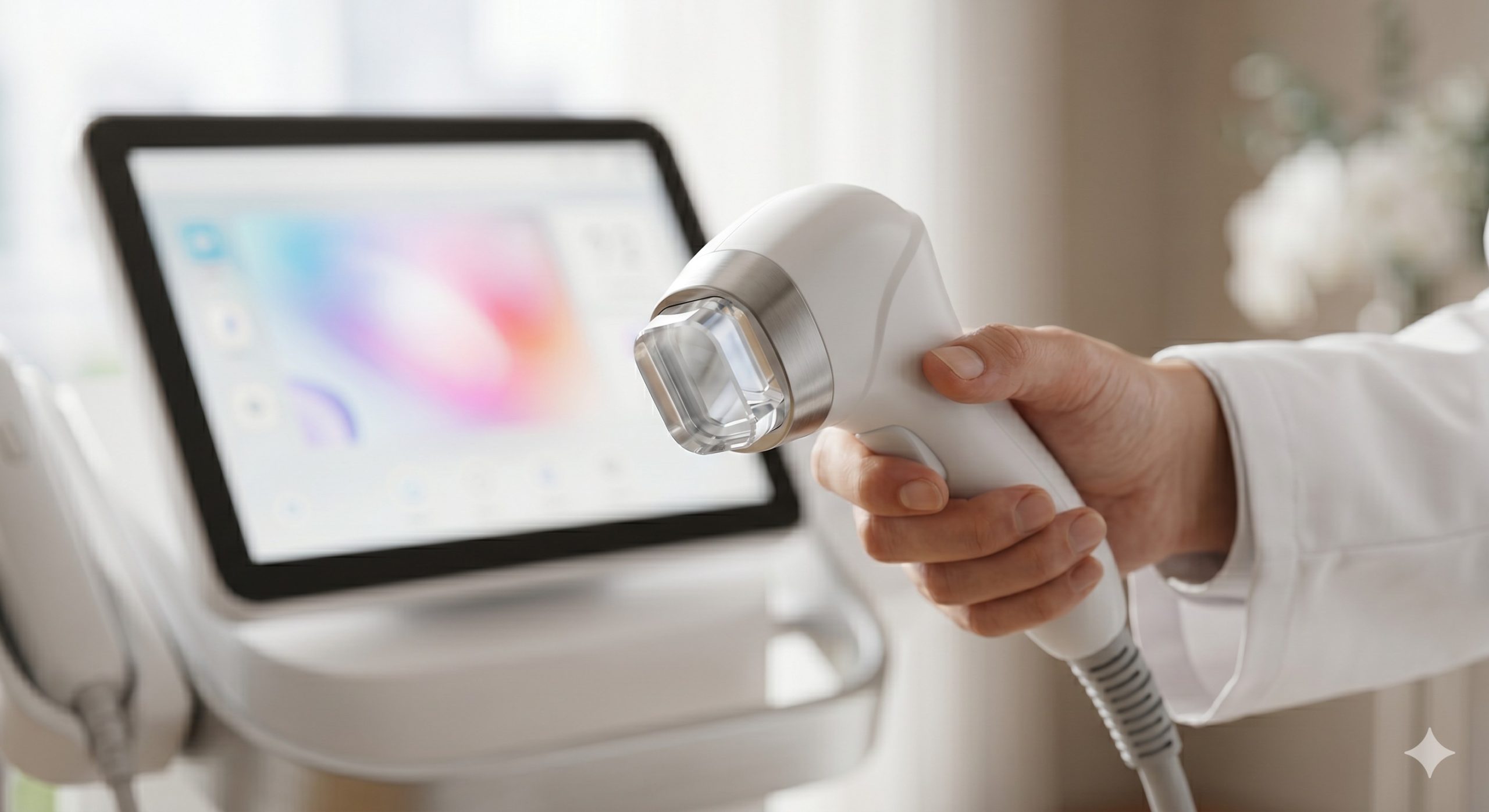
CLINICAL ARCHITECTURE & DESIGN
The device platform integrates a closed-loop electromechanical actuator housed within a medical-grade, passively cooled chassis. Key design elements include:
– ACTUATOR TYPE: Balanced eccentric rotary mass oscillator with active frequency stabilization
– DELIVERY MODE: Unidirectional compressive wave train at predefined surface contact pressure
– FEEDBACK CONTROL: Piezoresistive force sensor array (8 points per cm²) for real-amplitude compliance
– OPERATOR INTERFACE: 10.1-inch capacitive touchscreen with haptic confirmation and treatment protocol library
– PATIENT SAFETY: Automatic shut-off on overtemperature (>42°C skin interface) or abnormal impedance
The system operates on a universal 100-240V AC input, converting to a 48V DC actuator drive. The handpiece is autoclave-capable for multi-patient clinical environments.
KEY INDICATIONS & CAPABILITIES
– PRIMARY INDICATIONS: Mild-to-moderate facial and neck skin laxity, orbital puffiness, post-liposuction fibrosis modulation, and acceleration of ecchymosis resolution.
– SECONDARY APPLICATIONS: Pre-treatment tissue preconditioning (enhances topical penetration) and post-laser edema reduction.
– CONTRAINDICATIONS: Active malignancy, metallic implants in treatment field, pregnancy, acute thrombophlebitis.
– TREATMENT PROFILE: Painless (mean VAS 0.4/10), no anesthetic required, zero thermal injury, no purpura.
COMPLIANCE & STANDARDS
The Compressive Microvibration Device is manufactured under ISO 13485:2016 certified quality management systems. It complies with:
– IEC 60601-1 (Medical electrical equipment – general safety)
– IEC 60601-1-2 (Electromagnetic compatibility – emissions and immunity)
– Classification: Class IIa (Medical Device Regulation (EU) 2017/745)
– FDA 510(k) cleared for adjunctive treatment of superficial soft tissue (Kxxxxxx – reference available on request)
| Parameter | Specification |
|---|---|
| Actuation Type | Electromechanical eccentric rotary mass oscillator |
| Frequency Range | 20–60 Hz (±2% stability) |
| Peak Amplitude | 0.2 – 1.2 mm (programmable step 0.05 mm) |
| Contact Pressure Sensing | Piezoresistive array, 0–10 N range |
| Power Supply | 100–240 V AC, 50/60 Hz, 120 VA max |
| Dimensions (Base Unit) | 280 x 260 x 180 mm (W x D x H) |
| Weight (Base Unit) | 4.2 kg |
| Handpiece Mass | 280 g (without cable) |
| Handpiece Cable Length | 2.5 m (shielded) |
| Standby Noise | < 35 dB(A) |
| Operating Noise | < 55 dB(A) at 50 Hz |
| Display | 10.1” TFT LCD, 1280×800, capacitive touch |
| Treatment Memory | 500 patient records, exportable via USB-C |
| Certifications | CE MDR (Class IIa), FDA 510(k), ISO 13485 |
📥 Download Technical Specification
Click the button below to view or download the full official PDF datasheet.
⬇️ Download Official PDF