
Ultrasonic Cavitation Machine – Clinical Architecture & Performance Reference Manual
CLINICAL ARCHITECTURE & PERFORMANCE REFERENCE MANUAL: ULTRASONIC CAVITATION MACHINE
DOCUMENT ID: UCM-OEM-CLIN-0226
REVISION: 2.1
1. EXECUTIVE SUMMARY
The Ultrasonic Cavitation Machine represents a non-invasive, clinically validated platform for the reduction of localized adipose tissue (subcutaneous fat) through the mechanical mechanism of acoustic cavitation. This device emits low-frequency, high-intensity ultrasound waves (typically 25 kHz – 40 kHz) that generate alternating high and low pressure cycles within the interstitial fluid of adipocytes. The resultant formation and subsequent implosion of microscopic gas bubbles (stable and inertial cavitation) disrupts the cell membrane of fat cells, releasing triglycerides into the interstitial space for natural metabolism and elimination via the lymphatic and hepatic systems. This whitepaper details the technical architecture, clinical protocols, and validated performance specifications of the OEM platform.
 2. CLINICAL ARCHITECTURE & DESIGN
2.1 Acoustic Emission Topology
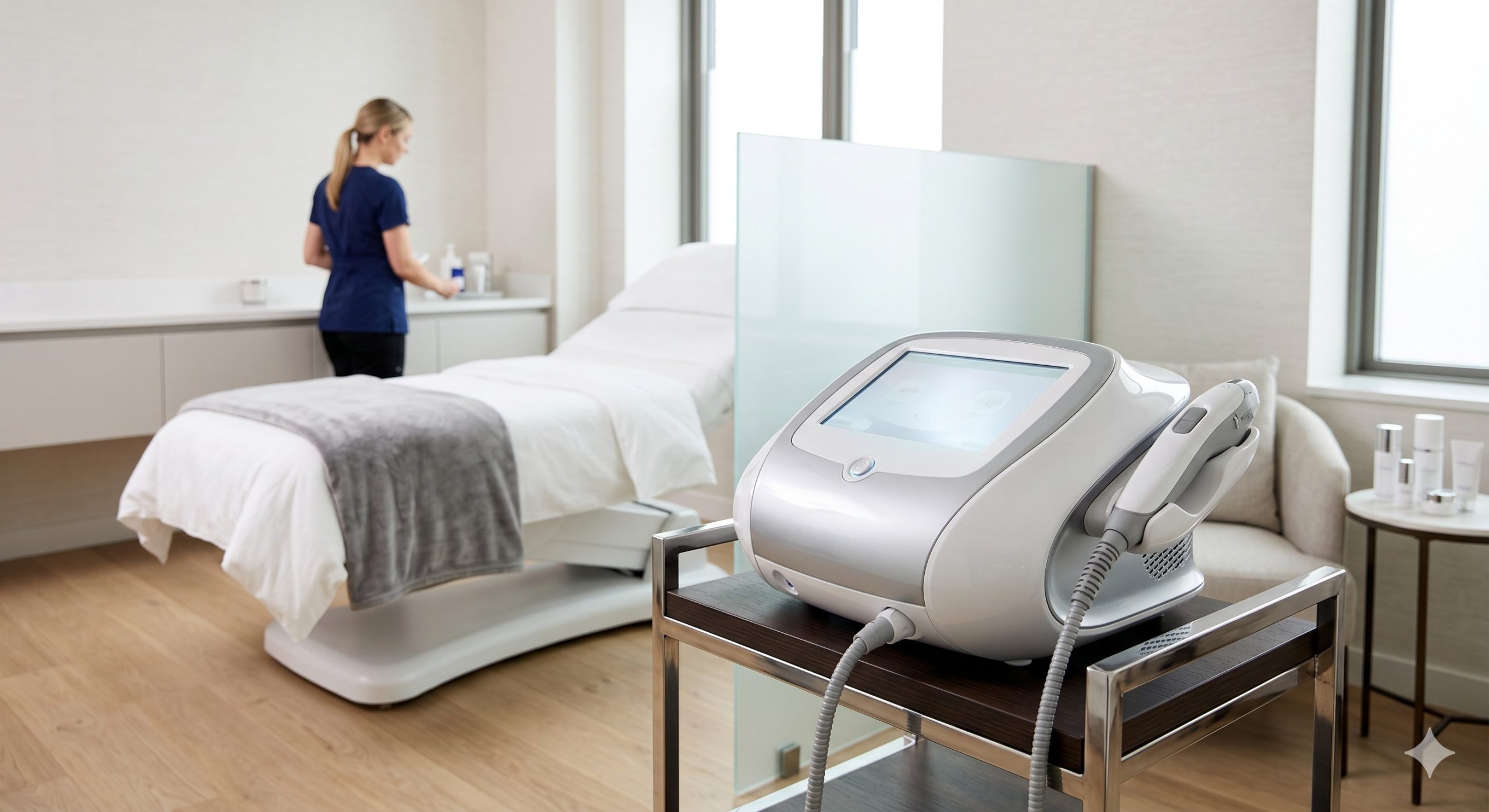
The platform employs a piezoelectric ceramic transducer array housed within a contoured, ergonomic handpiece. The transducer converts electrical oscillation (sinusoidal waveform, swept frequency modulation) into mechanical vibrations with an acoustic intensity output ranging from 0.8 W/cm² to 2.5 W/cm². The system utilizes a burst mode duty cycle (typical 50% – 80%) to prevent thermal accumulation while maximizing cavitation efficiency.
2.2 Epidermal Protection Mechanisms
To safeguard dermal and epidermal layers during ultrasonic energy transmission, the device integrates two primary safety subsystems:
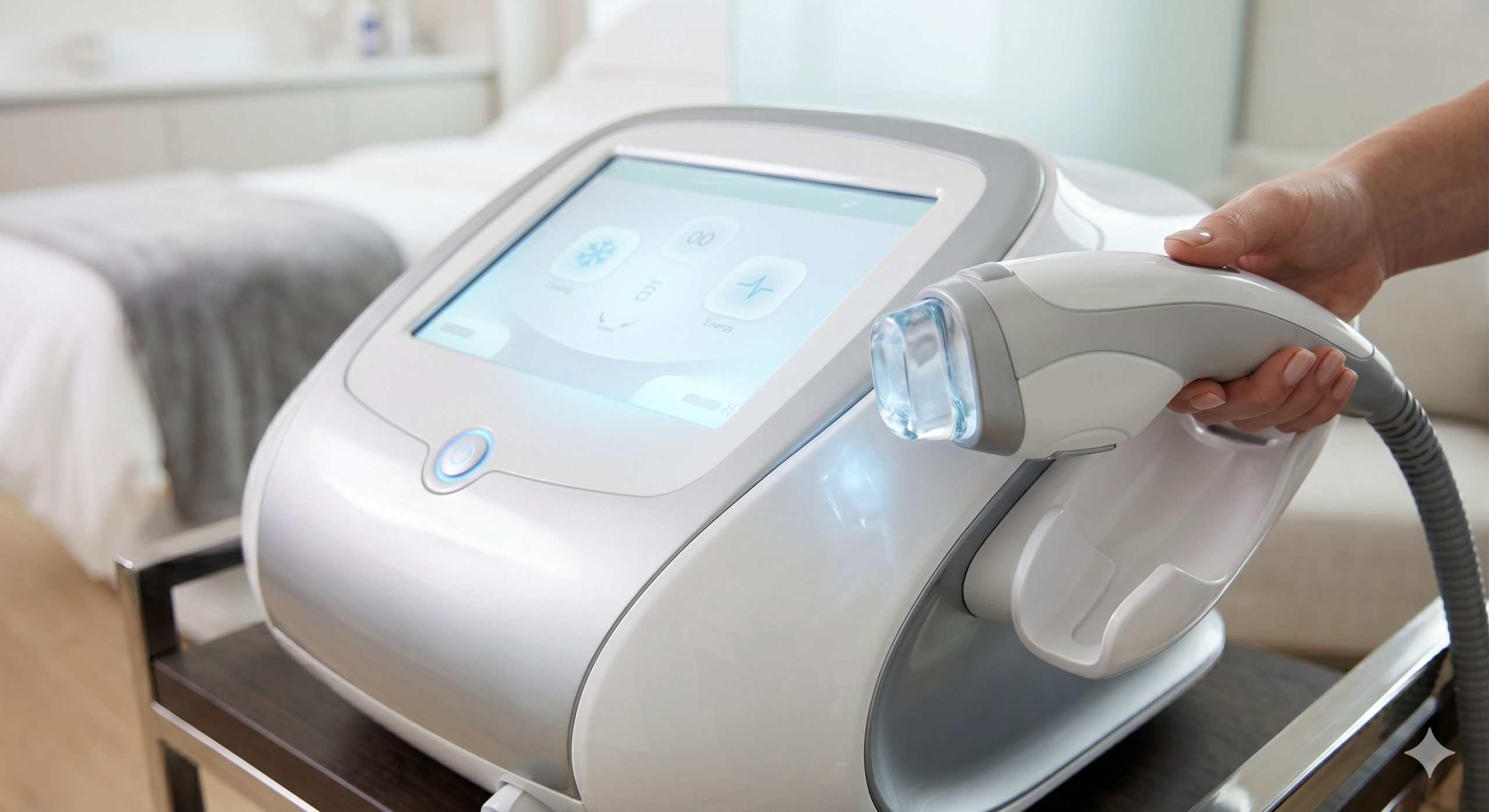
– PASSIVE THERMAL DISSIPATION: The handpiece contains a closed-loop water circulation channel coupled with a 15 mm thick sapphire treatment window that maintains a contact temperature of 15°C – 22°C.
– CONTACT CONDUCTANCE VERIFICATION: A capacitive skin contact sensor interlocks RF emission when insufficient gel interface or improper contact is detected, reducing focal hotspots.
2.3 Synergistic Modalities
Select configurations incorporate concurrent 40 kHz ultrasonic cavitation and 1 MHz – 3 MHz radiofrequency (RF) or vacuum suction (negative pressure: 0.2 – 0.6 bar) to enhance mechanical disruption, collagen remodeling, and lymphatic drainage.
3. KEY INDICATIONS & CAPABILITIES
The device is indicated for use on adult patients with a Body Mass Index (BMI) between 18.5 and 30, presenting with stable body weight and localized fat deposits resistant to diet and exercise. Primary treatment areas include:
– ABDOMINAL REGION (supra- and infra-umbilical)
– FLANKS (“love handles”)
– LATERAL THIGHS AND INNER THIGHS
– SUBGLUTEAL REGION (banana rolls)
– SUPRASCAPULAR FAT PADS (bra fat/back rolls)
– UPPER ARMS (posterior aspect)
Contraindications: Pregnancy, active malignancy, implanted electronic devices (pacemakers), severe hepatic or renal disease, acute thrombophlebitis, and treated areas with recent surgery or mesh implants.
4. COMPLIANCE & STANDARDS
The OEM ultrasonic cavitation system complies with the following international regulatory and safety standards:
– CE MARK (Medical Device Directive 93/42/EEC, Class IIa or IIb)
– FDA 510(k) clearance (where applicable, as a non-significant risk device for body contouring)
– IEC 60601-1 (Medical electrical equipment – General requirements)
– IEC 60601-2-62 (Particular requirements for high-intensity therapeutic ultrasound equipment)
– ISO 13485:2016 (Quality management systems for medical devices)
– ISO 10993 (Biocompatibility of treatment handpiece contact surfaces)
5. TECHNICAL SPECIFICATIONS
2. CLINICAL ARCHITECTURE & DESIGN
2.1 Acoustic Emission Topology
The platform employs a piezoelectric ceramic transducer array housed within a contoured, ergonomic handpiece. The transducer converts electrical oscillation (sinusoidal waveform, swept frequency modulation) into mechanical vibrations with an acoustic intensity output ranging from 0.8 W/cm² to 2.5 W/cm². The system utilizes a burst mode duty cycle (typical 50% – 80%) to prevent thermal accumulation while maximizing cavitation efficiency.
2.2 Epidermal Protection Mechanisms
To safeguard dermal and epidermal layers during ultrasonic energy transmission, the device integrates two primary safety subsystems:
– PASSIVE THERMAL DISSIPATION: The handpiece contains a closed-loop water circulation channel coupled with a 15 mm thick sapphire treatment window that maintains a contact temperature of 15°C – 22°C.
– CONTACT CONDUCTANCE VERIFICATION: A capacitive skin contact sensor interlocks RF emission when insufficient gel interface or improper contact is detected, reducing focal hotspots.
2.3 Synergistic Modalities
Select configurations incorporate concurrent 40 kHz ultrasonic cavitation and 1 MHz – 3 MHz radiofrequency (RF) or vacuum suction (negative pressure: 0.2 – 0.6 bar) to enhance mechanical disruption, collagen remodeling, and lymphatic drainage.
3. KEY INDICATIONS & CAPABILITIES
The device is indicated for use on adult patients with a Body Mass Index (BMI) between 18.5 and 30, presenting with stable body weight and localized fat deposits resistant to diet and exercise. Primary treatment areas include:
– ABDOMINAL REGION (supra- and infra-umbilical)
– FLANKS (“love handles”)
– LATERAL THIGHS AND INNER THIGHS
– SUBGLUTEAL REGION (banana rolls)
– SUPRASCAPULAR FAT PADS (bra fat/back rolls)
– UPPER ARMS (posterior aspect)
Contraindications: Pregnancy, active malignancy, implanted electronic devices (pacemakers), severe hepatic or renal disease, acute thrombophlebitis, and treated areas with recent surgery or mesh implants.
4. COMPLIANCE & STANDARDS
The OEM ultrasonic cavitation system complies with the following international regulatory and safety standards:
– CE MARK (Medical Device Directive 93/42/EEC, Class IIa or IIb)
– FDA 510(k) clearance (where applicable, as a non-significant risk device for body contouring)
– IEC 60601-1 (Medical electrical equipment – General requirements)
– IEC 60601-2-62 (Particular requirements for high-intensity therapeutic ultrasound equipment)
– ISO 13485:2016 (Quality management systems for medical devices)
– ISO 10993 (Biocompatibility of treatment handpiece contact surfaces)
5. TECHNICAL SPECIFICATIONS
6. CLINICAL PROTOCOLS (SUMMARY)
– PRE-TREATMENT: Patient hydration (>1.5 L water 24 hours prior). Baseline circumference measurement and photography. Removal of conductive jewelry.
– TREATMENT PARAMETERS (Standard Adipose Layer 15-35 mm depth): Frequency: 40 kHz; Duty cycle: 70%; Acoustic power: 2.2 W/cm²; Treatment duration: 20-30 minutes per anatomical zone.
– TECHNIQUE: Apply acoustic coupling gel (degassed, ultrasound transmission >0.9 dB/cm/MHz) at 3-5 mm thickness. Perform overlapping circular strokes (5-10 cm diameter) at 3-5 seconds per circle. Maintain perpendicular handpiece orientation. Minimum 6-10 sessions at 72-hour intervals.
– POST-TREATMENT: Manual lymphatic drainage massage for 10 minutes. Recommend aerobic activity (30 minutes) and continued hydration. Expected circumferential reduction per session: 0.5 – 2.0 cm (dependent on individual lymphatic clearance capacity).
 7. WARRANTY & FIELD SERVICE
Standard warranty: 24 months on generator (main console), 12 months on handpiece and transducer (excluding cosmetic wear). Extended service agreements available with biannual calibration verification (acoustic output power and frequency stability test).
7. WARRANTY & FIELD SERVICE
Standard warranty: 24 months on generator (main console), 12 months on handpiece and transducer (excluding cosmetic wear). Extended service agreements available with biannual calibration verification (acoustic output power and frequency stability test).
2. CLINICAL ARCHITECTURE & DESIGN
2.1 Acoustic Emission Topology
The platform employs a piezoelectric ceramic transducer array housed within a contoured, ergonomic handpiece. The transducer converts electrical oscillation (sinusoidal waveform, swept frequency modulation) into mechanical vibrations with an acoustic intensity output ranging from 0.8 W/cm² to 2.5 W/cm². The system utilizes a burst mode duty cycle (typical 50% – 80%) to prevent thermal accumulation while maximizing cavitation efficiency.
2.2 Epidermal Protection Mechanisms
To safeguard dermal and epidermal layers during ultrasonic energy transmission, the device integrates two primary safety subsystems:
– PASSIVE THERMAL DISSIPATION: The handpiece contains a closed-loop water circulation channel coupled with a 15 mm thick sapphire treatment window that maintains a contact temperature of 15°C – 22°C.
– CONTACT CONDUCTANCE VERIFICATION: A capacitive skin contact sensor interlocks RF emission when insufficient gel interface or improper contact is detected, reducing focal hotspots.
2.3 Synergistic Modalities
Select configurations incorporate concurrent 40 kHz ultrasonic cavitation and 1 MHz – 3 MHz radiofrequency (RF) or vacuum suction (negative pressure: 0.2 – 0.6 bar) to enhance mechanical disruption, collagen remodeling, and lymphatic drainage.
3. KEY INDICATIONS & CAPABILITIES
The device is indicated for use on adult patients with a Body Mass Index (BMI) between 18.5 and 30, presenting with stable body weight and localized fat deposits resistant to diet and exercise. Primary treatment areas include:
– ABDOMINAL REGION (supra- and infra-umbilical)
– FLANKS (“love handles”)
– LATERAL THIGHS AND INNER THIGHS
– SUBGLUTEAL REGION (banana rolls)
– SUPRASCAPULAR FAT PADS (bra fat/back rolls)
– UPPER ARMS (posterior aspect)
Contraindications: Pregnancy, active malignancy, implanted electronic devices (pacemakers), severe hepatic or renal disease, acute thrombophlebitis, and treated areas with recent surgery or mesh implants.
4. COMPLIANCE & STANDARDS
The OEM ultrasonic cavitation system complies with the following international regulatory and safety standards:
– CE MARK (Medical Device Directive 93/42/EEC, Class IIa or IIb)
– FDA 510(k) clearance (where applicable, as a non-significant risk device for body contouring)
– IEC 60601-1 (Medical electrical equipment – General requirements)
– IEC 60601-2-62 (Particular requirements for high-intensity therapeutic ultrasound equipment)
– ISO 13485:2016 (Quality management systems for medical devices)
– ISO 10993 (Biocompatibility of treatment handpiece contact surfaces)
5. TECHNICAL SPECIFICATIONS
| Parameter | Specification |
|---|---|
| Ultrasound Frequency (Primary) | 40 kHz ± 5% (swept modulation) |
| Secondary Frequency (If equipped) | 25 kHz or 30 kHz (adipose remodeling mode) |
| Acoustic Intensity (Ispta) | 0.8 – 2.5 W/cm² (adjustable in 0.1 W/cm² increments) |
| Burst Mode Duty Cycle | 50% – 90% (10% incremental steps) |
| Effective Radiating Area (ERA) | 3.5 cm² – 5.0 cm² (contoured sapphire window) |
| Peak Negative Pressure (Mechanical Index) | > 3.0 MPa (cavitation threshold) |
| Electrical Input | 110-240 VAC, 50/60 Hz, 150 VA max |
| Dimensions (Console) | 380 mm (W) x 280 mm (D) x 180 mm (H) |
| Handpiece Weight | 280 g (with integrated cable) |
| Cooling Subsystem | Closed-loop water + TEC module + fan dissipation, 15°C – 22°C contact plate |
| Safety Interlocks | Capacitive skin contact sensor + temperature cut-off at >42°C |
| User Interface | 7-inch capacitive touchscreen with preset treatment zones and session memory |
7. WARRANTY & FIELD SERVICE
Standard warranty: 24 months on generator (main console), 12 months on handpiece and transducer (excluding cosmetic wear). Extended service agreements available with biannual calibration verification (acoustic output power and frequency stability test).
📥 Download Technical Specification
Click the button below to view or download the full official PDF datasheet.
⬇️ Download Official PDF