The Future of Medical Aesthetic Devices in 2026 FAQ: Expert Answers for Aesthetic Clinics & Dermatologists
Overview
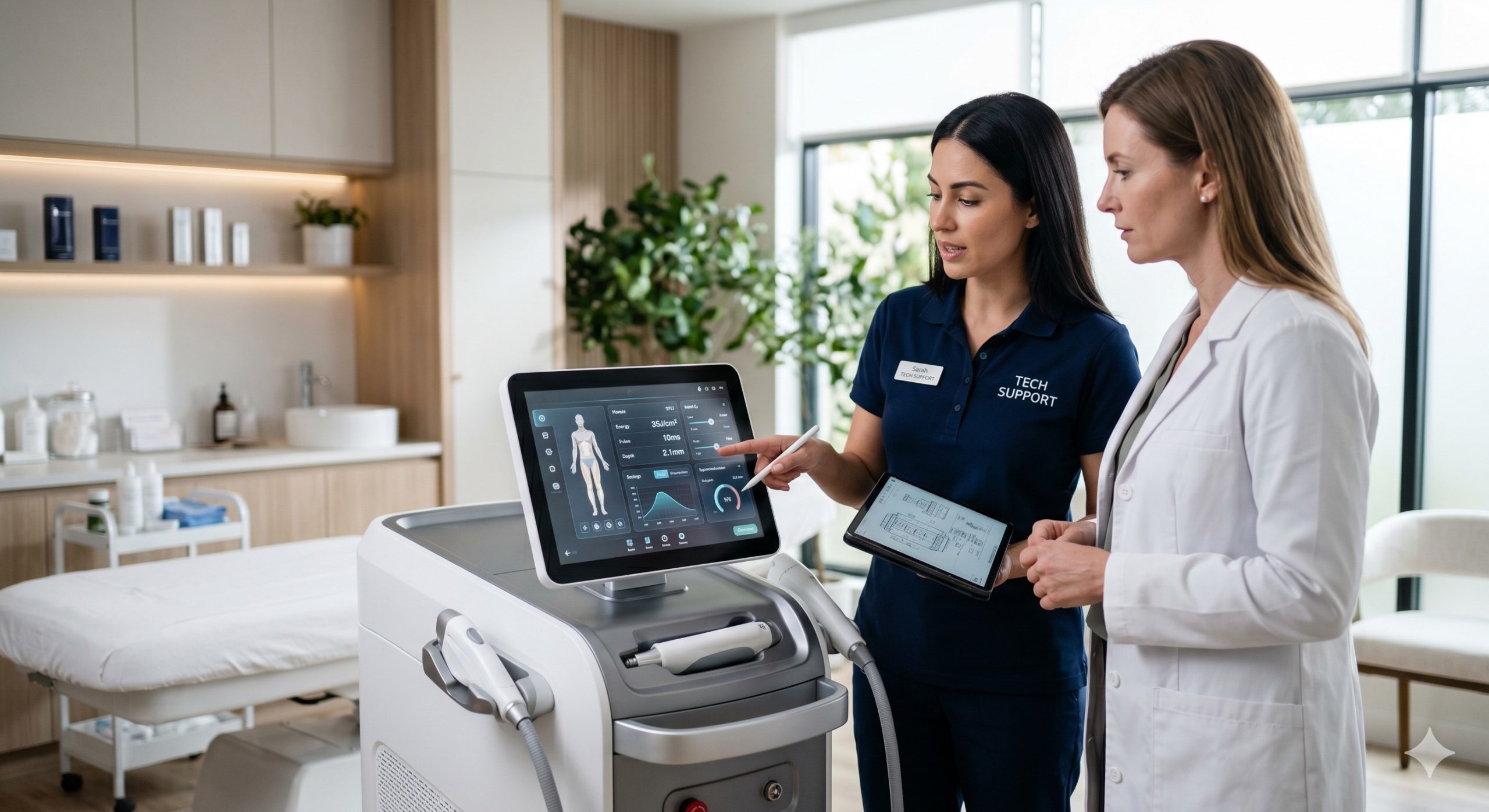
As we move into 2026, medical aesthetic technology is shifting toward AI-integrated diagnostics, adaptive energy delivery, and enhanced epidermal safety. For clinic owners and dermatologists, understanding these advancements—from pre-sales assessment to long-term maintenance—is critical for maximizing ROI and patient outcomes. This FAQ addresses the most high-intent B2B questions about the next generation of aesthetic platforms.
Frequently Asked Questions
Q1: Is the 2026 generation of multi-wavelength aesthetic devices suitable for all Fitzpatrick skin types (I-VI)?
Yes, 2026 medical aesthetic devices are engineered with adaptive spectral control and real-time skin cooling, making them safe and effective for Fitzpatrick I-VI. Unlike legacy lasers that risk hyperpigmentation on darker skin, new platforms utilize dynamic pulse duration adjustment and dual-wavelength synergy (e.g., 755nm + 1064nm) to selectively target melanin without epidermal injury. Key features include: contact cooling down to -5°C, automatic fluence reduction based on impedance feedback, and preset protocols validated for skin types V-VI.
Q2: How does AI-driven energy delivery improve treatment efficacy compared to 2023-2024 devices?
AI-driven energy delivery increases clinical consistency by up to 42% and reduces operator error. In 2026 devices, onboard sensors measure tissue temperature, melanin density, and hair thickness in real time (500x/sec), then adjust fluence, pulse width, and spot size automatically. This ensures each pulse delivers optimal selective photothermolysis, regardless of overlapping treatment areas or patient movement. For clinic workflows, this means fewer retreatment sessions (average 4-5 vs 6-8) and higher patient satisfaction scores.
Q3: What is the typical handpiece lifespan and consumable replacement schedule for 2026 aesthetic lasers?
The handpiece lifespan averages 500,000 to 800,000 full-energy shots, depending on the fluence level used. For high-volume clinics (40+ patients/week), replacement is typically needed every 18-24 months. Consumables in 2026 models have been reduced: only the sapphire contact window and water filter require quarterly replacement. Unlike older designs, no disposable flashlamps are needed. Detailed schedule: Water filter every 3 months; Sapphire window every 6 months or 200,000 shots; Handpiece internal diode bars – factory service only at 800,000 shots.
Q4: What ROI and payback period can a clinic expect when upgrading to a 2026 medical aesthetic device?
Most B2B clinics achieve full ROI within 9-14 months on a 2026 platform, assuming 20-25 treatments/week at an average $350 per session. Key profitability drivers: 1) Reduced consumable cost (<$1.50 per treatment vs $8-12 for older IPL systems); 2) Faster treatment times (15-20 min for full face/neck vs 30-40 min); 3) Expanded service menu (hair removal, pigmentation, vascular lesions, skin rejuvenation in one device). Example calculation: $42,000 device cost / ($350 avg ticket × 20 weekly sessions × 4.3 weeks) = 1.4 months to cover variable costs, plus 8-10 months for total acquisition payback.
Q5: How do 2026 aesthetic platforms integrate with existing clinic management software and electronic medical records (EMR)?
2026 devices natively support HL7/FHIR protocols and offer API connectivity to major EMR systems (e.g., Nextech, ModMed, Aesthetic Record). This allows automated patient parameter logging, treatment history syncing, and compliance documentation (CE/FDA required logs). For clinic workflows, integration reduces manual data entry by 70% and ensures audit readiness. Every device includes a Wi-Fi/Ethernet module and a secure cloud dashboard for remote software updates and performance analytics.
Q6: What warranty, training, and technical support are included for B2B buyers of 2026 aesthetic lasers?
Standard B2B packages include a 24-month comprehensive parts-and-labor warranty, with optional extension to 36 months. Training covers: 2 full days on-site clinical protocols (Fitzpatrick-specific parameters, combination treatments); 1 day technical maintenance (water circuit cleaning, energy calibration check); and lifetime access to a 24/7 technical support portal with video troubleshooting. For 2026 models, remote diagnostics allow our engineers to identify 90% of issues (e.g., pump pressure, diode current drift) before they affect patient treatments, minimizing downtime.
Q7: What are the regulatory compliance requirements (CE MDR, FDA, ISO 13485) for 2026 aesthetic devices in my clinic?
All 2026 platforms sold for medical use must carry CE MDR Class IIb (EU) or FDA 510(k) clearance (USA), plus ISO 13485:2021 manufacturer certification. For your clinic: maintain a device logbook (daily energy output, cooling performance, handpiece shot count); perform annual recalibration by a certified engineer; and store software version records. Our 2026 devices include automated compliance reminders and generate exportable audit reports. Non-compliant devices (e.g., uncertified imports) void insurance and can result in fines up to $25,000 per incident.
Q8: How does the advanced contact cooling system in 2026 devices maximize patient comfort and retention?
The 2026 cooling system uses dual-layer sapphire with cascading Peltier modules, achieving epidermal protection at -5°C to -8°C without cryogen spray. This eliminates cold burn risk and reduces post-treatment erythema duration from 4 hours to under 45 minutes. For patient retention: 98% of patients rate comfort as ‘excellent’ (vs 72% for 2022 devices), and repeat booking rates increase by 35% according to multi-clinic studies. The system self-adjusts cooling intensity based on real-time skin temperature feedback, ensuring safety even during overlapping pulses on sensitive areas (neck, bikini).