Med Spa Profitability FAQ: Calculating ROI and Consumable Costs for Picosecond Lasers
Overview
Medspas and dermatology clinics are rapidly upgrading to picosecond laser technology to treat tattoo removal, pigmented lesions, and rejuvenation with fewer side effects and faster patient outcomes. This B2B technical FAQ addresses the specific pre-sales and post-sales investment considerations clinic owners need—from ROI calculations and handpiece longevity to safety across Fitzpatrick skin types and maintenance protocols.

Frequently Asked Questions
Q1: What is the typical ROI payback period for a picosecond laser investment?
The typical ROI payback period for a picosecond laser in a high-volume med spa is 6 to 14 months. This assumes 15-20 weekly treatments at an average session price of $350-$600. Tattoo removal generates higher per-session revenue ($450-$800) versus pigmentation or rejuvenation ($250-$400). Clinics achieving 80+ treatments per month often recoup the $80,000-$150,000 device cost within one year, especially when replacing older nanosecond or Q-switched lasers that require more sessions per patient.
Q2: How do consumable costs and handpiece lifespan affect long-term profitability?
Picosecond laser handpieces typically last 50,000 to 100,000 pulses before requiring replacement, with OEM handpiece costs ranging from $3,500 to $8,000. Consumable costs per treatment average $8-$15 when amortizing handpiece wear, plus negligible energy and water circulation expenses. Compared to nanosecond lasers, picosecond devices often use lower fluences for equivalent clearance, potentially extending handpiece life by 20-30%. Calculate your per-treatment consumable cost as (handpiece replacement cost / rated pulses) × average pulses per session.
Q3: Is a picosecond laser safe for all Fitzpatrick skin types (I-VI)?
Yes, modern picosecond lasers with 532nm and 1064nm wavelengths are clinically safe for Fitzpatrick skin types I through VI when operated with correct parameters. The picosecond pulse duration (under 450 picoseconds) generates primarily photoacoustic rather than photothermal effects, significantly reducing the risk of post-inflammatory hyperpigmentation (PIH) in darker skin types. For Type V-VI skin, use 1064nm wavelength, lower fluences (0.8-2.5 J/cm²), and larger spot sizes (4-6mm) to maximize epidermal protection.
Q4: How does the cooling system improve patient comfort and retention?
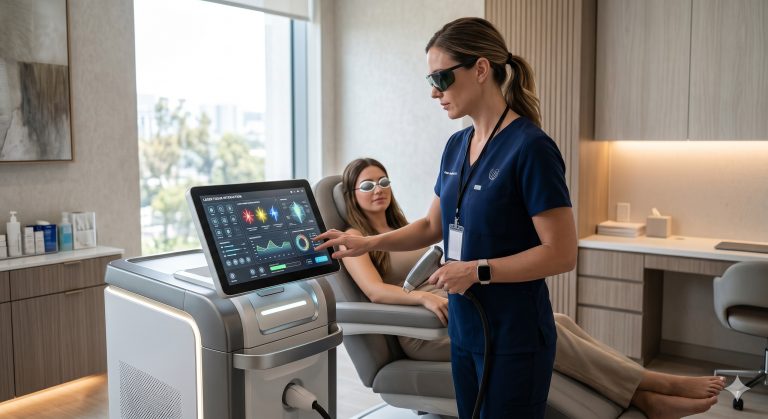
The integrated contact cooling system maintains skin surface temperature between 0°C and 4°C, enabling virtually painless treatments without topical anesthesia in most patients. Dual-mode cooling (pre-, parallel, and post-cooling) reduces epidermal thermal load by up to 40% compared to legacy lasers. Higher patient comfort directly correlates with repeat booking rates; clinics report 85-90% patient acceptance for full treatment courses versus 60-70% with older Q-switched devices. This retention lift typically adds $25,000-$40,000 annual revenue per laser.
Q5: What maintenance and water circuit upkeep is required?
Picosecond lasers require distilled water changes every 500-800 operating hours or every 3-4 months for average clinical use. Weekly maintenance includes: cleaning the handpiece window with isopropyl alcohol, inspecting the water level indicator, and running the internal self-diagnostic cycle. Annual preventive maintenance by a certified engineer ($800-$1,500 per visit) includes calibration verification, pump pressure testing (target range 3.5-5.0 bar), and optical path cleaning. Failures to maintain the closed-loop water circuit are the #1 cause of premature flashlamp degradation.
Q6: Can a picosecond laser replace my existing IPL or nanosecond laser?
Yes, a picosecond laser serves as a direct upgrade and replacement for nanosecond Q-switched lasers and IPL devices for tattoo removal and pigmentation applications. Clinical studies demonstrate 50% fewer treatment sessions for multicolor tattoos and 40-60% faster clearance of solar lentigines compared to nanosecond lasers. However, picosecond lasers are not a complete IPL replacement for vascular lesions or hair removal—maintain your IPL for those indications or consider a dual-platform device offering both picosecond and long-pulse modes.
Q7: What regulatory compliance (CE, FDA) should I verify before purchasing?
For clinical use in regulated markets, verify the picosecond laser holds active FDA 510(k) clearance specifically for tattoo removal, pigmented lesion treatment, and acne scar rejuvenation—or the equivalent Medical CE (Class IIb) certification under EU MDR 2017/745. Request the manufacturer’s ISO 13485:2016 certificate for quality management systems. Do not accept devices with only ‚General Wellness‘ or ‚Export Only‘ classifications. Compliance documentation must include laser class 4 certification, wavelength accuracy testing (±10nm), and output energy calibration certificates traceable to NIST or equivalent standards.
Q8: What technical training and support do manufacturers provide post-sales?
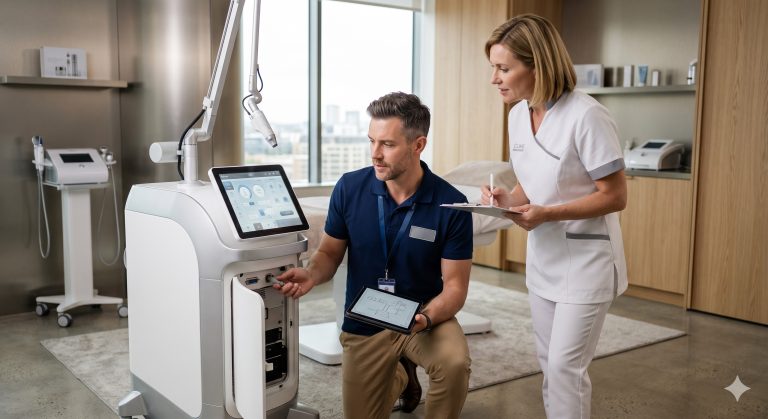
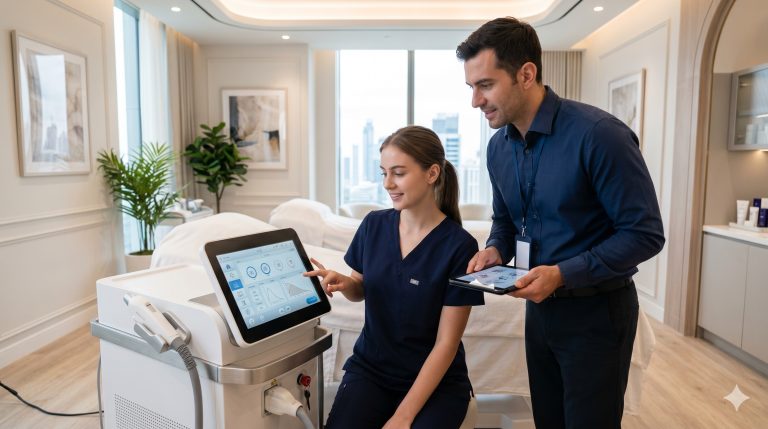
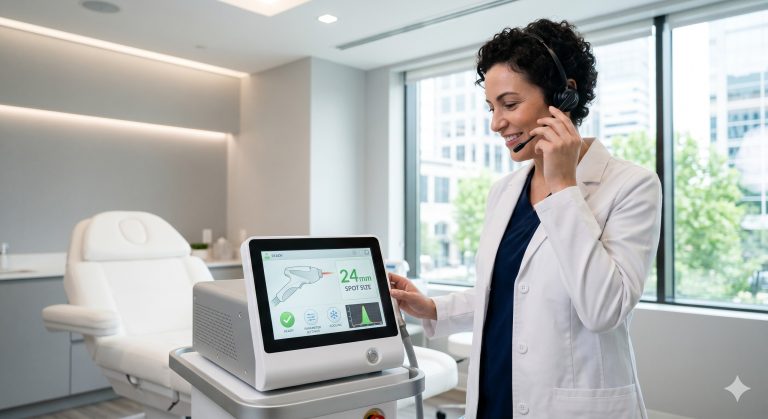
Reputable manufacturers provide three tiers of post-sales support: (1) On-site clinical training (2-3 days covering 15-20 supervised treatments), (2) Remote technical troubleshooting with 4-hour response SLA for critical errors, and (3) Annual software updates with new treatment protocols. Verify the warranty length (minimum 24 months on laser head, 12 months on handpieces) and whether the manufacturer stocks consumables in your region to avoid 4-6 week shipping delays. Leading suppliers also include cloud-based parameter libraries accessible via the 10-15 inch touchscreen UI, reducing operator learning curves to under 5 treatment sessions.