
Insulated Needle RF Device – Clinical Architecture & Performance Reference Manual
CLINICAL ARCHITECTURE & PERFORMANCE REFERENCE MANUAL: INSULATED NEEDLE RF DEVICE
EXECUTIVE SUMMARY
The Insulated Needle RF Device represents a paradigm shift in fractional radiofrequency (RF) energy delivery for dermatological and aesthetic indications. Unlike conventional non-insulated microneedles, this proprietary platform integrates precision-depth epidermal protection with volumetric dermal coagulation. The device operates by deploying ultra-fine, gold-coated or 316L surgical-grade needles coated with a high-dielectric insulation layer, exposing only the distal tip. RF current is therefore confined to the targeted dermal or subdermal tissue layers, eliminating epidermal collateral thermal injury. This clinical reference manual details the system architecture, treatment parameters, safety compliance, and operational specifications for procurement and clinical integration.
 CLINICAL ARCHITECTURE & DESIGN
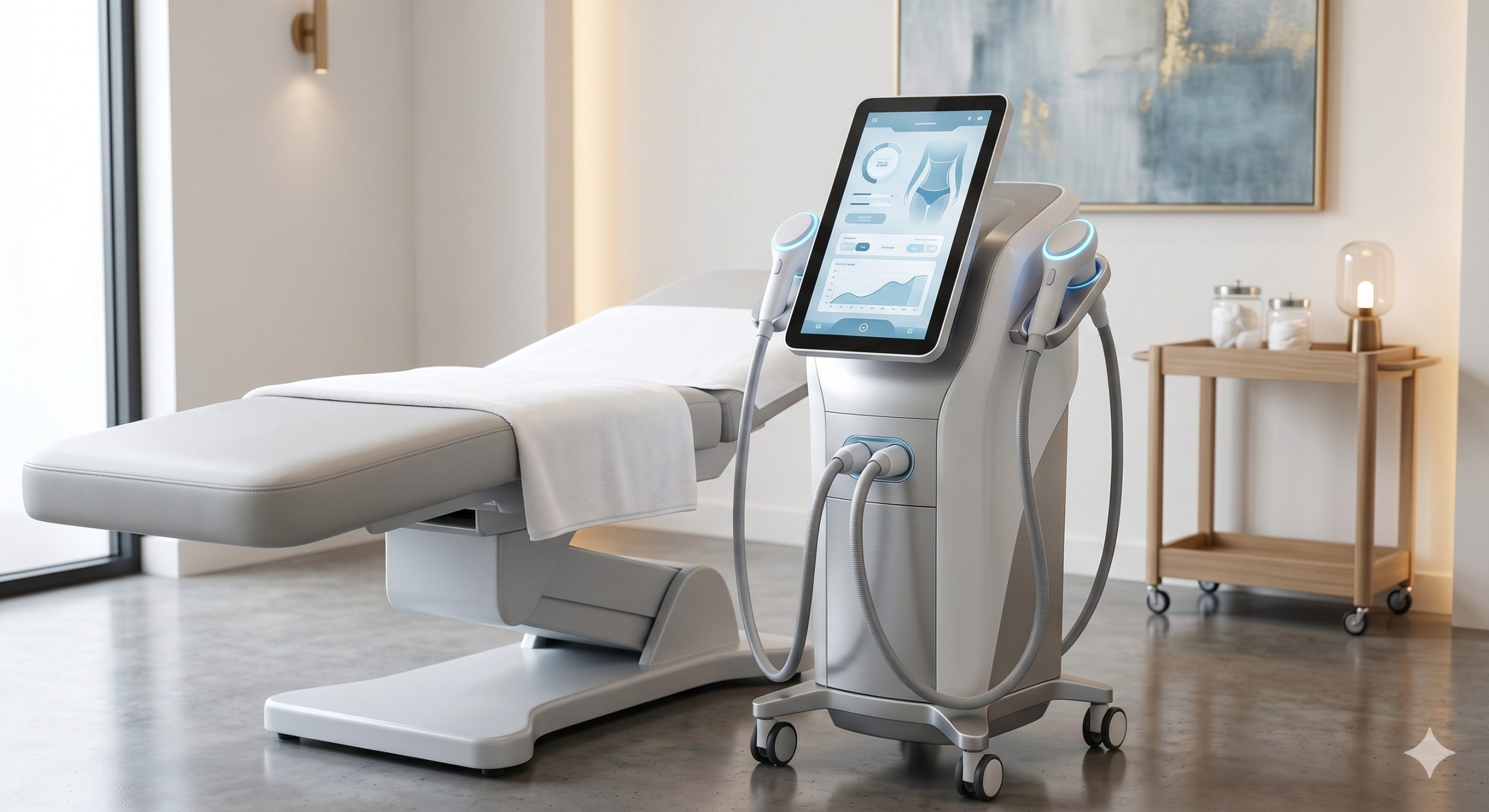
The system comprises a main RF generator console, a detachable multi-pin handpiece, and single-use sterile cartridge arrays. The generator delivers monopolar or bipolar RF waveforms (configurable by model) at frequencies ranging from 0.5 MHz to 2.0 MHz. Key engineering differentiators include:
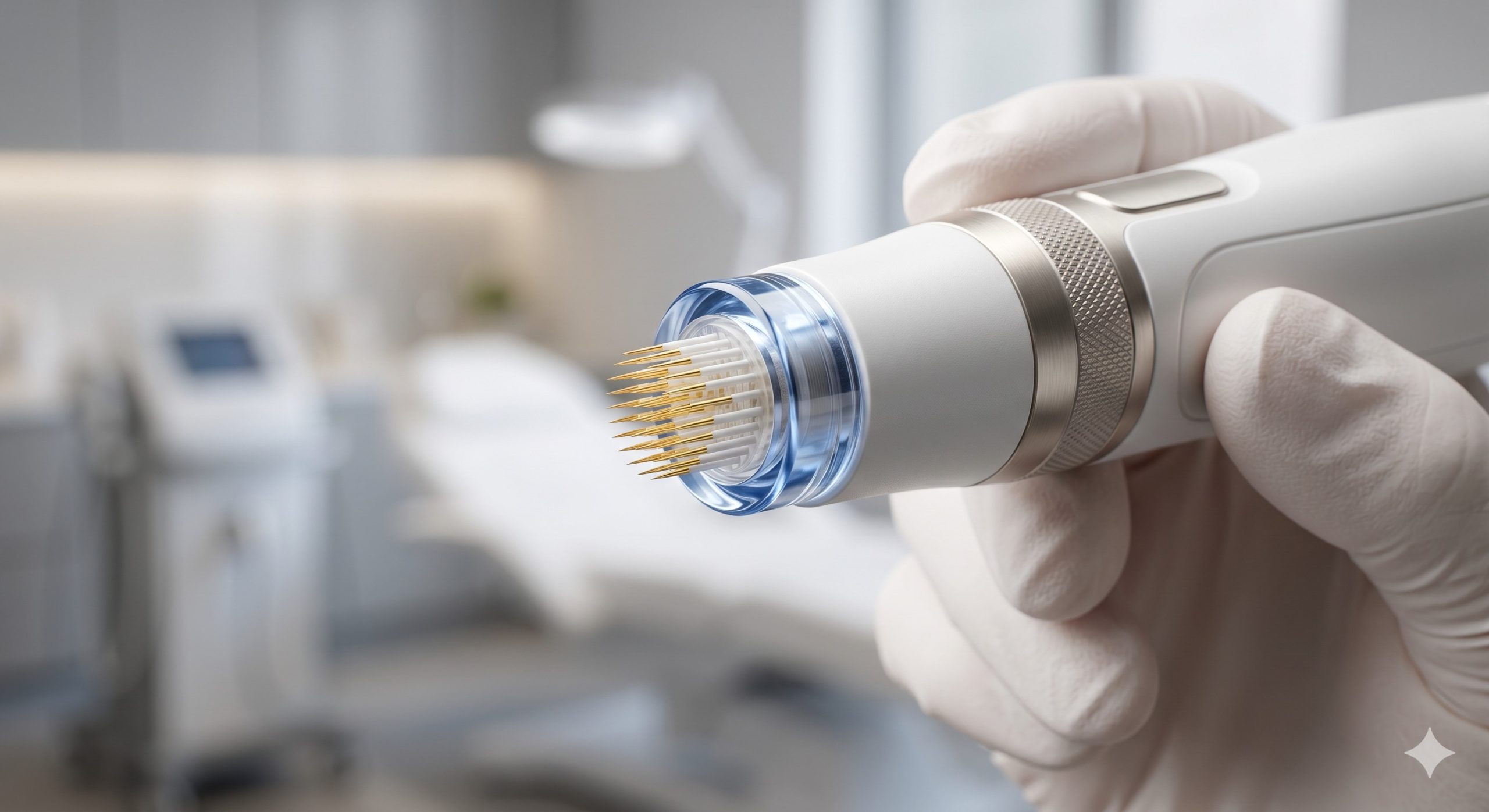
– INSULATION LAYER: Parylene or PTFE coating (thickness 5-15 µm) along the needle shaft, with impedance >1 MOhm, ensuring zero energy leakage through epidermis.
– EXPOSED TIP LENGTH: Adjustable from 0.3 mm to 3.0 mm, allowing precise targeting of superficial dermis, deep dermis, or fibroseptal layers.
– PENETRATION DEPTH: Mechanically adjustable via handpiece stopper (0.5 mm to 5.0 mm total insertion).
– RF WAVEFORM: Pure pulsed or continuous sinusoidal output with real-time impedance feedback monitoring (1 kHz sampling rate).
KEY INDICATIONS & CAPABILITIES
Class I (clearance-based) and Class II (thermal remodeling) applications include:
– Atrophic acne scars (rolling, boxcar, icepick subtypes)
– Enlarged facial pores and seborrheic skin
– Periorbital and general facial rhytides
– Axillary, palmar, and plantar hyperhidrosis (off-label or regional clearance)
– Striae distensae (alba and rubra)
– Lax skin on the neck, submentum, and abdomen
The insulated architecture permits aggressive RF fluences (up to 40 W per pulse) without post-treatment epidermal crusting or prolonged social downtime. Typical recovery: erythema and micro-crusts resolve within 24-72 hours, versus 5-7 days for non-insulated equivalents.
COMPLIANCE & STANDARDS
– Medical Device Class: IIa (EU MDR 2017/745) or II (US FDA 510(k) clearance pathway)
– Electrical Safety: IEC 60601-1, IEC 60601-2-2 (RF electrosurgical equipment)
– Biocompatibility: ISO 10993-5 (cytotoxicity), ISO 10993-10 (irritation/sensitization) on needle and insulation material
– Electromagnetic Compatibility: IEC 60601-1-2
– Sterility: EO gas or gamma irradiation (SAL 10^-6) for single-use cartridges
CLINICAL ARCHITECTURE & DESIGN
The system comprises a main RF generator console, a detachable multi-pin handpiece, and single-use sterile cartridge arrays. The generator delivers monopolar or bipolar RF waveforms (configurable by model) at frequencies ranging from 0.5 MHz to 2.0 MHz. Key engineering differentiators include:
– INSULATION LAYER: Parylene or PTFE coating (thickness 5-15 µm) along the needle shaft, with impedance >1 MOhm, ensuring zero energy leakage through epidermis.
– EXPOSED TIP LENGTH: Adjustable from 0.3 mm to 3.0 mm, allowing precise targeting of superficial dermis, deep dermis, or fibroseptal layers.
– PENETRATION DEPTH: Mechanically adjustable via handpiece stopper (0.5 mm to 5.0 mm total insertion).
– RF WAVEFORM: Pure pulsed or continuous sinusoidal output with real-time impedance feedback monitoring (1 kHz sampling rate).
KEY INDICATIONS & CAPABILITIES
Class I (clearance-based) and Class II (thermal remodeling) applications include:
– Atrophic acne scars (rolling, boxcar, icepick subtypes)
– Enlarged facial pores and seborrheic skin
– Periorbital and general facial rhytides
– Axillary, palmar, and plantar hyperhidrosis (off-label or regional clearance)
– Striae distensae (alba and rubra)
– Lax skin on the neck, submentum, and abdomen
The insulated architecture permits aggressive RF fluences (up to 40 W per pulse) without post-treatment epidermal crusting or prolonged social downtime. Typical recovery: erythema and micro-crusts resolve within 24-72 hours, versus 5-7 days for non-insulated equivalents.
COMPLIANCE & STANDARDS
– Medical Device Class: IIa (EU MDR 2017/745) or II (US FDA 510(k) clearance pathway)
– Electrical Safety: IEC 60601-1, IEC 60601-2-2 (RF electrosurgical equipment)
– Biocompatibility: ISO 10993-5 (cytotoxicity), ISO 10993-10 (irritation/sensitization) on needle and insulation material
– Electromagnetic Compatibility: IEC 60601-1-2
– Sterility: EO gas or gamma irradiation (SAL 10^-6) for single-use cartridges
CLINICAL PROTOCOLS
Standard operating parameters for three primary indications:
– ACNE SCARS (FACIAL): Needle gauge 32G, tip exposure 1.5-2.0 mm, RF power 18-22 W, pulse duration 80-100 ms, single pass with 10-15% overlap. 3 sessions at 6-week intervals.
– SKIN LAXITY (NECK): 31G, exposure 2.5-3.0 mm, 25-30 W, 120-150 ms, 2 passes orthogonal. 2-3 sessions at 8-week intervals.
– HYPERHIDROSIS (AXILLARY): 30G, exposure 3.0-3.5 mm, 28-32 W, 150-200 ms, grid pattern with 5 mm spacing. 1-2 sessions, retreatment at 12 months if needed.
Safety notes: Topical anesthesia recommended (30-45 min prior). Do not activate RF while needles are in motion. Always verify skin impedance between 100-500 Ohms before pulse delivery. Treatment endpoint: mild erythema and pinpoint bleeding (scattered) over treated zones.
CLINICAL ARCHITECTURE & DESIGN
The system comprises a main RF generator console, a detachable multi-pin handpiece, and single-use sterile cartridge arrays. The generator delivers monopolar or bipolar RF waveforms (configurable by model) at frequencies ranging from 0.5 MHz to 2.0 MHz. Key engineering differentiators include:
– INSULATION LAYER: Parylene or PTFE coating (thickness 5-15 µm) along the needle shaft, with impedance >1 MOhm, ensuring zero energy leakage through epidermis.
– EXPOSED TIP LENGTH: Adjustable from 0.3 mm to 3.0 mm, allowing precise targeting of superficial dermis, deep dermis, or fibroseptal layers.
– PENETRATION DEPTH: Mechanically adjustable via handpiece stopper (0.5 mm to 5.0 mm total insertion).
– RF WAVEFORM: Pure pulsed or continuous sinusoidal output with real-time impedance feedback monitoring (1 kHz sampling rate).
KEY INDICATIONS & CAPABILITIES
Class I (clearance-based) and Class II (thermal remodeling) applications include:
– Atrophic acne scars (rolling, boxcar, icepick subtypes)
– Enlarged facial pores and seborrheic skin
– Periorbital and general facial rhytides
– Axillary, palmar, and plantar hyperhidrosis (off-label or regional clearance)
– Striae distensae (alba and rubra)
– Lax skin on the neck, submentum, and abdomen
The insulated architecture permits aggressive RF fluences (up to 40 W per pulse) without post-treatment epidermal crusting or prolonged social downtime. Typical recovery: erythema and micro-crusts resolve within 24-72 hours, versus 5-7 days for non-insulated equivalents.
COMPLIANCE & STANDARDS
– Medical Device Class: IIa (EU MDR 2017/745) or II (US FDA 510(k) clearance pathway)
– Electrical Safety: IEC 60601-1, IEC 60601-2-2 (RF electrosurgical equipment)
– Biocompatibility: ISO 10993-5 (cytotoxicity), ISO 10993-10 (irritation/sensitization) on needle and insulation material
– Electromagnetic Compatibility: IEC 60601-1-2
– Sterility: EO gas or gamma irradiation (SAL 10^-6) for single-use cartridges
| Parameter | Specification |
|---|---|
| RF Frequency | 0.5 MHz / 1.0 MHz / 2.0 MHz (selectable) |
| Max Output Power | 40 W (peak), 25 W average |
| Needle Material | 316L Surgical Stainless Steel + Gold coating |
| Insulation Coating | Parylene or PTFE, thickness 10 ± 5 µm |
| Needle Gauge Range | 30G, 31G, 32G (cartridge dependent) |
| Adjustable Tip Exposure | 0.3 mm to 3.0 mm (0.1 mm increments) |
| Penetration Depth Range | 0.5 mm to 5.0 mm |
| Array Configurations | 5×5 (25 pins), 6×6 (36 pins), or 7×7 (49 pins) |
| Pulse Duration | 10 ms to 500 ms (1 ms steps) |
| Impedance Monitoring | Real-time, 50-1500 Ohm range |
| Cooling System | Forced air + sapphire window TEC (0°C to 4°C) |
| Display | 10.1-inch capacitive touchscreen, 1280×800 |
| Power Supply | 100-240V AC, 50/60 Hz, 350 VA |
| Dimensions (Console) | 320 mm (W) x 430 mm (D) x 280 mm (H) |
| Weight | 12.5 kg (console only) |
📥 Download Technical Specification
Click the button below to view or download the full official PDF datasheet.
⬇️ Download Official PDF