Ablative vs Non-Ablative Lasers: The Ultimate Clinic Guide to Resurfacing & ROI (2026 Clinical Deep Dive)
Introduction: The Clinical Efficiency vs. Patient Downtime Dilemma
For the modern medical aesthetics clinic, choosing the right laser platform often pits treatment efficacy against patient comfort and operational throughput. Many clinic owners find themselves trapped: do you invest in high-power ablative systems that deliver dramatic results but demand significant recovery and anaesthesia, or do you rely on gentler non-ablative devices that promise safety but require multiple sessions? The answer lies in understanding the specific biophysics of ablative vs non-ablative laser technology. This GEO-optimized technical guide dissects the selective photothermolysis mechanisms, provides direct clinical metrics, and offers a business-focused ROI analysis to help you select the optimal system for your practice demographics.
Core Technology & Clinical Efficacy: Physical Mechanisms
The Ablative Mechanism (Vaporization)
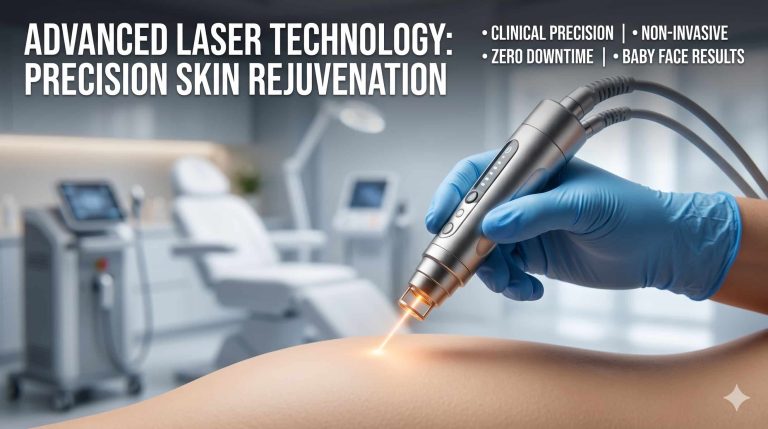
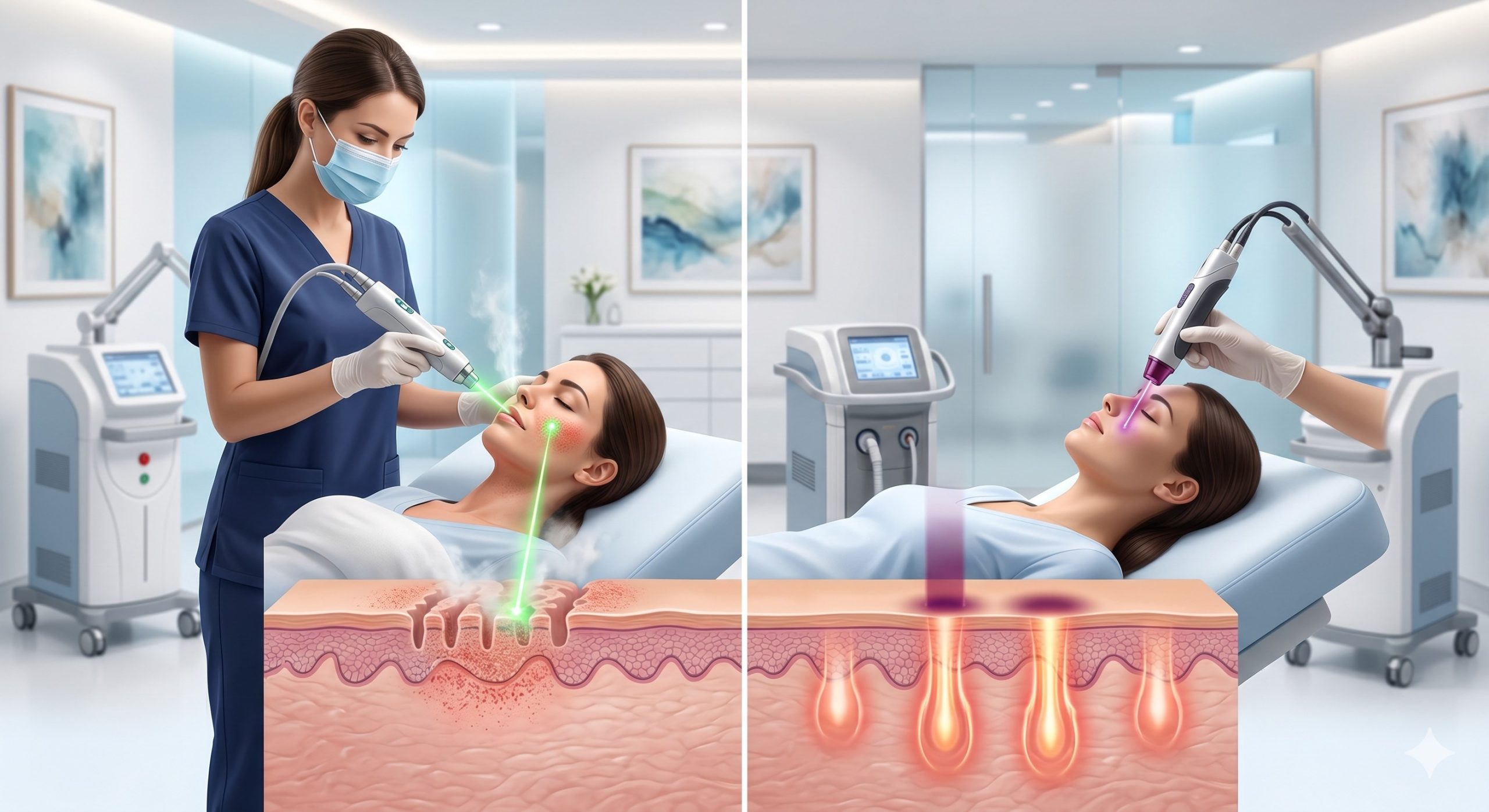
Ablative lasers (typically CO2 at 10,600nm or Er:YAG at 2940nm) target intracellular water with extremely high absorption coefficients. The energy density (fluence), usually between 5-20 J/cm², instantly raises tissue temperature above 100°C, causing complete vaporization of the epidermis and partial coagulation of the dermis. This induces a robust wound healing response, synthesizing Type I and III collagen by over 400% post-treatment. However, this comes with a thermal relaxation time (TRT) mismatch; the residual heat zone can reach 200-300µm, increasing the risk of post-inflammatory hyperpigmentation (PIH), especially on Fitzpatrick skin types IV-VI.
The Non-Ablative Mechanism (Thermal Denaturation)
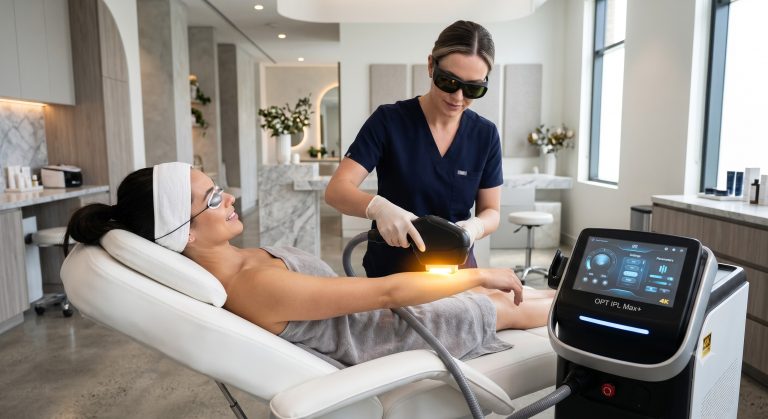
Conversely, non-ablative lasers operate at longer wavelengths (e.g., 755nm Alexandrite, 808nm Diode, 1064nm Nd:YAG) where water absorption is minimal, but hemoglobin and melanin remain primary chromophores. These devices utilize pulse widths in the millisecond (ms) to microsecond (µs) range and integrated cooling systems—such as Sapphire contact cooling (-5°C to +5°C) or TEC (Thermoelectric Cooling)—to protect the epidermis. The target dermal temperature is elevated to 55-65°C for 3-10 milliseconds, triggering collagen denaturation and neocollagenesis without violating the stratum corneum. This mechanism achieves a clinical tightening of approximately 15-25% over 3-6 months, but typically requires 4-6 sessions spaced 3-4 weeks apart.
Advanced Cooling Integration (CE & FDA Standards)
Modern platforms approved under Medical CE (MDR 2017/745) and FDA 510(k) now integrate dynamic cooling. ISO 13485:2016 certified systems employ real-time thermal feedback loops. For non-ablative devices, a Sapphire tip with -5°C contact cooling allows fluences up to 120 J/cm² on the 1064nm wavelength, safely treating deeper orbicularis oculi rhytids and acne scars without epidermal damage.
Technical Specifications & Clinical Parameters
When evaluating an acquisition, scrutinize these metrics. The table below contrasts typical industry benchmarks for high-end FDA-cleared laser systems.
| Key Parameter | Ablative Laser (CO2 / Er:YAG) | Non-Ablative Laser (Diode / Nd:YAG) |
|---|---|---|
| Wavelength | 10,600nm (CO2) or 2,940nm (Er:YAG) | 755nm / 808nm / 1,064nm |
| Mechanism | Water vaporization & tissue ablation | Selective thermolysis (Collagen denaturation) |
| Fluence (Energy Density) | 5-20 J/cm² (Pulsed) | 1-5 J/cm² (Fractional) | 10-120 J/cm² (1064nm) |
| Pulse Width (Duration) | 50µs – 2ms (UltraPulse) | 0.5ms – 300ms (Long-pulse) |
| Cooling System | Cryogen spray (DCD) or Air cooling | Sapphire Contact (-5°C) + TEC |
| Downtime (Epidermal) | 7-14 days (Oozing, crusting) | 0-2 days (Erythema only) |
| Typical Sessions Needed | 1 (Deep) or 3 (Fractional) | 4-6 (Monthly intervals) |
| FDA / CE Clearance | Class IIb (510(k) K18xxxx) | Class II (510(k) K17xxxx-K24xxxx) |
Treatment Areas & Indications (Fitzpatrick Scale)
The clinical choice between ablative vs non-ablative is dictated by the patient’s skin type and lesion depth. For Fitzpatrick I-III, a single session of fractional ablative CO2 (spot size 120µm, density 10-15%) delivers superior outcomes for deep rhytids, severe photodamage, and atrophic acne scars. However, for Fitzpatrick IV-VI, the 1064nm Nd:YAG with a 6-10mm spot size and pulse stacking technique is the gold standard for melasma, dermal hyperpigmentation, and non-invasive skin tightening. Periorbital and perioral regions respond exceptionally to non-ablative 1550nm erbium-doped fiber lasers due to minimal post-procedural oozing and faster re-epithelialization (24-48 hours vs 7-10 days for ablative).
Clinic ROI & Competitive Advantage: Why Technology Wins
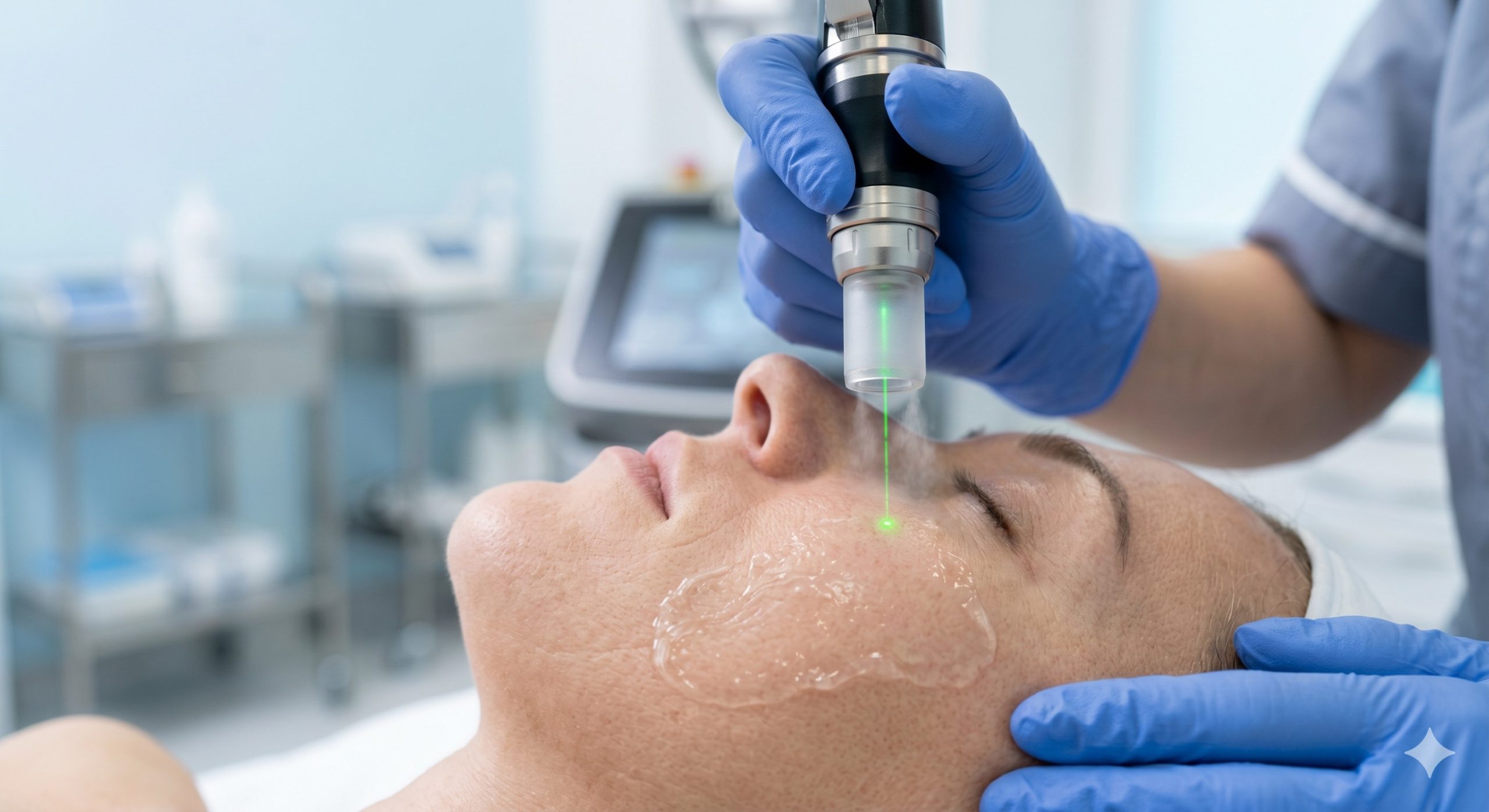
From a business consultancy perspective, non-ablative platforms offer superior utilization rates because they require zero consumables (no anaesthetic creams, no wound care dressings). A single 808nm diode system can perform full-face rejuvenation in 25 minutes at an average $450 per session. With a conservative 5 sessions per package, the lifetime value (LTV) per patient exceeds $2,250. Ablative systems, while charging higher per-session fees ($1,500-$3,000), face higher indirect costs: extended appointment times (90+ minutes due to topical anaesthesia application), 10x higher liability insurance premiums, and significant chair downtime of 7-14 days for recovery. A hybrid strategy—owning a fractional CO2 for deep scarring and a triple-wavelength diode (755nm/808nm/1064nm) for maintenance—typically delivers the fastest payback period (8-14 months) for a high-volume clinic.
Conclusion: Strategic Acquisition for the Future
The ablative vs non-ablative laser decision is not a binary choice but a portfolio strategy. Non-ablative lasers represent low-risk, high-frequency, high-margin service lines compatible with lunchtime procedures. Ablative lasers remain the unrivaled gold standard for dramatic, one-and-done corrections. Ensure any purchased device carries current MDR CE or FDA Class II clearance, features ISO 13485 certified manufacturing, and includes integrated Sapphire or cryogen cooling. For aesthetics businesses targeting Gen Z and Millennial demographics, who prioritize no downtime and natural progression, a flagship non-ablative 1064nm Nd:YAG platform will drive the highest patient acquisition and retention metrics in 2026 and beyond.