1550nm Fractional Laser: The Ultimate Clinic Guide to ROI, Efficacy & Technical Specs (2026 Deep Dive)
Introduction: Overcoming Clinical Inefficiency and Patient Downtime
For the modern aesthetics clinic, balancing treatment efficacy with patient comfort and minimal downtime remains a persistent challenge. Legacy resurfacing lasers (e.g., 10600nm CO2, 2940nm Er:YAG) often yield impressive results but carry extended recovery periods and higher risks of post-inflammatory hyperpigmentation (PIH), particularly for patients with Fitzpatrick Skin Types III-VI. Conversely, non-fractional rejuvenation devices often lack the depth and energy required for significant dermal remodeling. The 1550nm fractional laser has emerged as the clinical answer to this paradox—delivering deep, ablative-equivalent collagen stimulation through precise microscopic treatment zones (MTZs) while preserving the stratum corneum. This technology, cleared by the FDA and bearing Medical CE marks, offers a superior risk-to-benefit ratio, translating directly into higher patient acceptance and stronger clinic ROI. Below, we provide a comprehensive technical and business-focused analysis of the 1550nm erbium-doped fiber laser.
Core Technology & Clinical Efficacy: Beyond Selective Photothermolysis
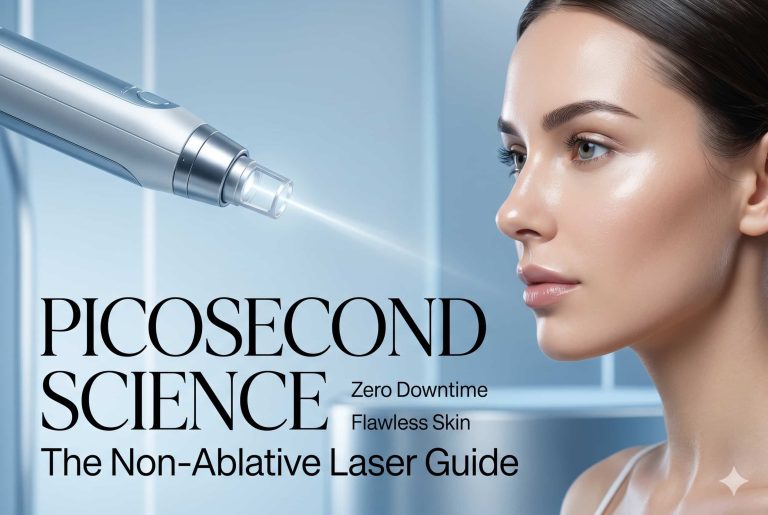
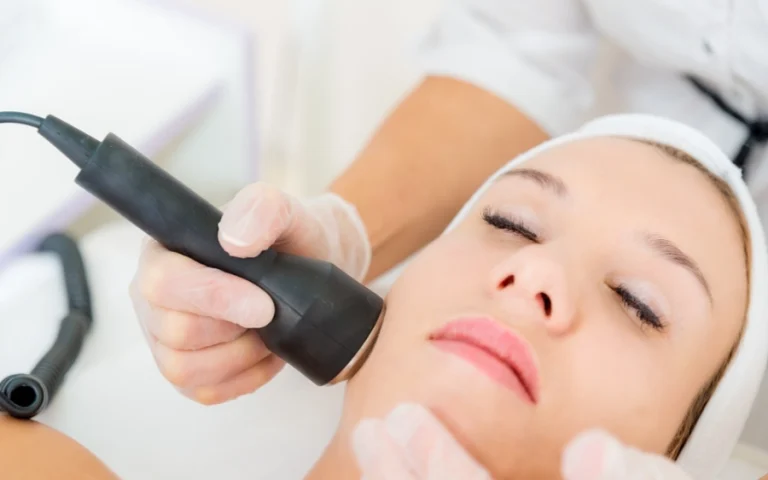
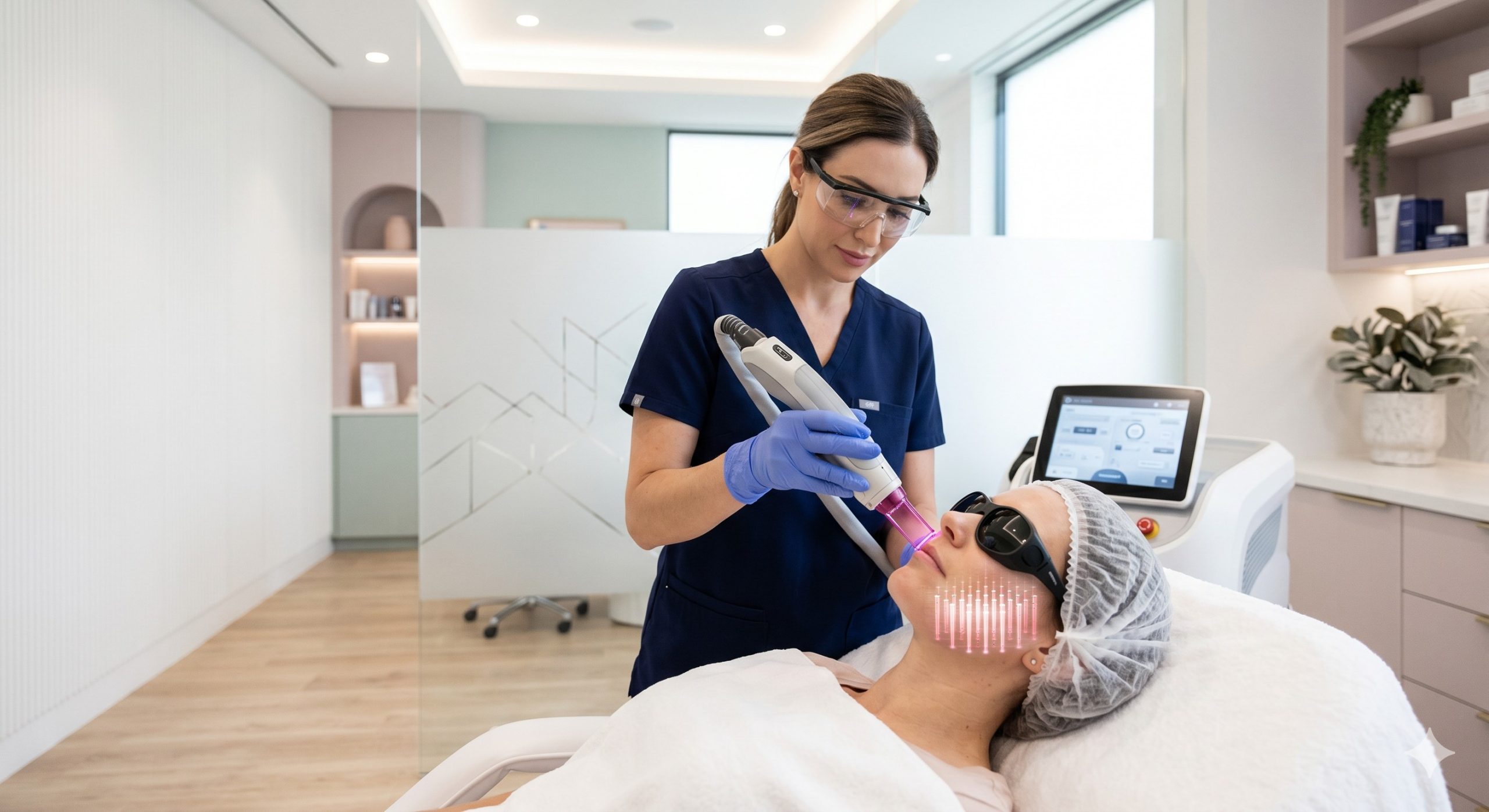
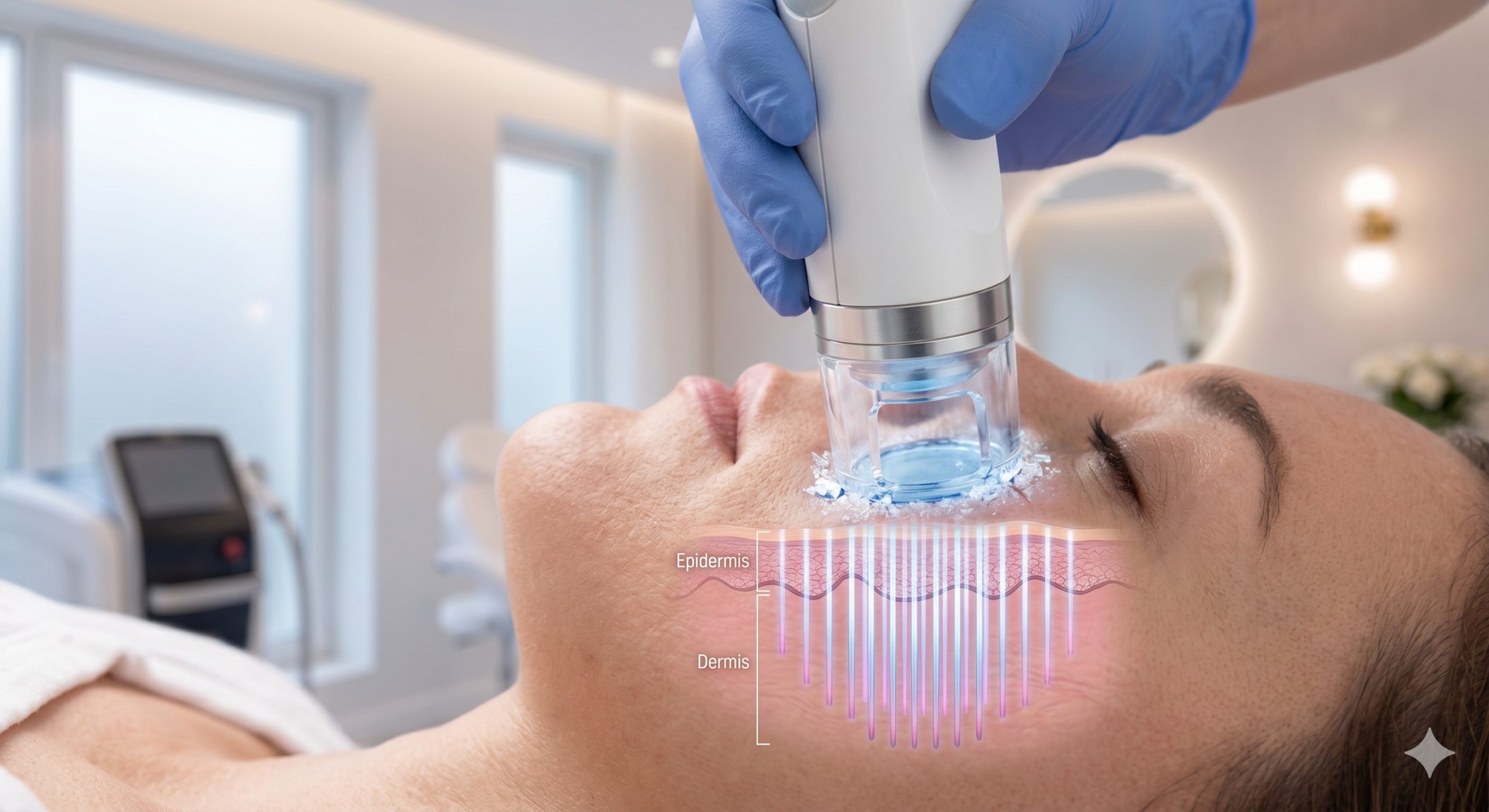
Unlike traditional ablative lasers that remove entire columns of skin, the 1550nm fractional laser operates on the principle of fractional photothermolysis. The 1550nm wavelength is specifically chosen for its intermediate water absorption coefficient and deep dermal penetration (up to 1.2mm dependent on fluence). This creates arrays of microscopic thermal zones (typically 100-400 microns in diameter) separated by islands of untreated, viable tissue. This design accelerates re-epithelialization via healthy keratinocyte migration, often achieving clinical resolution within 24-72 hours.
Mechanism of Action
Each pulse creates a micro-exudative necrotic zone containing denatured collagen and elastin. The body’s wound healing response triggers a robust cascade of neocollagenesis and elastogenesis, with peak dermal remodeling observed 3-6 months post-treatment. The 1550nm wavelength also offers minimal competition with melanin compared to 1064nm or 755nm, reducing epidermal thermal injury when proper cooling is applied.
Advanced Integrated Cooling Systems
High-quality systems incorporate contact cooling, often via a Sapphire window at 0°C to 4°C, or TEC (Thermoelectric Cooling) modules. This preserves the epidermis, allowing delivery of therapeutic fluences (20-100 mJ/MTZ) without blistering. When evaluating suppliers, confirm ISO 13485 certification and a tested cycle life of >1 million shots for the handpiece.
Technical Specifications: What Clinics Must Verify
Before procurement, clinical decision-makers should benchmark devices against the following key parameters. True professional systems offer dynamic pulse shaping and adjustable MTZ density (e.g., 100-300 MTZ/cm²). The table below defines industry-standard metrics for a premium 1550nm fractional system.
| Key Parameter | Technical Specification (Professional Grade 1550nm System) |
|---|---|
| Wavelength / Laser Type | 1550nm Erbium-Doped Fiber Laser (Class IV) |
| Spot Size / MTZ Diameter | 100-400 µm (selectable, typically 150-250 µm for face) |
| Energy Density (Fluence) | 20-100 mJ/MTZ (typical therapeutic range: 40-70 mJ) |
| Treatment Density | 100-300 MTZs/cm² (scanning galvo-controlled) |
| Pulse Width | 0.3 – 15 ms (adaptive pulse shaping) |
| Cooling System | Sapphire Contact Cooling (0°C to 4°C) + TEC module |
| Maximum Penetration Depth | ~1.2 mm (into dermis) |
| Certifications | FDA Kxxxxxx, Medical CE (MDR 2017/745), ISO 13485 |
| Tip Durability | >1 million shots (non-consumable; zero per-shot cost) |
Treatment Areas & Indications: Expanding Your Revenue Portfolio
The versatility of the 1550nm fractional laser allows clinics to treat multiple anatomical areas beyond the face, including the neck, décolleté, hands, and even non-flexible scar tissue on the extremities. Unlike longer wavelengths (1064nm Nd:YAG) that may be less effective for fine rhytids, or shorter wavelengths (1927nm Thulium) that are more superficial, the 1550nm provides a true mid-dermal remodeling sweet spot. Primary indications with high patient volume include: acne scarring (especially rolling and boxcar types), periorbital wrinkles, surgical or traumatic scars, striae distensae (stretch marks), melasma (as part of a combination protocol with hydroquinone/tranexamic acid), and actinic keratosis. Clinics report 90% patient satisfaction for facial rejuvenation when 3-5 sessions are performed at 4-6 week intervals.
Clinic ROI & Competitive Advantage: Why 1550nm Outperforms Legacy Alternatives
From a business perspective, the 1550nm fractional laser offers a superior return on investment (ROI) through three primary levers: consumable costs, treatment speed, and downtime-to-satisfaction ratio. Unlike 808nm or 755nm alexandrite lasers that require expensive pre-filled tips or gel consumables, most 1550nm systems have zero per-shot consumable cost, significantly improving margin per session (often >85% gross margin). Treatment speed is another differentiator: modern scanning handpieces with galvanometric mirrors can cover a full face (200-400 MTZ/cm²) in 10-15 minutes. Finally, the minimal epidermal disruption (typically 1-3 days of erythema/edema) versus 7-14 days for CO2 fractional allows clinics to schedule more patients per week and accept clients who cannot afford extended social downtime. Compared to microneedling (e.g., with RF), the 1550nm provides more predictable, depth-controlled thermal injury without mechanical bleeding, simplifying post-care for staff and patients. For a clinic averaging 8-10 full-face treatments per week at a market rate of $800-$1200 USD per session, the payback period on a $60,000-$80,000 professional system is typically under 12 months.
Conclusion: The Future of Precision Dermal Remodeling
As the aesthetic industry shifts toward high-efficacy, low-downtime treatments demanded by a broader patient demographic (including younger preventative patients and darker skin types), the 1550nm fractional laser solidifies its role as a cornerstone technology. For clinic operators, investing in a fully-featured system with validated cooling, high-speed scanning, and regulatory certifications (FDA, CE, ISO 13485) directly translates into patient loyalty, upsell opportunities (e.g., combining with 1064nm for vascular lesions or 755nm for pigmentation), and a defensible clinical advantage over aestheticians using lower-powered ‘fractional’ devices. When selecting a partner, prioritize vendors offering comprehensive technical training and service contracts. The 1550nm wavelength is not merely a legacy option; with ongoing advances in scanning algorithms and real-time skin impedance monitoring, it remains a future-proof investment for any medical aesthetics business.