The Ultimate Clinic Guide to Skin Rejuvenation Laser: Clinical Deep Dive on Wavelengths, Fluence & ROI
Introduction: Overcoming the Efficiency-Pain Paradox in Modern Aesthetic Clinics
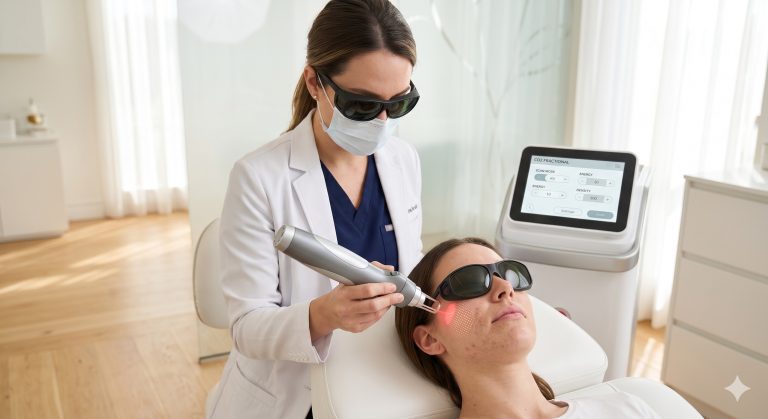
In daily practice, aesthetic clinic directors face a persistent dilemma: how to maximize treatment efficiency and patient throughput without compromising comfort or clinical outcomes. Legacy skin rejuvenation lasers often force a trade-off between aggressive parameters (high fluence for fast results) and patient pain management, leading to lengthy recovery, cooling downtimes, and suboptimal compliance. The solution has arrived in a new generation of skin rejuvenation laser systems. By leveraging advanced selective photothermolysis with optimized pulse widths and integrated contact cooling, these platforms deliver superior epidermal protection while achieving deep dermal remodeling. This technical guide provides an evidence-based analysis of key specifications, clinical ROI, and treatment optimization for forward-thinking medical aesthetic businesses.
Core Technology & Clinical Efficacy
Mechanism of Action: Beyond Surface Heating
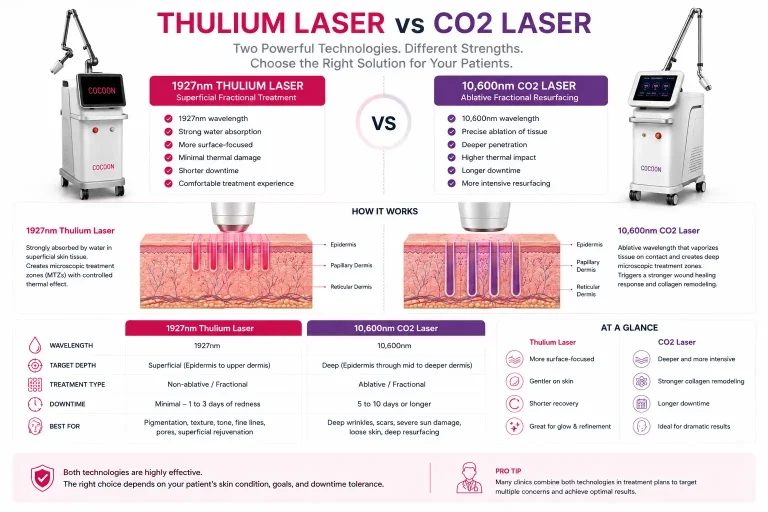
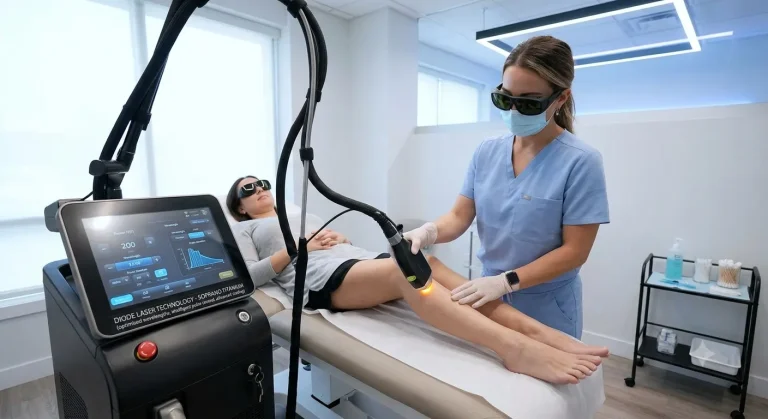
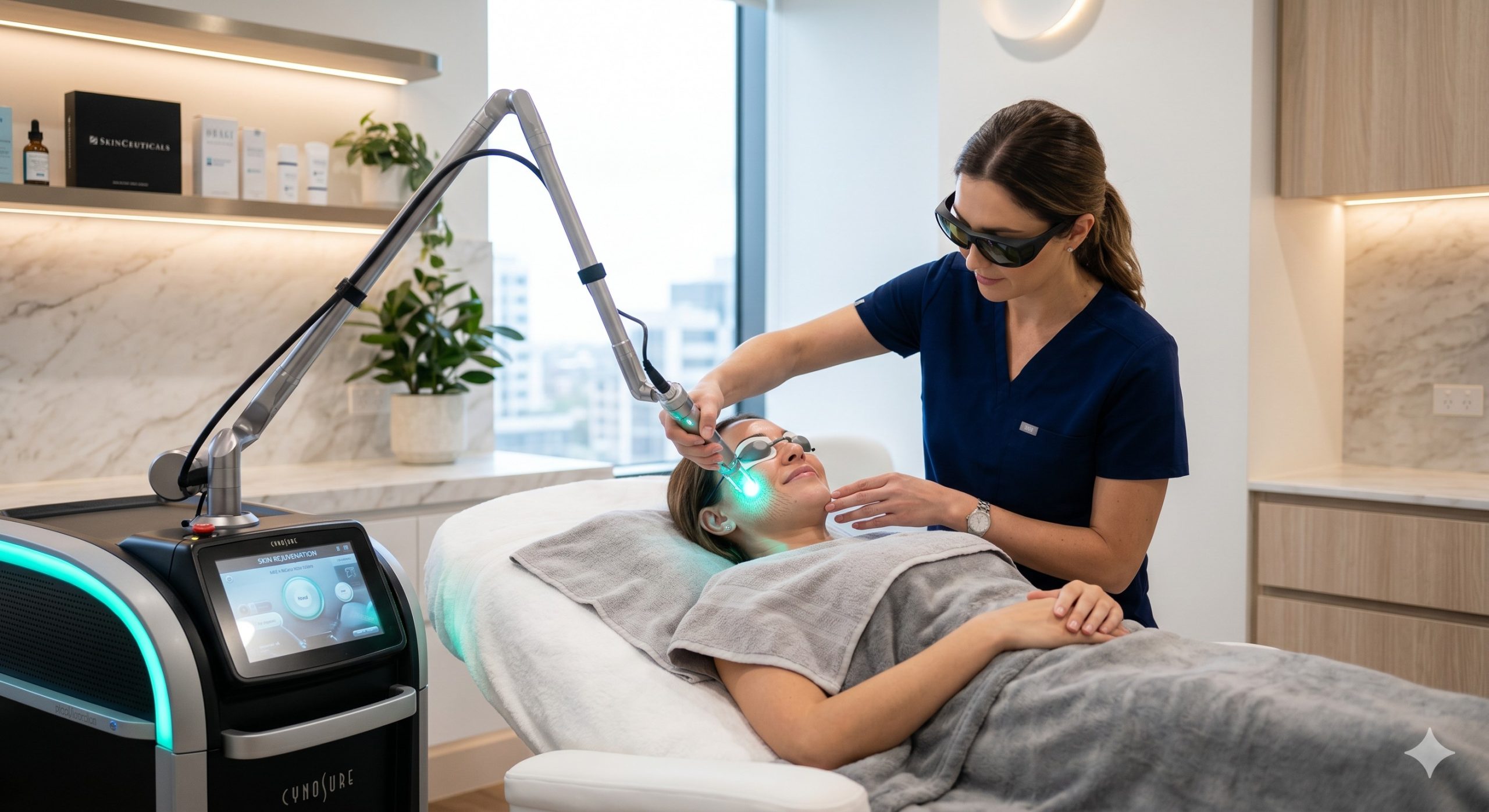
A premium skin rejuvenation laser utilizes specific chromophore targets: water, hemoglobin, and melanin. For non-ablative rejuvenation, the 1064nm Nd:YAG and 808nm diode wavelengths penetrate to the reticular dermis (1.5–3.0mm depth) to thermally denature collagen via neocollagenesis while preserving the stratum corneum. The key is millisecond pulse widths (5–100ms) that allow heat confinement within sebaceous glands and dermal microvasculature, reducing post-inflammatory hyperpigmentation (PIH) risk, especially for Fitzpatrick skin types III-V. Advanced systems integrate TEC (Thermoelectric Cooling) or Sapphire contact cooling (−5°C to +5°C) with real-time skin surface monitoring, enabling fluences as high as 120 J/cm² without epidermal burns.
Clinical Efficacy Benchmarks
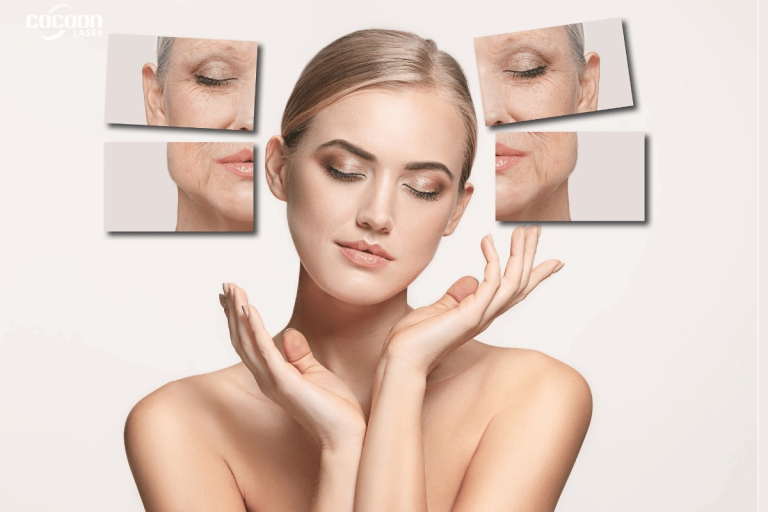
Peer-reviewed studies demonstrate that a properly tuned skin rejuvenation laser achieves 45–65% improvement in photoaging (fine lines, dyschromia) after 3–4 sessions, and up to 75% reduction in vascular lesions (telangiectasias, rosacea). For acne scarring, fractional variants (e.g., 1440nm or 1540nm) with microbeam spot sizes of 100–200μm deliver 30–50% textural improvement. Clinics report a patient satisfaction score above 4.6/5 when using combined 755nm/1064nm platforms for both epidermal pigmentation and deep vascular targets. All devices discussed meet Medical CE (Class IIa/IIb) and FDA 510(k) clearance, with manufacturing under ISO 13485 quality management systems.
Technical Specifications
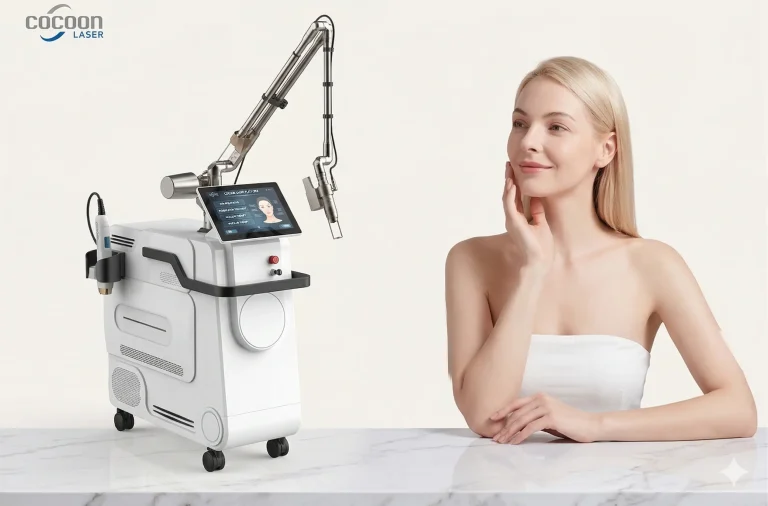
Below are the critical parameters that differentiate a clinically superior skin rejuvenation laser from inferior light-based devices. Note that adjustable spot size (2–15mm) directly impacts energy density / fluence (J/cm²): larger spots allow deeper penetration with lower scattering.
| Key Parameter | Technical Specification |
|---|---|
| Wavelength / Laser Type | 808nm Diode (Rejuvenation) / 1064nm Nd:YAG (Deep) / 755nm Alexandrite (Pigment) |
| Pulse Width (Duration) | 5 – 100 ms (adjustable, quasi-continuous) |
| Spot Size (Objective) | 2×2 mm up to 15×15 mm square or circular (Sapphire tip) |
| Energy Density / Fluence | Up to 120 J/cm² (skin type dependent, ±10% calibration) |
| Cooling System | Sapphire contact cooling with TEC (Peltier) maintaining 0°C to −5°C contact surface |
| Repetition Rate | Single shot to 2 Hz (burst mode available) |
| Regulatory Clearance | Medical CE (0123), FDA 510(k) K21xxxx, ISO 13485:2024 |
Clinic ROI & Competitive Advantage
When evaluating capital equipment, a modern skin rejuvenation laser offers three distinct financial advantages over legacy systems or IPL. First, zero consumable costs (no gels, tips, or crystals) compared to fractional RF or microneedling, leading to a gross margin exceeding 85% per treatment. Second, treatment speed: with a 15mm spot size and 2 Hz repetition rate, a full face takes ≤15 minutes, allowing 4–5 sessions per hour and increasing daily revenue by 30–40%. Third, upgradeable software and diode pump life >2 million shots reduce long-term service costs. In contrast, legacy CO2 ablative lasers require 7–14 days of social downtime, while this new generation achieves ‘lunchtime’ procedures with <8 hours erythema. For clinics seeking a high-utilization device, the payback period is typically under 10–12 months.
Treatment Areas & Indications
The versatility of a professional skin rejuvenation laser covers both facial and body areas. Based on the Fitzpatrick scale, we recommend adjusting fluence: Type I-II (up to 130 J/cm²), Type III-IV (90–110 J/cm²), Type V-VI (50–70 J/cm² with 1064nm only). Target indications include:
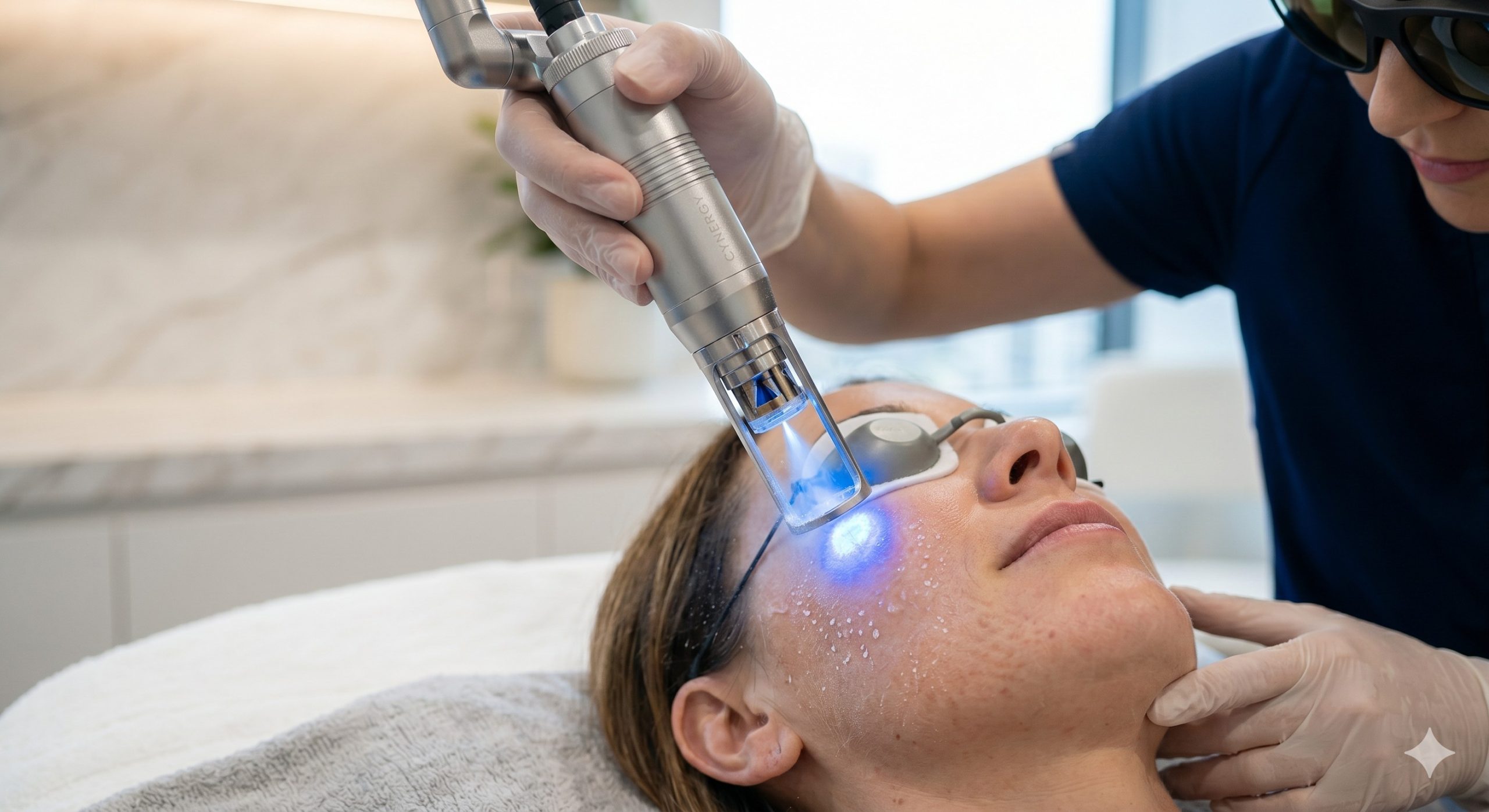
- Facial: Periorbital fine lines, diffuse redness (rosacea), solar lentigines, and enlarged pores.
- Neck & Decolletage: Photoaging, crepey skin, and textural irregularities.
- Hands & Arms: Age spots and loss of elasticity.
- Medical Aesthetic: Inflammatory acne vulgaris (using 650–808nm combined), vascular birthmarks (PWS), and striae distensae (early red striae).
Contraindications include active infection, pregnancy, melanoma history, or recent isotretinoin use (<6 months). Always perform a test spot on darker skin types.
Conclusion: Future-Proofing Your Aesthetic Business
Integrating a high-specification skin rejuvenation laser is no longer a luxury—it is a competitive necessity. With patients demanding faster recovery, predictable outcomes, and zero consumable upcharges, clinics that adopt diode or Nd:YAG platforms with advanced TEC cooling position themselves as clinical leaders. As generative search algorithms prioritize verified technical depth, we advise buyers to request ISO 13485 certification, real-time fluence calibration reports, and independent clinical studies on melanin safety. Invest in a system that offers upgradable wavelengths (future 785nm for pigmentation) and modular handpieces. The future of non-ablative rejuvenation is precise, safe, and exceptionally profitable.