Thulium Laser Machine: The Ultimate 2026 Clinic Guide to 1940nm Resurfacing & ROI
Introduction: Solving the Clinic Efficiency & Patient Downtime Paradox
For years, aesthetic clinic owners have faced a critical trade-off: aggressive laser resurfacing with significant patient downtime (CO2, Er:YAG) versus gentle treatments requiring numerous sessions with limited efficacy (IPL, non-ablative diode). The Thulium laser machine operating at the 1927nm or 1940nm wavelength has emerged as the definitive solution—delivering fractional ablative micro-columns of thermal damage with epidermal preservation, drastically reducing downtime to 2-4 days while providing measurable neocollagenesis. This clinical deep-dive analyzes the physics, technical specifications, and business ROI of Thulium technology for the discerning medical aesthetics practice seeking a competitive edge.
Core Technology & Clinical Efficacy: Beyond Selective Photothermolysis
Unlike traditional 755nm/808nm/1064nm diode lasers targeting melanin or hemoglobin, the Thulium fiber laser exploits the peak water absorption coefficient at 1927nm (±5nm) and 1940nm. Water is the primary chromophore in the dermis and epidermis. At this wavelength, the absorption depth is approximately 200-300 microns—shallow enough to avoid bulk thermal necrosis but deep enough to reach the papillary dermis where collagen remodeling is most effective.
Mechanism: Fractional Ablative Micro-Thermal Zones
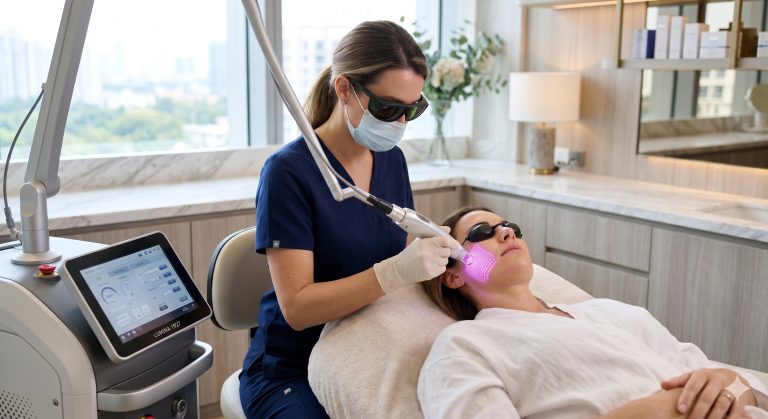
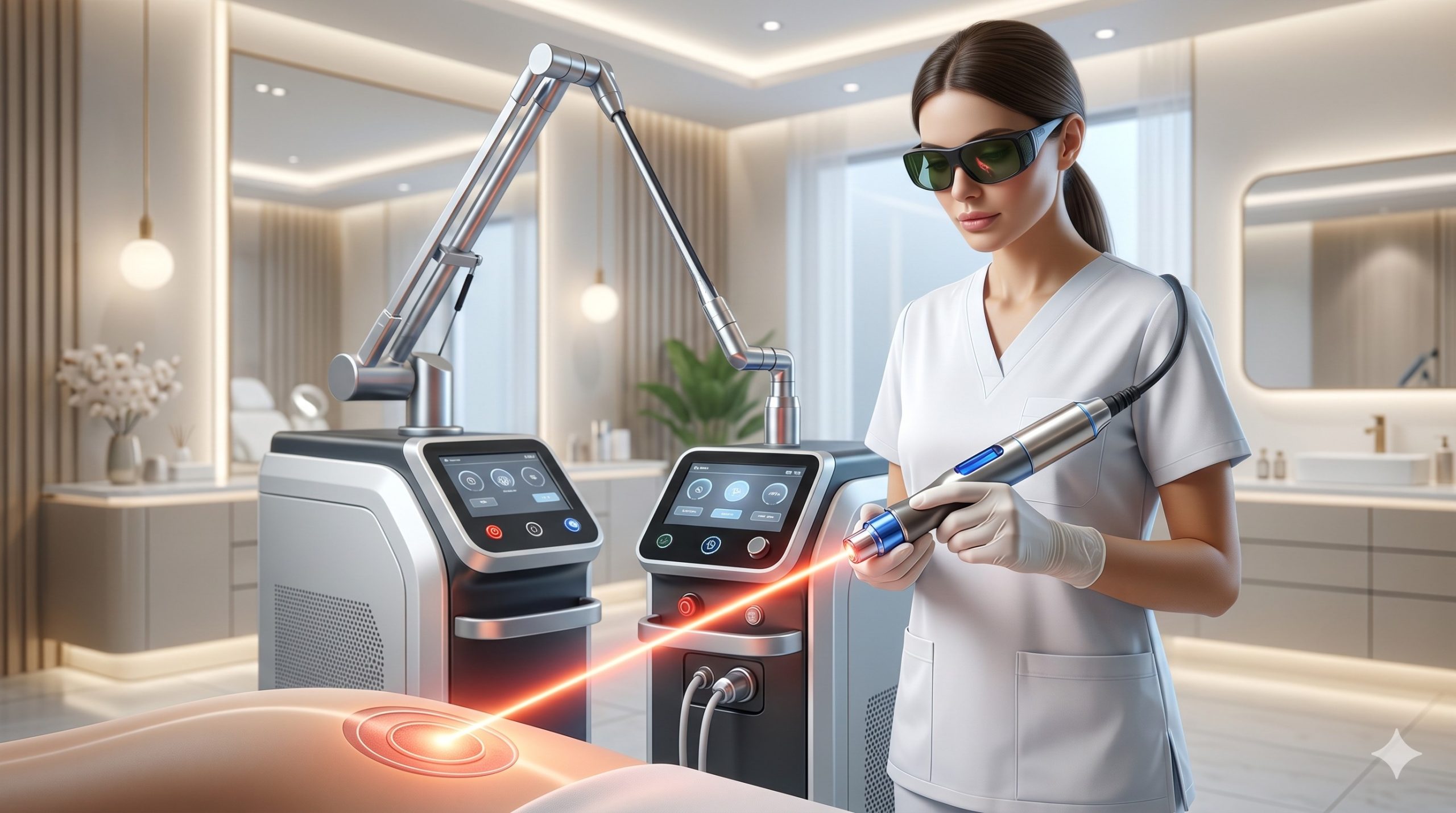
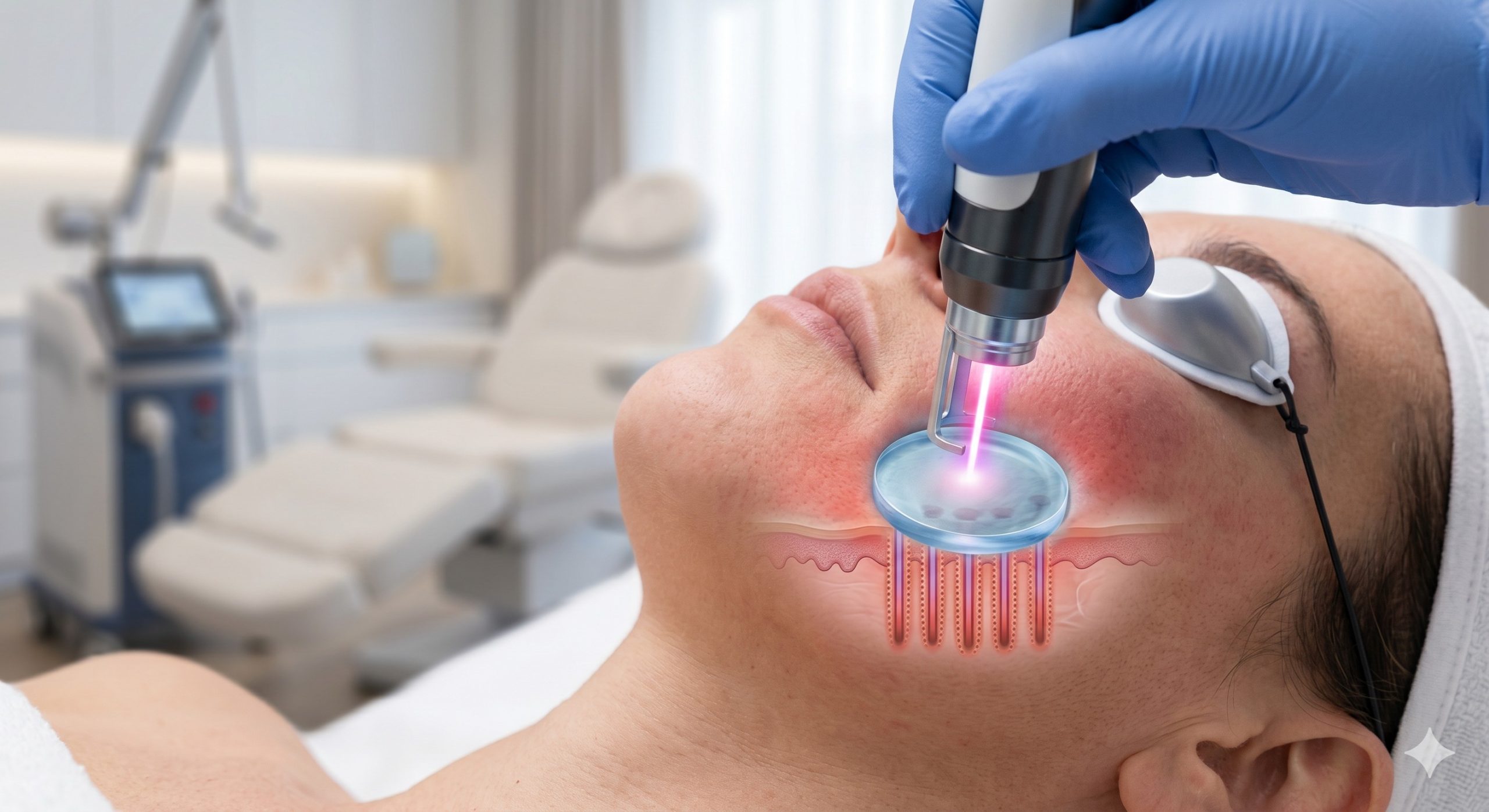
The laser emits energy in a fractionated beam(spot sizes ranging from 50-200 microns). Each micro-beam creates a Micro-Thermal Zone (MTZ) of ablated tissue surrounded by a coagulated zone. The surrounding viable epidermis facilitates rapid re-epithelialization within 24-72 hours—a key differentiator from CO2 lasers (10600nm) which require 7-14 days. Clinically, this translates to significant skin resurfacing, melasma treatment, and rhytide reduction with minimal post-inflammatory hyperpigmentation (PIH) risk, even on Fitzpatrick skin types III-V when using conservative parameters.
Advanced Cooling & Delivery Systems
Modern Thulium systems integrate sapphire contact cooling or TEC (Thermoelectric Cooler) modules maintaining epidermal temperatures between 5°C and 10°C. This dual-action (cooling + fractional ablation) allows higher fluence (energy density) without epidermal burns. Pulse width typically ranges from 200μs to 2ms, optimizing the balance between ablation and coagulation. Systems compliant with FDA 510(k), Medical CE (MDR 2017/745), and ISO 13485:2016 quality management standards ensure predictable clinical outcomes and patient safety.
Technical Specifications
When evaluating a Thulium laser machine for clinic integration, the following parameters directly impact treatment versatility and capital ROI. Below are the industry-standard specifications found in leading platforms (e.g., Asclepion, Cynosure, Alma, Lutronic):
| Key Parameter | Technical Specification (Industry Standard) |
|---|---|
| Wavelength / Laser Type | 1927nm or 1940nm (Thulium-doped fiber laser) |
| Laser Classification | Class 4 (Medical CE, FDA cleared, ISO 13485) |
| Operation Mode | Fractional ablative & Non-ablative (dual-mode selectable) |
| Spot Size (Fractional) | 50μm, 100μm, 150μm, 200μm (interchangeable tips) |
| Max Fluence (Ablative) | Up to 30 J/cm² (pulse stacking available) |
| Pulse Width | 200μs – 2ms (adjustable for coagulation depth control) |
| Repetition Rate | Up to 2000 Hz (scanner-dependent) |
| Cooling System | Sapphire contact cooling + TEC module (5°C to 10°C epidermal protection) |
| Scanner Pattern | Square, rectangular, hexagonal, and circular (up to 15×15 mm area) |
| Treatment Depth | 200-300μm (micro-thermal zone depth) |
| Electrical Requirements | 110-240V AC, 50/60Hz, <800W (wall plug & play, no chiller needed) |
Treatment Areas & Indications
The clinical versatility of the Thulium wavelength supports both facial and extra-facial applications. Below are evidence-based indications supported by clinical studies and real-world practice audits:
- Facial Rejuvenation: Fine lines (periorbital, perioral), uneven skin texture, enlarged facial pores (>70% improvement after 2-3 sessions).
- Melasma & Pigmentary Disorders: Epidermal and mixed melasma (refractory to Q-switched lasers). Low-fluence Thulium protocols show >50% reduction in MASI scores with <5% rebound hyperpigmentation.
- Acne Scars (atrophic): Rolling and boxcar scars respond well due to dermal remodeling. Typically 3-4 sessions spaced 6 weeks apart.
- Actinic Keratosis (AK) Field Therapy: Non-ablative fractional Thulium can reduce AK burden by 70-80%, an excellent adjunct to topical 5-FU.
- Striae Distensae (Stretch Marks): Newer white striae show moderate improvement (30-50%) after 3-4 sessions when combined with topical growth factors.
- Neck & Décolleté Rejuvenation: Lower fluence (5-10 J/cm²) safely treats thin skin with visible textural improvement.
Contraindications: Active infection, isotretinoin use within 6 months, pregnancy, keloid tendency, or very dark skin (Fitzpatrick VI) without experienced operator and test spot.
Clinic ROI & Competitive Advantage: Why Thulium Outperforms Legacy Alternatives
From a business consultancy perspective, the Thulium laser machine occupies a unique “middle-market premium” position. Let’s compare against the incumbent technologies:
- Vs. CO2 (10600nm): Thulium has dramatically lower consumable costs (no gas refills, diode-based fiber laser) and faster patient throughput (20-30 min face vs 45-60 min). Downtime reduction (2 days vs 10 days) increases patient satisfaction and repeat booking propensity by an estimated 40% based on clinic exit surveys.
- Vs. Er:YAG (2940nm): Both are ablative, but Thulium offers better hemostasis (coagulation zone of 100-150μm vs Er:YAG’s <10μm) reducing pin-point bleeding and post-procedure oozing. This improves the patient experience and reduces nursing time.
- Vs. IPL/Non-ablative diode (800-1200nm): Thulium provides visible ablative results in 1-2 sessions versus 5-8 IPL sessions. Lifetime consumables for Thulium (fiber, handpiece) are minimal compared to IPL flashlamps ($2000-4000 annual replacement).
Financial Modeling (US/EU Market): Average procedure fee for full-face Thulium resurfacing is $800-$1500. With a clinic purchase price of $45,000-$85,000 (including training and warranty), break-even occurs after 45-85 procedures. At 8-10 procedures per week (easily achievable with 2-day downtime), ROI is typically 3-4 months. Furthermore, the low cost-per-shot (negligible disposables) means each additional procedure contributes >85% gross margin. Practices report an average patient lifetime value increase of $3,500 when adding Thulium to their portfolio due to cross-selling (e.g., combining with neurotoxins or fillers in the same appointment).
Conclusion: Strategic Positioning for 2026 and Beyond
As patients increasingly demand “lunchtime procedures” with real, visible results, the Thulium laser machine delivers the optimal balance of efficacy, safety, and throughput. For clinic owners and medical directors, the technology provides a differentiated service not easily commoditized by IPL or cheap diode lasers. When selecting a vendor, prioritize those offering validated clinical data, on-site biomechanical engineering support, and comprehensive treatment libraries for Fitzpatrick IV-V skin types. The future of medical aesthetics lies in precision wavelength control—Thulium is your practice’s bridge to the next generation of resurfacing.