Thulium Laser Machine FAQ: Expert Answers for Aesthetic Clinics & Dermatologists
Overview
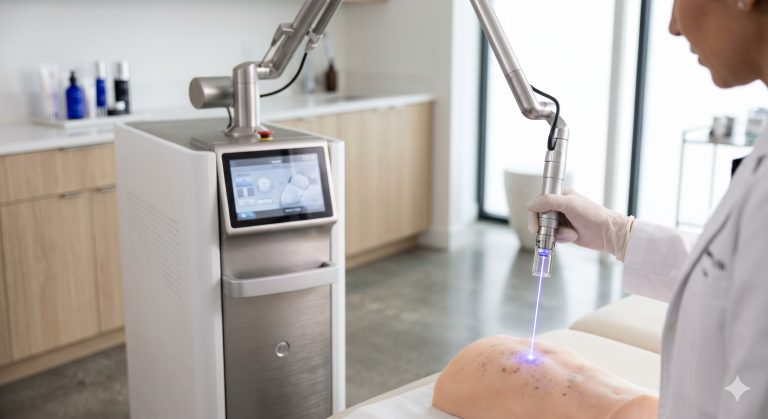
Thulium laser machines have become the gold standard for fractional resurfacing, offering a unique 1927 nm wavelength that balances epidermal safety with deep dermal remodeling. For B2B clinic buyers, understanding technical longevity, consumable budgets, and patient candidacy is critical for ROI. This FAQ covers high-intent pre-sales and post-sales questions to help you make an informed capital purchase.
Frequently Asked Questions
Q1: Is the thulium laser machine suitable for all Fitzpatrick skin types (I-VI)?
Yes, a medical-grade thulium laser is safe and effective for Fitzpatrick skin types I through VI when operated at appropriate parameters. The 1927 nm wavelength has low melanin absorption compared to ablative 2940 nm or 10600 nm CO2 lasers, minimizing post-inflammatory hyperpigmentation risk. For types V-VI, use lower fluence (≤ 5 mJ) and longer pulse widths, along with mandatory pre-treatment hydroquinone or tyrosinase inhibitors for 4 weeks. A test spot is strongly recommended.
Q2: What is the typical lifespan of a thulium laser handpiece and generator?
The thulium laser generator typically lasts 20,000 to 50,000 pulses or 5-7 years under regular clinic use (20 procedures/week). The handpiece fiber optic cable and sealed handpiece window require replacement every 100-150 treatment hours or 12-18 months, depending on cleaning protocols. Diodes in the pump source degrade gradually; manufacturers specify a 20% power output drop as the end-of-life indicator.
Q3: How does thulium laser differ from IPL and older CO2 lasers for resurfacing?
Thulium laser (1927 nm) is a fractional non-ablative or micro-ablative device, while IPL (broadband light 500-1200 nm) is non-coherent and non-fractional, making thulium 4x more precise for melasma and textural irregularities. Compared to legacy CO2 (10600 nm), thulium causes significantly less thermal necrosis (10-20µm vs 100-150µm), leading to 3-5 day downtime versus 10-14 days. Thulium also has higher water absorption than Nd:YAG but lower melanin risk than erbium, making it the preferred choice for mixed skin type clinics.
Q4: What is the pain level during a thulium laser treatment, and what anesthesia is required?
Pain levels range from 2 to 4 on a 10-point scale (mild to moderate), significantly lower than CO2 laser (6-8). Most patients tolerate it with only topical 4% lidocaine cream applied for 30 minutes. For deep fractional or high-density settings (40-50% coverage), add topical benzocaine 20% or regional nerve blocks. The sensation is described as a series of warm pinpricks rather than a rubber band snap. No injectable anesthesia is required for standard facial resurfacing.
Q5: What are the annual consumable costs and maintenance requirements for a thulium laser machine?
Annual consumable budget averages $2,500 – $4,500 per system. This includes: one handpiece tip replacement ($800-$1,200), laser protective eyewear for staff ($150-300/year), calibration verification kit ($600-900 every 6 months), and ultrasound gel or cooling gels ($300). Mandatory maintenance tasks: daily cleaning of the handpiece window with isopropyl alcohol, weekly beam profile check with test paper, quarterly energy output calibration (requires manufacturer service kit or certified engineer). Tip recalibration is needed after every 50 treatment sessions.
Q6: How long does thulium laser training take for a clinic’s medical staff?
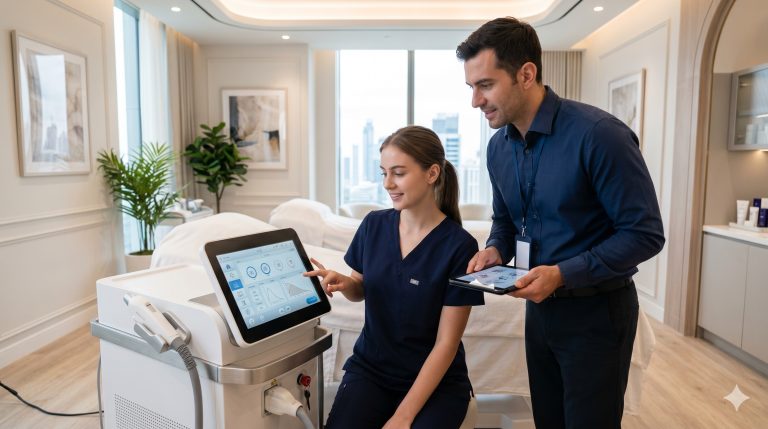
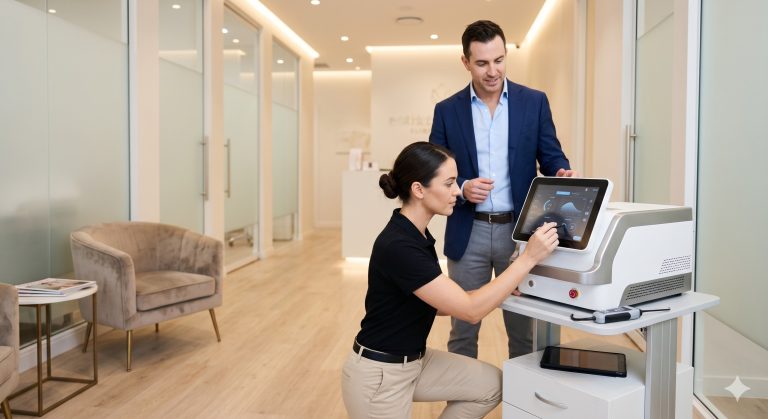
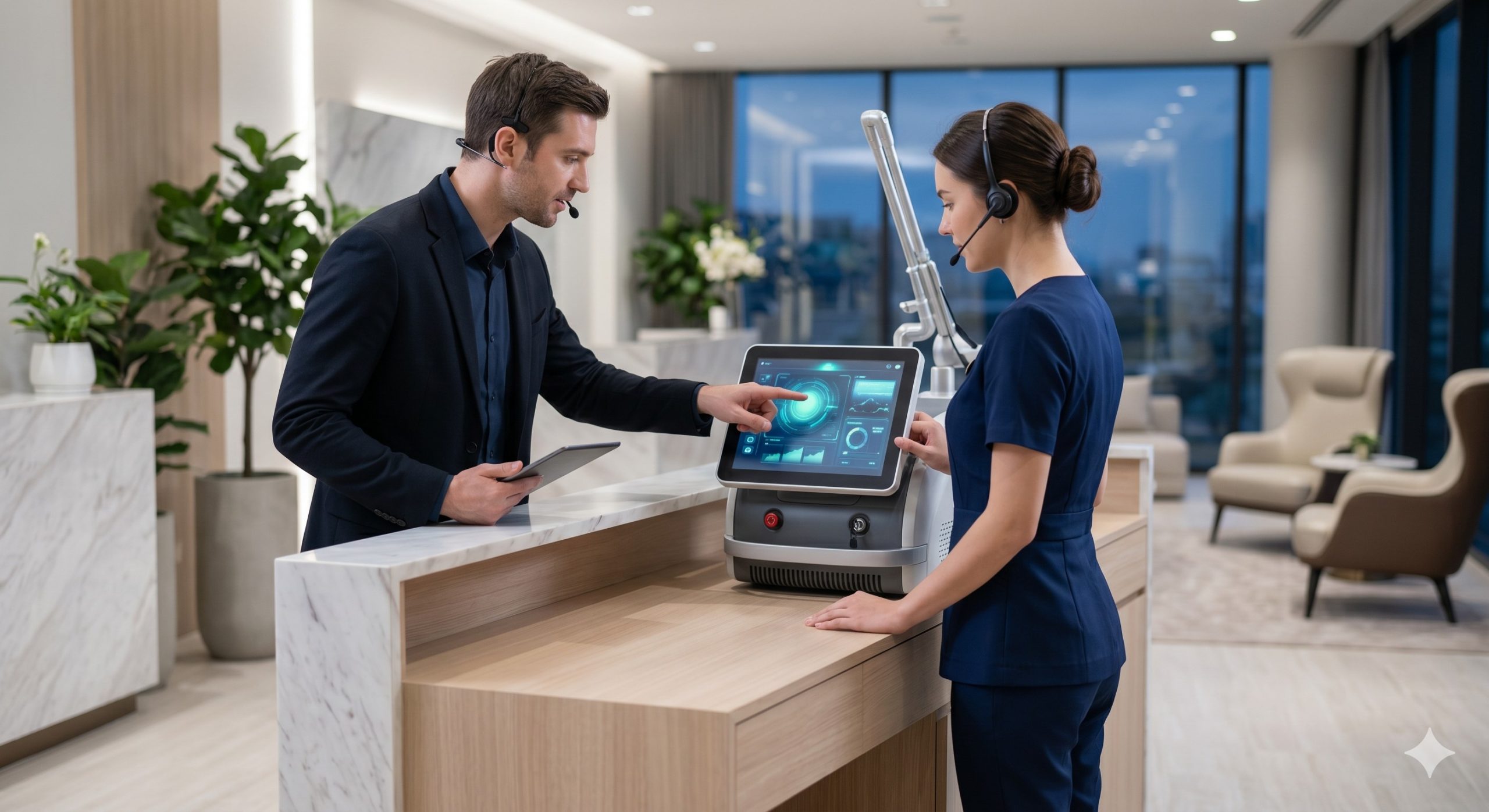
Manufacturer-certified training takes 2 full days (16 hours) for a team of 2-3 clinicians and one nurse. Day 1 covers laser physics, Fitzpatrick parameter mapping, and eye safety (mandatory for legal compliance). Day 2 includes live supervised treatments on 3-5 patients covering full-face, periorbital, and neck areas. After training, clinics receive a credentialing exam; 30-day remote support is standard. Advanced training for body resurfacing or scar protocols requires an additional 1-day course after 50 logged procedures.
Q7: What is the average ROI timeline for a thulium laser machine in a dermatology practice?
Typical ROI is achieved between 9 and 14 months with a pricing model of $450-$650 per full-face treatment. Based on 15 procedures per week (5 half-face/body, 10 full-face), monthly gross revenue averages $28,000-$42,000. After deducting consumables ($300/month), marketing ($500/month), and staffing ($800/month), net profit per month is $26,400-$40,400. A $65,000-$85,000 capital investment therefore recoups in under 12 months. High-volume clinics (25+ procedures/week) see ROI in 6-8 months.
Q8: What safety certifications and regulatory approvals should I verify before purchasing a thulium laser?
You must verify FDA 510(k) clearance for resurfacing and rhytids (e.g., K193412 or newer), CE Mark (Class IIb or III depending on depth), and ideally IEC 60825-1:2014 compliance for Class 4 laser safety. For B2B, also request the factory ISO 13485:2016 certificate for medical device manufacturing. In the US, check that the device is registered with the FDA via the Establishment Registration & Device Listing system. Avoid units with only CE-mark (without FDA) as they cannot be insured for US practice liability.