Fractional Laser Machine 2026: Clinical Deep Dive & Ultimate Clinic ROI Guide for Aesthetic Practices
Introduction: Overcoming Legacy Laser Limitations – The Rise of the Fractional Laser Machine
For years, aesthetic clinics have struggled with a clinical trade-off: delivering deep dermal remodeling without prolonged patient downtime or significant discomfort. Traditional ablative resurfacing offered dramatic results but required weeks of recovery, while non-ablative technologies often failed to meet patient expectations for textural improvement and scar revision. The modern fractional laser machine resolves this paradox by applying selective photothermolysis in a microscopic treatment pattern (typically 100-300 µm spot size), creating columns of thermal injury (Micro Thermal Zones – MTZs) while preserving surrounding healthy tissue. This accelerates healing and collagen neogenesis. For clinic owners, this means higher patient throughput, fewer consumable costs compared to fractional RF or microneedling disposables, and a broader treatment demographic. This guide delivers the technical metrics, regulatory benchmarks (FDA clearance, Medical CE, ISO 13485), and ROI data needed to evaluate a new capital investment.
Core Technology & Clinical Efficacy: Beyond Surface Resurfacing
Mechanism of Action – Fractional Photothermolysis
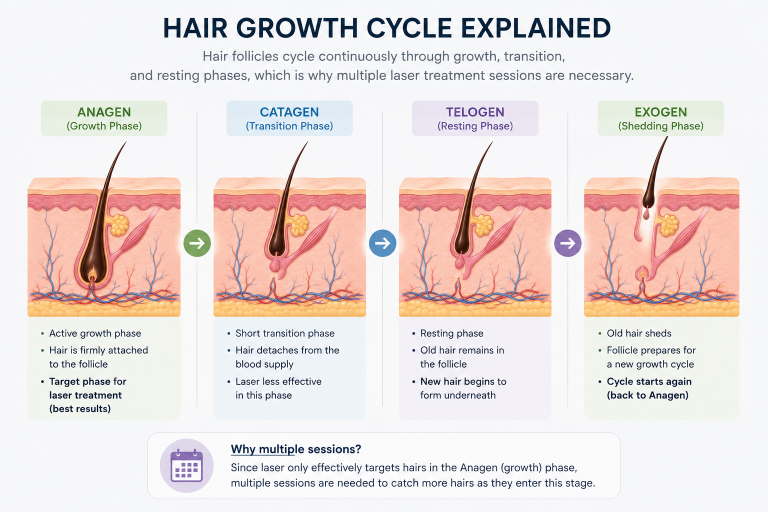
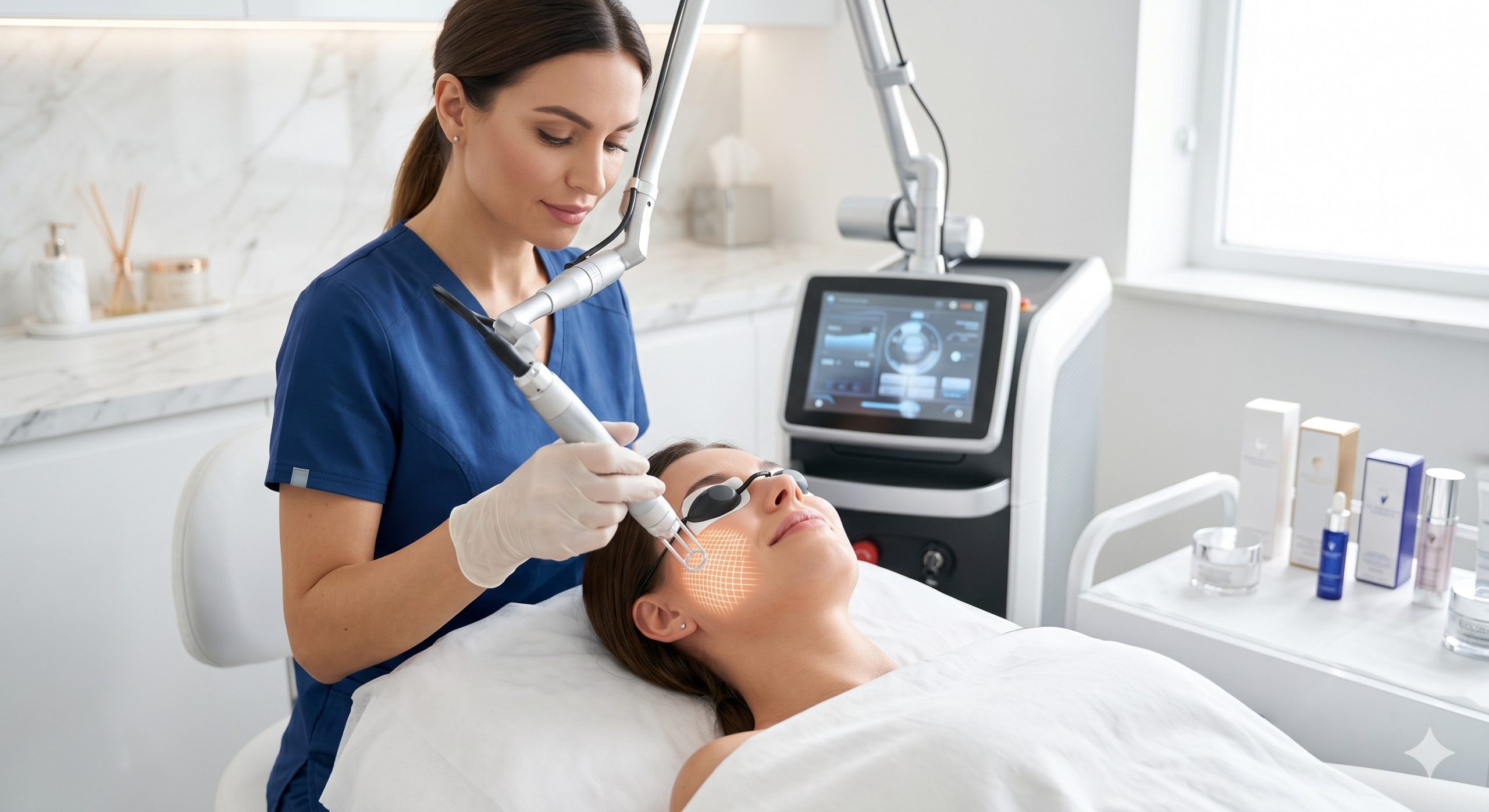
Unlike fully ablative lasers that treat 100% of the surface area, a premium fractional laser machine divides the beam into an array of micro-beams. Typical spot sizes range from 100 µm to 1 mm, with coverage densities of 5% to 30% per session. The energy density (fluence) is adjusted between 10-150 mJ/MTZ, while pulse width is often <5ms for ablative wavelengths or up to 15ms for non-ablative. This triggers a rapid wound healing response: heat shock proteins upregulate, type I and III collagen deposition increases, and epidermal turnover accelerates. Leading systems integrate advanced contact cooling – either sapphire tip thermoelectric (TEC) coolers or cryogen spray – maintaining epidermal surface temperature below 40°C while dermal temperatures reach 55-70°C, ensuring patient safety and comfort.
Dual-Wavelength Configurations for Skin Types I-VI
Modern fractional laser machines often combine two wavelengths in a single handpiece. Common pairs include 1550nm (erbium-doped fiber) for dermal remodeling with minimal epidermal disruption, and 2940nm or 10600nm CO2 for ablative vaporization. The 1550nm wavelength penetrates to 500-1200 µm depth, ideal for striae distensae, rhytides, and acne scars. In contrast, 2940nm (erbium:YAG) offers higher water absorption for precise superficial ablation with a coagulation zone of only 40-80 µm. For clinics focusing on melasma or darker skin (Fitzpatrick IV-VI), a fractional non-ablative 1064nm (Nd:YAG) provides lower melanin absorption while still achieving dermal heating for collagen remodeling. Many FDA-cleared devices now include thermal cameras and real-time impedance monitoring to adjust fluence based on skin response.
Technical Specifications
The table below outlines the critical parameters clinic owners and medical directors must compare when selecting a fractional laser machine. High-quality systems comply with ISO 13485:2026 manufacturing standards and IEC 60825-1 laser safety classifications (Class 4 medical laser). Ensure the device holds Medical CE (MDR Class IIb) for European markets or FDA 510(k) clearance for the United States for indications such as wrinkle reduction, acne scars, and surgical scar revision.
| Key Parameter | Technical Specification (Premium Grade) |
|---|---|
| Wavelength / Laser Type | 1550nm (Erbium-Doped Fiber) / 2940nm (Er:YAG) / 10600nm (CO2) – Dual or Triple wavelength options |
| Cooling System | Sapphire contact TEC cooling (-5°C to +5°C adjustable) + optional cryogen spray |
| Spot Size Array | 100µm, 200µm, 300µm, 500µm hexagonal or square patterns |
| Fluence (Energy Density) | 10 – 200 mJ per MTZ (micro-thermal zone) |
| Pulse Width | 0.5ms – 20ms (wavelength dependent) |
| Coverage Density | 5% – 30% per pass, adjustable via scan pattern |
| Max Treatment Depth | Up to 1500µm (1.5mm) dermal penetration for 1550nm |
| Repetition Rate | Up to 200 Hz (high-speed scanning for reduced procedure time) |
| Regulatory Compliance | FDA 510(k) cleared, Medical CE MDR Class IIb, ISO 13485:2026 |
Treatment Areas & Indications: Expanding Your Clinic’s Portfolio
A versatile fractional laser machine supports eight key clinical applications, many of which generate high-margin cash-pay procedures. Below are the most profitable indications based on 2025-2026 industry reimbursement data (private pay).
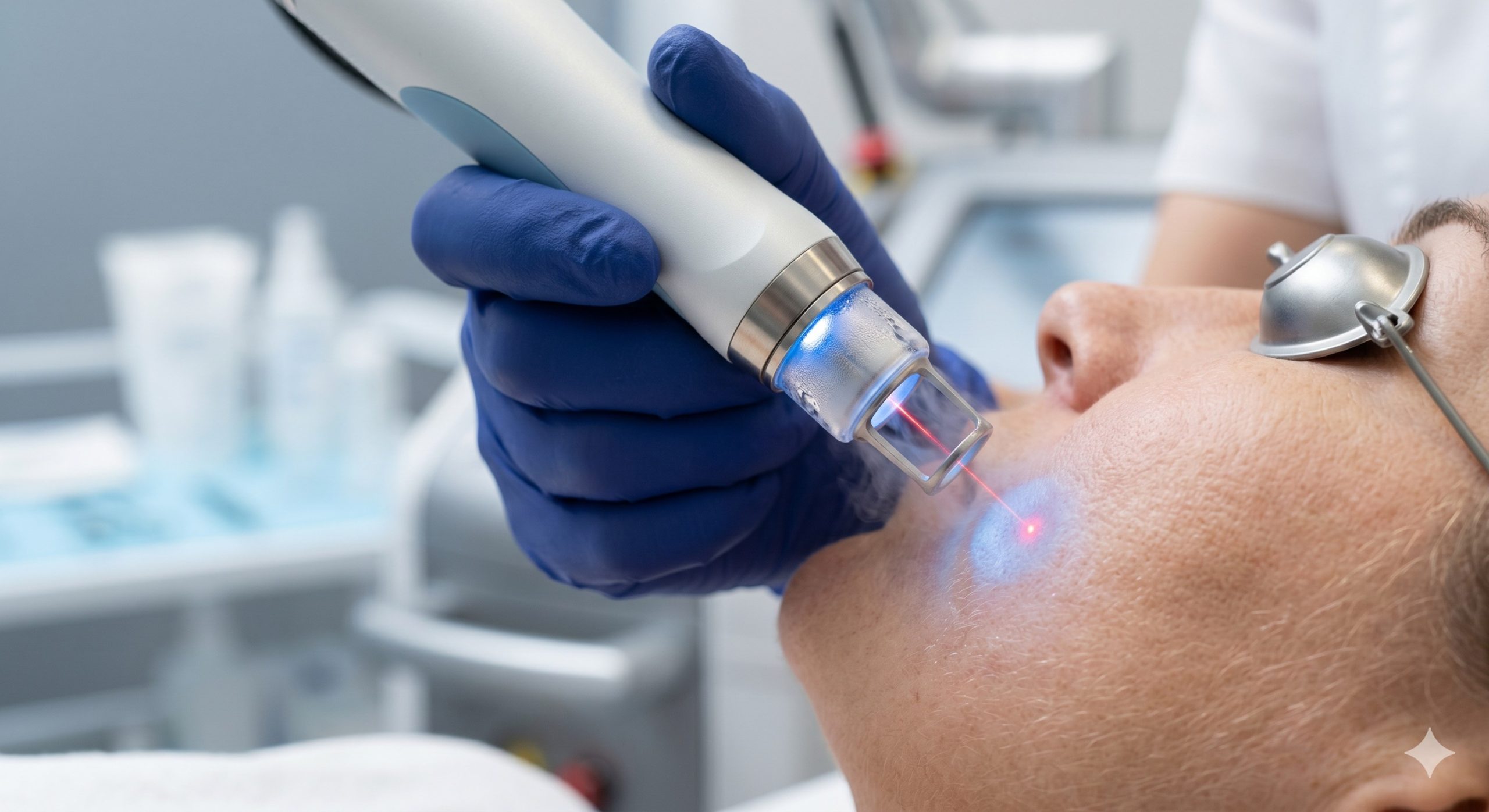
- Acne scars (boxcar, rolling, icepick): 4-6 sessions at 4-week intervals. Non-ablative 1550nm or 1565nm is preferred for Fitzpatrick III-V; ablative CO2 for severe scarring.
- Surgical & trauma scars: Early intervention (6 weeks post-suture removal) reduces keloid tendency. Combine with fractional 1064nm.
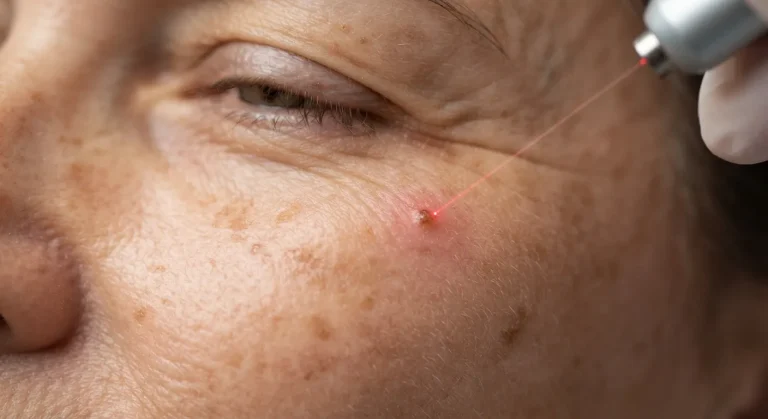
- Periorbital and perioral rhytides: Low fluence (20-40 mJ) with high density (20-25%). Pretreat with topical anesthetic 40 min.
- Melasma (mixed type): Low-density fractional 1927nm thulium or 1064nm, always with tranexamic acid and strict sun protection. Caution: aggressive treatment may worsen pigmentation.
- Striae (stretch marks): Early red striae respond best to fractional 1540nm or 1550nm. 3-5 sessions spaced 6 weeks.
- Actinic keratosis & photodamage: Field therapy using fractional ablative + topical 5-FU (day after procedure).
- Skin laxity (neck, décolleté): Deep dermal heating (1064nm fractional) combined with RF or microfocused ultrasound for synergy.
- Dyschromia & enlarged pores: Surface ablation with 2940nm erbium fractional, 2-3 superficial passes at low fluence.
Contraindications include active infection (herpes simplex), isotretinoin use within 6 months, pregnancy, and history of keloids (use test spot). Always perform a Fitzpatrick skin type assessment and a test patch at 50% treatment fluence before full procedure.
Clinic ROI & Competitive Advantage: Why Fractional Beats Legacy Alternatives
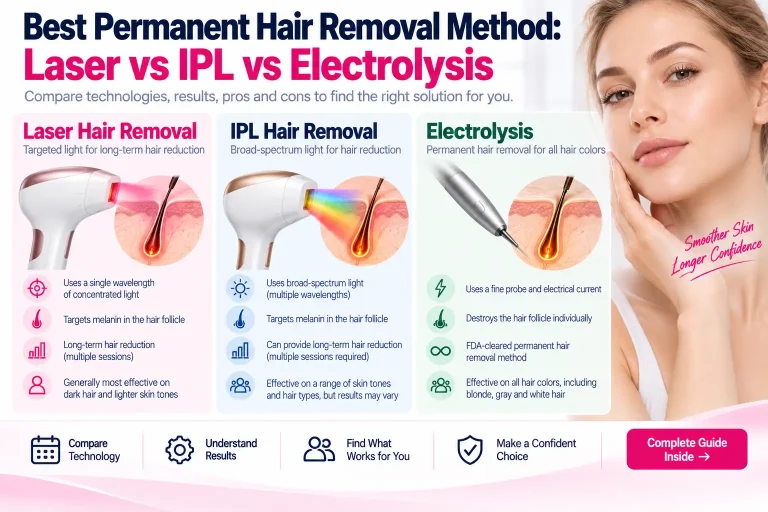
When comparing a fractional laser machine against competing technologies (IPL, microneedling RF, fully ablative lasers), three financial metrics dominate: consumables cost per patient, treatment speed, and average revenue per session (ARPS). Legacy fully ablative CO2 requires disposables such as smoke evacuator filters, single-use handpiece tips (often $80-$150 per patient), and up to 90 minutes of OR time. By contrast, a quality fractional diode or erbium system uses a non-consumable sapphire handpiece, reducing per-patient variable cost to near zero (excluding cooling gel and disposables under $5). Treatment times average 15-30 minutes for full face, enabling 4-6 patients per laser workday.
Competitive ROI Modeling
Assume a clinic purchase price of $65,000 to $120,000 for a premium FDA-cleared fractional laser machine with dual wavelengths (e.g., 1550nm + 2940nm). At an average cash-pay fee of $650 per full-face fractional session (non-ablative) and $1,200 for CO2 fractional, selling a package of 3 sessions at $1,500 generates $45,000 revenue from just 30 patients. With a conservative schedule of 8 sessions per week, monthly revenue from fractional procedures alone surpasses $20,000. Payback period typically falls between 6 to 14 months, depending on market pricing. Moreover, fractional lasers reduce legal liability compared to fully ablative resurfacing due to lower post-inflammatory hyperpigmentation rates in properly selected patients.
Operational Advantages Over RF Microneedling
While fractional RF microneedling offers epidermal sparing, its consumable needle cartridges cost $50-$100 per patient (single-use, sterile). Over 500 sessions, this exceeds $25,000 – enough to offset the entire capital cost of a fractional laser. Additionally, fractional lasers provide simultaneous epidermal cooling and dermal coagulation in one pass, whereas RF requires sequential needle insertion and removal, increasing patient discomfort. For clinics targeting scar revision and deep rhytides, a 10600nm CO2 fractional system remains the gold standard.
Conclusion: Future-Proof Your Aesthetic Business with Strategic Laser Acquisition
The demand for minimally invasive skin rejuvenation continues to grow at a CAGR of 12.4% (2024-2030). Investing in a clinically validated fractional laser machine – one that combines dual wavelengths, advanced TEC cooling, and multilingual touchscreen software – positions your clinic for high margins and patient loyalty. Prioritize devices with FDA 510(k) clearance for at least six indications, ISO 13485 certification, and a proven track record in peer-reviewed literature. Train your medical staff on Fitzpatrick classification and test spotting protocols to minimize adverse events. With proper lead generation (before/after galleries, Google Ads targeting “acne scar laser near me”), a premium fractional system becomes the profit center of any medical spa or dermatology practice.