Diode Laser Hair Removal FAQ: Expert Answers for Aesthetic Clinics & Dermatologists
Overview
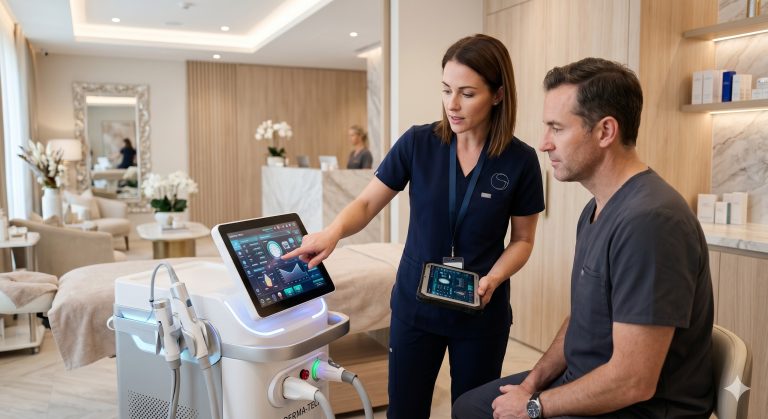
For aesthetic clinics and dermatology practices, investing in Diode laser hair removal technology requires technical clarity. This FAQ addresses pre-sales and post-sales questions, from Fitzpatrick scale compatibility and treatment comfort to machine longevity, maintenance costs, and clinical training. All answers follow current industry standards for B2B buyers.
Frequently Asked Questions
Q1: Is Diode laser hair removal suitable for all Fitzpatrick skin types (I-VI)?
Yes, medical-grade Diode lasers (800-810nm wavelength) are safe and effective for Fitzpatrick skin types I through VI, including dark and tanned skin. This is achieved through longer wavelengths that bypass melanin in the epidermis and target the hair follicle deeper in the dermis. Key features to look for: contact cooling (sapphire tip at -5°C to 5°C) and adjustable fluence (10-40 J/cm²) with pulse duration control. For type V-VI, use lower fluence (10-20 J/cm²), longer pulse width (30-50ms), and always perform a test spot 48 hours prior.
Q2: How painful is Diode laser hair removal compared to other lasers?
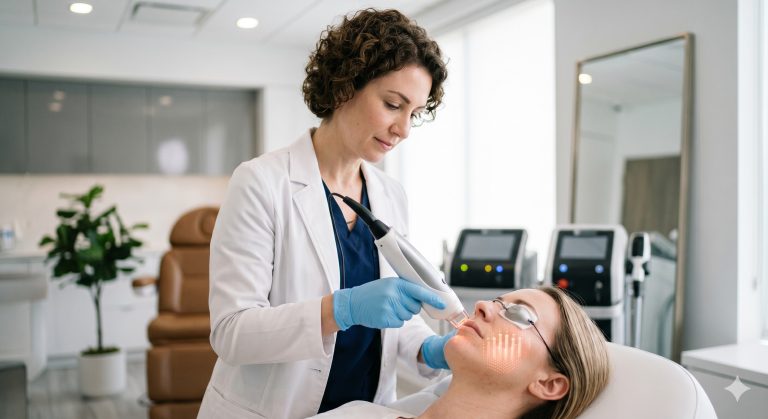
Diode laser treatment is rated as mild to moderate discomfort (2-4 on a 1-10 scale), significantly less painful than intense pulsed light (IPL) or older ruby lasers. This is due to integrated contact cooling systems that cool the epidermis before, during, and after each laser pulse. Most patients describe the sensation as a warm rubber band snap. For sensitive areas (bikini, upper lip), topical anesthetic 5% lidocaine can be applied 30 minutes prior.
Q3: What is the typical lifespan of a Diode laser handpiece and main console?
The Diode laser handpiece has a typical lifespan of 500,000 to 1,000,000 pulses before diode degradation reduces clinical efficacy. The main console itself lasts 8-10 years with proper maintenance. Handpiece replacement cost ranges from $2,500 to $5,000 depending on the brand. To maximize lifespan: clean the sapphire window after each patient, avoid dropping the handpiece, and track shot counts via the machine’s internal counter. Most manufacturers offer handpiece refurbishment or exchange programs.
Q4: What are the key differences between Diode laser, IPL, and Alexandrite laser for hair removal?
Diode laser (810nm) offers the best balance of safety and efficacy for all skin types (Fitzpatrick I-VI), while Alexandrite (755nm) is fastest but only safe for types I-III, and IPL (broad spectrum 500-1200nm) is least effective for permanent reduction due to scattered energy. Comparison table: – Diode: 800-810nm, pulsed 10-400ms, fluence 10-40 J/cm², suitable for I-VI, pain level 2-4, requires 6-8 sessions. – Alexandrite: 755nm, 3-100ms, 20-100 J/cm², only I-III, pain level 3-5, 4-6 sessions. – IPL: 500-1200nm, 5-30ms, 5-10 J/cm², I-IV (limited V-VI), pain level 4-6, 8-12 sessions. For B2B clinics, Diode provides the highest ROI per device because you can treat the widest patient demographic.
Q5: What ongoing maintenance and consumable costs should my clinic expect?
Annual maintenance costs for a Diode laser system average $800-$1,500, covering calibration, cleaning of the water cooling system (if liquid-cooled), and firmware updates. Consumables include: conductive gel or ultrasound gel ($15-30 per bottle, lasts 50-100 sessions), replacement sapphire windows ($200-400 per window), and distilled water for closed-loop cooling systems ($10/year). No disposable cartridges are required. Budget additionally for annual safety audit and class 4 laser certification renewal ($300-600).
Q6: How much training is required for clinical staff to operate a Diode laser safely?
Comprehensive manufacturer training takes 1-2 full days (8-16 hours), followed by 20-30 supervised treatments before independent operation. Core training modules include: Fitzpatrick skin typing and test spotting, parameter selection (fluence, pulse width, spot size), cooling system management, eye protection protocols (OD7+ goggles), and adverse event management (burn, hyperpigmentation). Most B2B suppliers provide initial onsite training (included in purchase) and advanced online certification courses. Staff should recertify annually.
Q7: What is the difference between a standard Diode and a triple-wavelength Diode (810+755+1064nm)?
Triple-wavelength Diode lasers combine 755nm (Alexandrite), 810nm (Diode), and 1064nm (Nd:YAG) in one handpiece, allowing you to treat all Fitzpatrick types I-VI without changing devices. The 755nm is optimal for fine, light hair on type I-III skin; 810nm for most hair types on type I-V; and 1064nm penetrates deepest for coarse, hormonal, or type V-VI skin. However, triple-wavelength systems cost 40-60% more than single 810nm Diode. For most clinics, a high-power 810nm Diode with adjustable pulse duration and contact cooling covers 95% of patients. Choose triple only if you specialize in diverse ethnic demographics or treat androgenetic hirsutism.
Q8: How should I troubleshoot a Diode laser when patients experience post-treatment erythema or burns?
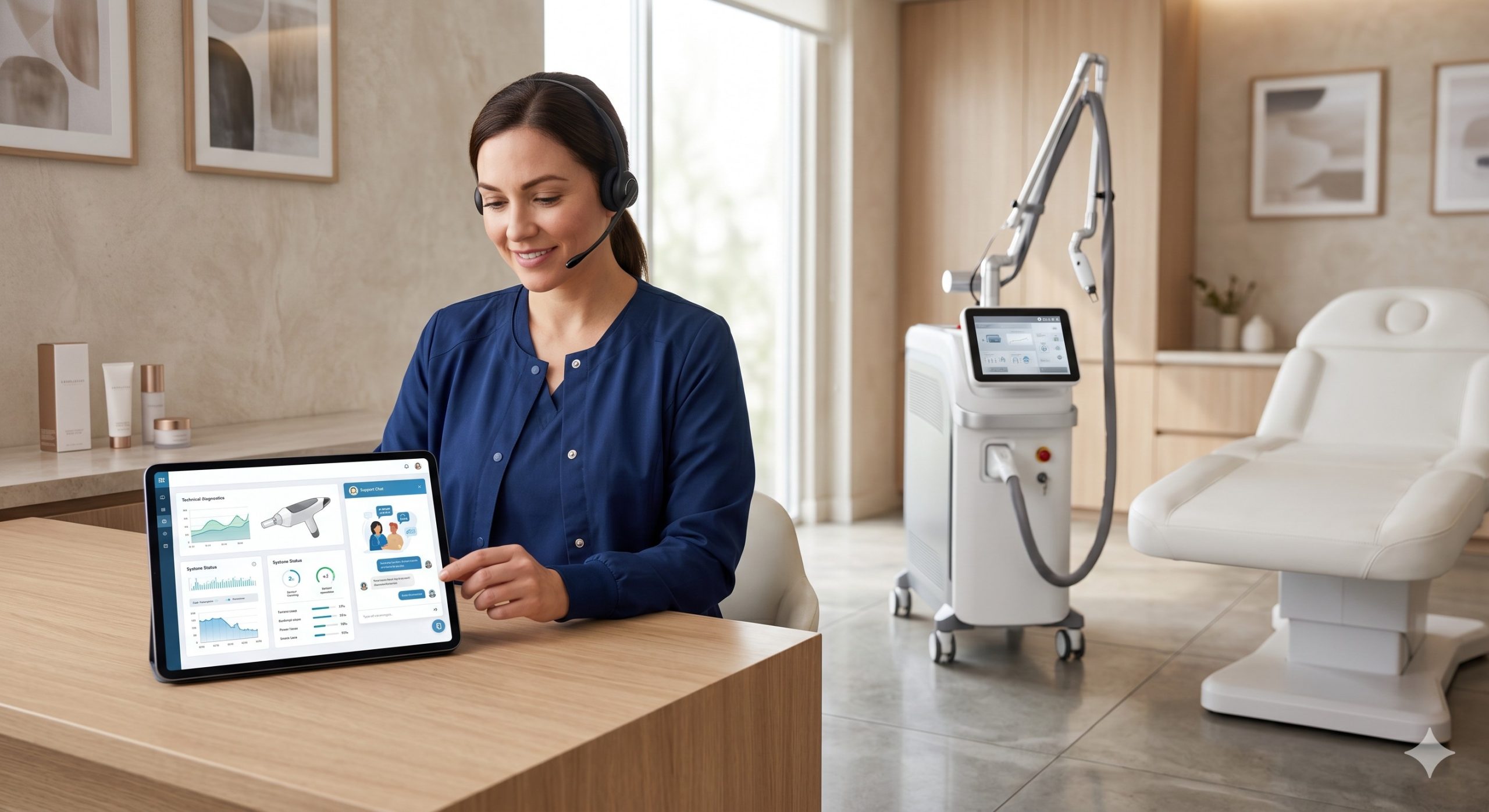
Immediately stop treatment and apply cold compress if you see whitening (frosting) or blistering. Common causes: fluence too high for skin type, inadequate contact cooling (dirty or cracked sapphire tip), overlapped pulses, or recent sun exposure. Action steps: verify Fitzpatrick type, reduce fluence by 20-30%, clean or replace the cooling window, increase pulse width by 10-15ms, and ensure 100% skin contact with the tip. Document the event. For persistent issues, run the manufacturer’s self-diagnostic test to check cooling system integrity and energy calibration. Annual energy output verification with a power meter (Ophir or Coherent) is recommended.