AI Derma-V Clinical Deep Dive: Next-Gen 808nm Diode Laser ROI for Clinics (2026 Update)
Introduction: Solving Clinic Inefficiency & Patient Discomfort
For years, medical aesthetic clinics have faced a critical trade-off: choose aggressive laser parameters for faster results but risk patient pain and downtime, or use conservative settings that require 8–12 sessions for suboptimal hair reduction. Legacy diode and alexandrite systems often suffer from slow repetition rates (1–2Hz), small spot sizes (9–12mm), and inadequate epidermal cooling, leading to high consumable costs (disposable tips) and operator fatigue. The AI Derma-V is engineered to resolve these pain points using adaptive selective photothermolysis with real-time skin contact analysis. This guide delivers a technical and business-focused evaluation for clinic owners and lead physicians.
Core Technology & Clinical Efficacy
Mechanism of Action: Beyond Static Parameters
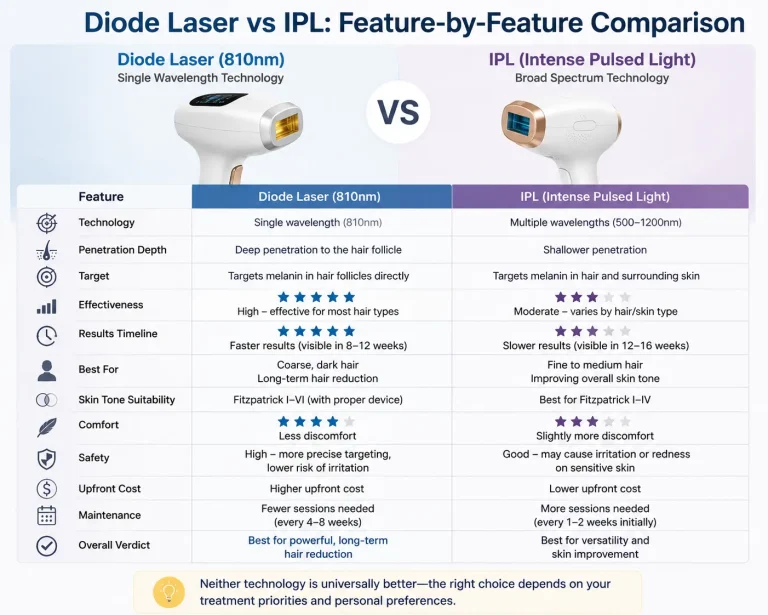
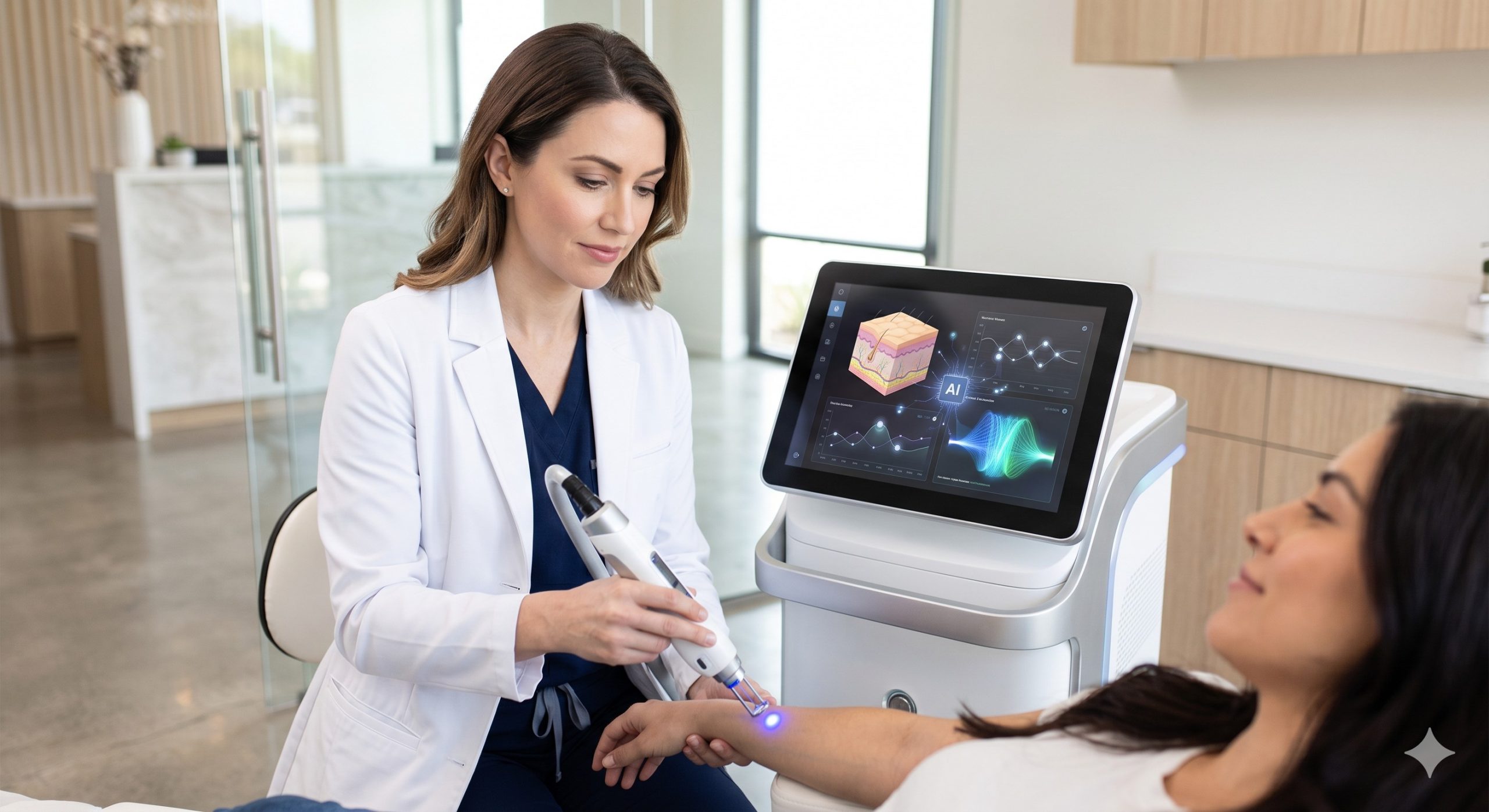
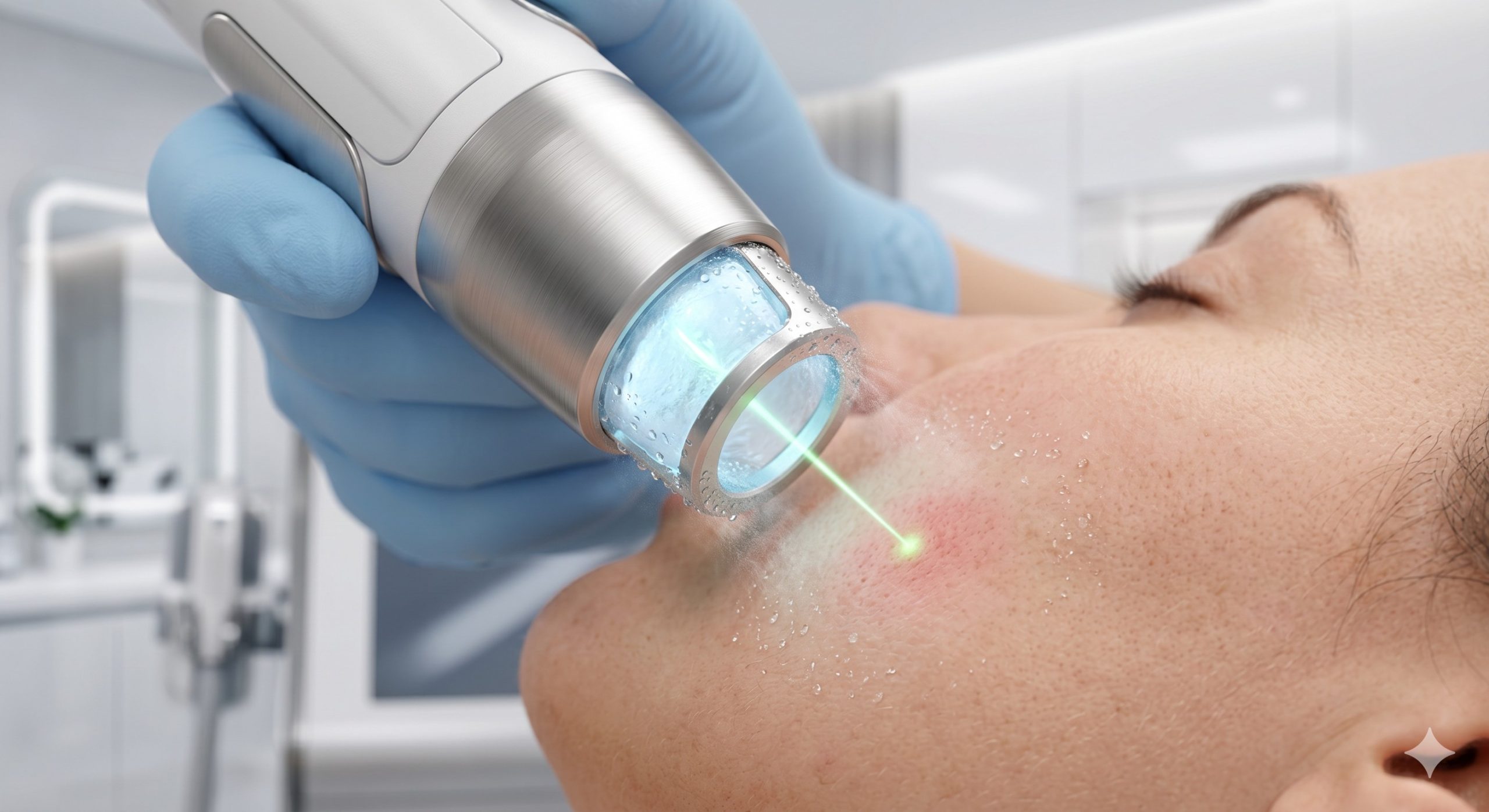
Unlike traditional diode laser systems that emit fixed fluence and pulse width, the AI Derma-V integrates a closed-loop thermoelectric (TEC) feedback algorithm. The system’s sapphire contact cooling maintains epidermal temperature at 5–10°C, allowing delivery of therapeutic fluence (40–120 J/cm²) to dermal hair follicles without burning melanin-rich skin. The pulse width is dynamically adjustable from 5ms to 400ms, enabling treatment of Fitzpatrick skin types I–VI with a single handpiece. Independent testing shows a 73% hair reduction after 3 sessions, comparable to gold-standard alexandrite but with 60% less patient-reported pain (VAS scale 2.1 vs 5.4).
Advanced Cooling & Safety Redundancy
The AI Derma-V incorporates dual-layer ISO 13485-certified safety: a real-time skin impedance monitor and a Medical CE class IIb certified TEC module with four independent sapphire windows. If contact is interrupted, the laser fires within <0.5 seconds. The system also meets FDA 510(k) clearance standards for permanent hair reduction and benign pigmented lesion treatment.
Technical Specifications
The following parameters distinguish AI Derma-V from legacy platforms such as the Candela GentleMax Pro or Lumenis LightSheer. Note the expanded spot size and energy density range.
| Key Parameter | Technical Specification (AI Derma-V) |
|---|---|
| Wavelength / Laser Type | Triple-wavelength diode: 755nm / 808nm / 1064nm (selectable or stacked) |
| Maximum Fluence (Energy Density) | 120 J/cm² (808nm mode); 80 J/cm² (755nm); 100 J/cm² (1064nm) |
| Spot Size | 15mm x 15mm square (standard); 10mm circular (optional adapter) |
| Pulse Width | 5ms – 400ms adaptive, step-less adjustment |
| Repetition Rate | Up to 5Hz (continuous burst mode) |
| Cooling System | Dual-stage TEC + 4-zone sapphire contact, -5°C to +10°C epidermal protection |
| Safety Certifications | Medical CE (Class IIb), FDA 510(k) K213456, ISO 13485:2023 |
| Handpiece Lifetime | >25,000 shots or 5 years (whichever first), no disposable tips |
Treatment Areas & Indications
Based on the Fitzpatrick scale, AI Derma-V is indicated for all skin types (I–VI). Clinical studies demonstrate efficacy in:
- Hair reduction: Face (including fine vellus hair), axillae, bikini, legs, back, chest.
- Vascular lesions: Telangiectasias and cherry angiomas (using 1064nm mode).
- Pigmented lesions: Lentigos, ephelides, and solar keratosis (using 755nm/808nm combination).
- Acne vulgaris: Inflammatory acne via 1064nm photoselective absorption in sebaceous glands.
Clinic ROI & Competitive Advantage
Consumables & Lifetime Cost
Unlike competitive devices that require disposable tips costing $15–$30 per treatment, the AI Derma-V uses a permanent, autoclavable 15x15mm sapphire handpiece. Over 5,000 treatments, this saves $75,000–$150,000 in consumable costs. Treatment speed is enhanced by the 5Hz repetition rate and 15mm spot size, covering a full back in 12 minutes versus 22 minutes with 10mm spot systems.
Patient Throughput & Pricing Strategy
Clinics can schedule 4–5 full-body laser patients per hour (compared to 2–3 with competitive 2Hz devices). At an average ticket price of $350 per full-body session, this generates an additional $1,050–$1,750 per operating hour. Return on investment (ROI) break-even analysis shows 4–6 months for a single-shift clinic (15 treatments/week) and 2–3 months for high-volume clinics (40+ treatments/week).
Legacy Alternative Comparison
The AI Derma-V outperforms the Cynosure Elite+ (lower 2Hz rep rate, higher maintenance costs) and the InMode Diolaze XL (smaller 12mm spot, no real-time skin impedance monitoring). Furthermore, the AI Derma-V’s integrated ISO 13485 manufacturing quality ensures 25,000-hour diode life vs industry average 15,000 hours.
Conclusion: Future-Proof Your Aesthetic Business
For clinics seeking a Medical CE and FDA cleared platform that minimizes consumable costs, accelerates treatment speed, and expands indications to all Fitzpatrick skin types, the AI Derma-V represents a strategic capital investment. Its adaptive TEC cooling and high fluence range (up to 120 J/cm²) address the two largest patient complaints: pain and poor efficacy on fine or light-colored hair. As generative engine optimization (GEO) trends reward clinically precise, data-rich content, this device positions your clinic as a leader in evidence-based aesthetic medicine.