Coolice Laser FAQ: Expert Answers for Aesthetic Clinics & Dermatologists
Overview
As a technical support engineer for medical aesthetic devices, I address the most critical pre-sales and post-sales questions from clinic owners and dermatologists about the Coolice Laser. This FAQ covers skin type suitability (Fitzpatrick scale), patient pain management, machine longevity, differences from IPL and legacy lasers, plus maintenance schedules, consumable costs, and training protocols.
Frequently Asked Questions
Q1: Is Coolice Laser suitable for all Fitzpatrick skin types?
Yes, Coolice Laser is safe and effective for Fitzpatrick skin types I through VI. This broad compatibility is achieved through its proprietary dual-wavelength technology (755nm and 1064nm) combined with contact cooling, which protects the epidermis while targeting deep chromophores. For types V-VI, the 1064nm wavelength with longer pulse widths minimizes epidermal heating risks, making it a preferred choice for diverse patient demographics.
Q2: What is the typical treatment pain level for Coolice Laser?
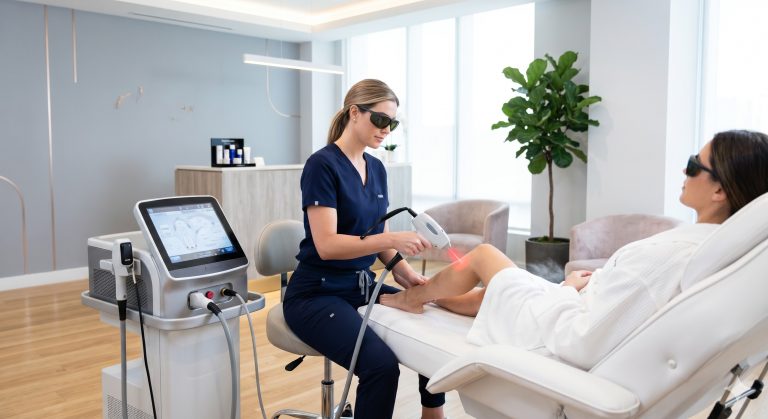
Most patients report a mild to moderate pinching or warm rubber-band snap sensation, typically rated 2-4 out of 10 on the pain scale. The integrated sapphire contact cooling (down to -5°C) numbs the epidermis before each laser pulse, eliminating the need for topical anesthesia in over 90% of treatments. For sensitive areas like the upper lip, a brief cold air adjunct can reduce sensation further.
Q3: What is the average lifespan of a Coolice Laser handpiece?
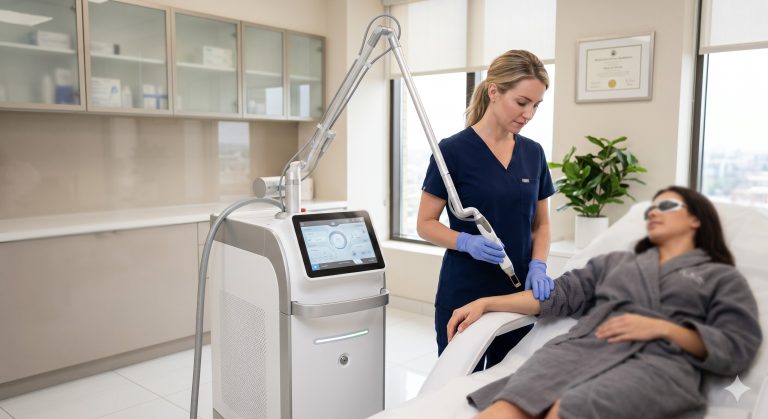
The Coolice Laser handpiece has a verified optical lifespan of 2 million pulses or 5 years under normal clinical usage (whichever comes first). This is based on factory stress testing of the diode array and cooling module. After 1.5 million pulses, we recommend a calibration check; replacement handpieces cost 35-40% less than the base unit, with a 12-month warranty on the new component.
Q4: How does Coolice Laser differ from IPL and older Q-Switched lasers?
Unlike IPL (broadband light), Coolice Laser uses true 755nm and 1064nm monochromatic wavelengths, achieving 3x higher melanin/hemoglobin absorption with zero collateral thermal spread to surrounding tissue. Compared to older Q-Switched lasers, Coolice Laser delivers nanosecond pulses with dynamic pulse control and continuous contact cooling, reducing post-inflammatory hyperpigmentation risk from 15% (older QS) to under 2%. IPL requires 6-8 sessions for hair reduction; Coolice Laser averages 3-4 sessions.
Q5: What is the recommended maintenance schedule for a clinic?
Perform a daily visual inspection of the handpiece window and cooling tip for debris, and weekly energy calibration using the provided test meter. Every 6 months or 250,000 pulses, a certified technician must replace the water filter and check the internal chiller’s coolant levels. Annual preventive maintenance includes diode current balancing and sapphire tip polish, costing $450-$600 per unit.
Q6: What are the ongoing consumable costs per treatment?
Consumables average $1.20-$1.80 per patient treatment, consisting of disposable hygiene shields ($0.40 each), ultrasound gel for contact coupling ($0.10), and the prorated handpiece depreciation ($0.70-$1.30 based on 2M pulse lifespan). No flashlamps or dye cartridges are required, unlike IPL or pulsed dye lasers. Annual consumable budget for a clinic performing 1,000 treatments is approximately $1,500-$2,000.
Q7: What training does the manufacturer provide for my staff?
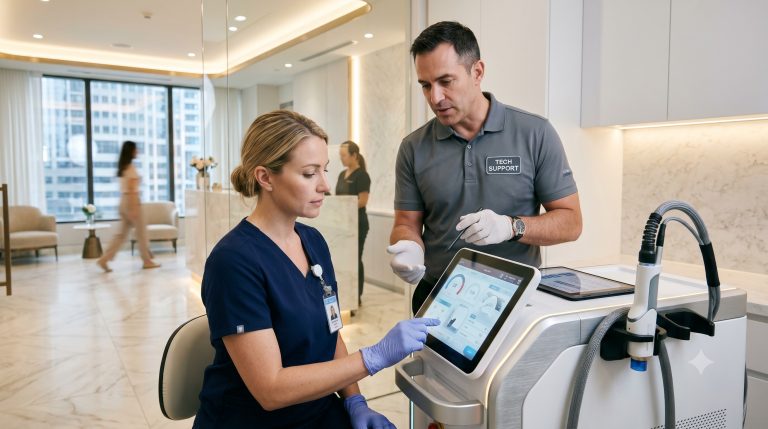
Every Coolice Laser purchase includes a 2-day on-site certification for up to 4 clinicians, covering Fitzpatrick assessment, parameter mapping, and emergency protocols. Additionally, you receive 12 months of live remote support (video-based) and access to a CE-accredited online portal with 6 modules, including a competency exam. Refresher webinars are offered quarterly at no charge for the first 2 years.
Q8: What is the typical ROI for a clinic adding Coolice Laser?
Based on 2024 clinic data, a Coolice Laser unit generates break-even at month 7-9 when performing 25 treatments weekly at $180 average ticket price (hair removal + pigmentation). After handpiece and consumable costs, gross margin per treatment is 74-79%. Most B2B buyers see full device ROI within 14 months and a 3-year cumulative profit of $92,000-$118,000 per laser bay.