Piko Lazer Machine Price: Cost & Buying Guide
Professional Laser Equipment Buying Guide
Piko Lazer Machine Price: Cost, Features & Buying Guide
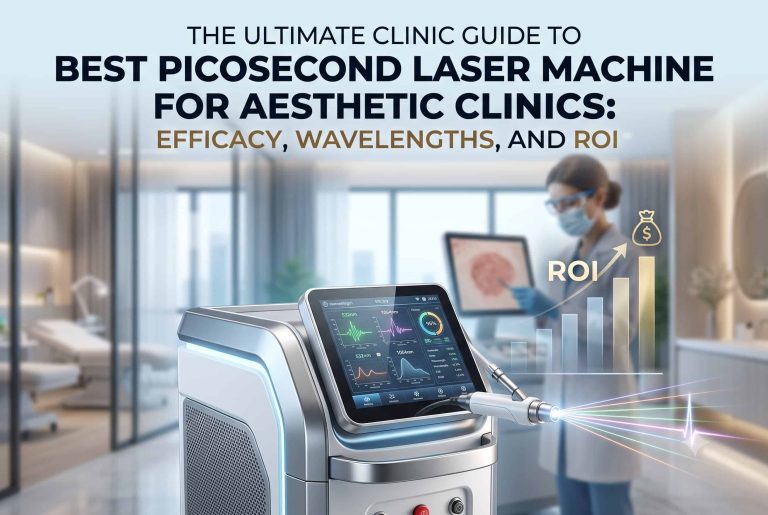
How much does a Piko Lazer machine cost? For clinics, medical spas, tattoo removal businesses, and equipment distributors, the answer depends on far more than the advertised purchase price. Laser technology, verified pulse duration, wavelength options, treatment handpieces, documentation, warranty, and international delivery can all affect the final investment.
This guide explains Piko Lazer machine price considerations, compares professional picosecond laser equipment categories, and shows how to evaluate supplier quotations without overlooking long-term ownership costs.
Quick Answer: How Much Does a Piko Lazer Machine Cost?
There is no single verified public selling price for every machine described as Piko Lazer. Professional picosecond laser equipment can range from lower-cost imported systems to premium branded platforms costing well over $100,000.
Published supplier pricing guides indicate that some professional direct-import picosecond systems are offered around $20,000–$40,000, while certain established branded platforms can cost $100,000–$150,000 or more. Actual prices depend on configuration, condition, destination market, and included services.
These figures are general market references, not Cocoon Laser quotations or verified prices for a particular Piko Lazer model.
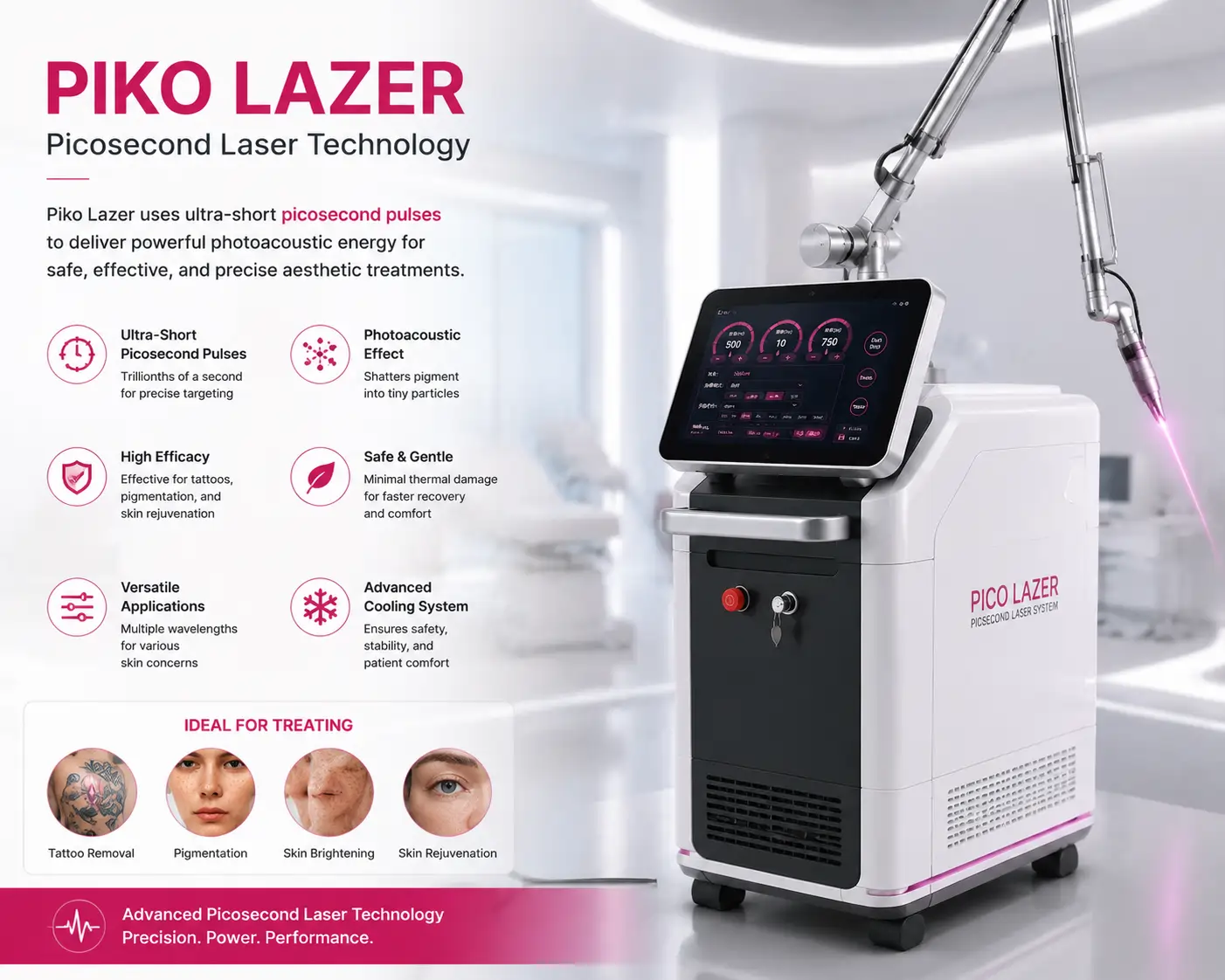
For an equipment-specific quotation, visit our Piko Lazer picosecond laser machine product page and provide your preferred configuration and destination country.
Piko Lazer Machine Price vs Professional Pico Laser Market Prices
Buyers searching for Piko Lazer price information frequently encounter equipment from different manufacturers, distributors, and price categories. A low advertised price does not necessarily mean that the machine provides verified picosecond laser performance.
The following table illustrates broad market categories based on publicly advertised supplier pricing. It is not a standardized market survey, and the categories are not directly comparable without examining specifications and included services.
| Equipment Category | Indicative Market Price | Important Considerations |
|---|---|---|
| Lower-Cost Pico-Labeled Equipment | Varies widely | Verify actual pulse duration, laser source, documentation, and manufacturer identity. |
| Professional Direct-Import Picosecond Systems | Approximately $20,000–$40,000 | Compare technical verification, warranty, training, delivery terms, and service access. |
| Established Premium Branded Platforms | Approximately $100,000–$150,000+ | Compare approved indications, clinical documentation, brand support, and total ownership costs. |
| Pre-Owned Professional Systems | Model- and condition-dependent | Inspect service records, handpiece condition, operating history, and transferable support. |
Pricing note: These illustrative US-dollar ranges are based on published third-party supplier guidance available in 2026. They are not binding offers, verified transaction averages, or quotations from Cocoon Laser.
A buyer should always request a written quotation identifying the exact model, specifications, accessories, warranty, and delivery terms.
What Affects Piko Lazer Machine Price?
The most important differences between professional picosecond laser quotations are often technical and contractual rather than cosmetic.
1. Verified Picosecond Pulse Duration
Picosecond laser technology uses pulses measured in trillionths of a second. Conventional nanosecond Q-switched lasers operate with longer pulse durations.
However, equipment advertised as a “pico laser” should not automatically be assumed to deliver verified picosecond pulses.
Ask suppliers for the actual pulse-duration specifications at the relevant wavelengths and operating conditions. Where available, request supporting technical documentation or independent measurement evidence.
2. Available Laser Wavelengths
Professional picosecond systems may offer different wavelength configurations. Common examples include 1064 nm and 532 nm, although the exact options depend on the model.
Additional wavelengths can expand certain pigment-targeting capabilities, but they may also affect equipment cost, maintenance, and accessory requirements.
Do not assume that every Piko Lazer machine includes the same wavelengths or handpieces.
3. Pulse Energy, Spot Size, and Beam Delivery
Buyers should compare energy output, available spot sizes, beam characteristics, and treatment delivery options using manufacturer-supported technical specifications.
A larger advertised energy number alone does not establish superior clinical performance. Specifications must be interpreted together with wavelength, pulse duration, spot size, fluence, and the intended application.
4. Handpieces and Treatment Accessories
Some equipment quotations include only the standard treatment handpiece, while others include additional optics or accessories.
Ask whether the quoted price includes all required handpieces, replacement components, protective eyewear, and other relevant accessories.
5. Cooling and Equipment Design
The equipment’s thermal-management system, electrical requirements, internal components, and service accessibility may influence both acquisition and operating costs.
Buyers should verify the installation requirements for their specific facility.
6. Warranty, Training, and After-Sales Service
A lower initial price may exclude operator training, replacement parts, remote support, or on-site technical service.
Before comparing quotations, establish exactly what the warranty covers, who performs repairs, and how service is delivered in the destination country.
7. Regulatory Documentation
Medical aesthetic laser equipment is subject to different requirements depending on the country and intended use.
Request documentation for the exact model being purchased. A supplier’s general certificate or another model’s clearance does not automatically establish the regulatory status of the selected machine.
Cheap Piko Lazer Machines vs Premium Picosecond Laser Systems
When comparing an inexpensive pico-labeled machine with a premium professional system, the objective should not be to identify which one has the most impressive marketing claims.
Instead, compare verifiable characteristics and the complete purchasing package.
| Evaluation Area | Lower-Cost Equipment | Premium Professional Equipment |
|---|---|---|
| Initial Purchase Price | Usually lower | Usually higher |
| Pulse Verification | Must be checked individually | Must still be verified by model |
| Clinical Documentation | Availability varies | May be more extensive |
| Wavelength Options | Model-dependent | Model-dependent |
| Warranty and Service | Supplier-dependent | Contract-dependent |
| Regulatory Status | Verify exact model and market | Verify exact model and market |
| Best Purchasing Approach | Prioritize technical verification | Evaluate total value and support |
Price category alone cannot prove equipment quality, safety, or treatment effectiveness. A well-documented quotation is more useful than an unsupported claim about performance.
Total Cost of Owning a Piko Lazer Machine
The purchase price is only one part of the financial commitment. Clinics and distributors should estimate the total cost of ownership before making a decision.
Costs to Include in Your Budget
- Equipment purchase price
- Shipping and insurance
- Import duties and applicable taxes
- Installation and facility preparation
- Initial and ongoing operator training
- Maintenance and preventive servicing
- Replacement parts and accessories
- Software or service fees, if applicable
- Equipment downtime and repair expenses
- Financing and insurance costs
Example: Three-Year Equipment Budget
The following is a hypothetical budgeting exercise, not a Cocoon Laser quotation or a prediction of actual operating expenses.
| Cost Item | Illustrative Budget |
|---|---|
| Equipment Acquisition | $30,000 |
| Freight and Installation | $2,000 |
| Training and Setup | $1,000 |
| Three-Year Maintenance Reserve | $6,000 |
| Accessories and Replacement Reserve | $3,000 |
| Illustrative Three-Year Total | $42,000 |
This example excludes taxes, financing, insurance, treatment consumables, staffing, facility overhead, and other market-specific expenses. Actual supplier quotations and operating costs may differ substantially.
The purpose of the calculation is to encourage buyers to compare complete ownership costs instead of equipment prices alone.
How to Estimate Piko Lazer Machine ROI
Return on investment is an important consideration for clinics introducing tattoo removal or other suitable picosecond laser services.
However, equipment revenue is not the same as profit, and no treatment volume or payback period can be guaranteed.
A Simple Break-Even Calculation
Start by estimating the contribution margin from each treatment after deducting direct variable costs.
Break-Even Treatments = Total Investment / Contribution Margin per Treatment
For example, assume a hypothetical equipment-related investment of $42,000 and a contribution margin of $150 per completed treatment.
The simplified break-even volume would be:
$42,000 / $150 = 280 treatments
This is only an illustrative calculation. It does not include all fixed overhead, financing costs, downtime, taxes, or the timing of cash flows.
Questions to Ask Before Forecasting Revenue
- How many suitable patients can the clinic realistically serve?
- What treatment services will the selected equipment support?
- What are the actual local treatment prices?
- What are the variable costs per session?
- How much training and staff time is required?
- What happens if treatment demand is lower than expected?
- What service arrangements exist if the machine is unavailable?
Conservative financial planning is preferable to relying on promotional claims of rapid equipment payback.
Piko Lazer Machine Buying Checklist for Clinics and Distributors
Before placing an order, request enough information to verify the equipment and compare suppliers fairly.
Technical Specifications
- Exact manufacturer and model identification
- Laser technology and pulse-duration specifications
- Available wavelengths
- Pulse energy and operating parameters
- Spot-size range and beam delivery
- Included handpieces and accessories
- Electrical and installation requirements
Commercial Terms
- Written equipment quotation
- Currency and payment terms
- Order quantity and applicable MOQ
- Production or availability lead time
- Incoterms and delivery destination
- Packaging and transport insurance
- Warranty coverage and exclusions
Documentation and Support
- Technical datasheet for the exact model
- Available regulatory and conformity documentation
- Operator manual and safety information
- Training arrangements
- Maintenance requirements
- Replacement-part availability
- After-sales support process
For distributors, additional considerations may include private-label availability, packaging customization, documentation language, service responsibilities, and territory-specific requirements.
How to Request an Accurate Piko Lazer Machine Price Quote
A detailed inquiry helps suppliers recommend a suitable configuration and prepare a more useful quotation.
When contacting a supplier, provide:
- Your country and intended delivery destination
- Whether you operate a clinic or distribute equipment
- Primary intended treatment applications
- Preferred wavelength configuration, if known
- Required accessories or handpieces
- Expected order quantity
- Any applicable local regulatory requirements
- Whether OEM or private-label options are required
Ask the supplier to separate the equipment price from freight, optional accessories, training, and other charges.
This makes quotations easier to compare and reduces the risk of unexpected purchasing costs.
Request Piko Lazer Equipment Pricing From Cocoon Laser
Cocoon Laser assists international buyers with professional aesthetic equipment sourcing and purchasing inquiries.
If you are evaluating a Piko Lazer machine for a dermatology clinic, aesthetic practice, tattoo removal business, or distribution project, you can request information about available equipment configurations.
Depending on the selected model and supplier arrangements, our team can help coordinate inquiries regarding technical specifications, equipment pricing, available documentation, and purchasing terms.
View the Piko Lazer machine and request a quotation .
You can also review our Piko Lazer technology and buying overview for additional background on the equipment category.
Common Mistakes When Buying a Picosecond Laser Machine
Choosing the Lowest Advertised Price
A low price may exclude accessories, training, delivery, or after-sales support. Always compare the full purchasing package.
Assuming Every Pico-Labeled Machine Is Picosecond
Request verifiable pulse-duration specifications rather than relying only on the product name.
Ignoring Local Regulatory Requirements
Documentation and permitted uses vary by jurisdiction. Confirm requirements before import or operation.
Overlooking Maintenance and Spare Parts
Equipment downtime can affect clinic scheduling and operating expenses. Evaluate service support before purchase.
Comparing Different Configurations as Identical
Two quotations may describe different wavelengths, accessories, warranties, or technical capabilities.
Relying on Unsupported Treatment Claims
Clinical applications should be assessed using device-specific documentation and appropriate professional guidance.
Frequently Asked Questions About Piko Lazer Machine Price
How much is a Piko Lazer machine?
The price depends on the exact model, specifications, accessories, warranty, and delivery requirements. Contact the supplier for a written quotation for the selected configuration.
What is the average picosecond laser machine price?
Public supplier guides show a wide range of prices. Some direct-import professional systems are advertised around $20,000–$40,000, while certain premium branded platforms exceed $100,000. These are indicative market figures, not universal averages.
Why are some pico laser machines much cheaper?
Differences may involve laser architecture, actual pulse duration, component quality, included accessories, regulatory documentation, and support arrangements. Specifications must be verified individually.
Does a higher Piko Lazer price mean better results?
Not necessarily. Treatment outcomes depend on the device’s actual capabilities, appropriate clinical use, patient selection, and operator expertise.
What should be included in a pico laser quotation?
A quotation should identify the exact model, technical configuration, included accessories, warranty, delivery terms, payment conditions, and available support services.
Can I buy a Piko Lazer machine for tattoo removal?
Picosecond laser systems are used for selected tattoo removal applications. Buyers must confirm the specific machine’s capabilities, intended uses, and local regulatory requirements.
Is a used picosecond laser machine worth buying?
A used system may reduce upfront cost, but buyers should verify service history, operating condition, handpiece status, available documentation, and support options.
Can distributors order OEM Piko Lazer equipment?
OEM or private-label availability depends on the selected equipment and manufacturing partner. Branding options, order quantity, and documentation should be confirmed with the supplier.
How can I reduce the total cost of ownership?
Compare complete quotations, select a configuration appropriate for your intended applications, review maintenance requirements, and clarify warranty and service arrangements.
Where can I request Piko Lazer machine pricing?
You can contact Cocoon Laser through the Piko Lazer product page to discuss available equipment, specifications, and quotation requirements.
Final Verdict: How to Choose the Right Piko Lazer Machine
The right Piko Lazer machine is not necessarily the one with the lowest initial price. A sound purchasing decision requires verified specifications, appropriate treatment capabilities, clear commercial terms, and reliable support arrangements.
Buyers should compare the complete equipment package, calculate realistic ownership costs, and confirm the exact machine configuration before committing to a purchase.
Ready to compare equipment options? Request Piko Lazer pricing and specifications from Cocoon Laser.